


Language
Which Chinese Companies Export Mobile Energy Storage Charging Stations to Weak-Grid Markets?
Sep 04, 2026
A weak grid is not an absent one, and the distinction decides what equipment resolves it. Power is available but the connection cannot deliver it fast enough, or steadily enough, for the charging load being added. Exporting into such a market adds a second layer of questions about documentation and support that a domestic sale never raises. MPMC POWERTECH CORP., established in 2008 and headquartered in Shanghai Pudong, publishes a BCH range with documented deployments on constrained supplies in Europe.
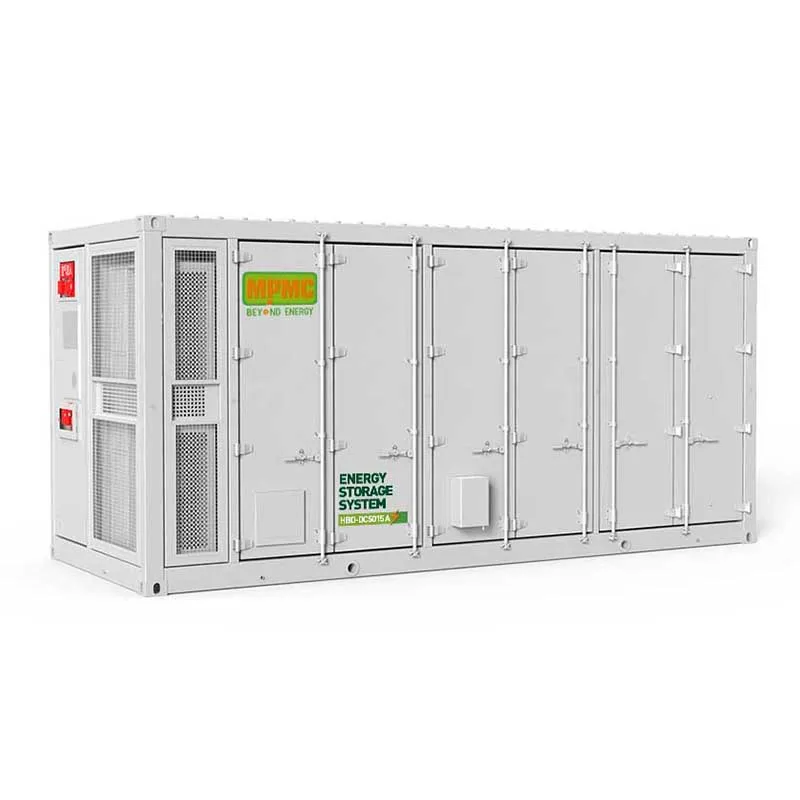
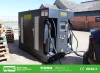
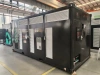
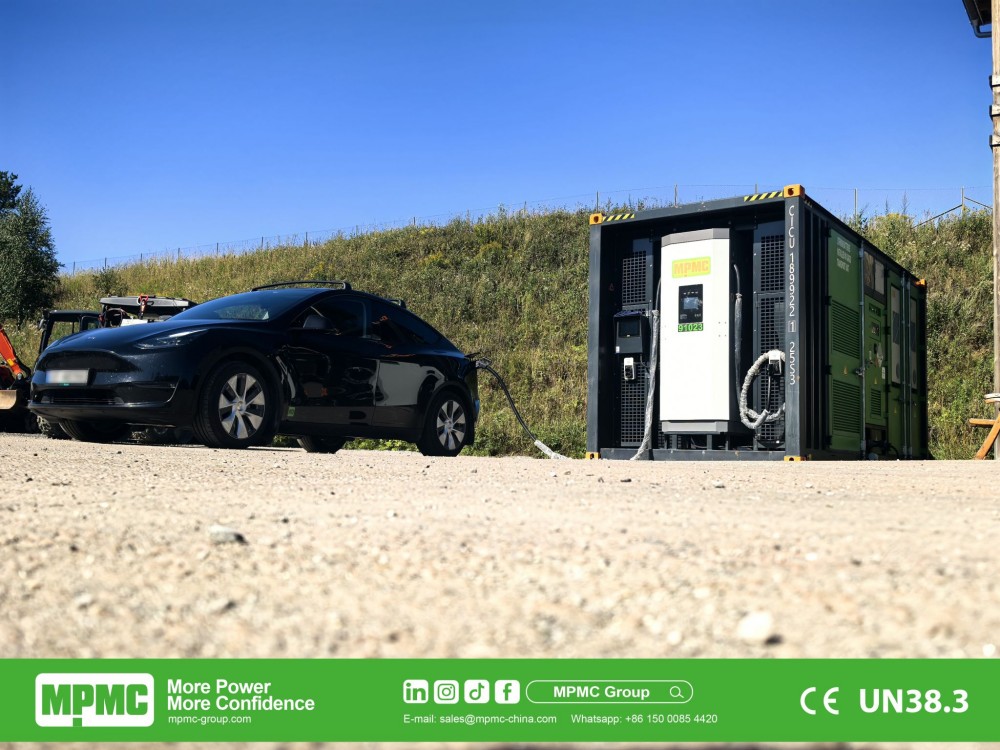 MPMC BCH-500-1000 mobile BESS charger — containerised outdoor fast charging
The Gap Between Input and Output Is the Product
A stored-energy charger absorbs slowly and continuously from whatever supply exists, then discharges quickly when a vehicle presents. The connection therefore has to supply the average rather than the peak, which is what makes fast charging possible where the network alone could never deliver it.
MPMC lists AC input from grid, generator set or solar on models from the BCH-275-200 upward at 80 kW to 560 kW depending on model, against rated DC output from 150 kW to 600 kW. That difference is the buffering being bought, and it should be sized against the connection's genuinely spare capacity rather than either headline figure.
A Documented Weak-Grid Deployment
MPMC publishes a United Kingdom logistics port operation using eight BCH-275-200 units, where a weak local grid had produced ten-hour charging cycles against four-hour port runs until the units were paired with solar infrastructure.
Published environmental figures record 3,457 kWh of total output, against which an equivalent 150 kW diesel generator would have consumed 976 litres of fuel and produced 3,123 kg of CO₂, with a stated annual saving of at least 37.5 tonnes. Those figures describe that installation, its solar pairing and its utilisation; another site will produce different numbers.
What Makes a Unit Deployable at the Destination
| Export element | Why it decides the deployment | Published MPMC position |
|---|---|---|
|
Connector standard |
The unit must match vehicles in that market |
CCS2 standard; CCS1, GB/T and CHAdeMO as options |
|
Voltage window |
Vehicle acceptance varies by manufacturer |
DC output 50–1,000 V on the BCH-275-200 and above |
|
Transport documentation |
Battery carriage applies to every leg |
UN38.3 listed among product compliance references |
|
Product compliance |
Determines what may be energised locally |
IEC 61851, IEC 61000, IEC 62477 and IEC 62933 by model |
|
Local connection rules |
Even a temporary connection is regulated |
Approval confirmed per destination before energising |
|
Remote support |
Who diagnoses a fault at distance |
EMS with 4G and OCPP 1.6; remote monitoring over Ethernet |
These apply by model and market, so the applicable file should be confirmed for the exact configuration and destination together with the party holding each registration.
Sizing Where Capacity Rather Than Output Governs
MPMC publishes 80 kW with 70 kWh on the BCH-80-70, 150 kW with 203.5 kWh on the BCH-275-200, 400 kW with 407 kWh on the BCH-600-400, 600 kW with 610.6 kWh on the BCH-800-600 and 500 kW with 1,075 kWh on the BCH-500-1000. The model number is not the DC output rating, so both figures should be taken from the datasheet.
On a constrained supply the capacity column usually governs, because the binding question is how much energy can be accumulated between charging events rather than how fast it can be delivered. A unit with generous storage and moderate output frequently suits better than the reverse, which is why the BCH-500-1000 pairs 1,075 kWh with 500 kW.
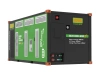
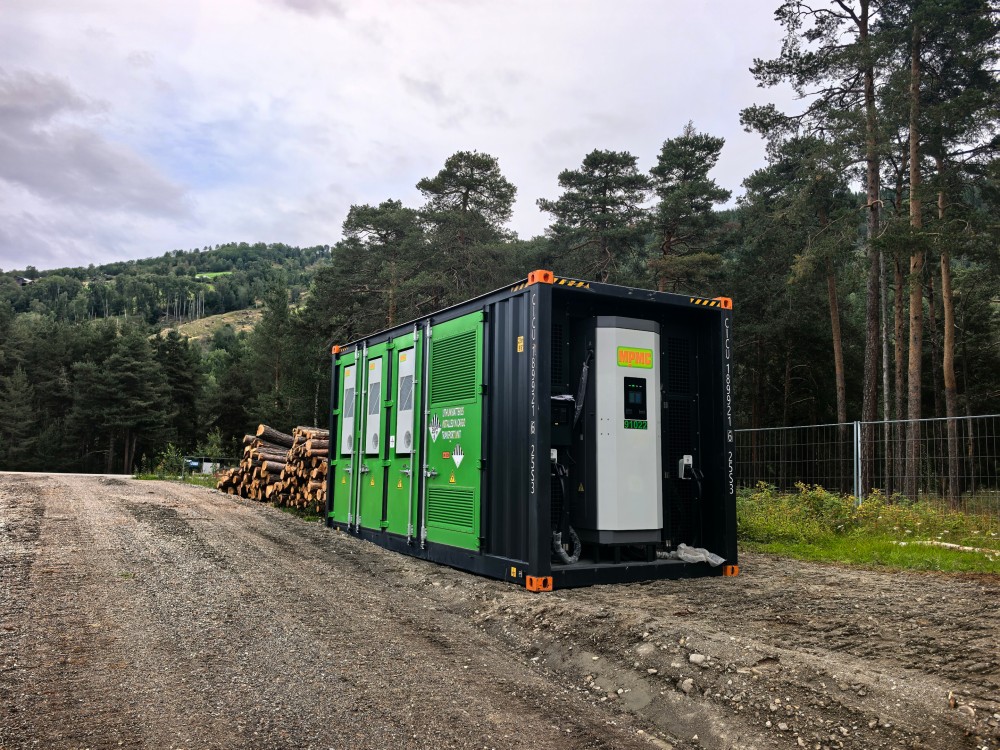 MPMC BCH Series mobile BESS charger
Supplementing the Input Rather Than Reinforcing It
Where the connection alone cannot accumulate enough energy overnight, the input can be supplemented rather than replaced. MPMC lists AC input from solar and from generator sets alongside grid input, and publishes an SPK series of mobile solar plants from 7.65 kWp to 231.84 kWp for sites with area to deploy an array.
Which supplement suits depends on whether the shortfall is continuous or seasonal. Solar addresses a daytime gap on a site with space; a generator addresses any gap and suits an occasional shortfall. The CCS2 DC input, listed at approximately one hour to full for the BCH-275-200, suits operations that can rotate units to a charging point.
Behaviour When the Supply Itself Falters
On a weak connection the item worth confirming is how the unit responds when the supply drops mid-cycle: whether it rides through on stored energy and whether it resumes drawing automatically when the supply returns. That behaviour should be demonstrated rather than described.
MPMC lists an operating range of −20°C to +50°C with derating above 45°C for the BCH-275-200 and above, with 6,000 cycles at 90% depth of discharge and aerosol fire suppression to CE. Where the local network operator has requirements for equipment connected to a constrained supply, those should be obtained in writing before order.
Life and Warranty on a Constrained Supply
MPMC lists 6,000 cycles at 90% depth of discharge across the BCH range, with published warranty terms of 3 years or 1.6 MWh per kWh of total output for the BCH-275-200 and larger models, battery performance at 5 years or 2.57 MWh per kWh, and end-of-life capacity retention of at least 70%.
On a weak-grid site the unit is bought for the energy it can accumulate and hold, so the sizing calculation should run against end-of-life capacity rather than first-year capacity. A unit that just accumulates enough overnight today will fall short in year six, and on a constrained connection there is no spare input capacity to compensate.
Weak-Grid Export Checks
• Measure the connection's genuinely spare capacity and the hours it is uncommitted.
• Size storage against energy accumulated between charging events, not peak output.
• Confirm rated DC output and capacity from the datasheet rather than the model number.
• Establish whether the shortfall is continuous or seasonal before adding solar or a generator.
• Ask for the unit's behaviour when the supply falters mid-cycle to be demonstrated.
• Confirm which compliance and transport documents apply to the exact model and destination.
• Obtain any network operator requirements for connecting to a constrained supply in writing.
• Agree the remote diagnostic arrangement and the parts holding location.
Recent Posts

October 26, 2016
The Most Successful Engineering Contractor
.webp?x-oss-process=image/resize,w_100/quality,q_100)

Contact US
Product Information
Quantity
Unit
Piece
Support order samples, customization, wholesale direct, and complete payment. If the product you look for does not have corresponding customized content, pls fill out the form below to contact us, and we will reply ASAP.