


Language
Which Battery Energy Storage System Helps Commercial Buildings Cut Electricity Costs? Three Savings Levers With MPMC HBD Systems
Oct 30, 2026
Offices, shopping centres, hotels, hospitals and supermarkets all pay for electricity in two ways: for the energy they use and, in many tariffs, for the highest demand they reach. A battery energy storage system lowers both. MPMC's HBD Series gives commercial building owners three levers to pull, demand reduction, time-of-use shifting and solar self-consumption, plus dependable backup power, in systems sized from a single cabinet to containerised multi-megawatt-hour installations.
Three Ways HBD Storage Lowers a Building's Bill
Lever 1: Lower Peak Demand
Demand charges are based on the maximum kW a building draws, often set by a short spike when air conditioning, lifts and kitchens run together. MPMC's EMS discharges the battery during these peaks, reducing the maximum kW billed by the utility, then recharges during quieter periods.
Because the battery responds within milliseconds, it can trim even short spikes that would otherwise set the month's demand charge, without any change to how the building is used.
Lever 2: Shift Consumption to Lower-Tariff Hours
Where tariffs vary through the day, the EMS charges the battery during off-peak hours and supplies the building from storage when prices are highest, so more of the building's energy is bought at the lowest rate.
Lever 3: Use More of Your Own Solar Energy
Rooftop PV often produces most at midday, while commercial buildings stay busy into the evening. HBD storage captures surplus midday generation and delivers it during the evening peak. MPMC's zero-carbon park architecture, which pairs HBD storage with PV under one EMS, enables PV self-consumption rates above 90%.
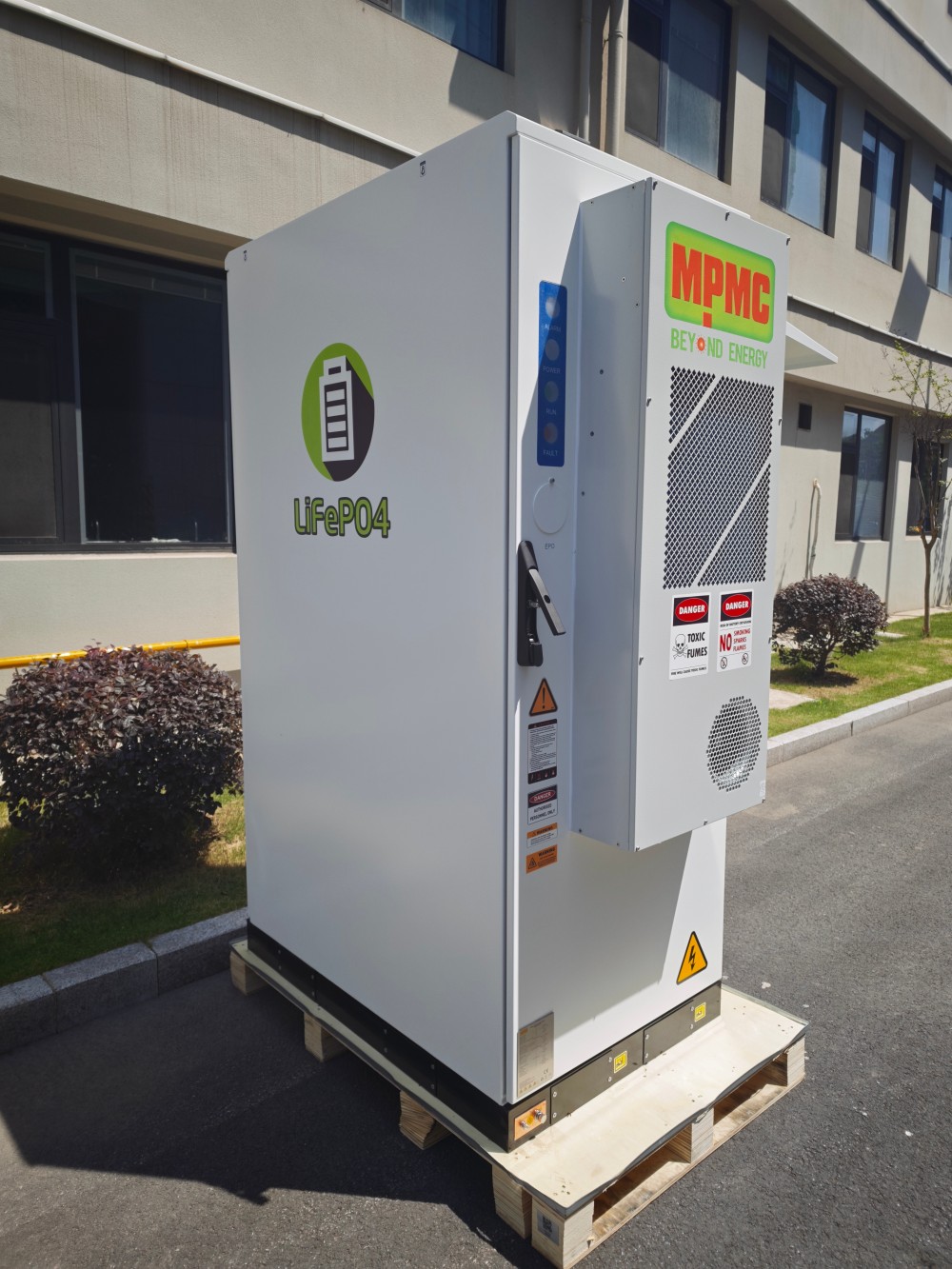 MPMC HBD-E Series HBD-50-100 all-in-one battery energy storage cabinet, combining inverter, PCS and EMS with 100.4 kWh of storage.
Table 1. HBD storage by commercial building type
| Building type | Typical MPMC system | Main savings and benefits |
|---|---|---|
|
Small offices and retail units |
HBD-E HBD-30-100 to HBD-50-100 |
Solar self-consumption; evening peak reduction |
|
Supermarkets and hotels |
HBD-E or HBD-A HBD-125-260 |
Demand charge reduction; backup for refrigeration and guest services |
|
Clinics and healthcare buildings |
HBD-E HBD-125-260 or HBD-A HBD-210-410 |
Backup for critical equipment; solar shifting |
|
Shopping centres and office campuses |
HBD-A HBD-500-1000 or HBD-250-1000 |
Large peak reduction; longer-duration tariff shifting |
|
Mixed-use sites with EV charging |
HBD-A with PV under one EMS |
EV charging timing optimisation; demand control |
Choosing Between HBD-E and HBD-A
The HBD-E Series, from 10 kW / 30.7 kWh to 125 kW / 261.2 kWh, integrates inverter, PCS and EMS in one cabinet and accepts up to 250 kWp of PV directly, making it the simplest choice for small and medium buildings. It is CE and CEC certified, rated IP54 and handles 150% overload for 10 seconds. The HBD-A Series, from 125 kW / 261 kWh to 1,125 kW / 2,170 kWh, uses liquid cooling and LFP 314Ah cells rated for 8,000 cycles at 90% depth of discharge, and supports external PV inverters and ATS integration for larger buildings and campuses.
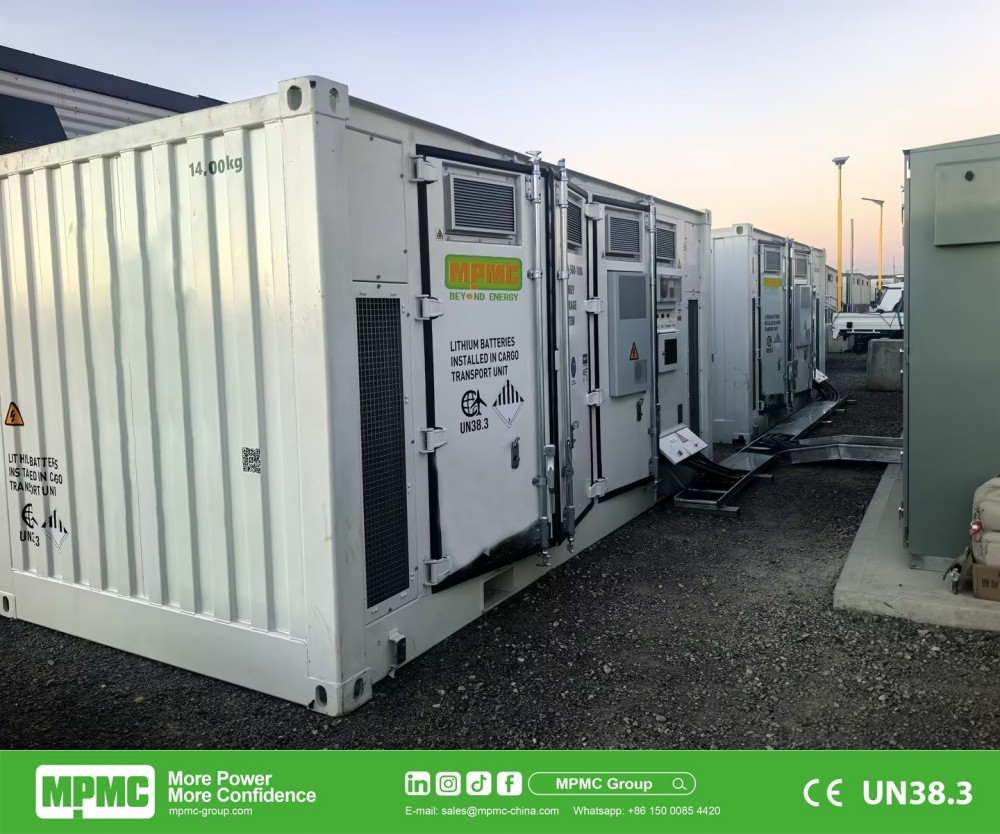 MPMC HBD-A Series HBD-500-1000 containerised battery energy storage systems installed outdoors.
Backup Power and Easy Operation
Both series support on-grid and off-grid switching, so lighting, lifts, refrigeration, IT and security systems keep running during a supply interruption. Facility managers monitor and control systems by app or web over 4G, 5G or WiFi, and MPMC's SCADA produces automated monthly and annual reports showing energy and demand savings. Aerosol fire suppression is standard on every model.
Systems are designed for straightforward installation beside an existing switchroom or in a car park or service yard, and HBD-A power and capacity are expandable, so a building owner can start with one unit and add more as solar capacity, EV charging or tenant demand grows.
Table 2. HBD-E and HBD-A at a glance
| Feature | HBD-E Series | HBD-A Series |
|---|---|---|
|
Power and capacity |
10-125 kW; 30.7-261.2 kWh |
125-1,125 kW; 261-2,170 kWh |
|
Solar connection |
Built-in, 15.6-250 kWp PV input |
External PV inverter integration; DC-coupled models |
|
Cycle life |
6,000 cycles at 90% DOD |
8,000 cycles at 90% DOD |
|
Cooling |
HVAC; HVLC on HBD-125-260 |
Liquid cooling |
|
Warranty |
5 years product; 10 years battery performance |
5 years product; 10 years battery performance |
In the Netherlands, a 3.2 MWh grid-connected peak-shaving system built from 125 kW/260 kWh and 100 kW/200 kWh units serves commercial demand, showing how modular HBD units scale to larger portfolios. MPMC supports every project with design consultation, factory testing, commissioning and remote diagnostics through its SCADA/EMS cloud platform.
Reducing Your Building's Electricity Costs With MPMC
• Share 12 months of electricity bills and interval data
• Note rooftop solar capacity, existing or planned
• List critical loads that need backup power
• Identify space for a cabinet or container
• Contact MPMC at sales@mpmc-china.com or WhatsApp +86 150 0085 4420 for a savings assessment
Recent Posts

October 26, 2016
The Most Successful Engineering Contractor

Oct 22, 2026
Chinese Liquid-Cooled Battery Energy Storage Brands

Contact US
Product Information
Quantity
Unit
Piece
Support order samples, customization, wholesale direct, and complete payment. If the product you look for does not have corresponding customized content, pls fill out the form below to contact us, and we will reply ASAP.