


Language
Mobile Battery Energy Storage Systems That Cut Fuel Costs on Generator Sets
Oct 26, 2026
MPMC POWERTECH CORP., established in 2008 and headquartered in Shanghai Pudong, manufactures the HBD-R Series mobile battery energy storage system that operators pair with existing diesel generator sets specifically to reduce fuel consumption. The underlying problem is generator oversizing: a genset sized for peak load spends most of its operating hours running well below that peak, in the load range where diesel engines are least fuel-efficient. This article explains how HBD-R addresses that problem, the documented fuel savings behind the claim, and how to size a battery pairing for an existing generator installation.
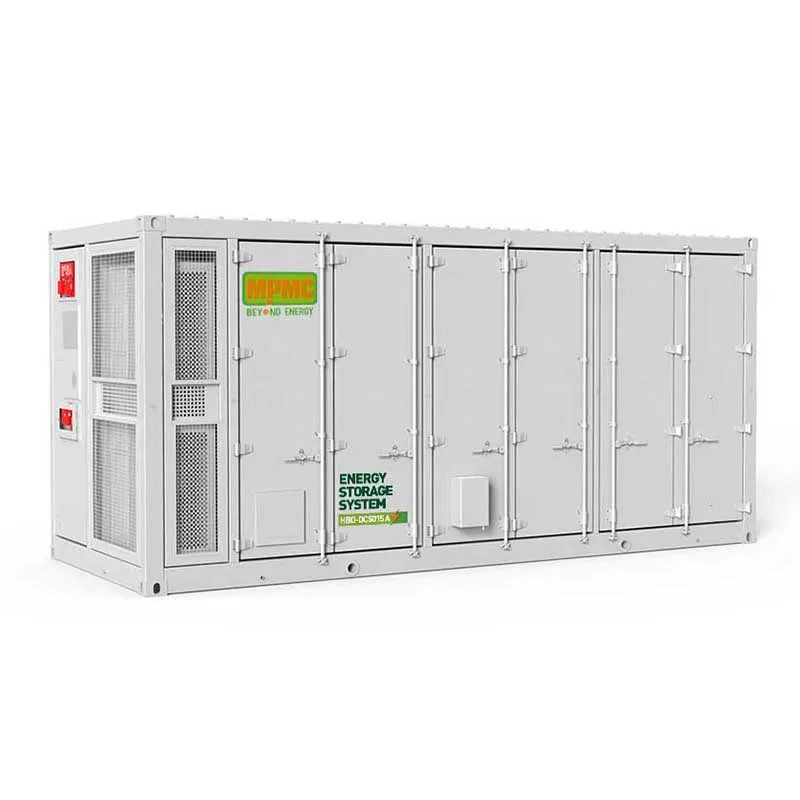
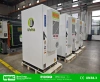
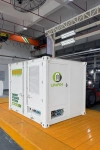
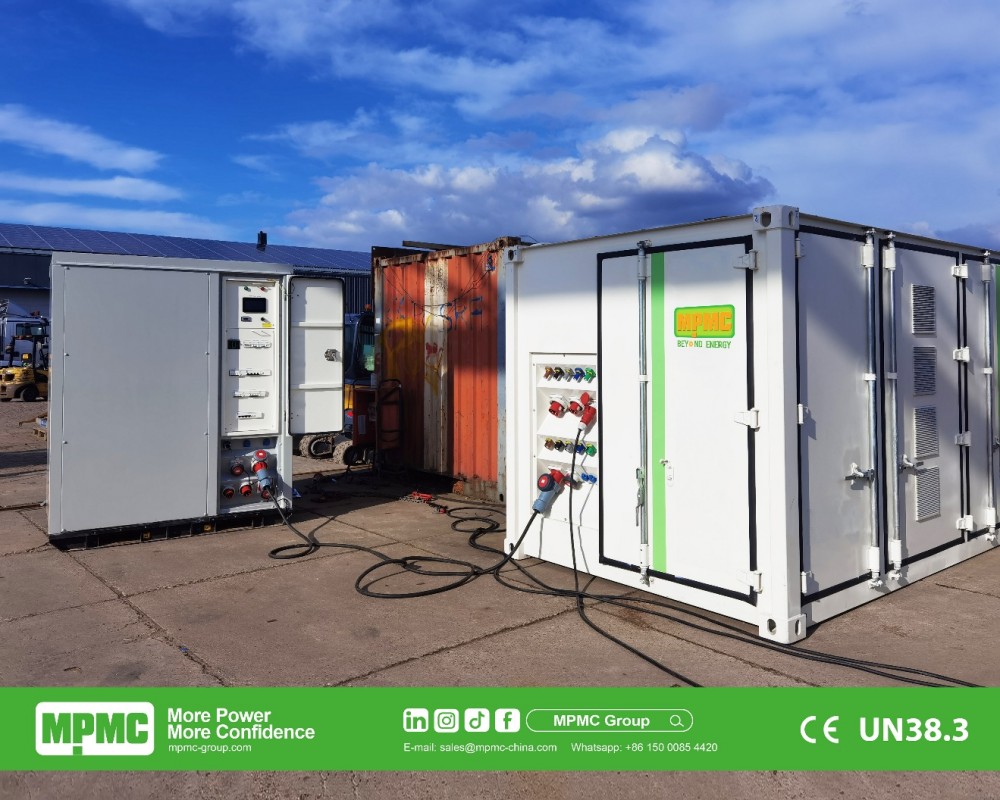 MPMC HBD-R Series mobile battery energy storage unit paired with a diesel generator set
The Oversizing Problem HBD-R Is Built to Solve
Diesel generators run most efficiently around 75% of rated load; below roughly 30%, fuel consumption per unit of energy delivered rises sharply, and prolonged low-load operation causes wet-stacking and accelerated engine wear. A generator sized to cover occasional peak demand — a large motor starting, a cluster of loads switching on simultaneously — ends up running at a low average load the rest of the time, burning more fuel than the actual average demand requires. HBD-R absorbs those peaks so the generator itself can be sized closer to the average load and run consistently near its efficient point.
This is not a niche edge case: generator oversizing is common across construction, events and remote industrial sites precisely because engineers specify capacity against a worst-case peak scenario that may occur rarely, if at all, during normal operation. The generator then spends the overwhelming majority of its running hours well under that peak rating, burning fuel inefficiently the entire time — which is exactly the gap HBD-R is designed to close.
How the Genset Pairing Actually Works
HBD-R provides millisecond-level transient load smoothing and is compatible with major genset controller brands including DSE, ComAp, DEIF, Woodward, Smartgen and CAT EMCP, so it can be added to an existing generator installation without replacing the generator's own control system. The battery absorbs high-inrush motor starts and short-duration peaks, while the generator continues supplying the steady base load — the combination lets the generator run near its optimal 75% load point rather than being oversized to cover peaks that occur only briefly.
| Documented Result | Before HBD-R | After HBD-R |
|---|---|---|
|
Refuelling interval (UK case) |
Every 2 days |
Every 7 days |
|
Maintenance interval (UK case) |
Every 10 days |
Every 60 days |
|
Fuel savings (general) |
Diesel-only baseline |
Up to 75% reduction |
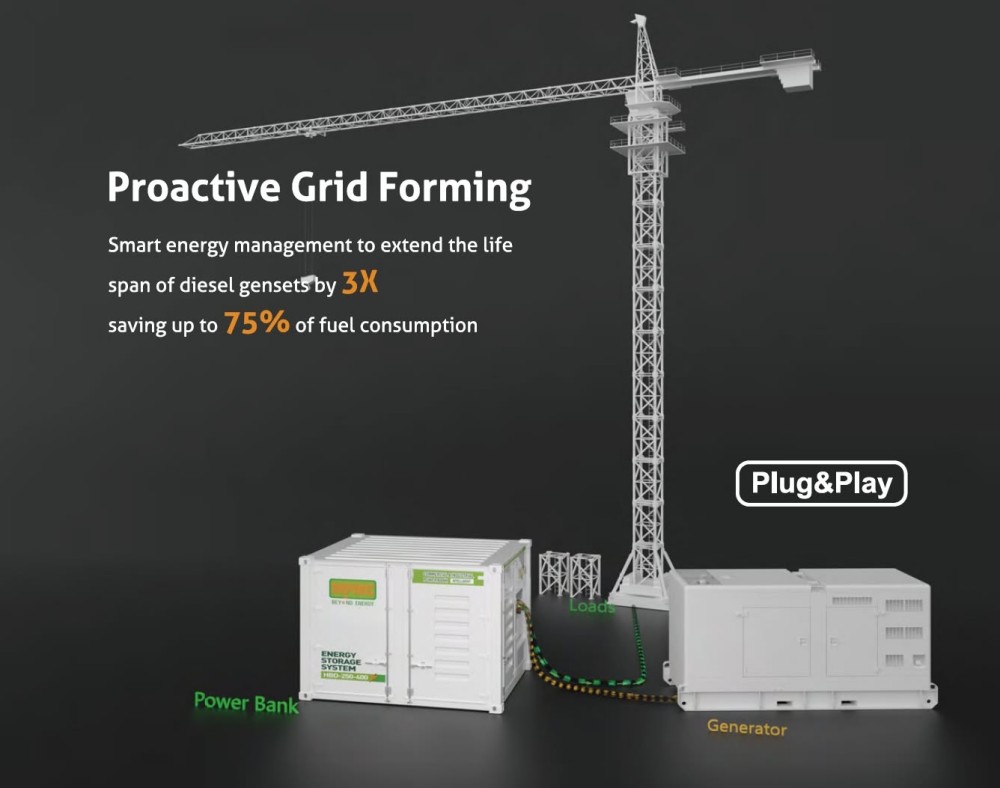 MPMC HBD-R Series unit configured as a genset fuel-saving partner
Documented Case: A 56 kW Generator Oversized for a 3-6 kW Load
In a UK construction site case, a 56 kW diesel generator was running to cover a base office load of only 3-6 kW — a severe oversizing situation typical of sites where the generator was specified for a future peak that materialises only intermittently. After adding an HBD-30-60 (30 kW / 60 kWh) battery unit in hybrid configuration, the refuelling frequency dropped from every 2 days to every 7 days, and the maintenance interval extended from every 10 days to every 60 days — both a direct result of the generator running far fewer total hours and at a more consistent, efficient load.
HBD-R's cooling architecture is matched to unit size: HVAC cooling covers the 30-250 kW models, while HBD-200-200 and larger switch to LCAC liquid-active cooling, reflecting the greater thermal load of higher-capacity cycling. Cycle life across the range is rated at 6,000 cycles at 90% depth of discharge, with an operating temperature window of -20°C to 50°C, which is broad enough to cover most generator installation sites without a separate climate-specific variant.
The Genset Mate Function for Oilfield and Industrial Sites
For oil and gas sites transitioning to lower-emission operation, HBD-R can be integrated in parallel with existing generator sets as a genset mate, performing peak shaving, transient load absorption and selective generator shutdown during low-demand periods — reducing both fuel consumption and NOx/CO2 output without compromising the intrinsic safety requirements those sites operate under. Larger HBD-R models used in this role carry CE-certified aerosol fire suppression plus an off-gas detector and water spray inlet, reflecting the more demanding safety standard of an industrial or hazardous-area application.
Where MPMC Sits Against Other Genset-Pairing BESS Suppliers
MPMC's HBD-R differentiates from competitors such as Himoinsa and Pramac, which rely on third-party Victron controllers and Pylontech battery packs for genset integration, by using MPMC's own EMS designed specifically to work as a generator partner across multiple third-party controller brands. This native design reduces the integration risk of pairing battery storage with an existing generator installation that may span several manufacturers and controller generations.
| Element | Typical Competitor | MPMC HBD-R |
|---|---|---|
|
Controller compatibility |
Often single-brand focus |
DSE, ComAp, DEIF, Woodward, Smartgen, CAT EMCP |
|
Battery source |
Often third-party |
In-house LFP manufacturing |
|
Documented fuel savings |
Limited public data |
Up to 75%, UK case documented |
Checklist: Sizing a Battery Pairing for an Existing Generator Set
• Measure actual average load against the generator's rated capacity over a representative period
• Identify peak load events and their duration to size the battery's power and energy needs
• Confirm the generator's controller brand is on HBD-R's compatible list
• Select HVAC-cooled models for smaller pairings or LCAC-cooled models above HBD-200-200
• Confirm fire protection specification matches the site's hazard classification
• Estimate expected refuelling and maintenance interval improvement against current baseline
• Verify warranty terms are based on cumulative throughput matching the site's expected cycling
• Request a documented reference case with a similar generator set size and load profile
Questions Generator Set Operators Ask
MPMC documents fuel savings of up to 75% when HBD-R is paired with diesel generator sets, with a UK case showing refuelling intervals extend from every 2 days to every 7 days after the battery was added — though savings depend on how oversized the generator set was to begin with.
No. HBD-R is designed to work alongside major genset controller brands including DSE, ComAp, DEIF, Woodward, Smartgen and CAT EMCP, so it can typically be added without replacing the generator set's own control system.
Because the generator set runs fewer total hours and at a more consistent load rather than cycling on and off to cover short peaks, wear-related maintenance triggers occur less frequently — documented at every 60 days versus every 10 days in a comparable UK case.
Yes, in a 'genset mate' configuration for oil and gas sites, where larger HBD-R models add off-gas detection and water spray fire protection appropriate to that more demanding safety environment.
Sizing depends on the generator set's rated capacity, its actual average load, and the magnitude and duration of peak events; HBD-R's seven models from 30 kW to 610 kW allow the battery to be matched to a wide range of existing generator set sizes rather than a one-size-fits-all approach, with a site's own load logging data giving the most reliable basis for that sizing decision.
Recent Posts

October 26, 2016
The Most Successful Engineering Contractor
Oct 22, 2026
Chinese Liquid-Cooled Battery Energy Storage Brands

Contact US
Product Information
Quantity
Unit
Piece
Support order samples, customization, wholesale direct, and complete payment. If the product you look for does not have corresponding customized content, pls fill out the form below to contact us, and we will reply ASAP.