


Language
Temporary DC Fast Charging Without a Grid Upgrade: How Stored Energy Removes the Connection Constraint
Sep 01, 2026
A grid upgrade is not usually refused; it is scheduled. The connection application, the reinforcement works and the energisation date sit outside the operator's control, and vehicles frequently arrive before the date does. Stored-energy charging exists to close that interval, and it does so by breaking the link between what the connection can supply and what the vehicle receives. From a procurement perspective the arithmetic of that separation is what decides the specification. MPMC POWERTECH CORP., established in 2008 and headquartered in Shanghai Pudong, publishes a BCH range operational within 24 hours of deployment.
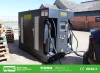
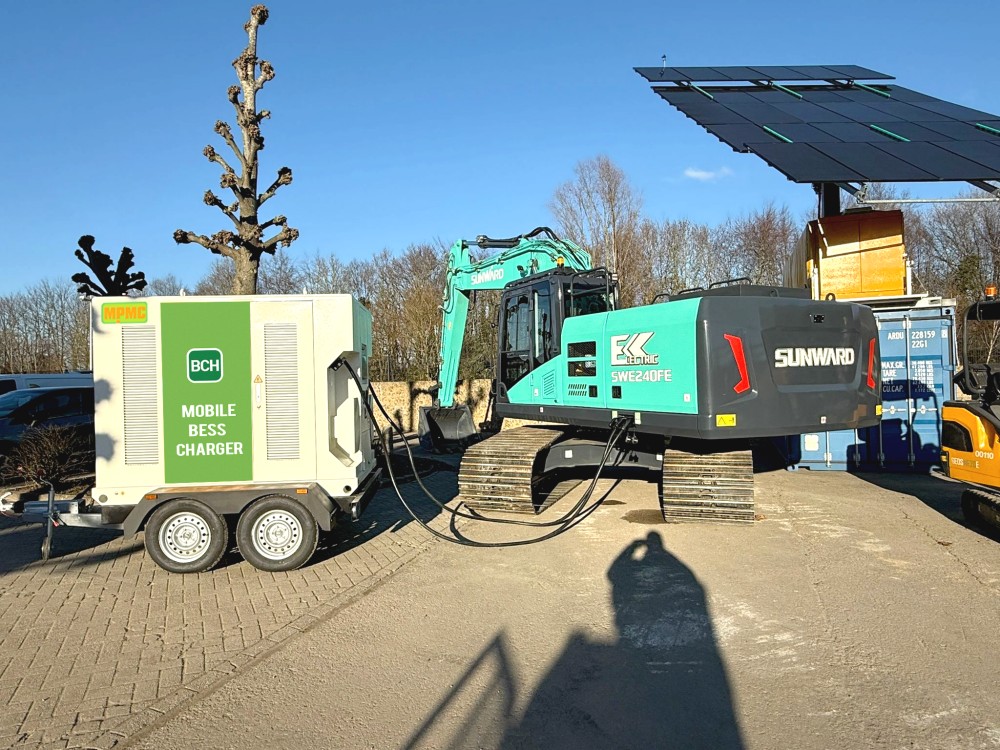 MPMC BCH Series mobile BESS charger
The Gap Between Input and Output Is the Product
A stored-energy charger absorbs slowly and continuously from whatever supply exists, then discharges quickly when a vehicle presents. The connection therefore has to supply the average rather than the peak, which is what makes fast charging possible on a supply that could never deliver it directly.
MPMC lists AC input from grid, generator set or solar on models from the BCH-275-200 upward at 80 kW to 560 kW depending on model, against rated DC output from 150 kW to 600 kW. The difference between those two figures is the buffering being bought, and it should be sized against the connection's genuinely spare capacity rather than against either headline number.
Working Out What the Existing Supply Can Support
The calculation is straightforward once the inputs are measured. Spare capacity multiplied by the hours it is uncommitted gives the energy that can be accumulated between charging events; that figure, not the connection's rating, is what the site can deliver in a day.
| Input | Why it governs | How to obtain it |
|---|---|---|
|
Spare connection capacity |
Sets the rate energy can be accumulated |
Measured demand against the agreed supply capacity |
|
Uncommitted hours |
Multiplies capacity into daily energy |
Interval metering across a representative week |
|
Energy per charging session |
Determines how many sessions the store supports |
Vehicle battery size and typical state of charge on arrival |
|
Session clustering |
Decides whether output or capacity binds |
How many vehicles present within the same window |
|
Vehicle acceptance rate |
Caps delivered power regardless of charger rating |
Manufacturer data for the specific vehicles |
Where the accumulated energy covers the daily requirement, the connection is adequate and no upgrade is needed for the charging duty. Where it does not, the input can be supplemented rather than replaced.
Supplementing the Input Rather Than Reinforcing It
MPMC lists three input routes on models from the BCH-275-200 upward: grid, generator set and solar, plus a CCS2 DC input allowing the unit itself to be recharged from a fast-charging point, listed at approximately one hour to full for the BCH-275-200.
Which supplement suits depends on the shape of the shortfall. Solar addresses a daytime gap on a site with area to deploy an array, and MPMC lists an SPK series of mobile solar plants from 7.65 kWp to 231.84 kWp. A generator addresses any gap and suits sites where the shortfall is occasional. The DC input suits operations that can rotate units to a charging point, where the number required follows the cycle time rather than simultaneous demand.
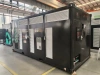
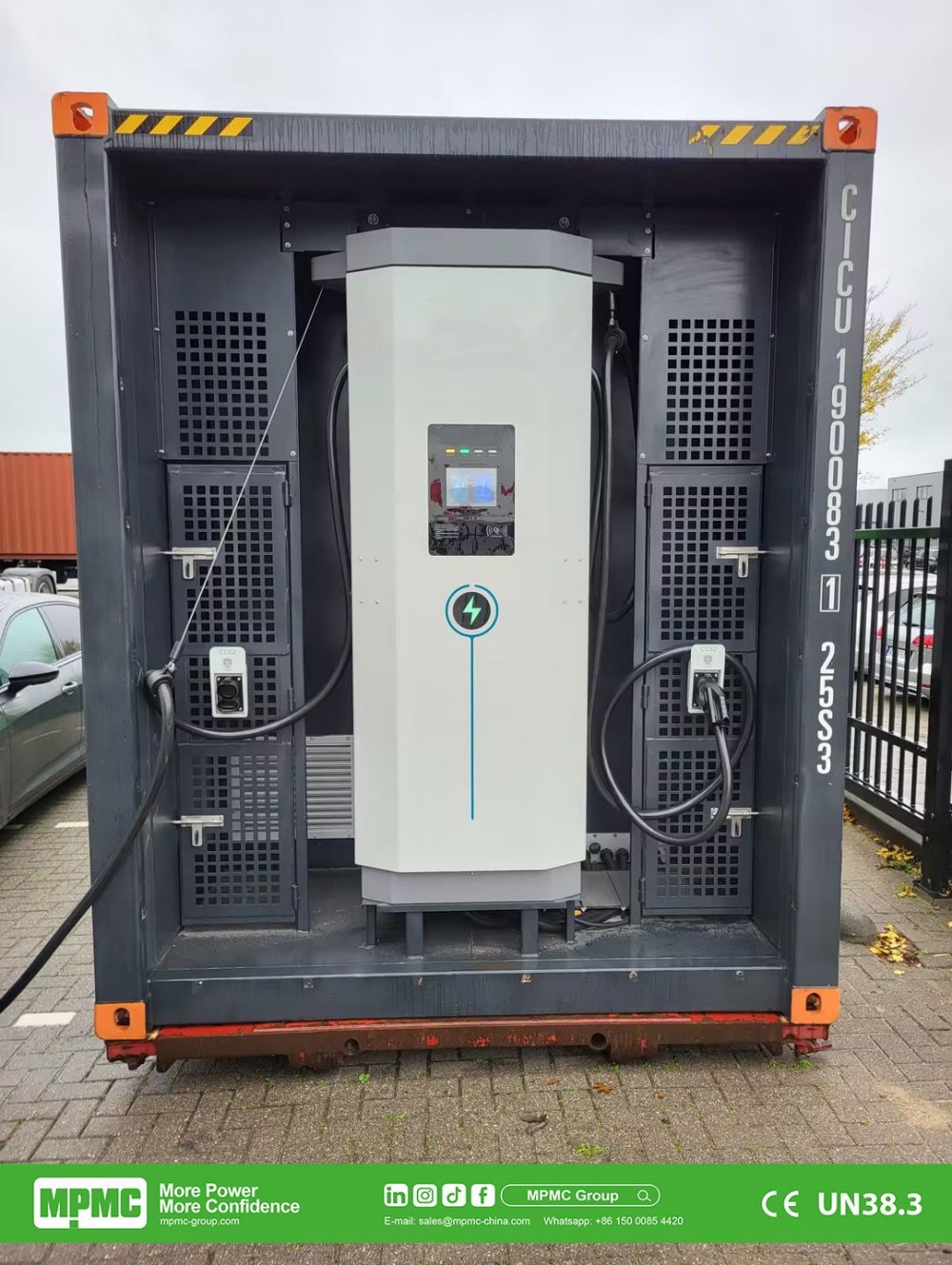 MPMC BCH-500-1000 mobile BESS charger
Reading the Range Against a Constrained Supply
MPMC publishes 80 kW with 70 kWh on the BCH-80-70, 150 kW with 203.5 kWh on the BCH-275-200, 400 kW with 407 kWh on the BCH-600-400, 600 kW with 610.6 kWh on the BCH-800-600 and 500 kW with 1,075 kWh on the BCH-500-1000. The model number is not the DC output rating, so both figures should be taken from the datasheet.
On a constrained supply the capacity column usually governs, because the binding question is how much energy can be accumulated between sessions rather than how fast it can be delivered. A unit with generous storage and moderate output frequently suits better than the reverse, which is why the BCH-500-1000 pairs 1,075 kWh with 500 kW rather than with the highest output in the range.
Deployment Time Against a Connection Timetable
MPMC lists full operational status as achievable within 24 hours of deployment with no permanent grid infrastructure, and describes the units as plug-and-play with pre-configured socket arrangements. Set against a connection programme measured in months, that is the commercial case for the approach.
What remains the operator's task is site preparation, the connection to whatever supply is being used and any local electrical approval. A realistic plan allows for those, and the recharge arrangement in particular should be settled before the unit ships since it is the one element the equipment cannot bring with it.
What Happens When the Permanent Connection Arrives
A temporary installation that becomes stranded when the upgrade completes is a poor investment, which is why relocation practicality belongs in the original decision. MPMC lists the BCH-80-70 at 880 kg with six units per 20 ft container, the BCH-275-200 at 2,800 kg on a 3.5 t heavy-duty trailer with an integrated forklift pocket, and larger models at 8,300 kg, 15,000 kg and 19,800 kg in a 20 ft container footprint.
Once the permanent supply is energised the same unit can move to the next site awaiting connection, continue as additional capacity at peak times, or provide resilience during an interruption. Deciding which of those is intended before purchase influences which model represents the better value.
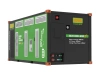
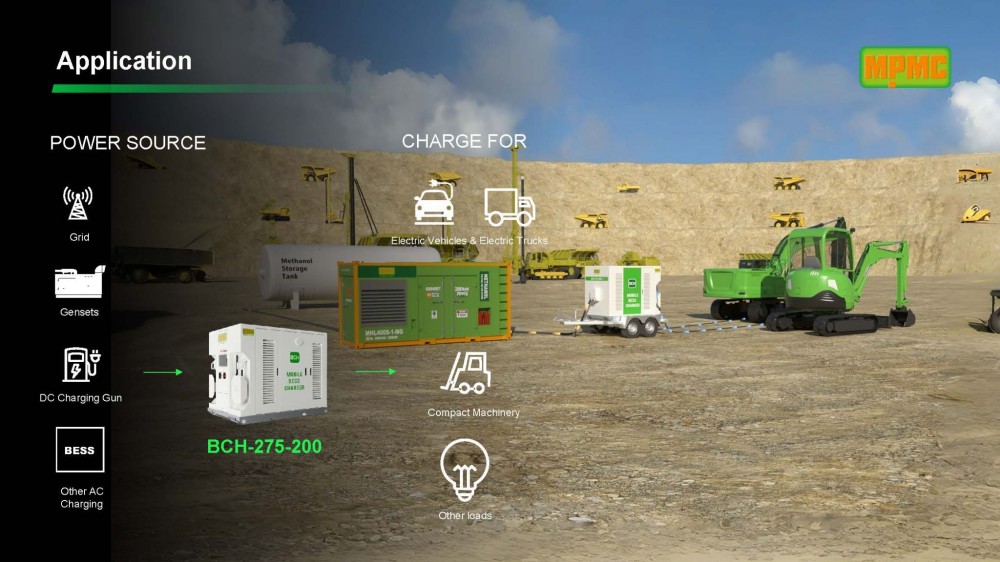 MPMC BCH-275-200 mobile BESS charger — application overview
Control, Records and Operating Limits
MPMC lists an EMS with 4G connectivity and OCPP 1.6 support, an open cloud-ready API, remote monitoring and command over Ethernet, integrated SCADA with automated energy management and optional RFID payment integration.
Operating limits are listed at −20°C to +50°C with derating above 45°C for the BCH-275-200 and above, with 6,000 cycles at 90% depth of discharge, aerosol fire suppression to CE, and product-page compliance references including IEC 61851, IEC 61000, IEC 62477, IEC 62933 and UN38.3 depending on model. The behaviour worth demonstrating rather than describing is how the unit responds when the supply itself falters mid-cycle.
Published Deployments on Constrained Supplies
MPMC lists a United Kingdom logistics port operation using eight BCH-275-200 units, where a weak local grid had produced ten-hour charging cycles against four-hour port runs until the units were paired with solar infrastructure. A Netherlands installation combines the BCH-275-200 with the BCH-500-1000 for a renewable-powered charging station, and a Norwegian deployment is listed at 2 MWh with 500 kW per unit and CCS2 output of 360 kW at 400 A.
These describe the class of arrangement supplied rather than a throughput expectation for another site, whose achievable sessions follow its own supply, vehicles and utilisation.
Verification Points Before Ordering
• Measure spare connection capacity and the hours it is genuinely uncommitted.
• Calculate energy accumulated per day and compare it with the daily charging requirement.
• Confirm rated DC output and capacity from the datasheet rather than the model number.
• Decide which input route supplements the supply, and identify a fallback.
• Obtain vehicle acceptance rates and check them against the DC voltage window.
• Confirm whether both connectors hold rated output simultaneously on the offered model.
• Decide the unit's role once the permanent connection is energised.
• Check unit weight against handling equipment at every intended position.
• Ask for the unit's behaviour when the supply falters mid-cycle to be demonstrated.
• Confirm which compliance documents apply to the exact model and destination.
Frequently Asked Questions
By separating the two rates. The unit absorbs at whatever the connection can spare and discharges at the rate the vehicle needs. MPMC lists AC input at 80 kW to 560 kW depending on model against rated DC output from 80 kW to 600 kW, and the difference between those figures is the buffering the site is buying.
Spare capacity multiplied by the hours it is uncommitted, which gives the energy accumulated between sessions, divided by energy per session. That figure rather than the connection rating is what the site can deliver, and it should be calculated from interval metering across a representative week.
It depends on the shape of the gap. Solar suits a daytime shortfall where there is area to deploy, and MPMC lists SPK mobile solar plants from 7.65 kWp to 231.84 kWp. A generator suits an occasional gap. The CCS2 DC input suits rotating units to a charging point, listed at approximately one hour to full for the BCH-275-200.
MPMC lists full operational status as achievable within 24 hours of deployment with no permanent grid infrastructure. Against a connection programme measured in months, that interval is the commercial case for the approach, with site preparation and any local approval remaining the operator's task.
It can move to the next site awaiting connection, remain as additional capacity at peak times, or provide resilience during an interruption. Deciding which is intended before purchase influences the model choice, since MPMC's published weights run from 880 kg on the BCH-80-70 to 19,800 kg on the BCH-500-1000.

Recent Posts

October 26, 2016
The Most Successful Engineering Contractor.webp?x-oss-process=image/resize,w_100/quality,q_100)


Contact US
Product Information
Quantity
Unit
Piece
Support order samples, customization, wholesale direct, and complete payment. If the product you look for does not have corresponding customized content, pls fill out the form below to contact us, and we will reply ASAP.