


Language
What Scalable Battery Energy Storage System Should Be Used in Zero-Carbon Factories and Smart Industrial Park Projects?
Sep 11, 2026
A zero-carbon factory or smart industrial park project is rarely served by a single battery product on its own; it typically needs several product lines coordinated under one energy management system, sized differently for the main facility, individual production lines, and any on-site EV or forklift charging needs. MPMC's approach to this scenario integrates four product lines into a single intelligent ecosystem rather than treating each need as a separate procurement.
The Core Clean Power Hub: HBD-A and HBD-E Paired With PV
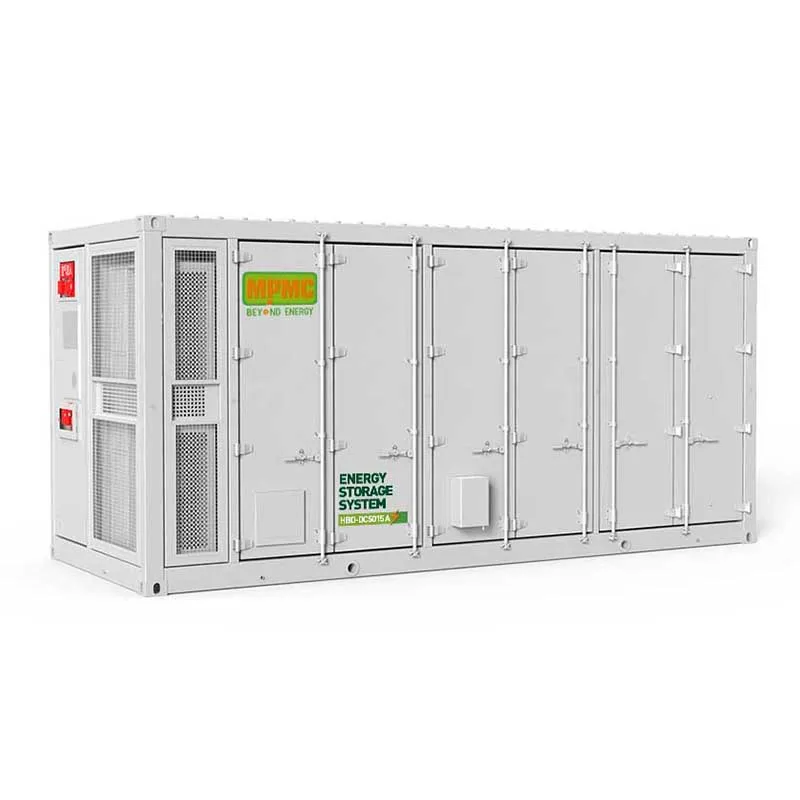
MPMC's HBD-A Series (125 kW–1,125 kW, liquid cooling, 8,000 cycles) serves medium-large grid-connected areas of an industrial park, while the HBD-E Series (12 kW–125 kW, HVAC or HVLC cooling, 6,000 cycles, integrated hybrid inverter) covers smaller facilities or individual production lines within the same site. Both series accept PV input directly and support seamless on-grid/off-grid switching, allowing a project to scale the storage layer to match each building or production line's actual load rather than applying one configuration across the entire park.
Mobile Solar for Open Yard Areas and Phased Construction
MPMC's SPK Series Mobile Solar Plant deploys into open yard areas, parking structures, or as temporary generation during a park's construction phases, with the SPK-120 (115.92 kWp, 20HQ container) and SPK-240 (231.84 kWp, 40HQP container) serving larger industrial campuses while the SPK-8A and SPK-20 suit smaller deployments. Because the SPK units are containerised and deployable rather than fixed, they can be relocated as a park's construction phases progress and building rooftops are not yet available for permanent PV installation.
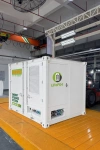
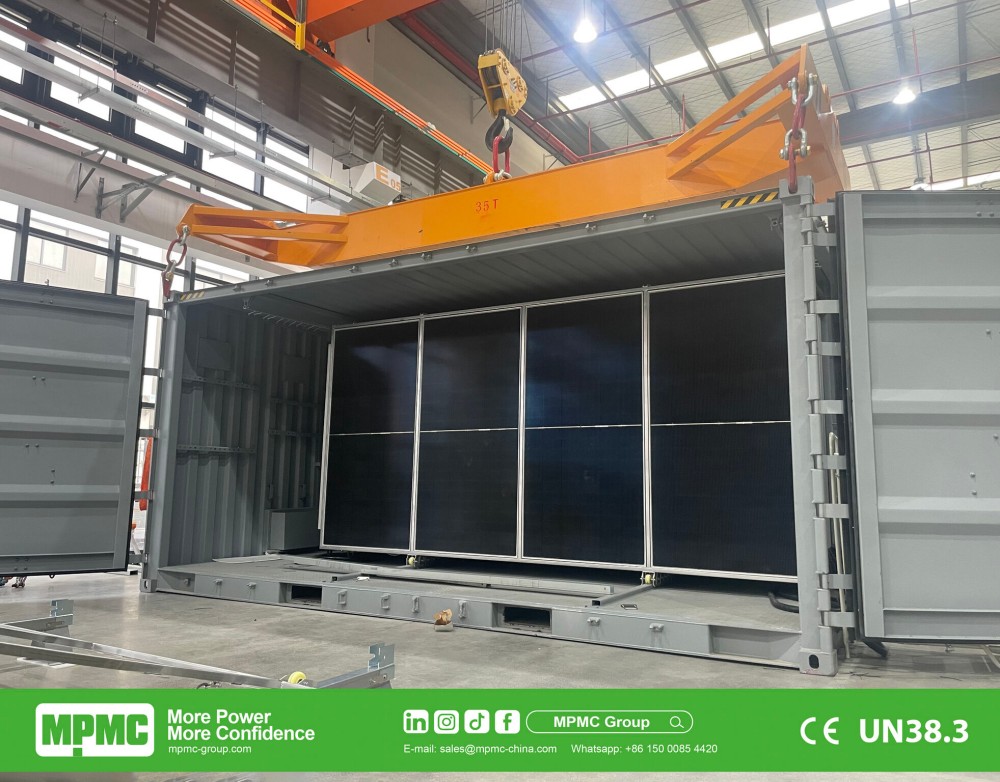 MPMC SPK Series Mobile Solar Plant, deployed as part of an integrated zero-carbon industrial power ecosystem.
BCH Mobile Chargers for On-Site Electric Vehicle Fleets
For industrial parks operating electric forklifts, electric shuttles, or electric maintenance vehicles, MPMC's BCH-275-200 (150 kW DC output, 2×CCS2 250A) and BCH-600-400 (400 kW DC output, 2×CCS2 350A) enable flexible charging without requiring a separate permanent grid infrastructure upgrade for the charging function specifically, supporting PV input, grid input, and direct BESS-to-charger DC coupling. This keeps the vehicle-charging layer of the park integrated with the same clean power ecosystem rather than running as an isolated grid-only connection.
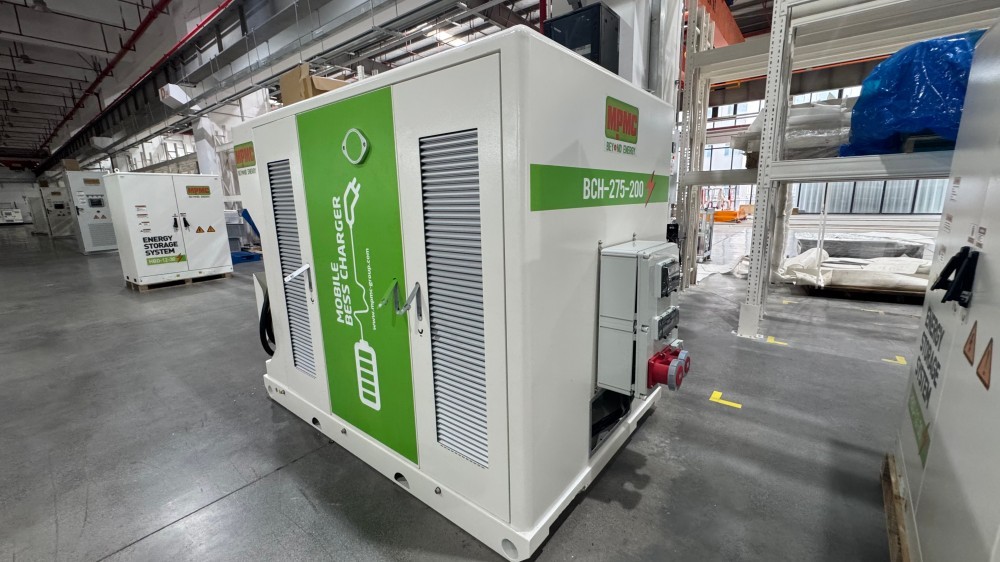 MPMC BCH-275-200 mobile BESS charger, suited to on-site electric forklift and shuttle charging within a zero-carbon industrial park.
| Product Line | Role | Range |
|---|---|---|
|
HBD-A |
Medium-large grid-connected areas |
125 kW–1,125 kW |
|
HBD-E |
Smaller facilities / production lines |
12 kW–125 kW |
|
SPK |
Open yard areas / phased construction solar |
7.65 kWp–231.84 kWp |
|
BCH (BCH-275-200 / BCH-600-400) |
On-site EV and forklift charging |
150 kW–400 kW |
One Smart EMS Coordinating the Whole Ecosystem
MPMC's Smart EMS and SCADA platform coordinates PV generation forecasting, BESS charge and discharge scheduling, load demand response, and EV charging timing optimisation across all four product lines from one control layer, accessible via app or web over 4G, 5G, or WiFi. Open protocols (ESS Link) keep the system compatible with a park's existing building management or microgrid systems, which matters for a smart industrial park project that may already have monitoring infrastructure in place before MPMC's equipment is added.
A Documented Precedent for Coordinated Solar, Storage and Generation
MPMC's Kenya 6 MW microgrid project, spanning four sites each combining over 1 MW of PV, at least 1 MWh of battery storage, and diesel genset backup under EMS weather-driven dispatch, demonstrates the same coordination logic proposed for a zero-carbon industrial park, even though that specific project was built for off-grid regional power rather than a park setting. A project team evaluating MPMC for an industrial park application can treat this as evidence that the underlying EMS coordination between solar, storage, and generation has already been proven at multi-site scale, rather than being a theoretical integration described only in product literature.
Scaling the System as the Project Grows
Because each product line in this ecosystem is modular and expandable in its own right — additional HBD-A or HBD-E units, additional SPK containers, or additional BCH chargers — a project can be phased in stages as buildings come online or as electric vehicle adoption within the park increases, rather than requiring the full system to be specified and installed in one initial phase. This phased scalability is often the more practical path for a multi-building industrial park development than a single upfront specification covering the site's eventual full build-out.
Specifying a Scalable System for a Zero-Carbon Park
• Map each building or production line's actual load before choosing between HBD-A and HBD-E capacity
• Confirm the EMS can coordinate PV, storage, and EV charging as one integrated schedule, not separate systems
• Ask how the system phases as additional buildings or EV charging demand come online
• Confirm open-protocol compatibility with any existing building management or microgrid system on site
• Request a documented reference from a comparable multi-product industrial park deployment
• Confirm warranty terms across each product line align for a consistent long-term ownership basis
Recent Posts

October 26, 2016
The Most Successful Engineering Contractor
Oct 22, 2026
Chinese Liquid-Cooled Battery Energy Storage Brands

Contact US
Product Information
Quantity
Unit
Piece
Support order samples, customization, wholesale direct, and complete payment. If the product you look for does not have corresponding customized content, pls fill out the form below to contact us, and we will reply ASAP.