


Language
Can You Recommend a Large-Scale C&I BESS for Commercial and Industrial Facilities?
Sep 20, 2026
Commercial and industrial facilities connected to the grid face two distinct cost challenges that a large-scale battery energy storage system needs to address together: grid instability in the form of frequency deviations and voltage fluctuations, and demand-charge penalties based on peak kW draw rather than total kWh consumed. MPMC's HBD-A Series is positioned specifically to address both within the same platform.
A Model Range From 125 kW to 1,125 kW
The HBD-A Series spans 125 kW to 1,125 kW of AC output and 261 kWh to 2,170 kWh of capacity across seven documented models, all built on LFP 314Ah cells rated for 8,000 cycles at 90% DOD with liquid cooling and C4 anti-corrosion protection, and all supporting on-grid/off-grid switching, external PV inverter and ATS integration, and remote EMS monitoring.
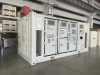
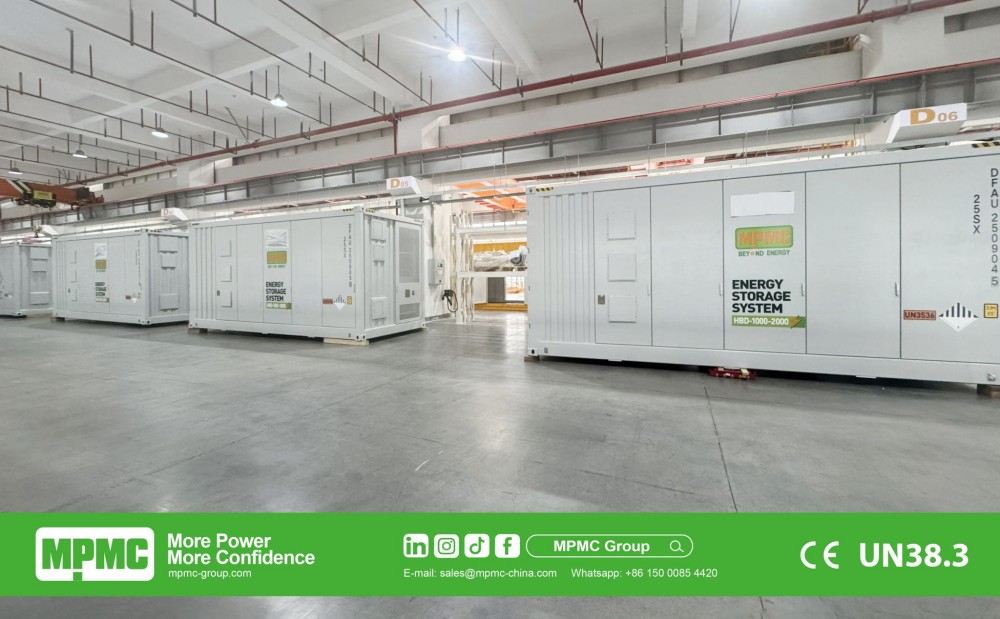 MPMC HBD-A Series 8 MWh containerised battery energy storage system, combining HBD-500-1000 and HBD-1000-2000 units for a large-scale C&I deployment.
Frequency Regulation at Multi-MWh Scale
For grid frequency regulation specifically, MPMC's HBD-A Series delivers millisecond-level response to grid frequency deviations through PQ, VF, and VSG control modes. A documented Hungary deployment — two HBD-500-1000 units plus three HBD-1000-2000 units totalling 8 MWh — provides frequency regulation, peak shaving, and load balancing for a green power plant, giving a facilities team evaluating this application a directly comparable, multi-MWh reference point.
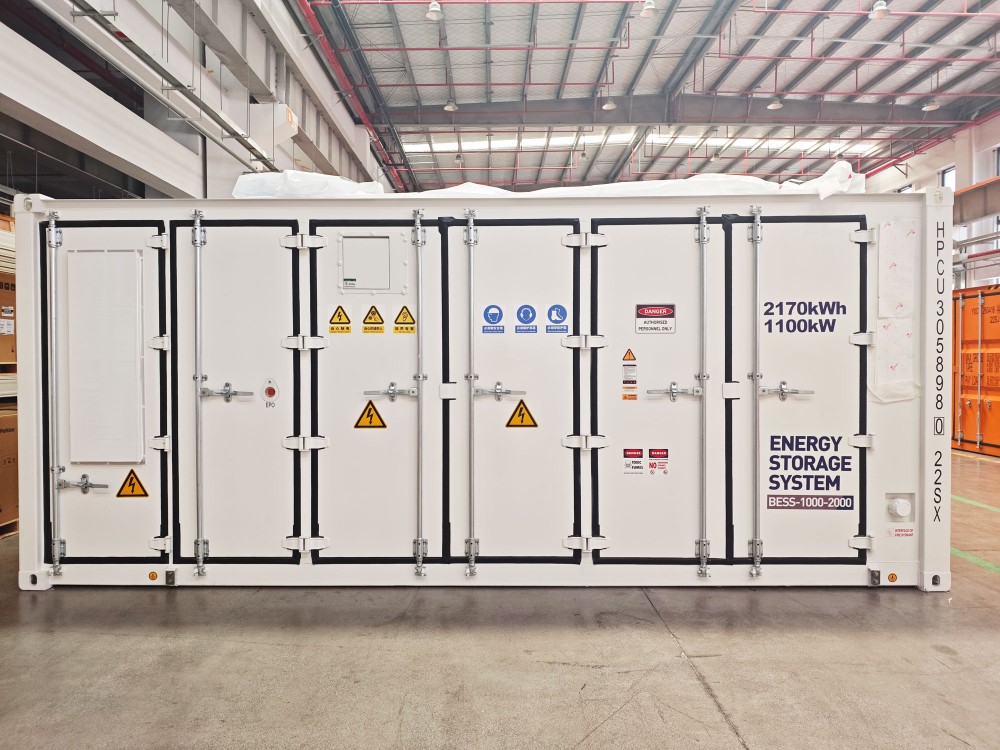 MPMC HBD-1000-2000 battery energy storage unit, the largest model in the HBD-A Series at 1,125 kW and 2,170 kWh.
Demand Charge Reduction With a Quantified Result
For peak shaving and demand-charge reduction, the EMS charges the BESS during off-peak hours using lower-cost grid electricity and discharges during peak demand periods, reducing the maximum kW draw a facility is billed against. MPMC's Dubai concrete batching plant case, combining an HBD-500-1000 with three 500 kVA gensets, documents an estimated 20% operating expenditure reduction from this peak-shaving function specifically.
Protection and Environmental Ratings
All HBD-A models carry IP54 protection at the system level and IP67 for the battery pack itself, with a maximum altitude rating of 3,000 metres above sea level (derating above 2,000 metres) and an operating temperature range of −20°C to 55°C — specifications a facilities engineer should confirm directly against the installation's rooftop, ground-level, or high-altitude siting conditions before finalising a large-scale order.
Self-Consumption Optimisation With Rooftop Solar
Where a facility has rooftop PV already installed or planned, the HBD-A stores excess midday solar generation and delivers it during evening demand peaks, maximising PV self-consumption rates — MPMC documents self-consumption rates above 90% achievable through this buffering approach as part of its zero-carbon industrial park solution architecture.
| Model | AC Power | Battery Capacity |
|---|---|---|
|
HBD-125-260 |
125 kW |
261 kWh |
|
HBD-500-1000 |
500 kW |
1,045 kWh |
|
HBD-1000-2000 |
1,125 kW |
2,170 kWh |
A Smaller-Scale European Peak-Shaving Reference
Not every C&I facility needs multi-MWh scale: MPMC's Netherlands 3.2 MWh peak-shaving microgrid, combining 125 kW–260 kWh and 100 kW–200 kWh configurations, demonstrates the same HBD-A platform applied at a considerably smaller commercial scale, giving a mid-sized facility a documented reference closer to its own likely capacity requirement than the larger Hungary or Netherlands frequency-regulation projects.
Specifying a Large-Scale C&I BESS
• Size total capacity against your facility's actual peak demand reduction target, not an arbitrary round number
• Confirm which control modes (PQ, VF, VSG) are supported if grid frequency regulation is a requirement
• Request quantified demand-charge or OPEX reduction data from a comparable documented deployment
• Verify seamless versus gap on-grid/off-grid switching depending on your critical-load tolerance
• Confirm rooftop PV integration compatibility if self-consumption optimisation is a goal
• Ask about expandability if your facility's power or capacity needs may grow beyond the initial installation
Recent Posts



Contact US
Product Information
Quantity
Unit
Piece
Support order samples, customization, wholesale direct, and complete payment. If the product you look for does not have corresponding customized content, pls fill out the form below to contact us, and we will reply ASAP.