


Language
A Battery Energy Storage System for an EV Charging Station With Limited Grid Capacity
Nov 02, 2026
MPMC POWERTECH CORP., established in 2008 and headquartered in Shanghai Pudong, manufactures the stationary and mobile battery energy storage systems that EV charging station operators specify when the site's grid connection cannot support the peak demand of multiple vehicles fast-charging at once. This is fundamentally a demand-charge and peak-shaving problem, the same challenge MPMC's HBD-A Series solves for industrial facilities, applied specifically to EV charging infrastructure. This article covers how a stationary BESS buffers charging demand, a documented grid-connected EV charging deployment, and how to decide between a stationary HBD-A system and a mobile BCH unit for this application.
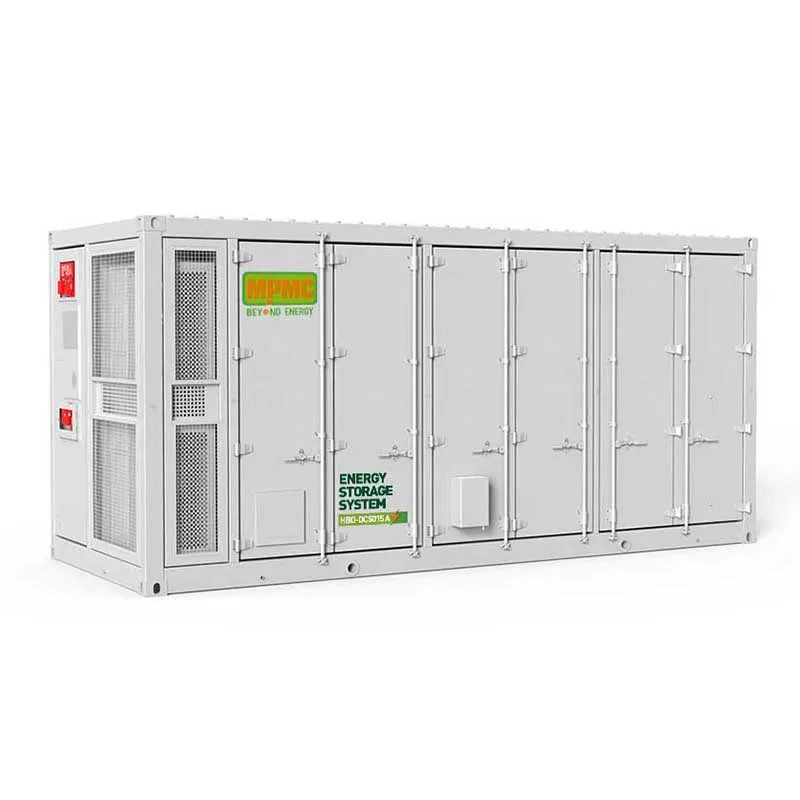
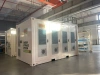
 MPMC HBD-A Series battery energy storage system configured for grid-capacity-limited applications
Why EV Charging Demand Is a Peak-Shaving Problem
An EV charging station's grid connection is typically sized against an assumed average utilisation, but actual demand arrives in short, high-power bursts when several vehicles plug in simultaneously — a profile that closely resembles the demand-charge problem MPMC's HBD-A Series was built to solve for commercial and industrial facilities. Rather than paying for a grid upgrade sized to the rare worst-case charging peak, a battery buffer lets the site draw a lower, steadier average load from the grid while still delivering full charging power to vehicles during peak periods.
This distinction matters because a grid capacity upgrade to cover a rare worst-case scenario is often the most expensive and slowest-to-approve part of building charging infrastructure, while the battery buffer approach can bring a site into service against the grid connection it already has, with the upgrade decision deferred until — or avoided entirely if — actual utilisation growth genuinely requires it.
Sizing HBD-A for a Charging Station's Peak Demand
The HBD-A Series spans from the HBD-125-260 (125 kW / 261 kWh) up to the HBD-1000-2000 (1,125 kW / 2,170 kWh), with a DC-coupled HBD-DC 5000 variant reaching 5,015 kWh for the largest sites, all on liquid-cooled LFP cells rated for 8,000 cycles at 90% depth of discharge. All models support on-grid/off-grid switching and external inverter integration, so the same platform used for industrial demand-charge management applies directly to a charging station's grid-buffering requirement.
The table below highlights three representative HBD-A models for different charging-site scales; it does not list every available model or configuration.
| Model | AC Power | Capacity | Fit for Charging Sites |
|---|---|---|---|
|
HBD-125-260 |
125 kW |
261 kWh |
Small site, few simultaneous chargers |
|
HBD-500-1000 |
500 kW |
1,045 kWh |
Mid-scale site, multiple fast chargers |
|
HBD-1000-2000 |
1,125 kW |
2,170 kWh |
Large hub, high simultaneous demand |
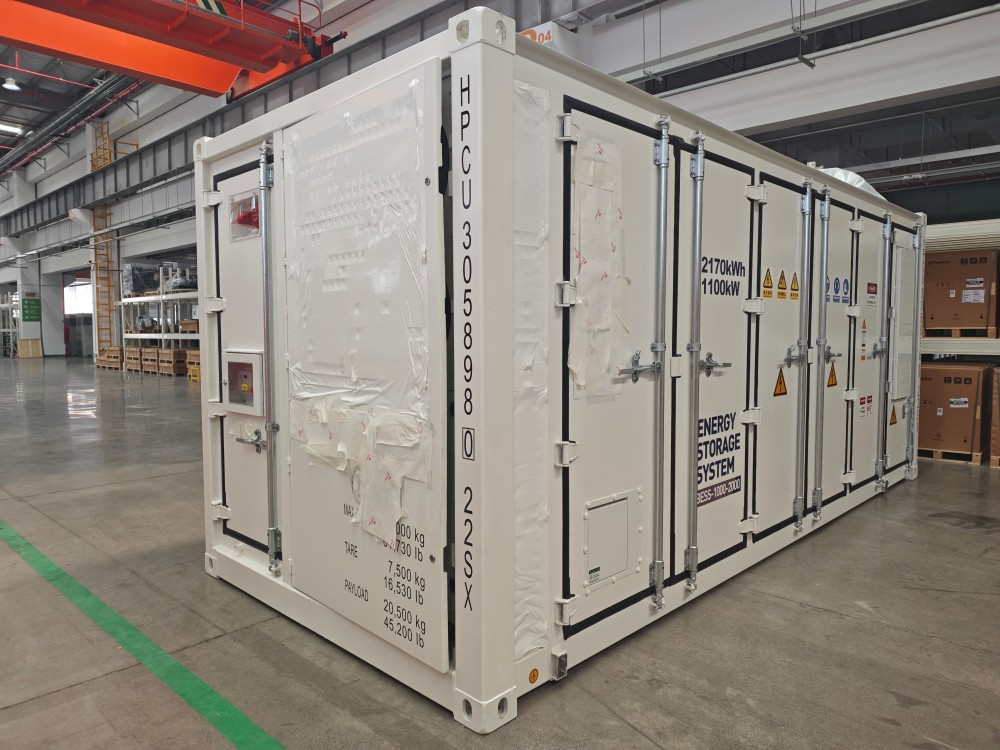 MPMC HBD-A Series large-capacity battery energy storage unit — HBD-1000-2000, for high-demand charging applications
Case Reference: Grid-Connected EV Charging, Netherlands
MPMC has delivered a Netherlands optical storage grid-connected EV charging station combining BCH-275-200 and BCH-500-1000 units at approximately 1 MWh scale — a mobile-charger-based approach to the same underlying grid-capacity problem, buffering peak vehicle charging demand against the site's existing grid connection. This project demonstrates the buffering principle in a charging-specific context, whether the buffering battery is packaged as a stationary HBD-A system or built into a mobile BCH charging unit. The same underlying logic also appears in MPMC's Dubai concrete batching plant case, where an HBD-500-1000 paired with on-site gensets reduced peak grid draw by roughly 20% — a non-charging example of the identical demand-buffering principle applied to a different type of intermittent, high-power load.
Stationary HBD-A or Mobile BCH: Which Fits a Given Site
The choice between a stationary HBD-A system and a BCH mobile charger with integrated storage depends on the site's permanence and configuration. A fixed charging station with a known, stable layout is typically better served by a stationary HBD-A system paired with separately installed chargers, since the HBD-A's larger capacity range and grid-services functionality (frequency regulation, self-consumption optimisation) extend beyond charging alone. A site that may relocate, expand incrementally, or needs the charger and battery as one delivered unit is better matched to BCH, which integrates the battery and charging hardware into a single deployable package.
A third scenario worth considering is a phased rollout: an operator uncertain about final site layout or long-term demand can start with a BCH mobile unit to prove out demand at a location, then transition to a larger stationary HBD-A installation once utilisation and layout are established, rather than committing to permanent infrastructure before the site's actual usage pattern is known.
Where MPMC Sits Against Other Charging-Site BESS Suppliers
MPMC's advantage for this application is offering both the stationary HBD-A and mobile BCH product lines from one manufacturer, so a charging network operator planning a mix of permanent hub sites and smaller or temporary locations can source both battery formats without switching suppliers. Competing suppliers focused only on stationary C&I storage, or only on mobile EV charging hardware, require an operator to manage two separate vendor relationships to cover the same range of site types.
Both product lines also share the same underlying LFP cell technology and warranty philosophy, so an operator standardising on MPMC across a mixed rollout of stationary and mobile sites is dealing with one set of technical documentation and one after-sales relationship rather than reconciling specifications from two unrelated manufacturers.
| Element | Single-Format Supplier | MPMC |
|---|---|---|
|
Stationary BESS (HBD-A) |
Available from some |
Yes, 125 kW–1,125 kW+ range |
|
Mobile charger + battery (BCH) |
Available from others |
Yes, 80 kW–600 kW range |
|
Single-supplier coverage |
Requires two vendors typically |
Both formats from MPMC |
Checklist: Choosing a BESS for a Grid-Limited Charging Site
• Confirm the site's existing grid connection capacity and its peak charging demand gap
• Decide whether the site is permanent (favouring stationary HBD-A) or flexible/temporary (favouring BCH)
• Size battery capacity against simultaneous vehicle charging scenarios, not average utilisation
• Confirm on-grid/off-grid switching mode (gap vs seamless) meets the site's continuity requirement
• Ask whether additional grid services (frequency regulation, self-consumption) are wanted beyond charging support
• Verify warranty terms for the expected charging cycle frequency at the site
• Confirm remote monitoring coverage for unstaffed charging locations
• Request a documented reference deployment of a comparable charging application
Questions EV Charging Station Operators Ask
By absorbing short peak demand when multiple vehicles charge simultaneously, the battery lets the site draw a lower, steadier average load from the grid, similar to how demand-charge peak shaving works for industrial facilities.
A permanent site with a stable layout typically favours stationary HBD-A paired with separate chargers, while a site that may relocate or expand incrementally is better matched to BCH, which packages the battery and charger together.
Yes, if using HBD-A: the platform supports frequency regulation and self-consumption optimisation alongside charging demand buffering, functionality that a charging-only mobile charger battery is not typically configured to provide.
The HBD-500-1000, at 500 kW / 1,045 kWh, is positioned for mid-scale sites with multiple fast chargers, while larger hubs with higher simultaneous demand would look at the HBD-1000-2000 or a DC-coupled HBD-DC 5000 configuration.
Yes. A phased approach using a BCH mobile unit to prove out demand and layout before committing to a stationary HBD-A installation is a practical way to avoid over-building permanent infrastructure before actual site utilisation is established.
Recent Posts

October 26, 2016
The Most Successful Engineering Contractor


Oct 22, 2026
Chinese Liquid-Cooled Battery Energy Storage Brands

Contact US
Product Information
Quantity
Unit
Piece
Support order samples, customization, wholesale direct, and complete payment. If the product you look for does not have corresponding customized content, pls fill out the form below to contact us, and we will reply ASAP.