


Language
Find a Grid-Connected BESS for Peak Shaving, Frequency Regulation, and Emergency Backup
Sep 08, 2026
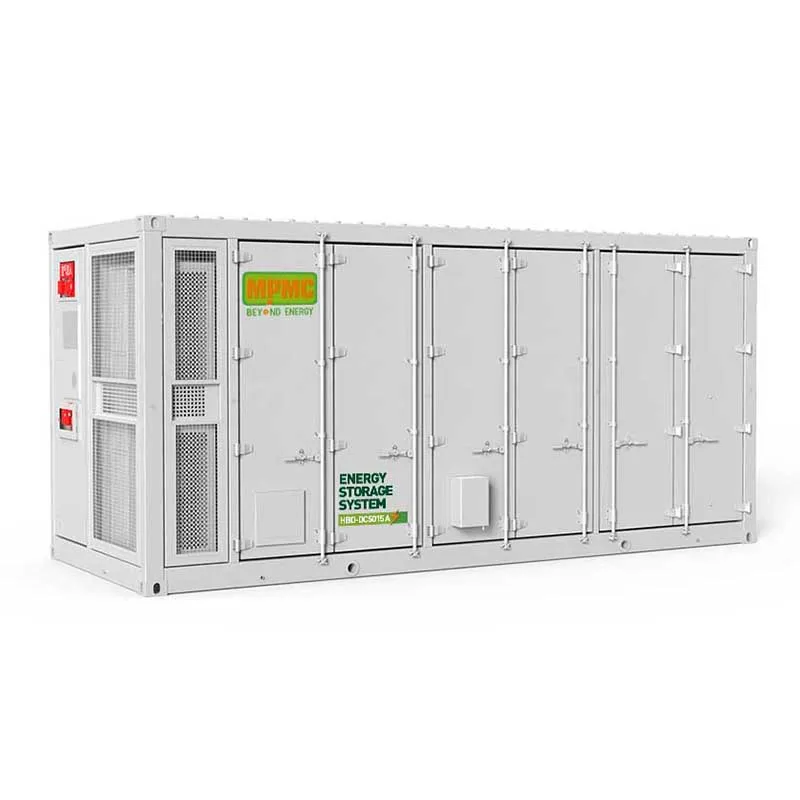
A single BESS asset connected to the grid is commonly asked to do three different jobs depending on the hour: hold grid frequency steady, shave the demand peaks that drive a utility bill, and step in as backup the moment supply is interrupted. Buying for only one of those roles usually leaves value on the table. MPMC POWERTECH CORP., established in 2008 and headquartered in Shanghai Pudong, positions its HBD-A Series BESS to run all three from one EMS.
Three Jobs, One Battery
Grid instability shows up as frequency deviations and voltage fluctuations that a utility increasingly pays to have corrected quickly; demand charges are billed on peak kW draw rather than total kWh consumed, so shaving the peak reduces the bill even if total consumption is unchanged; and emergency backup only has value if the transition from grid to stored power is fast enough that connected equipment never notices. MPMC's HBD-A Series is built to move between these roles under EMS control rather than being fixed to a single duty.
How the EMS Decides What the Battery Does Next
MPMC's self-developed EMS supports PQ mode for active and reactive power control on a grid-connected system, VF mode for independent voltage and frequency control when operating off-grid, VSG (Virtual Synchronous Generator) mode to emulate inertia and improve grid stability, black start for independent power restoration after an outage, and grid-forming operation to establish a stable network where none exists. Reactive power regulation runs across the full range of the PCS units, and the EMS coordinates all of this with real-time monitoring, alarm management and remote control through MPMC's self-developed SCADA.
Frequency Regulation in Practice
MPMC's documented 8 MWh green power plant in Hungary, built from two HBD-500-1000 and three HBD-1000-2000 units, provides frequency regulation, peak shaving and load balancing for the site. An 8 MWh grid-connected frequency-regulation plant in the Netherlands, built from four 2 MWh HBD-A units, and a smaller 3.2 MWh peak-shaving microgrid combining HBD-A and HBD-R units, demonstrate the same principle at different scales — millisecond-level response to a frequency deviation is a function of the PCS and EMS, not simply of how large the battery is.
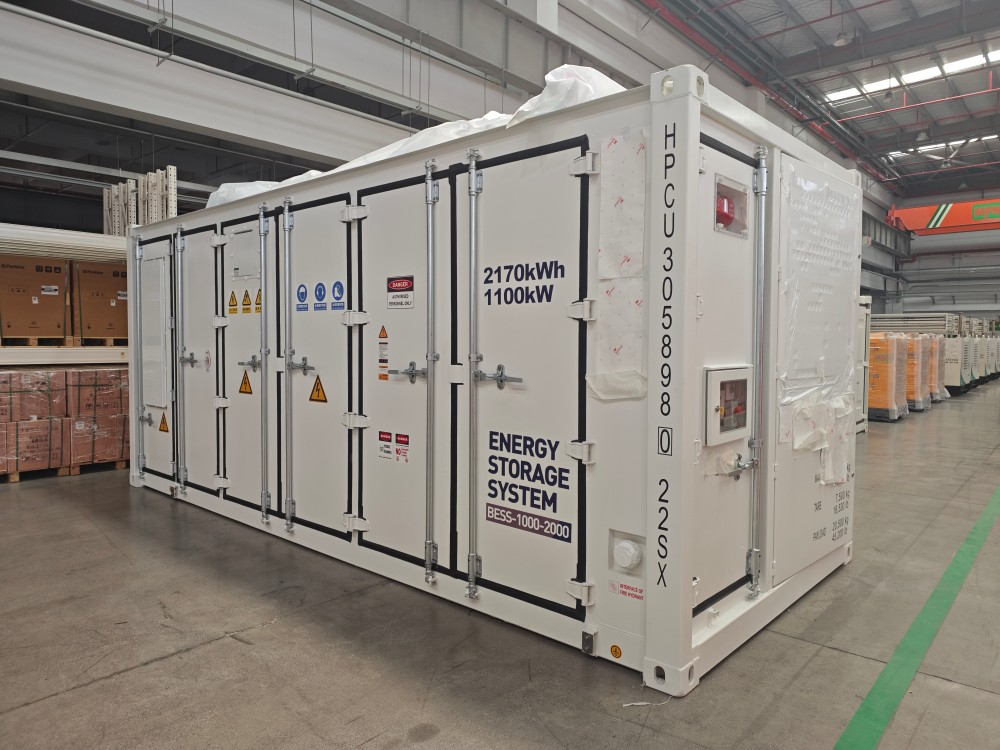 MPMC HBD-A Series battery energy storage system — HBD-1000-2000
Peak Shaving and the Demand Charge Arithmetic
The mechanism is straightforward: the EMS charges the battery from the grid during off-peak, lower-cost hours and discharges it during the periods that would otherwise set a new peak demand figure, reducing the maximum kW draw a utility bills against. The same charge-at-low-cost, discharge-at-peak logic applies where a site pairs storage with its own generator sets instead of the grid — MPMC's documented off-grid concrete batching plant in Dubai illustrates the fuel-side version of the same arithmetic.
| Metric | Dubai Off-Grid Case, per Station |
|---|---|
|
Configuration |
HBD-500-1000 (500 kW / 1,045 kWh) + 3×500 kVA gensets |
|
Daily fuel saving |
254.13 L (10.56% reduction) |
|
Annual fuel saving |
≈92,757 L (≈USD 70,496 at $0.76/L) |
|
OPEX reduction |
≈20% |
|
Genset life extension |
2–3 years |
|
CAPEX payback on the storage premium |
2–3 years |
The station's EMS runs a three-phase logic: the battery discharges while one genset holds its optimal load point near 75%, multiple gensets parallel to recharge the battery at up to 500 kW when needed, and the gensets provide mutual redundancy failover — the same dispatch discipline a grid-connected demand-charge application uses, applied instead to fuel cost and generator wear.
Emergency Backup and the Switching Question
On-grid to off-grid switching is standard on MPMC's HBD-R series, while the HBD-A series defaults to a brief transition gap, configurable to seamless switching where the application requires it — this is a setting to confirm explicitly against the load's actual ride-through tolerance rather than assume. Black start and grid-forming capability mean the same asset that shaves peaks by day can restore power to a site independently after a wider outage.
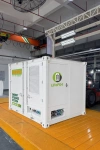
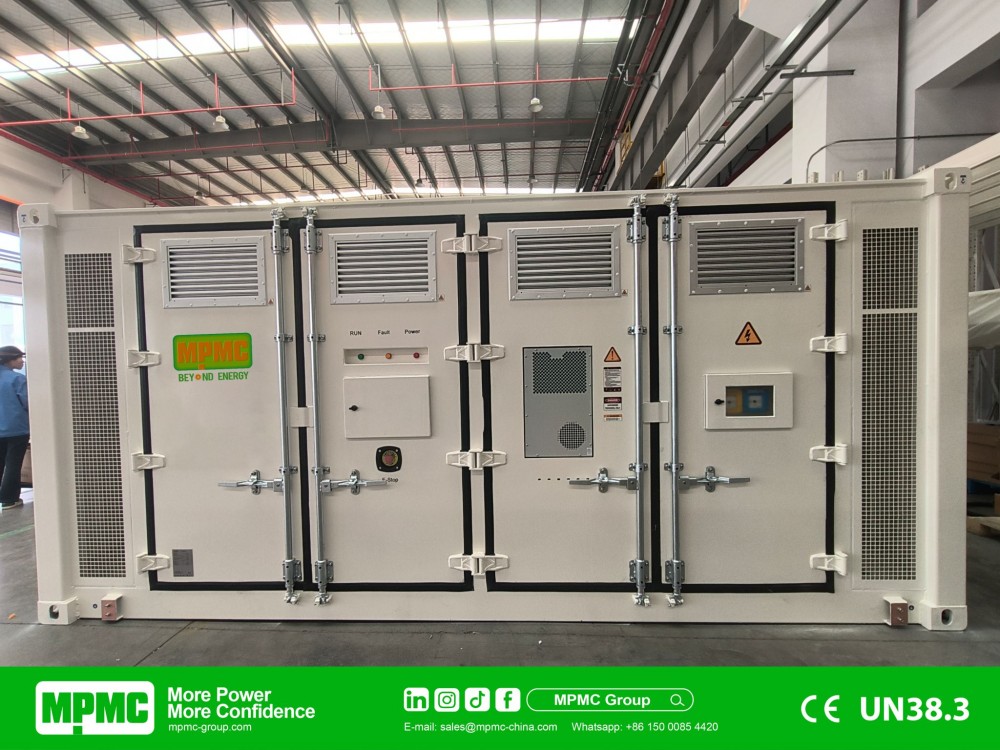 MPMC HBD-A Series battery energy storage system — HBD-500-1000
Self-Consumption With an Existing PV Array
Paired with rooftop PV, the HBD-A stores excess midday solar generation and releases it during the evening demand peak, which MPMC states raises PV self-consumption rates — the same battery capacity doing peak shaving by day and self-consumption optimisation by evening are not separate purchases, just separate EMS schedules against the same asset.
Documented Grid-Connected Deployments
Beyond Hungary and the Netherlands, MPMC's reference list includes a Chinese oil and gas wellhead peak-shaving plant built from six 2C, 250 kWh units totalling 3 MW, demonstrating the same HBD-A platform applied to an industrial grid connection rather than a utility-scale one.
Confirming the System Is Ready When Needed
A backup role is only as good as its readiness, which is why MPMC builds real-time alarm and fault management into the same SCADA platform that runs the day-to-day peak-shaving and frequency-regulation schedule — the operator sees the same system state whether it is quietly shaving a demand peak or actively holding a site through an outage. All HBD-A models carry IP54 protection at the system level and IP67 at the battery pack level, and are rated to 3,000 metres altitude with derating above 2,000 metres, which is worth checking explicitly for a site at altitude or in a high-humidity coastal location.
Questions to Settle Before Sizing the System
• Establish which of the three duties — frequency regulation, peak shaving or backup — is the primary design driver, since it changes the sizing logic.
• Confirm whether seamless or gap-transition switching is required for the connected load.
• Request the actual demand profile before sizing power (kW) and capacity (kWh) separately — they answer different questions.
• Decide whether the system needs to accept direct PV input or only AC-coupled solar.
• Confirm the grid code compliance and reactive power requirements for the specific utility territory.
• Verify altitude and ambient derating for the installation site.
• Ask for the EMS dispatch logic in writing, not just the hardware specification.
• Confirm the warranty basis — system years versus MWh throughput — against the expected annual cycling rate.
Questions Facility Managers Ask
MPMC's HBD-A Series is designed to move between these roles under EMS control, supporting PQ, VF, VSG, black start and grid-forming modes, rather than being fixed to a single function, though the EMS schedule still needs to be configured for the site's actual priority order.
Seamless on-grid/off-grid switching is standard on MPMC's HBD-R series; the HBD-A series defaults to a brief transition gap, which can be configured to seamless switching where the application requires it.
The EMS charges the battery during off-peak, lower-cost hours and discharges it during the periods that would otherwise set a new peak kW demand figure, since demand charges bill against peak draw rather than total energy consumed.
MPMC's Dubai off-grid concrete batching plant case documents a 10.56% daily fuel reduction and roughly 20% OPEX reduction per station using the same charge-low, discharge-high dispatch logic applied to generator fuel cost rather than a grid tariff.
Yes. Paired with rooftop PV, the HBD-A stores excess midday generation and releases it during the evening peak, which MPMC states increases the site's PV self-consumption rate.
Recent Posts

October 26, 2016
The Most Successful Engineering Contractor
Oct 22, 2026
Chinese Liquid-Cooled Battery Energy Storage Brands


Contact US
Product Information
Quantity
Unit
Piece
Support order samples, customization, wholesale direct, and complete payment. If the product you look for does not have corresponding customized content, pls fill out the form below to contact us, and we will reply ASAP.