


Language
Battery Energy Storage Systems for Microgrid Applications
Sep 23, 2026
A microgrid depends on its battery storage for a role well beyond simple energy buffering: black-starting the system independently, forming grid voltage and frequency when the microgrid is islanded, and dispatching seamlessly between solar, diesel, and stored energy as conditions change. A BESS specified for grid-tied peak shaving alone frequently lacks the control modes a genuine microgrid application requires.
Grid-Forming and Black-Start Capability
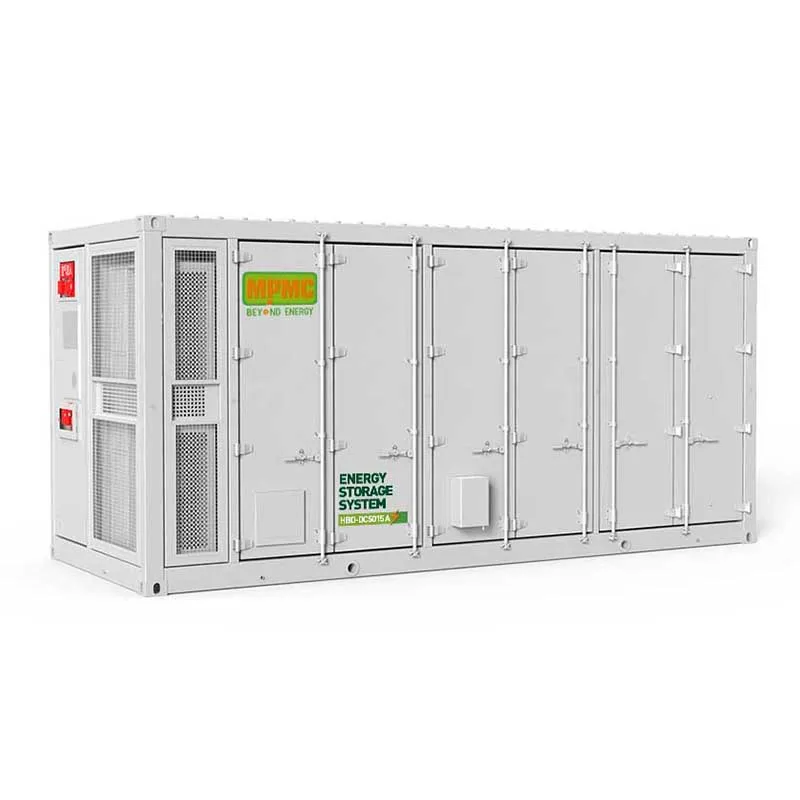
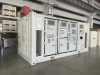
MPMC's HBD-A Series supports PQ mode (active/reactive power control), VF mode (independent voltage/frequency control), and VSG or Virtual Synchronous Generator mode, alongside black-start capability and grid-forming operation — the specific combination of functions a microgrid needs to operate both grid-tied and fully islanded, and to restart the system from a complete outage without external grid support.
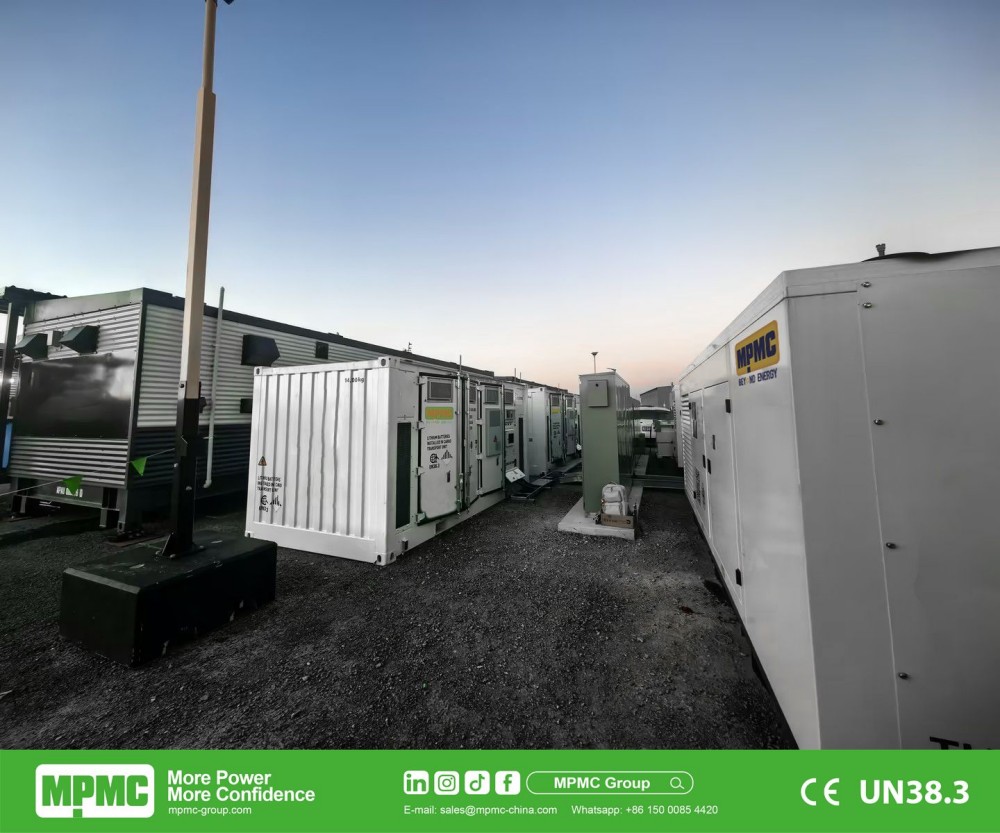 MPMC HBD-A Series battery energy storage units, providing grid-forming and black-start capability for microgrid applications.
A Documented Four-Site Microgrid in Kenya
MPMC's remote-area electricity supply project in Kenya combines a light-diesel-storage hybrid microgrid architecture across four sites, each pairing 1 MW of solar PV with at least 1 MWh of battery storage and 2×500 kW plus 2×250 kW diesel generator sets, totalling 6 MWh of coordinated capacity. The battery system runs at 80% DOD over 6,000 cycles in a DC-coupled, dual-unit redundant configuration, coordinated by MPMC's self-developed SCADA and EMS with Starlink satellite backup communication, and MPMC documents this deployment as delivering stable 24/7 power in a high-UV, sandy, grid-fluctuating environment with seamless solar-diesel switching.
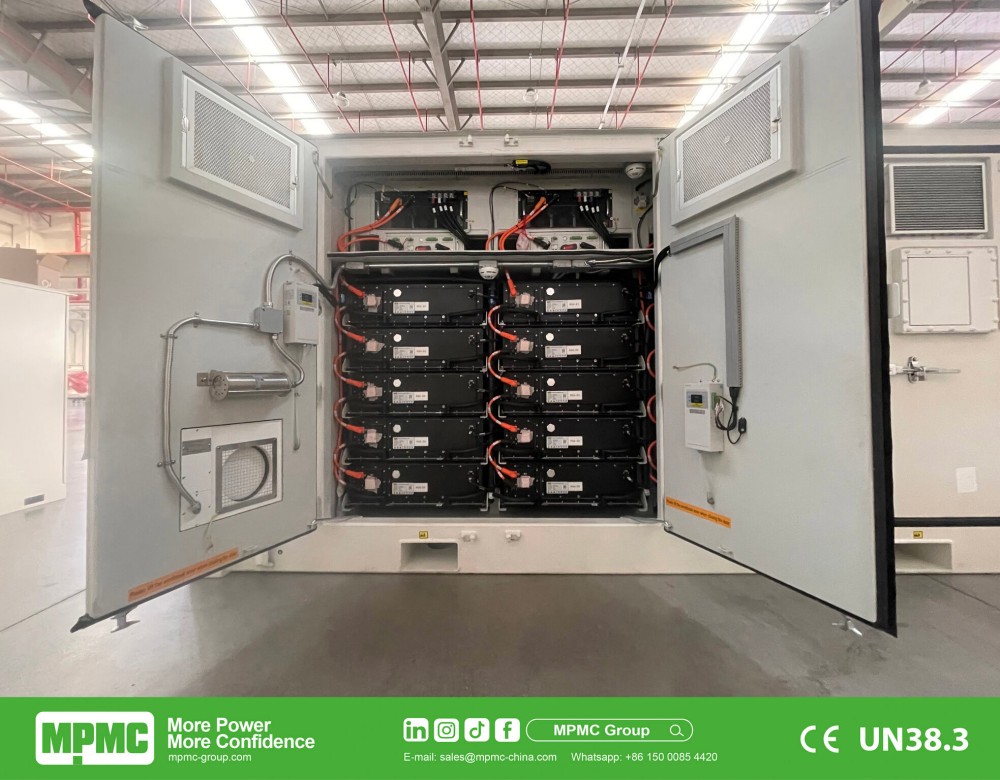 MPMC HBD-A Series — HBD-500-1000, multi-unit battery energy storage array, sized for coordinated microgrid dispatch alongside solar and diesel generation.
High-Voltage Distribution for Larger Microgrids
For a microgrid serving an island industrial zone or a large factory footprint, MPMC's MCLS2000H(S)-1 delivers 2,000 kVA prime power at 11,000 V, enabling direct high-voltage distribution with reduced transmission losses over the long cable runs typical of an extended microgrid layout — a detail relevant when the microgrid's physical footprint, rather than its total generation capacity, is the binding design constraint.
Coordinating Multiple Power Sources Through One EMS
A microgrid's practical reliability depends less on any single power source and more on how well solar, storage, and diesel generation are coordinated moment to moment. MPMC's EMS and self-developed SCADA platform manages this coordination directly, and the same platform supports real-time remote monitoring with ten-year data retention and an SL3 cybersecurity framework — relevant specifically for a microgrid site where a communications or control failure can mean the entire islanded system loses coordinated dispatch.
Sizing Storage to the Microgrid's Actual Islanding Duration
A microgrid's battery capacity needs to be sized against how long the system needs to run in a fully islanded state without diesel or grid support, not simply against its daily energy throughput. MPMC's HBD-A range, from 261 kWh up to 2,170 kWh per unit and expandable through multi-unit configurations, gives a system designer the flexibility to size storage against a specific islanding-duration target rather than a fixed catalogue capacity.
| Requirement | HBD-A Capability | Kenya Reference |
|---|---|---|
|
Islanded operation |
Grid-forming, VF mode |
4 sites, fully islanded diesel-storage-solar |
|
Black start |
Native black-start capability |
Dual-unit redundancy per site |
|
Remote coordination |
Self-developed SCADA/EMS, Starlink backup |
10-year data retention, SL3 cybersecurity |
Specifying BESS for a Microgrid Application
• Confirm grid-forming, black-start, and VSG mode support if the microgrid needs to operate fully islanded
• Size battery capacity against your required islanding duration, not average daily throughput alone
• Verify the EMS coordinates all power sources (solar, diesel, storage) under a single dispatch logic
• Confirm remote monitoring and communication backup for sites with limited on-site staffing
• Request a documented multi-site or multi-source microgrid reference at comparable scale
• Ask about dual-unit or N+1 redundancy if continuous operation is a hard requirement
Recent Posts





Contact US
Product Information
Quantity
Unit
Piece
Support order samples, customization, wholesale direct, and complete payment. If the product you look for does not have corresponding customized content, pls fill out the form below to contact us, and we will reply ASAP.