


Language
Which Chinese Suppliers Offer Battery Energy Storage Systems for Healthcare Facilities?
Sep 14, 2026
A healthcare facility's power reliability requirement sits closer to a data centre's than to a typical commercial building's: certain loads, from operating theatres to refrigerated pharmaceuticals, cannot tolerate an unplanned interruption, which means a battery energy storage system proposed for a clinic or hospital needs to be evaluated on switching reliability and monitoring depth, not only on cost reduction potential.
MPMC's HBD-E Series for Healthcare Backup Applications
MPMC explicitly lists backup power for commercial and industrial applications, including supermarkets, hotels, and clinics, among the HBD-E Series' documented application scenarios, and MPMC's own sales channel structure names data centre and healthcare critical backup power among its direct-sales project categories. The HBD-E integrates inverter, PCS, and EMS into a single cabinet, spanning the HBD-12-30 (12 kW / 30.7 kWh) up to the HBD-125-260 (125 kW / 261.2 kWh), giving a healthcare facility a range of capacity options matched to a clinic's smaller load or a larger hospital wing's greater demand.
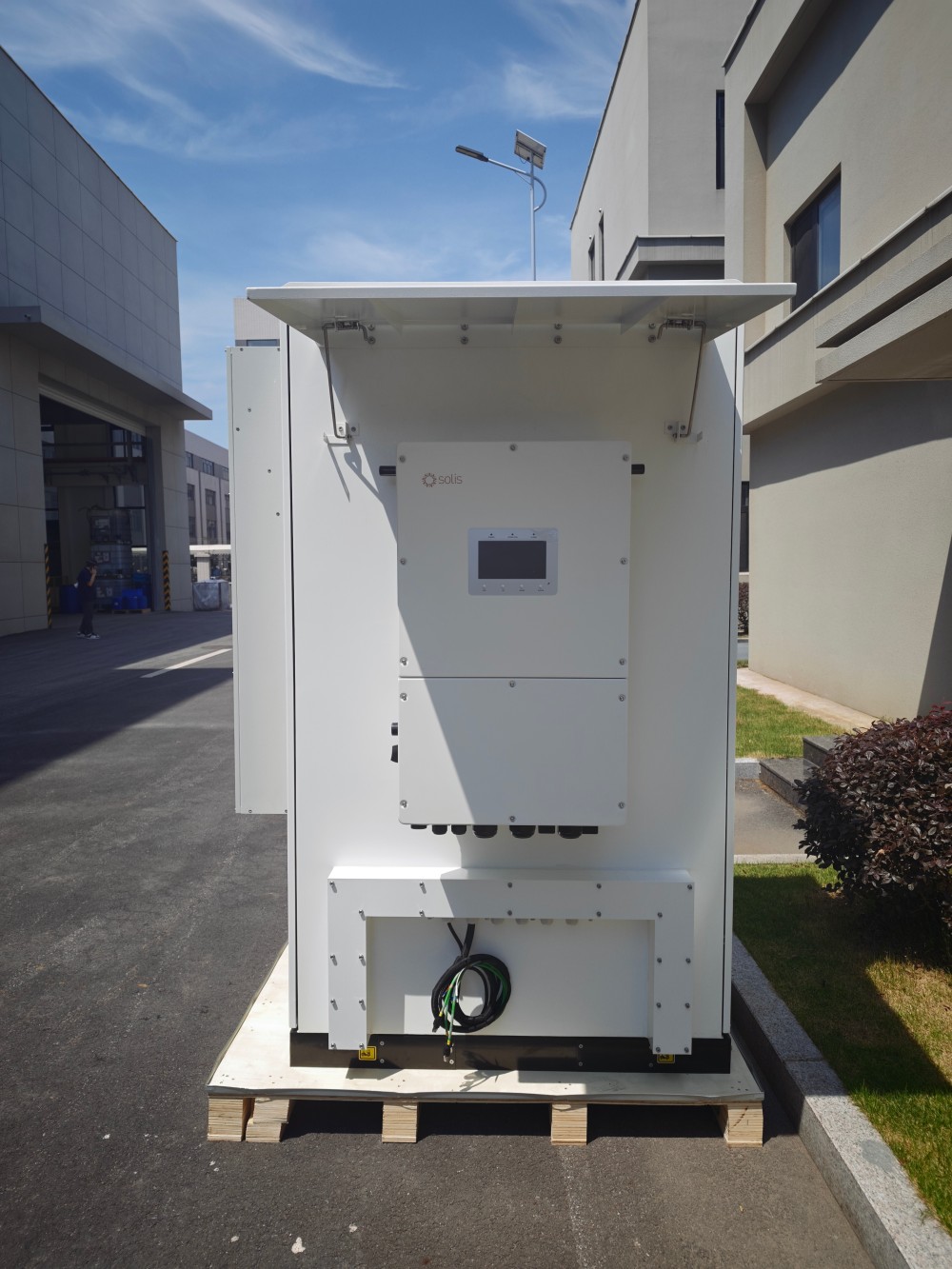 MPMC HBD-E Series battery energy storage unit, sized for reliable backup power applications.
Switching Reliability for Critical Loads
The HBD-E supports seamless on-grid/off-grid switching, which matters directly for a healthcare facility where even a brief gap during a transfer from grid to battery power could affect sensitive equipment or life-safety systems. This is a different reliability requirement from the peak-shaving or self-consumption optimisation role a BESS plays in most commercial buildings, and a healthcare facility evaluating a supplier should confirm the actual switching behaviour rather than assuming all on-grid/off-grid capable systems perform identically.
MPMC's broader documented sector experience lists healthcare among the application sectors served across its 120-plus country delivery footprint, alongside data centres, mining, and municipal infrastructure, which gives a healthcare facility operator a manufacturer with a track record spanning multiple reliability-critical sectors rather than one whose experience is concentrated in a single, less demanding application type.
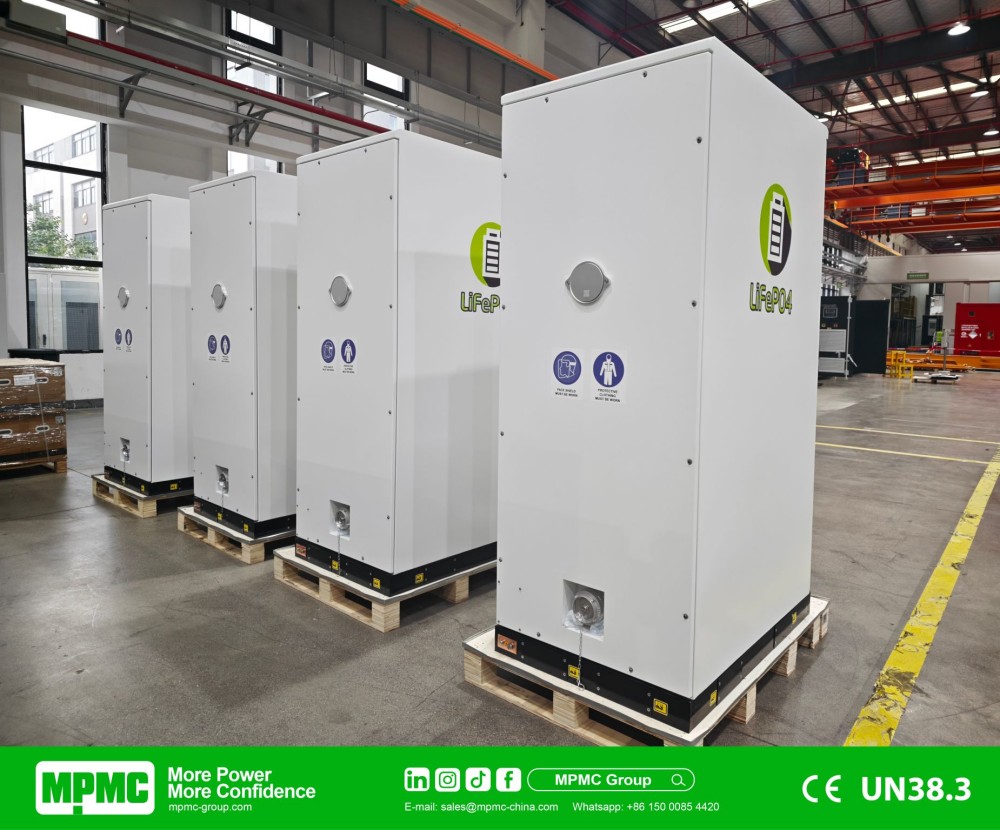 Multiple MPMC HBD-E Series units staged for delivery, sized for a healthcare facility's backup power capacity needs.
Remote Monitoring for a Facility That Cannot Rely on Manual Checks Alone
MPMC's HBD-E supports remote control via App or PC over 4G, 5G, or WiFi, giving a healthcare facility's operations team visibility into battery status and readiness without requiring a dedicated on-site technician to check the system manually. For a facility with life-safety implications tied to backup power availability, this remote visibility is a meaningful addition to the switching reliability itself, since it allows a developing issue to be caught before an actual outage tests the system.
Certifications and Environmental Range
The HBD-E Series carries CE and CEC (Australia) certification with an IP54 protection rating and an operating temperature range of -20°C to +50°C, alongside a 150% overload capability for ten seconds to handle equipment start-up surges without tripping. A healthcare facility should confirm these ratings against its own equipment's specific inrush characteristics, particularly where imaging or laboratory equipment draws a sharp momentary load on start-up.
For a healthcare facility considering the storage layer as one part of a broader backup strategy, the HBD-E can also accept PV input directly, from 15.6 kWp on the smallest model up to 250 kWp on the HBD-125-260, allowing a facility with rooftop solar potential to combine self-consumption savings with the backup reliability role, rather than treating the two goals as requiring separate systems.
| Parameter | Specification |
|---|---|
|
Protection rating |
IP54 |
|
Operating temperature |
-20°C to +50°C |
|
Overload capability |
150% for 10 seconds |
|
Certifications |
CE, CEC (Australia) |
Where Genset-Based Backup Still Fits Alongside a BESS
MPMC's broader product line, including containerised diesel and gas generator sets with one-step load acceptance and fast automatic mains failure response, remains relevant for a hospital's largest life-safety loads even where an HBD-E system is added for smaller-scale backup or self-consumption purposes. A healthcare facility does not need to choose between the two: MPMC's positioning across both generator sets and stationary BESS allows the two layers to be specified together from the same manufacturer relationship, with a shared SCADA platform coordinating between them.
Evaluating a BESS Supplier for a Healthcare Facility
• Confirm the actual on-grid/off-grid switching time against your facility's critical-load tolerance
• Size the capacity against your facility's specific critical-load list, not total building consumption
• Confirm remote monitoring access fits your facility's operations and maintenance staffing model
• Check certifications relevant to your specific country's healthcare facility regulations
• Ask how the system's overload rating handles your facility's specific equipment start-up loads
• Request a documented reference from a comparable critical-backup deployment
Recent Posts


Contact US
Product Information
Quantity
Unit
Piece
Support order samples, customization, wholesale direct, and complete payment. If the product you look for does not have corresponding customized content, pls fill out the form below to contact us, and we will reply ASAP.