


Language
Finding a Mobile Solar-Diesel-Battery Hybrid Power System for Off-Grid and Temporary Projects
Sep 02, 2026
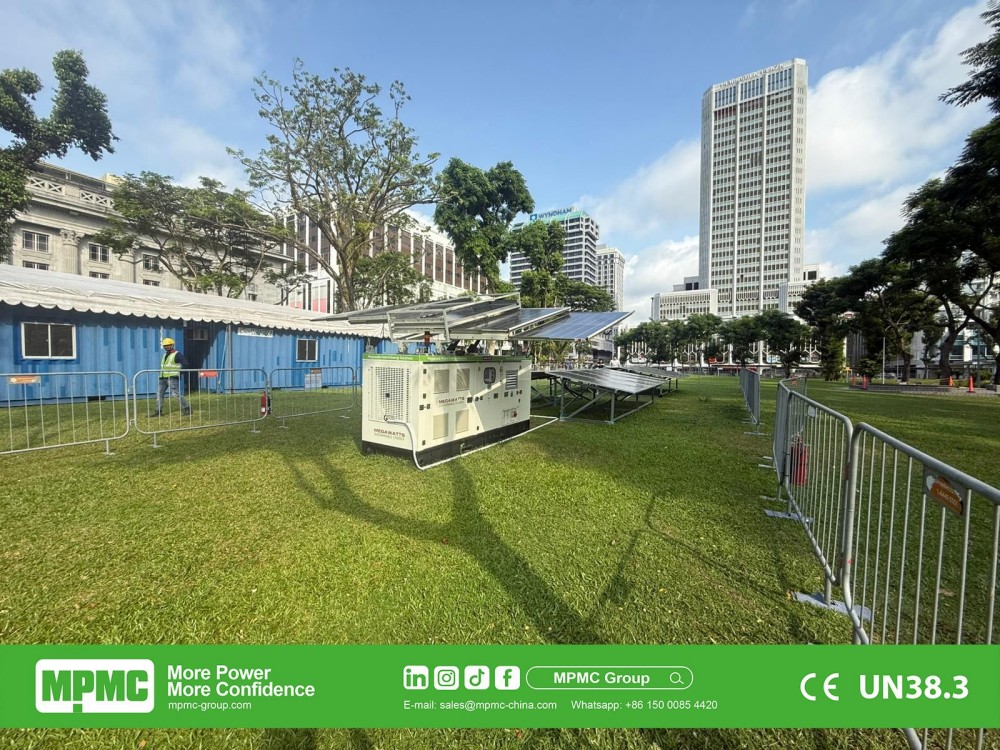
A mobile hybrid system combines three technologies that are usually specified separately, and the value of buying them together is that the control logic arrives already engineered. For an off-grid or temporary project with no permanent electrical staff, that is frequently worth more than optimising any single element. MPMC POWERTECH CORP., established in 2008 and headquartered in Shanghai Pudong, publishes a GSB series combining solar, generator and battery on one mobile chassis.
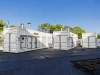
 MPMC GSB-30 hybrid power station
What an Integrated Chassis Delivers
MPMC lists the GSB series from 10 to 120 kVA maximum output with 20.4 to 112.5 kWh of battery capacity and a 2,375 W slide-out photovoltaic array, with engines listed as Perkins, Kubota or Yanmar and published weights from 2,380 kg on the GSB-10 to 4,100 kg on the GSB-60P, with up to four units per 20GP container for shipping.
The unit starts, dispatches and protects itself, which removes the integration exercise that a separately specified arrangement requires. Published warranty for the GSB and GB series is 2 years or 1,500 operating hours for the system, with battery at 3 years or 1.6 MWh per kWh.
Matching the Range to the Project
| Model | Max output | Battery | Genset | Deployment note |
|---|---|---|---|---|
|
GSB-10 |
10 kVA |
20.4–41.0 kWh |
16/20 kW/kVA |
2,380 kg; compact welfare and small site loads |
|
GSB-20 |
20 kVA |
41.0 kWh |
16/20 kW/kVA |
Up to four units per 20GP container |
|
GSB-30 |
60 kVA |
62.7 kWh |
24/30 kW/kVA |
2,375 W integrated slide-out solar array |
|
GSB-40 |
80 kVA |
62.7 kWh |
32/40 kW/kVA |
2,375 W integrated slide-out solar array |
|
GSB-50 |
100 kVA |
112.5 kWh |
40/50 kW/kVA |
4,060 kg; expands to 3,030 × 5,500 × 3,350 mm deployed |
|
GSB-60P |
120 kVA |
112.5 kWh |
48/60 kW/kVA |
4,100 kg; engines listed as Perkins, Kubota or Yanmar |
The deployed dimensions matter as much as the rating on a temporary site, because the array has to open out somewhere that will not be built over or driven across during the project.
When Separate Components Suit Better
An integrated chassis is bounded by what the vehicle can carry. Where the load is larger, the array requirement exceeds the chassis, or the elements need to be positioned apart, separate components serve better at the cost of someone owning the control layer.
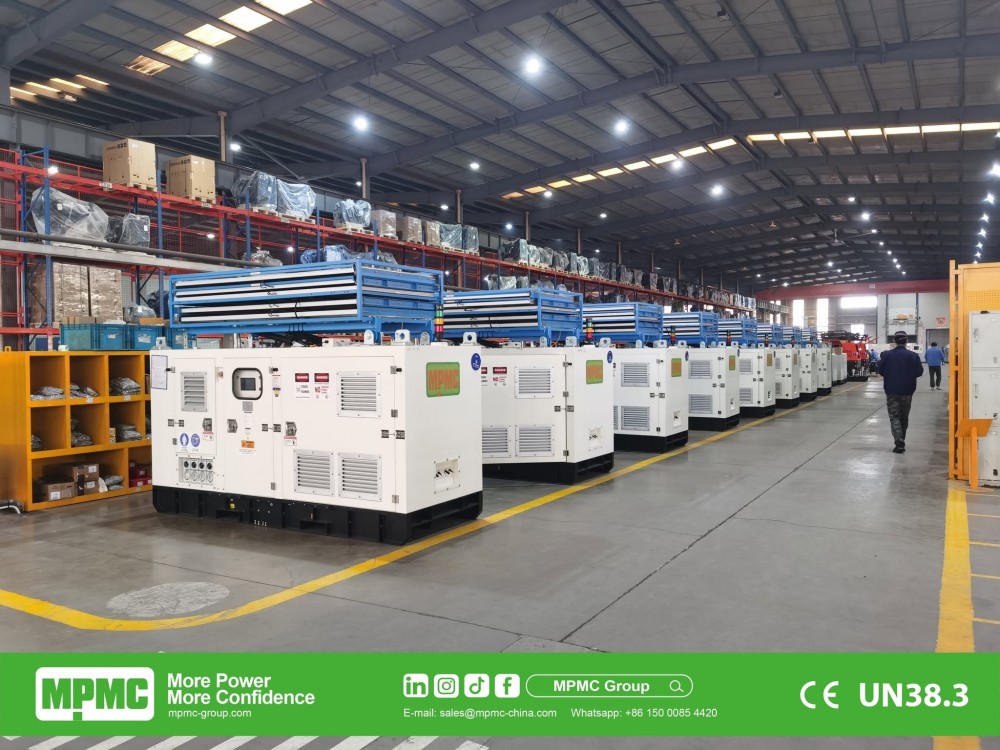
MPMC lists an SPK series of mobile solar plants from 7.65 kWp to 231.84 kWp, an HBD-R storage series from the HBD-30-60 at 30 kW with 61.44 kWh to the HBD-610-610 at 610 kW with 610.6 kWh, and containerised generation from 800 to 3,750 kVA. Where that route is taken, the party accountable for system behaviour should be named in the contract rather than assumed.
 MPMC GSB Series hybrid power station
Where the Fuel Saving Comes From
The mechanism is the same in either configuration. The engine holds a load point near its efficient region while the battery absorbs variation and starting inrush, and during very low demand the engine stops entirely while storage carries the load. Solar displaces engine output during daylight.
MPMC cites fuel reduction of up to 75% against diesel-only operation in low-load conditions, and publishes a United Kingdom construction case in which a 56 kW generator serving a 3 to 6 kW base load gained a 30 kW / 60 kWh unit, after which refuelling moved from every two days to every seven and the maintenance interval extended from every ten days to every sixty. Those figures belong to those installations; the saving scales with how lightly loaded the engine was to begin with.
Dispatch Logic Realises the Result
Hardware sets the ceiling; the control layer determines how much of it is reached. The system must decide when the engine starts, at what state of charge, at what load point it holds, and whether solar is prioritised for direct supply or for charging.
MPMC lists a self-developed SCADA and EMS with intelligent generation dispatch alongside PQ, VF and VSG modes, black start and grid-forming, with weather-forecast-informed optimisation aiming to maximise photovoltaic yield and minimise diesel runtime. Those settings should be agreed and demonstrated at commissioning rather than left at defaults.
Temporary Duty Adds Handling and Redeployment
A temporary installation is defined by an end date, which makes relocation practicality part of the specification. The published weights and container loading figures determine whether a unit moves with equipment the site already has or requires specialist lifting for every move.
Across a portfolio of short projects that difference compounds quickly and frequently outweighs a modest capacity advantage. Storage conditions and state of charge during idle periods between projects also affect the asset's condition at the next deployment and are worth agreeing with the supplier.
Conditions That Reduce the Achievable Output
Three site factors erode published expectations. Soiling reduces photovoltaic output progressively, so an array performing to expectation in the first week may not by the sixth unless cleaning keeps pace. High ambient temperature reduces panel efficiency separately.
Storage carries its own limits, with MPMC listing an operating range of −20°C to +50°C on the HBD-R series and derating above 45°C, alongside a maximum ambient of 50°C with copper high-temperature radiator options on the generation range. Specifying margin above the strict requirement is what absorbs these effects between service visits, and the derated figures rather than nameplate ratings should drive the fuel model.
Hybrid Project Checks
● Log the load profile and split consumption between idling, daytime work and peaks.
● Confirm available area and access before fixing solar capacity.
● Check the deployed footprint against the site layout for the project duration.
● Decide whether an integrated chassis or separate components suits the staff available.
● Where separate, name the party accountable for system behaviour in the contract.
● Settle the dispatch logic and have it demonstrated at commissioning.
● Confirm handling weights and container loading against site access.
● Agree storage conditions and state of charge for idle periods between projects.
Recent Posts

October 26, 2016
The Most Successful Engineering Contractor



Contact US
Product Information
Quantity
Unit
Piece
Support order samples, customization, wholesale direct, and complete payment. If the product you look for does not have corresponding customized content, pls fill out the form below to contact us, and we will reply ASAP.