


Language
What Hybrid Power System Is Suitable for Island Off-Grid Power Supply?
Sep 16, 2026
An island power plant is not a backup system that happens to run more often — it is the only supply, fuel arrives by sea rather than by road, and a technician cannot reach a failed unit within the hour. That combination calls for continuous-duty generation, genuine redundancy, and a fuel strategy that does not depend on a single, uninterrupted delivery schedule. MPMC POWERTECH CORP., established in 2008 and headquartered in Shanghai Pudong, documents island and long-term off-grid power station projects built around exactly this design brief.
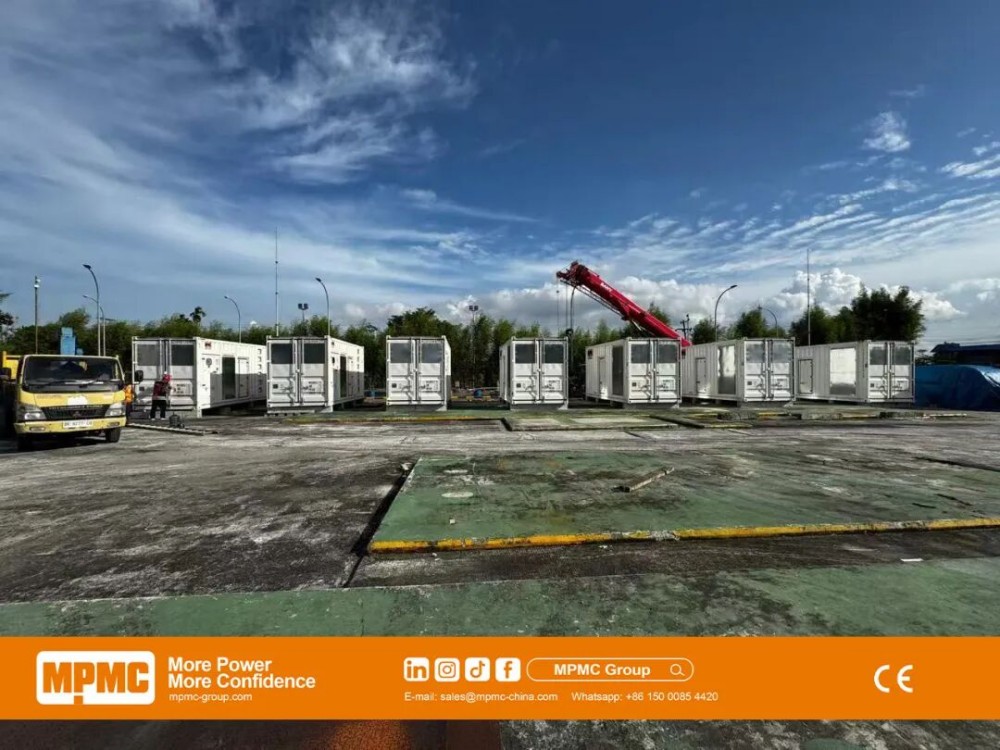 MPMC containerised generator sets delivered for an 18 MW biodiesel-fuelled island power project in Indonesia
Why an Island Power Plant Is Designed Differently From a Backup System
A backup generator is sized against a worst-case outage; an island power plant is sized against continuous, indefinite operation, which shifts the design priorities toward multi-unit redundancy, black-start capability, and a fuel plan that survives a delayed shipment rather than a single missed delivery. MPMC's containerised platform for this scenario runs on Cummins, Perkins, MTU, Baudouin or Scania engines paired with Stamford or Leroy-Somer alternators, rated for operation up to 50°C ambient with ISO 12944 C4/C5 anti-corrosion enclosures for coastal and tropical exposure.
The Generation Backbone: Containerised Gensets Built for Continuous Duty
| Model | Prime Power | Engine | Alternator |
|---|---|---|---|
|
MCLS1000(S)-1 |
1,000 kVA / 800 kW |
KTA38-G5 |
TAL A49 E |
|
MCLS1250(S)-1 |
1,250 kVA / 1,000 kW |
KTA50-G3 |
LSA 50.2 M6 |
|
MCLS1500(S)-1 |
1,500 kVA / 1,200 kW |
KTA50-GS8 |
LSA 50.2 L8 |
|
MCLS1875(S)-1 |
1,875 kVA / 1,500 kW |
QSK60-G7 |
LSA 52.3 S6 |
|
MCLS2000(S)-1 |
2,000 kVA / 1,600 kW |
QSK60-G4 |
LSA 52.3 S6 |
|
MCLS2000H (S)-1 |
2,000 kVA / 1,600 kW (HV) |
QSK50-G17 |
LSA 53.2 VL7 |
Reducing Imported Fuel Dependency With Biofuel and Biodiesel
MPMC's 18 MW biodiesel power project in Indonesia runs eighteen containerised 1 MW generator sets, each built on a Cummins KTA50-GS8 engine with a Leroy-Somer LSA50.2 L8 alternator, rated at 1,200 kW prime and 1,000 kW continuous power on B35 biodiesel fuel, lowering lifecycle CO₂ emissions by up to 85% against a diesel-only plant of the same output while remaining compliant with the EU's Renewable Energy Directive II and the US Renewable Fuel Standard. MPMC's separate 21.6 MW Island Power Station project, also in Indonesia, runs on biodiesel with what MPMC describes as zero fossil fuel dependency — a direct answer to an island's exposure to imported fuel price and shipping-schedule risk.
Adding Battery Storage for Redundancy and Grid-Forming Capability
MPMC's HBD-A Series BESS (125 kW–1,125 kW AC output, 261 kWh–2,170 kWh capacity) can integrate with the genset array as a buffer, supporting VSG mode, black start, and PQ/VF control — functions that matter specifically where there is no wider grid to fall back on. Multi-unit parallel operation with load sharing through DSE or DEIF AGC controllers, combined with master-standby rotation across the genset array, gives an island plant an “N+X” redundancy strategy rather than a single point of failure sitting behind a single spinning reserve.
High-Voltage Output for Larger Island Distribution Networks
For islands with distribution runs spread across several settlements or an industrial zone some distance from the power plant, MPMC's MCLS2000H(S)-1 delivers 2,000 kVA prime power at 11,000 V, built on a Cummins QSK50-G17 engine with a Leroy-Somer LSA 53.2 VL7 alternator. Distributing at 11 kV rather than low voltage reduces transmission losses over the longer cable runs an island layout typically involves, compared with stepping down to low voltage at the plant and distributing from there.
Remote Monitoring Where On-Site Staffing Is Limited
MPMC's self-developed SCADA supports real-time remote monitoring and control, an SL3-level cybersecurity framework, and up to ten years of data retention, with Starlink satellite communication available as a backup link where terrestrial connectivity is unreliable — a documented feature of MPMC's Kenya microgrid deployment and a relevant one for any island site where a technician visit is a multi-day undertaking rather than a same-day callout.
The same platform handles automated fault alarms, maintenance work-order tracking and spare-parts warehouse records, which matters on a site where the person reading an alarm and the person who can act on it may not be in the same location, let alone on the same island.
A Documented Multi-Site Off-Grid Architecture
| Project | Scale | Configuration |
|---|---|---|
|
Island Power Station, Indonesia |
21.6 MW |
Cummins KTA50-GS8 / Leroy-Somer LSA50.2 L8, biodiesel, zero fossil fuel dependency |
|
18 MW Biodiesel Power Plant, Indonesia |
18 MW |
18× 1 MW Cummins KTA50-GS8 / Leroy-Somer LSA50.2 L8, B35 biodiesel |
|
Off-Grid Hybrid Microgrid, Kenya |
6 MW, 4 sites |
>1 MW PV + ≥1 MWh BESS + 2×500 kW / 2×250 kW diesel backup per site |
The Kenya microgrid is not an island project, but its architecture answers the same underlying problem: four dispersed sites, each combining solar PV, DC-coupled battery storage at 80% depth of discharge and 6,000 cycles, and diesel backup, coordinated by MPMC's own SCADA and EMS with weather-driven dispatch — a structure that transfers directly to a multi-settlement island layout facing the same distance and staffing constraints.
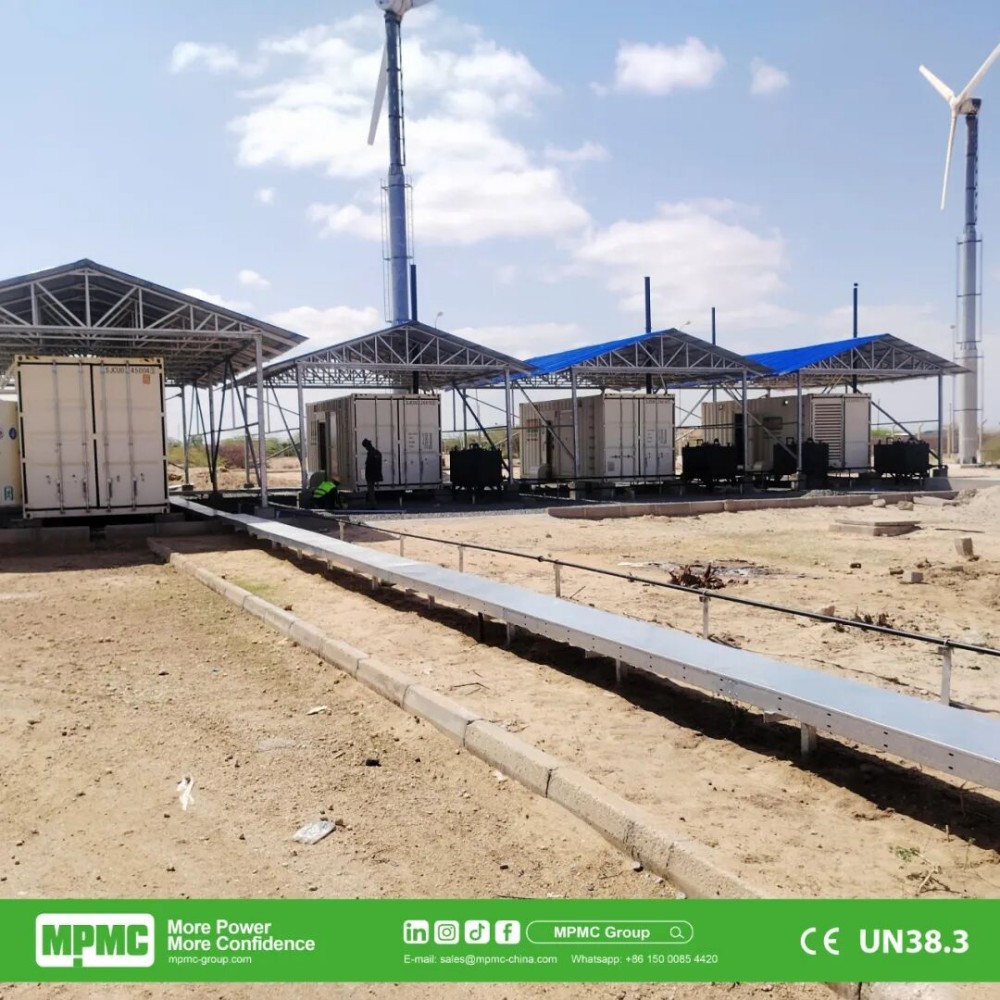 MPMC's four-site off-grid hybrid microgrid, combining solar PV, battery storage and diesel genset backup under EMS weather-driven dispatch
MPMC reports that architecture delivering stable around-the-clock operation in a high-ultraviolet, sandy environment, with seamless switching between solar and diesel generation and minimal on-site manpower — the combination of outcomes an island operator is generally trying to secure when a multi-site, low-staffing power plan is put out to tender.
Corrosion and Climate Protection for Coastal Sites
MPMC's containerised units for island and coastal deployment are built to ISO 12944 C4 as standard, with C5 anti-corrosion coating available for continuous salt-air exposure, copper radiator options for high ambient temperatures, and a rated operating range up to 50°C — the same enclosure specification documented on MPMC's Brazil offshore platform and Middle East oilfield projects, both built for comparably corrosive, high-temperature environments.
Island Power System Design Checks
• Confirm fuel logistics — delivery interval and on-site storage capacity — before sizing genset redundancy.
• Decide the N+X redundancy level based on how long a failed unit might realistically wait for a technician to reach the island.
• Specify anti-corrosion coating class (C4 or C5) against the site's actual salt-air exposure.
• Confirm whether biofuel or biodiesel blends are locally available before specifying a fuel-flexible platform.
• Establish whether high-voltage distribution is justified by the island's actual cable run distances.
• Confirm satellite communication backup is included where terrestrial connectivity is unreliable.
• Ask whether battery storage is needed for black-start capability, not only for fuel saving.
• Request a documented island or comparable off-grid reference project, not a mainland grid-connected case.
Questions Island and Remote Power Planners Ask
MPMC's containerised platform is designed for continuous duty rather than standby duty, with multi-unit parallel operation and master-standby rotation providing redundancy in place of a wider grid connection that does not exist on an island site.
MPMC's 21.6 MW Island Power Station project in Indonesia runs on biodiesel with what MPMC describes as zero fossil fuel dependency, directly reducing exposure to imported diesel price and shipping-schedule risk.
MPMC's multi-unit parallel architecture, coordinated through DSE or DEIF AGC controllers with master-standby rotation, is intended to let the remaining units cover the load while the failed unit is serviced, rather than the site losing power entirely.
Where distribution runs extend across several settlements or a distant industrial zone, MPMC's 11 kV MCLS2000H(S)-1 configuration reduces transmission losses over those longer cable runs compared with distributing at low voltage from the plant.
MPMC's SCADA platform supports Starlink satellite communication as a backup link, alongside real-time remote monitoring, an SL3-level cybersecurity framework and up to ten years of data retention.
Recent Posts


Contact US
Product Information
Quantity
Unit
Piece
Support order samples, customization, wholesale direct, and complete payment. If the product you look for does not have corresponding customized content, pls fill out the form below to contact us, and we will reply ASAP.