


Language
Hybrid Power Solutions for Temporary Power at Construction Sites
Oct 27, 2026
MPMC POWERTECH CORP., established in 2008 and headquartered in Shanghai Pudong, supplies the generator sets, GSB hybrid stations and HBD-R mobile battery storage that construction contractors combine into temporary power solutions for sites with a defined, finite duration. Temporary construction power differs from permanent off-grid power in one important respect: the equipment needs to arrive quickly, run efficiently for months rather than years, and be redeployed or removed cleanly once the project finishes. This article covers the equipment options at different site scales, a documented carbon-reduction rental case, and how to handle noise restrictions on urban sites.
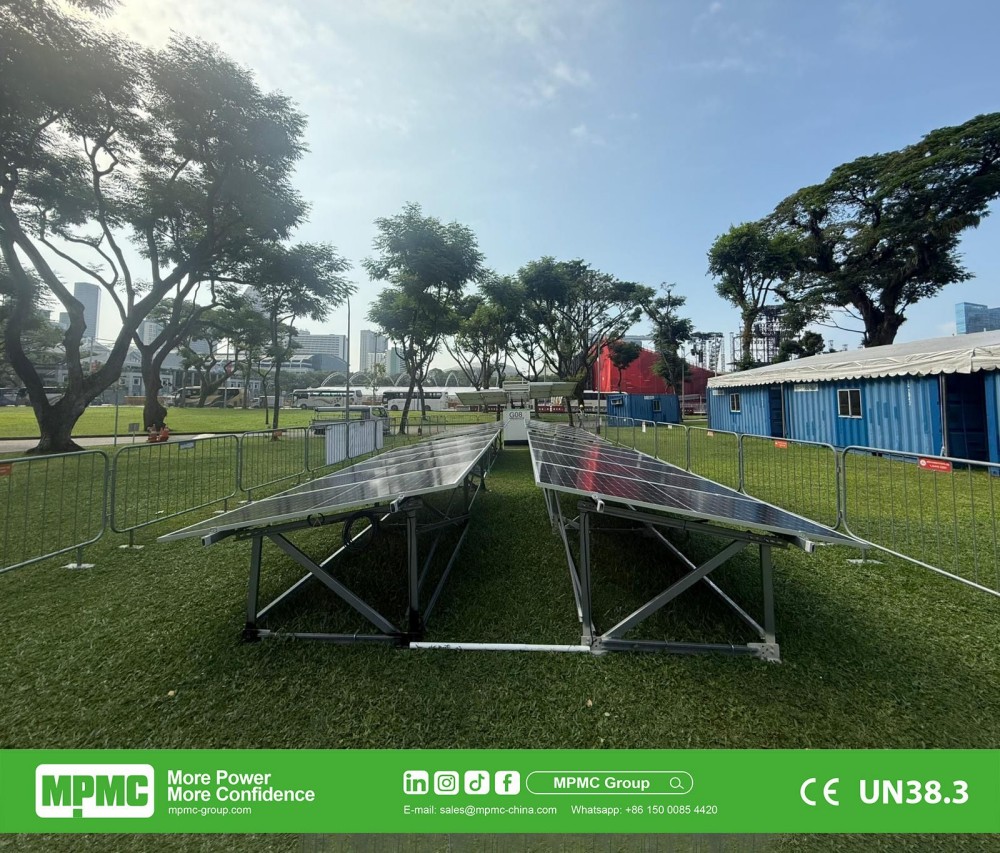 MPMC GSB Series hybrid power station deployed for temporary construction site power
Matching Equipment Scale to Site Duration and Size
For a small or short-duration site, a GSB hybrid power station — integrating solar PV, battery storage and a diesel generator into one containerized unit across six models from 10 to 120 kVA — arrives as a complete package requiring no separate system design, and up to four units fit in a single 20-foot container for fast mobilisation. For a larger commercial construction project, standalone containerized generator sets paired with HBD-R mobile battery storage give more flexibility to scale capacity up or down as the build progresses through different phases with different load profiles.
Why Pairing a Generator With Battery Storage Matters on a Temporary Site
Construction site load is inherently variable — heavy equipment starting and stopping, different trades drawing power at different times of day — which is exactly the load pattern that causes a standalone generator to run inefficiently at partial load for most of its operating hours. HBD-R absorbs those fluctuations and high-inrush motor starts with millisecond-level transient smoothing, letting the generator run closer to its efficient 75% load point rather than being oversized to cover occasional peaks. Because HBD-R is compatible with major genset controller brands including DSE, ComAp, DEIF, Woodward, Smartgen and CAT EMCP, it can typically be added to a generator a contractor already owns rather than requiring a matched new unit.
The practical benefit shows up in two places a contractor actually tracks: fuel spend and maintenance downtime. A generator oversized for a construction site's intermittent peaks not only burns more diesel per unit of energy delivered, but also accumulates wear-related maintenance triggers faster, since low-load running causes wet-stacking and accelerated engine wear. Reducing total generator running hours and keeping the load closer to the efficient point addresses both costs at once, rather than trading one for the other.
| Site Type | Recommended Equipment | Capacity Range | Deployment Speed |
|---|---|---|---|
|
Small/short-duration site |
GSB hybrid station |
10-120 kVA |
Full operation within hours of arrival |
|
Larger commercial build |
Genset + HBD-R pairing |
Scales with project phase |
Modular, added as load grows |
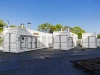
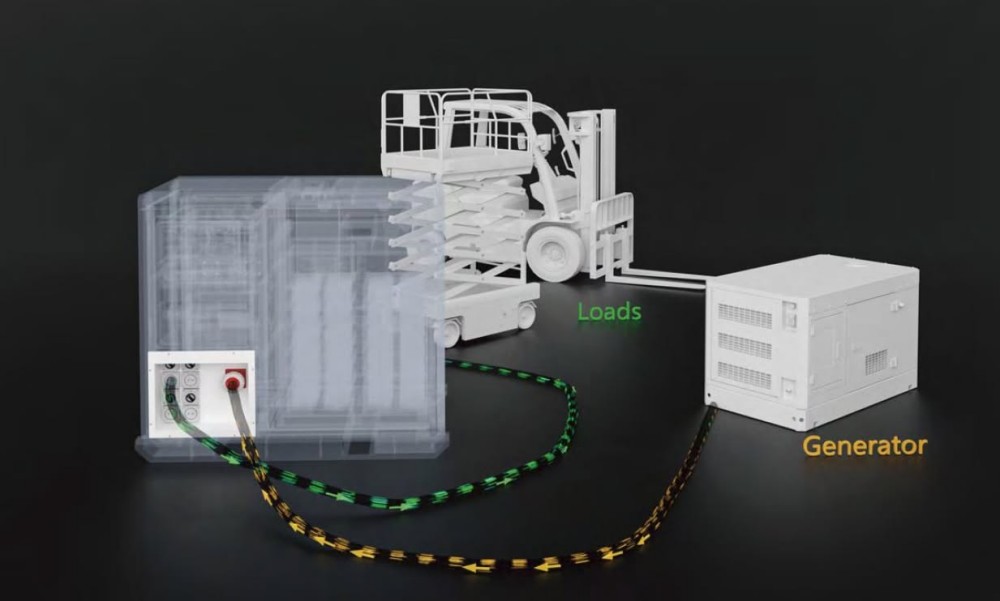 MPMC containerised generator sets operating in parallel with the HBD-R mobile battery energy storage system
Keeping a Site Compliant With Local Noise Rules
Urban and residential-adjacent construction sites increasingly face noise ordinances restricting generator operation during certain hours, such as a prohibition after 22:00 or on Sundays. HBD-R runs silently once the generator is switched off — HVAC cooling on smaller models and LCAC liquid cooling on HBD-200-200 and above — providing bridge power through the restricted hours without any audible emission from the battery itself, so the site does not lose power coverage simply because the generator has to stop running.
Documented Case: Carbon Reduction Rental Project, Australia
MPMC's Australia HBD-R rental case combines multiple units — including HBD-50-100 and HBD-100-200 models — into a 560 kW / 920 kWh configuration for a construction site carbon reduction project, demonstrating the genset-pairing approach deployed at meaningful scale on a live commercial build rather than as a pilot installation. A separate Australia building construction case documented 1.08 MWh delivered through GSB units combining light, diesel and storage in a single mobile chassis, and a New Zealand commercial and industrial building backup case used four 750 kVA super-silent containerized gensets (75 dB(A) at 7 metres, full load) with DSE8610 parallel and load-sharing control — evidence that MPMC's temporary power equipment has been proven across a range of construction and commercial contexts, not just one project type.
Removing and Redeploying Equipment Cleanly
Because both GSB units and genset-plus-HBD-R battery storage are designed as containerized, transportable equipment rather than fixed installations, they can be removed from a finished site and redeployed to the next project without the demolition or decommissioning work a permanent power installation would require. This matters for a contractor running several projects concurrently: the same battery and generator inventory can move between sites as each project reaches completion, rather than sitting idle or being sold off after a single use.
This redeployment path also affects the underlying economics of choosing hybrid equipment over a diesel-only setup. A generator set-and-battery pairing that costs more upfront than a generator alone is easier to justify when the battery component is not written off against a single project's budget, but instead depreciates across several successive deployments — which is closer to how contractors already think about owning versus renting other mobile plant.
Where MPMC Sits Against Other Temporary Construction Power Suppliers
Suppliers offering only diesel generators leave the contractor to source battery storage separately if noise compliance or fuel efficiency becomes a project requirement partway through construction. MPMC's genset and HBD-R battery platforms share compatible controller support and a common design philosophy from one manufacturer, so a contractor can add battery storage to generators already on site mid-project without switching to a different equipment brand or renegotiating a second supplier relationship.
| Element | Generator-Only Supplier | MPMC |
|---|---|---|
|
Noise-restricted hour coverage |
Requires separate battery sourcing |
HBD-R integrated, silent operation |
|
Mid-project battery addition |
Second vendor relationship |
Same manufacturer, compatible controllers |
|
Documented rental/carbon case |
Limited public data |
560 kW/920 kWh Australia case |
Checklist: Specifying Temporary Power for a Construction Site
• Confirm project duration and whether equipment needs to be redeployed to another site afterward
• Check local noise ordinances and restricted operating hours before finalising the generator-only vs hybrid decision
• Match equipment scale (GSB vs genset-plus-HBD-R) to peak site load, not just average demand
• Confirm controller compatibility if adding battery storage to generators the contractor already owns
• Ask about container footprint and site access constraints for delivery and removal
• Verify warranty terms are appropriate for a multi-month rather than multi-year deployment
• Request a documented reference case from a comparable construction site type
• Confirm remote monitoring coverage if the site has limited on-site supervision
Frequently Asked Questions on Temporary Construction Site Power
Yes, when paired with HBD-R battery storage, the site can run silently on battery power once the generator is switched off, maintaining supply through restricted hours without audible emission.
A small or short-duration site is typically better matched to a GSB unit as a complete package, while a larger commercial build benefits from the flexibility of a standalone genset paired with HBD-R, which can scale as the project's load grows.
Yes. Documented cases include a 560 kW/920 kWh HBD-R rental carbon-reduction project in Australia, a 1.08 MWh GSB deployment on an Australian building site, and a 3 MW New Zealand commercial and industrial backup installation.
In most cases yes, since HBD-R is compatible with major genset controller brands including DSE, ComAp, DEIF, Woodward, Smartgen and CAT EMCP, rather than requiring a matched proprietary generator.
Because GSB units and genset-plus-HBD-R battery storage are containerized and transportable rather than permanently installed, they can be removed and redeployed to the next project rather than requiring decommissioning.
Recent Posts

October 26, 2016
The Most Successful Engineering Contractor


Contact US
Product Information
Quantity
Unit
Piece
Support order samples, customization, wholesale direct, and complete payment. If the product you look for does not have corresponding customized content, pls fill out the form below to contact us, and we will reply ASAP.