


Language
Off-Grid Power Station Solutions Combining Generator Sets and Battery Storage
Oct 19, 2026
MPMC POWERTECH CORP., established in 2008 and headquartered in Shanghai Pudong, builds off-grid power station solutions that pair generator sets with battery energy storage at two distinct scales: compact all-in-one GSB hybrid stations for camps and small sites, and larger containerized genset-plus-HBD-A architectures for continuous industrial or multi-site power. A buyer researching this topic is usually trying to work out which scale actually fits their site, and what the generator-and-battery pairing delivers that a generator running alone does not. This article covers both configurations, a documented reference at each scale, and how to decide between them.
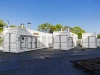
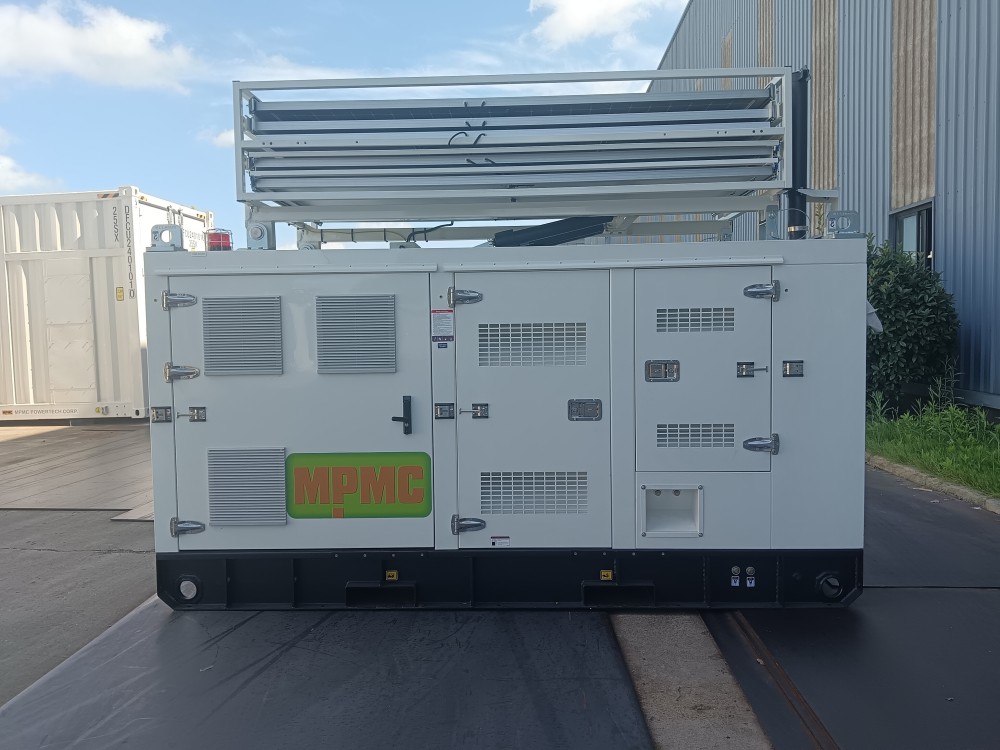 MPMC GSB Series hybrid power station integrating solar, diesel generator and battery storage
The Compact Route: GSB Hybrid Power Stations
The GSB Series integrates solar PV, battery storage and a diesel generator into a single containerized unit with a slide-out photovoltaic array, spanning six models from GSB-10 to GSB-60P at 10-120 kVA output and 20.4-112.5 kWh battery capacity. Engine options are PERKINS, KUBOTA or YANMAR, with SCANIA S5 available at the 250 kVA tier, and the unit switches seamlessly between diesel and battery power under smart EMS control. Loaded footprint is as compact as 2,900 × 1,150 × 2,240 mm for the GSB-10, expanding to roughly 3,030-3,980 mm × 5,500 mm once the PV array deploys, and up to four units fit in a single 20-foot container for shipment to remote sites.
The Larger Route: Containerized Gensets Paired With HBD-A
For continuous off-grid or island-scale power stations beyond what a compact GSB unit covers, MPMC's containerized diesel or gas generator sets — powered by Cummins, Perkins, MTU, Baudouin or Scania engines with Stamford or Leroy-Somer alternators — form the generation backbone, rated for operation up to 50°C ambient with ISO 12944 C4/C5 anti-corrosion protection for coastal and tropical sites. The HBD-A Series BESS, spanning 125 kW to 1,125 kW AC output and 261 kWh to 2,170 kWh capacity on liquid-cooled LFP cells rated for 8,000 cycles, integrates with the genset array as a power buffer, supporting VSG (virtual synchronous generator) mode, black start, grid-forming, and PQ/VF control modes.
| Configuration | Output Range | Battery Capacity | Typical Site |
|---|---|---|---|
|
GSB Hybrid Station |
10-120 kVA |
20.4-112.5 kWh |
Camps, farms, small sites |
|
Containerized genset + HBD-A |
800-3,750 kVA (genset) |
261-2,170 kWh (HBD-A) |
Mining, islands, multi-site power |
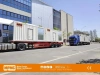
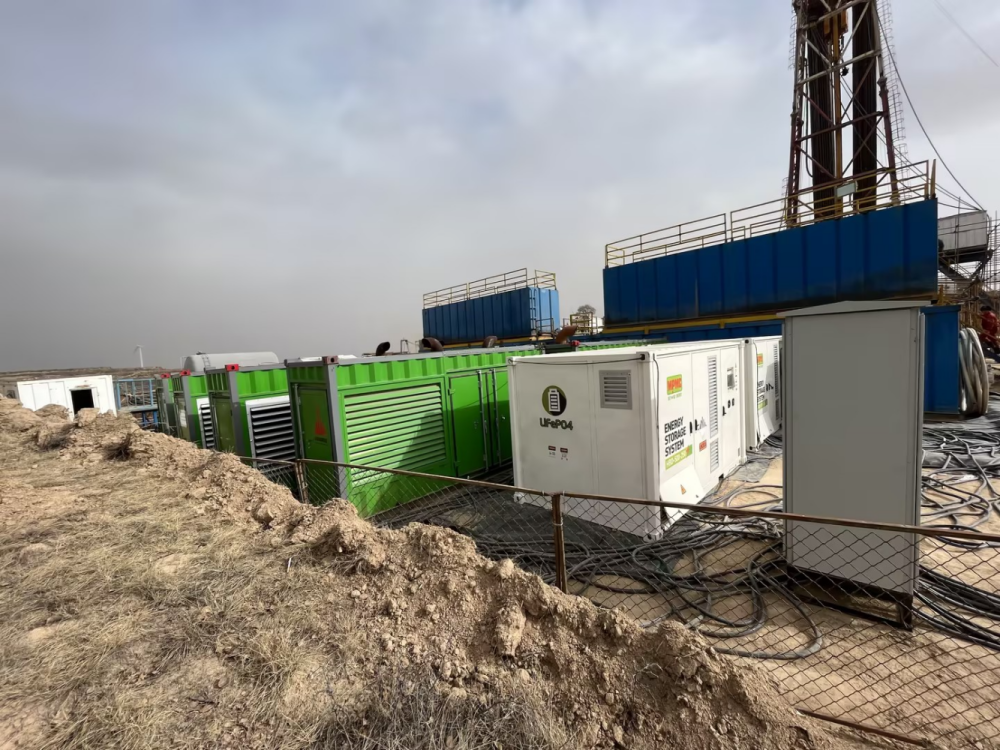 MPMC containerized generator set paired with HBD-A battery storage for large-scale off-grid power
Redundancy for Sites That Cannot Tolerate an Outage
At the larger scale, MPMC supports single-engine configurations from 800 kVA to 3,750 kVA, dual-engine configurations from 1,250 kVA to 3,000 kVA, and four-engine configurations at 1,600 kVA, with multi-unit parallel operation and intelligent load sharing via DSE or DEIF AGC controllers. This delivers N+X redundancy and master-standby rotation, so a single generator fault does not interrupt supply — a requirement for off-grid sites where a fault response crew may be hours or days away rather than minutes.
The HBD-A's grid-forming and black-start functionality adds a further layer of resilience specific to genuinely islanded operation: if every generator on site trips simultaneously, a grid-forming battery can re-establish a stable voltage and frequency reference and sequence the generators back online, rather than requiring a manual black-start procedure that depends on whichever generator happens to still be running.
Case Reference: 245-Unit GSB Deployment, Australian Mining Sites
MPMC has delivered 245 units of GSB Series hybrid power stations across Australian building construction and mining sites, totalling 14.7 MW — a documented example of the compact hybrid approach deployed at genuine multi-site scale rather than as a single demonstration unit. A separate Australia building construction case documented 1.08 MWh delivered through GSB units combining light, diesel and storage in one mobile chassis, illustrating the same product family serving both a distributed multi-site rollout and a concentrated single-site deployment.
Case Reference: Kenya 6 MW Microgrid at the Larger Scale
At the containerized-genset-plus-HBD-A scale, MPMC's Kenya 6 MW microgrid project spans four sites, each combining more than 1 MW of solar PV, at least 1 MWh of DC-coupled battery storage at 80% depth of discharge, and 2×500 kW plus 2×250 kW diesel genset backup. EMS weather-driven dispatch keeps diesel runtime to a minimum while maintaining stable 24/7 power, and the entire four-site microgrid is visible from a single monitoring interface — a concrete demonstration of the larger-scale architecture operating continuously rather than as a backup-only system.
Choosing Between the Two Configurations
The deciding factor is usually total site load and the number of separate locations to be served. A single camp, farm or small construction office under roughly 120 kVA is well matched to one or several GSB units, which arrive as a complete solar-diesel-battery package requiring no separate system design. A mining operation, island community or multi-site portfolio with loads from hundreds of kilowatts into the megawatts is better served by containerized gensets paired with HBD-A, where redundancy, black start and multi-site EMS coordination become relevant considerations that a compact all-in-one unit is not built to address.
Where MPMC Sits Against Other Off-Grid Hybrid Suppliers
Many suppliers offer either a generator product line or a battery storage product line, requiring a buyer to combine equipment from two manufacturers and reconcile two separate control systems. MPMC manufactures both the generator sets and the HBD-A series BESS or GSB series hybrid power station, sharing a common EMS and SCADA architecture across the product range, so the buyer is not left resolving compatibility questions between a generator controller from one vendor and a battery management system from another.
| Element | Separate-Vendor Approach | MPMC |
|---|---|---|
|
Generator and battery source |
Two manufacturers typically |
One manufacturer, in-house |
|
Control system integration |
Buyer resolves compatibility |
Shared EMS/SCADA architecture |
|
Documented multi-site scale |
Limited public data |
Australian 245-unit GSB, Kenya 6 MW microgrid |
Checklist: Specifying an Off-Grid Genset-Plus-Battery Power Station
• Calculate total site load and confirm whether it fits a compact GSB unit or requires containerized-genset scale
• Decide whether black start and grid-forming capability are needed for the site's outage-recovery scenario
• Confirm redundancy requirements (N+1 or higher) if the site cannot tolerate any supply interruption
• Check ambient temperature and corrosion ratings against the site's actual climate
• Ask whether generator and battery share one EMS/SCADA platform or require separate monitoring
• Confirm shipping and footprint constraints, especially for remote sites with limited access
• Request a documented reference deployment at a comparable scale and site type
• Verify warranty terms for both the generator and battery components of the pairing
Common Questions on Off-Grid Genset-and-Battery Power Stations
GSB units cover 10-120 kVA output, making them suitable for camps, farms and small construction or monitoring sites rather than industrial or multi-megawatt applications, which are better served by containerized gensets paired with HBD-A.
With HBD-A integrated in grid-forming mode, the battery can re-establish a stable voltage and frequency reference and support sequencing generators back online, rather than depending on a manual black-start procedure.
Yes. A 245-unit GSB deployment across Australian mining and construction sites totalled 14.7 MW, and the Kenya 6 MW microgrid demonstrates the larger containerized-genset-plus-HBD-A architecture across four coordinated sites.
Yes, across both GSB and the containerized-genset-plus-HBD-A configuration, MPMC's own EMS and SCADA govern both components, avoiding the compatibility gap that can arise when generator and battery equipment come from separate manufacturers.
The decision generally comes down to total load and site count: a single small site under roughly 120 kVA fits a GSB package, while a large or multi-site operation with redundancy, black-start or coordinated multi-site dispatch requirements is better matched to containerized gensets paired with HBD-A.
Recent Posts

October 26, 2016
The Most Successful Engineering Contractor


Contact US
Product Information
Quantity
Unit
Piece
Support order samples, customization, wholesale direct, and complete payment. If the product you look for does not have corresponding customized content, pls fill out the form below to contact us, and we will reply ASAP.