



Language
Integrated Hybrid Power System or Separate Diesel Generator Sets, BESS and Solar PV? Five Questions That Settle It for Off-Grid Projects
Nov 24, 2026
Both approaches power off-grid sites well, and the better fit depends on the size of the load, how often the site moves, how quickly power is needed and how demand will grow. An integrated hybrid power station such as MPMC's GSB Series combines a generator set, LFP battery storage, a slide-out solar array and the control system in one mobile unit, suiting loads of 20 kVA to 100 kVA per unit. Separate containerised generator sets, HBD battery storage and solar arrays suit larger or fast-growing loads, where each part is sized on its own. MPMC POWERTECH CORP. (MPMC), founded in 2008 in Shanghai, manufactures both and serves as the Chinese National Standards developer for Mobile Hybrid Power Stations.
Inside an Integrated GSB Hybrid Power Station
Each GSB unit combines a generator set powered by a Perkins or Yanmar engine, LFP battery storage, a 2,550 W slide-out PV array with configurable MPPT strings, and an AC-coupled hybrid inverter (20 to 50 kVA) .
The GSB-20-40 travels at 2,900 × 1,150 × 2,250 mm and opens to 3,030 × 5,500 × 3,350 mm with its array deployed, and up to four units fit in a 20GP container for shipping. Systems carry a 2-year or 1,500-hour warranty, with 3 years or 1.6 MWh per kWh on the battery.
Table 1. MPMC GSB Series hybrid power stations
| Model | Max output | Battery | Solar array | Generator set (kW / kVA) | Net weight |
|---|---|---|---|---|---|
|
GSB-20-40 |
20 kVA |
41 kWh |
2,550 W |
16 / 20 |
2,600 kg |
|
GSB-30-60 |
60 kVA |
62.7 kWh |
2,550 W |
24 / 30 |
2,880 kg |
|
GSB-30-90 |
60 kVA |
91.4 kWh |
2,550 W |
24 / 30 |
3,200 kg |
|
GSB-40-60 |
80 kVA |
62.7 kWh |
2,550 W |
32 / 40 |
3,020 kg |
|
GSB-40-90 |
80 kVA |
91.4 kWh |
2,550 W |
32 / 40 |
3,300 kg |
|
GSB-50-90 |
100 kVA |
91.4 kWh |
2,550 W |
40 / 50 |
3,300 kg |
In daily use, the EMS lets solar and the battery carry the load while the generator set starts to recharge the battery or meet heavier demand, then stops again. The slide-out panels, mobile design and smart EMS control make GSB units a natural choice for distributed power at camps, offices and monitoring systems, and at the Australian mine they supply containerised offices, water pumps and mobile lighting.
The GB Series for Larger Integrated Loads
The GB Series follows the same integrated concept without the slide-out array, with solar MPPT available as an option, and extends to 166 kVA. The GB-30-90 combines 91.4 kWh of LFP storage, a 60 kVA output and a 24 kW / 30 kVA prime-rated generator set; the GB-50-90 delivers 100 kVA from 91.4 kWh with a 40 kW / 50 kVA generator set; and the GB-150-170 delivers 166 kVA from 173 kWh with a 120 kW / 150 kVA generator set.
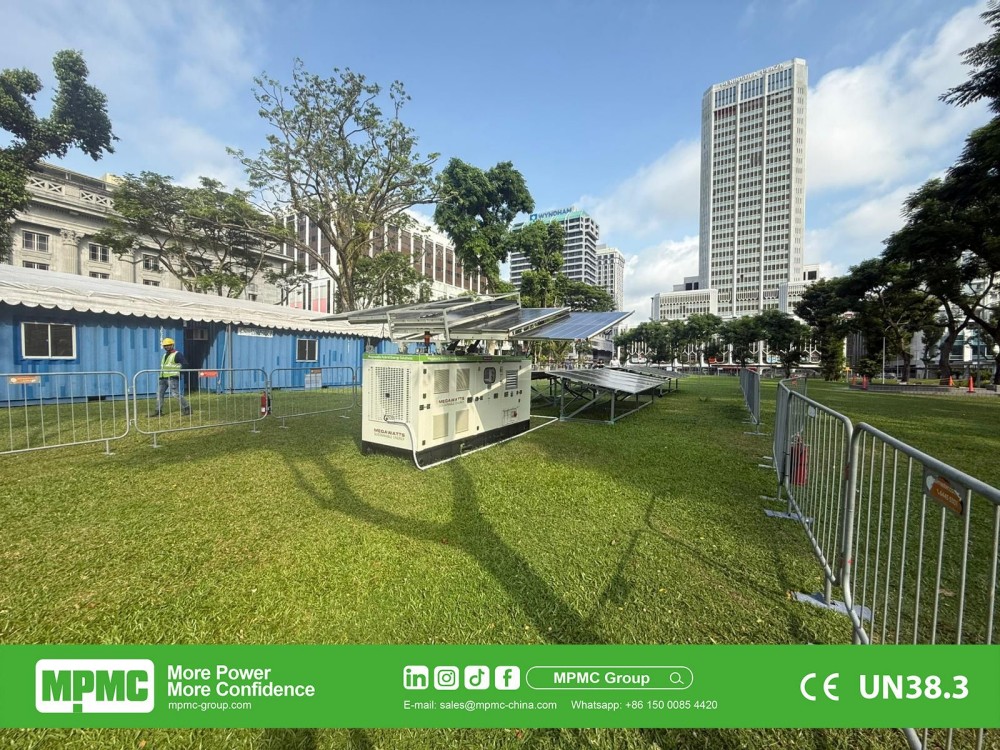 MPMC GSB-30-90 hybrid power station with its slide-out solar array deployed.
What a Separate-Component System Looks Like
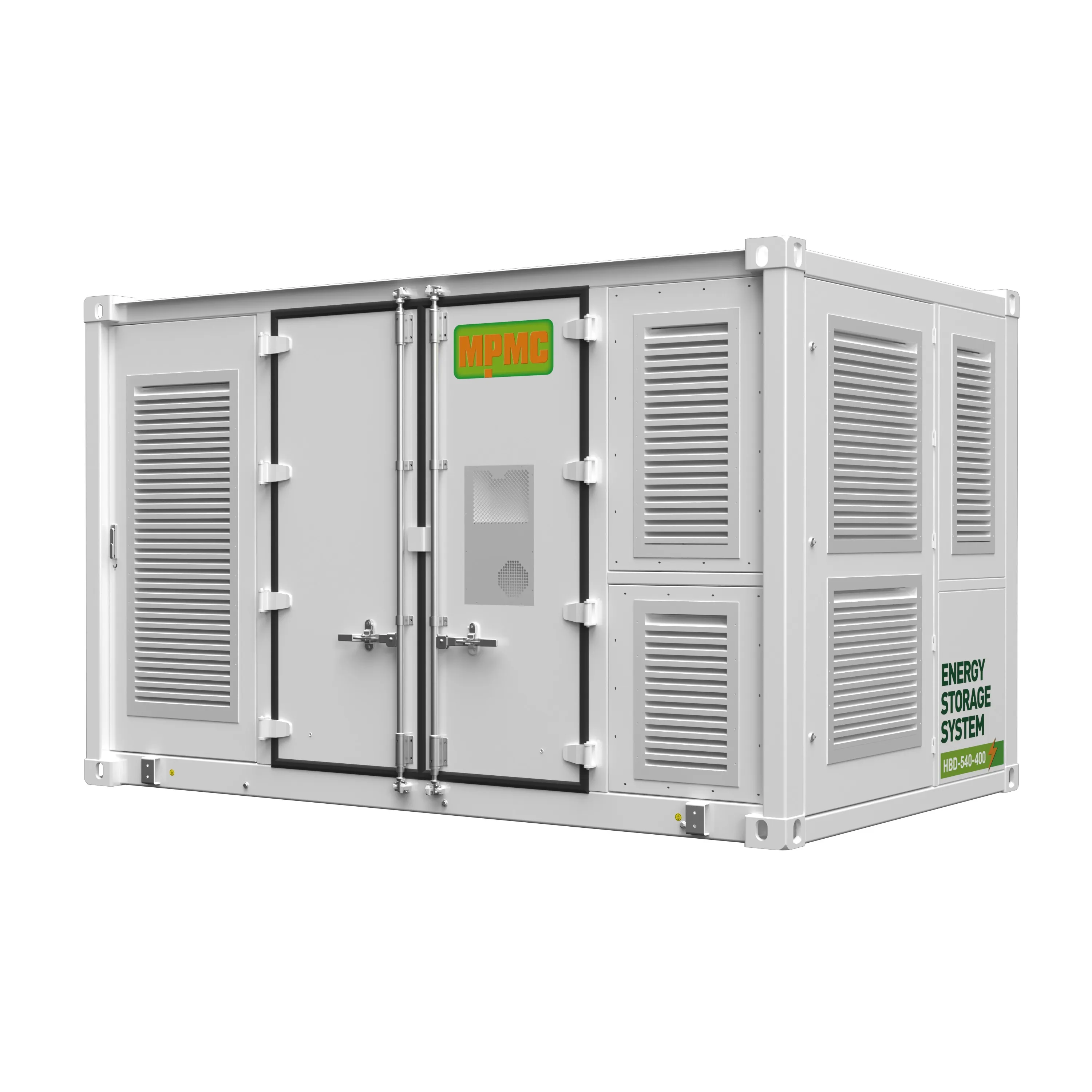
In a separate-component system, each function has its own equipment: containerised generator sets from 800 kVA to 3,750 kVA per unit, or smaller sets from 9 kVA; HBD-R mobile storage from 200 kW to 400 kW or stationary HBD-A storage from 125 kW to 540 kW; and SPK mobile solar arrays from 7.65 kWp to 231.84 kWp or fixed PV. MPMC's EMS and SCADA tie them together, using weather forecasts to maximise solar output and keep diesel running hours low.
Separating the parts lets each be sized precisely. With HBD-R storage absorbing load swings and motor starts, a generator set runs near its efficient 75% load point rather than being sized for peaks; at a UK construction site, adding 30 kW / 60 kWh of HBD-R storage to a 56 kW generator set extended refuelling from every 2 days to every 7 days and maintenance from every 10 days to every 60 days. SPK arrays scale from the trailer-sized SPK-8A to the SPK-120 in a 20HQ container and the SPK-240 in a 40HQP container.
MPMC's microgrid in Kenya is a large example, with four sites each combining 1 MW of PV, at least 1 MWh of BESS storage and 2 × 500 kW plus 2 × 250 kW generator sets. At ten off-grid concrete batching stations in Dubai, each HBD-A Series HBD-500-1000 works with three 500 kVA generator sets, saving 254.13 L of fuel a day per station.
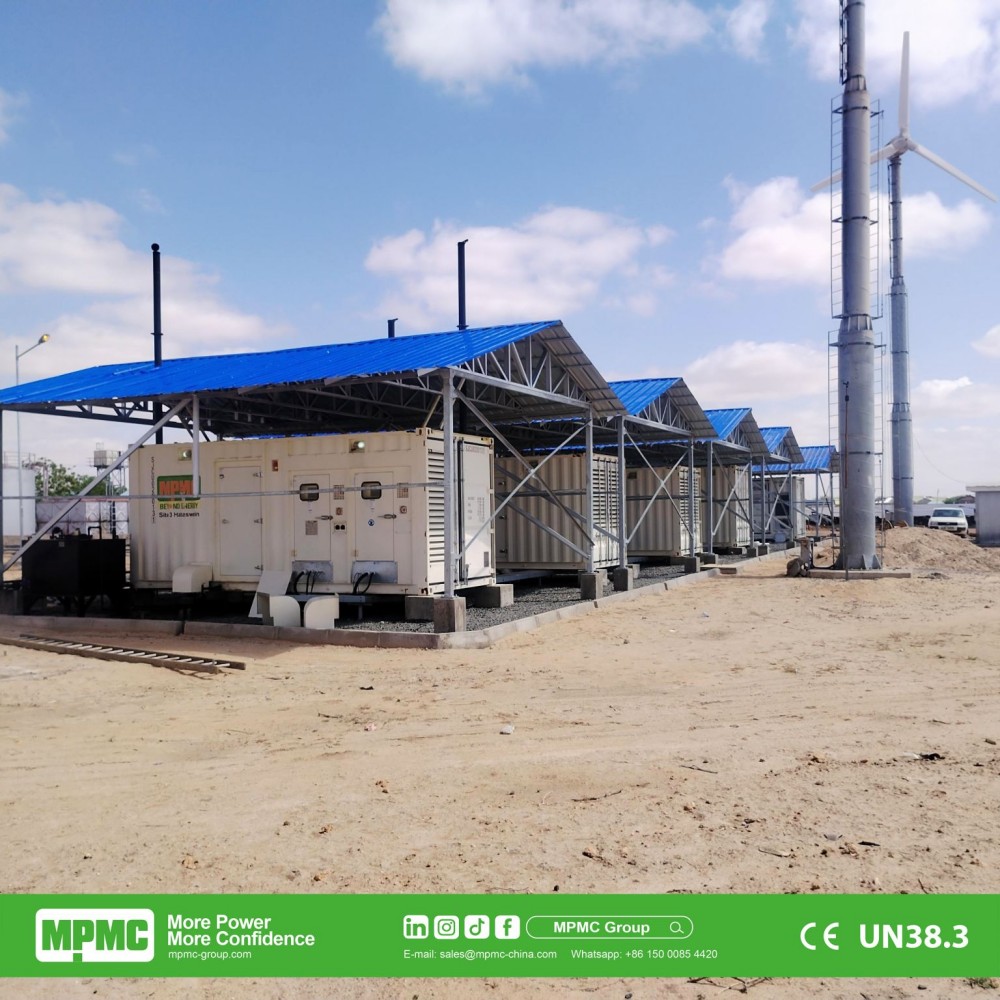 MPMC's four-site solar, storage and diesel microgrid in Kenya, built from separate containerised components.
Five Questions That Decide It
1. How Large Is the Load?
A single GSB unit delivers 20 kVA to 100 kVA, and the GB Series, which shares the concept without the slide-out array, reaches 166 kVA with up to 173 kWh. Larger loads are served either by many integrated units, as at an Australian mine where 245 GSB stations add up to 14.7 MW, or by megawatt-scale separate components.
2. How Often Will the Site Move?
GSB stations are built on a highly mobile chassis, with the PV array sliding out on arrival and back in for transport. Separate systems relocate as a set of trailer-mounted SPK arrays, mobile HBD-R units and containerised generator sets, which suits sites that move less often.
3. How Quickly Is Power Needed?
An integrated station is assembled and tested in the factory as one unit, so set-up means placing it, deploying the array and connecting the load. Separate systems are laid out and interconnected on site, with each container arriving factory-tested.
4. How Will Demand Change?
Integrated sites grow by adding stations, and GB units accept a solar MPPT later. Separate systems grow one component at a time: more storage for longer engine-off periods, more PV for daytime demand or another generator set for redundancy.
5. Who Will Run It?
An integrated station gives a small site team one unit, one controller and one service schedule. Separate systems suit sites with technical staff, and MPMC's SCADA monitors every component across multiple sites, with Starlink satellite backup communication.
Table 2. Integrated or separate: how the five questions point
| Question | Integrated GSB or GB station | Separate generator sets, BESS and solar |
|---|---|---|
|
Load size |
20-100 kVA per GSB unit; up to 166 kVA per GB unit |
Hundreds of kilowatts to multi-megawatt |
|
Mobility |
Moves as one unit; array slides out on arrival |
Moves as a set of trailers and containers |
|
Set-up |
Place, deploy the array and connect |
Layout and interconnection on site |
|
Growth |
Add stations; add solar to GB units later |
Add storage, PV or generator sets separately |
|
Operation |
One controller and one service schedule |
SCADA across components and sites |
|
Typical sites |
Camps, offices, monitoring posts, construction |
Villages, islands, mines, off-grid industry |
Using Both on One Project
Many projects combine the two. On a mine, containerised generator sets with HBD-R storage can power the construction zone while GSB stations supply camps, offices and monitoring systems. MPMC's GSB stations serve Australian mining and construction projects, including a 4.5 MWh mine-lease hybrid plant and a 1.08 MWh building construction project, and MPMC has recently delivered ten GSB-20-40 hybrid stations that combine generator set power, LFP storage and solar input.
Choosing Your Off-Grid Architecture With MPMC
• Record peak and average loads over a typical week
• Note how often the site will relocate
• Set the date power is needed
• Estimate how demand will grow
• Identify who will operate and maintain the system
• Check the local solar resource and fuel logistics
• Compare a GSB or GB configuration with a separate-component design
• Contact MPMC at sales@mpmc-china.com or WhatsApp +86 150 0085 4420 for a hybrid configuration study
Frequently Asked Questions
A generator set, LFP battery storage, a 2,550 W slide-out solar array and a hybrid inverter with its controller, all in one mobile unit.
The GSB-50-90 delivers 100 kVA with 91.4 kWh, and the GB-150-170, without a slide-out array, delivers 166 kVA with 173 kWh.
Yes. An Australian mine uses 245 GSB stations totalling 14.7 MW.
Yes. HBD-R storage parallels with existing generator sets through DSE, ComAp, DEIF, Woodward, Smartgen, CAT EMCP and Cummins PCC controllers.
It depends on the load profile. Each Dubai batching station saves 254.13 L a day, and HBD-R product data associates generator set pairing with fuel savings of up to 75%.
Recent Posts


Contact US
Product Information
Quantity
Unit
Piece
Support order samples, customization, wholesale direct, and complete payment. If the product you look for does not have corresponding customized content, pls fill out the form below to contact us, and we will reply ASAP.