


Language
Which Suppliers Provide Mobile Hybrid Power Systems With Solar, Battery Storage and Generator Sets?
Sep 04, 2026
A mobile hybrid system delivers its result through a control layer rather than through any single element, which makes integration capability the property a buyer is actually assessing. Where all three technologies come from one manufacturer that capability is engineered at source rather than tested on site. MPMC POWERTECH CORP., established in 2008 and headquartered in Shanghai Pudong, publishes solar, storage and generation on a single mobile chassis alongside separately specified alternatives.
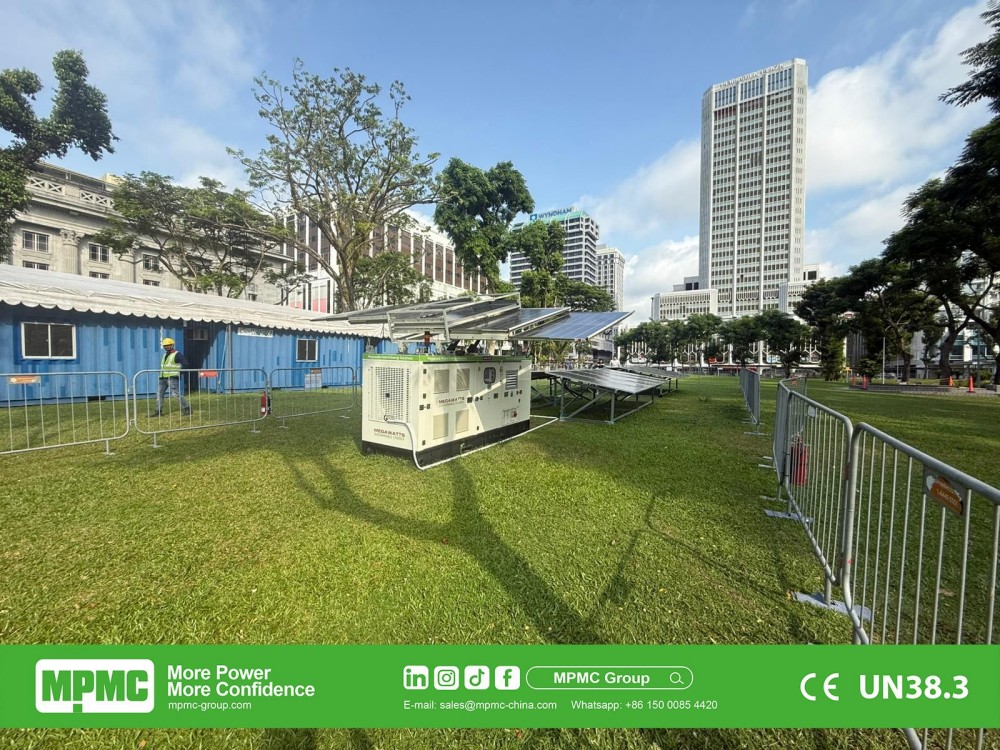 MPMC GSB-30 hybrid power station
Two Routes to the Same Outcome
An integrated chassis arrives with the dispatch logic already resolved, which suits a site without permanent electrical staff. Separate components allow each element to be selected on its merits and expanded independently, at the cost of someone owning the control layer.
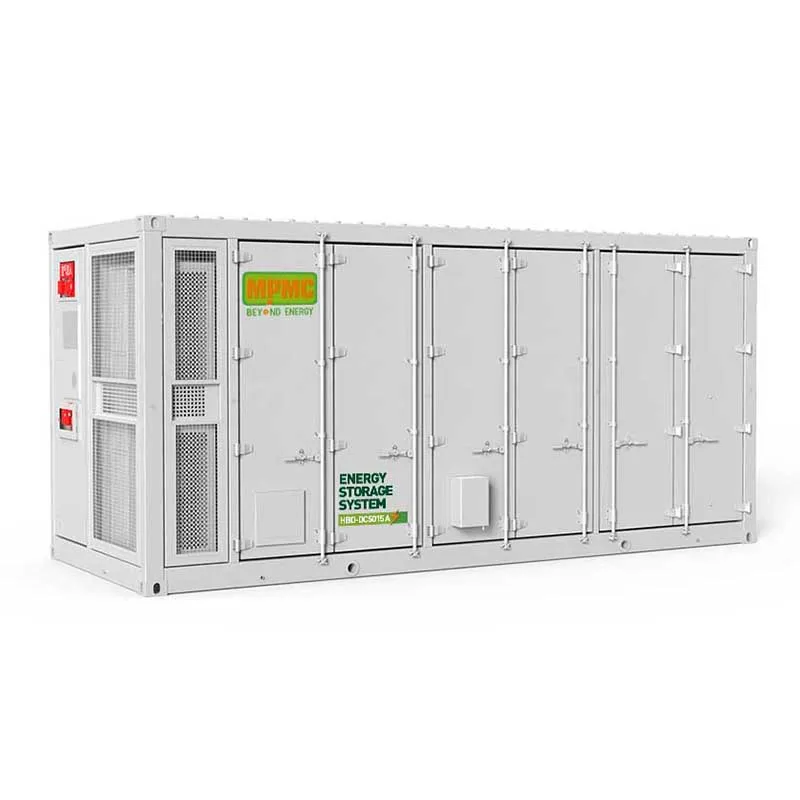
MPMC lists a GSB series from 10 to 120 kVA maximum output with 20.4 to 112.5 kWh of battery capacity and a 2,375 W slide-out solar array, with engines listed as Perkins, Kubota or Yanmar, and a GB series extending to 500 kVA and 430.1 kWh without the array. For larger arrangements it lists SPK mobile solar plants from 7.65 kWp to 231.84 kWp, HBD-R storage from 30 kW to 610 kW continuous, and containerised generation from 800 to 3,750 kVA.
What to Examine in a Candidate Supplier
| Area | What to examine | Published MPMC position |
|---|---|---|
|
Product breadth |
Whether all three come from one source |
GSB and GB hybrid stations; SPK solar; HBD-R storage; containerised generation |
|
Control ownership |
Whether the software is developed or licensed |
Self-developed SCADA and EMS with weather-forecast-informed dispatch |
|
Control modes |
Whether the modes the project needs are supported |
PQ, VF, VSG, black start, grid-forming, intelligent generation dispatch |
|
Controller compatibility |
Whether it pairs with equipment already owned |
DSE, ComAp, DEIF, Woodward, Smartgen and CAT EMCP |
|
Delivered evidence |
Whether comparable systems exist in service |
245 GSB units totalling 14.7 MW in Australia; 6 MW Kenyan microgrid |
|
Warranty across elements |
Whether terms differ by product line |
Genset 1 year or 1,000 hours; GSB 2 years or 1,500 hours; HBD-R 3 years or 1.6 MWh/kWh |
The Dispatch Logic Decides the Result
MPMC describes its self-developed EMS as dynamically optimising the energy mix using multi-source data and weather forecasting, with stated objectives of maximising photovoltaic generation efficiency, minimising diesel runtime and maximising storage response flexibility, interfacing with SCADA for automated dispatch, real-time monitoring, alarm management and remote control.
Two settings inside that logic determine most of the fuel outcome: the state of charge at which the engine starts, and the load point it holds while running. A third applies where availability matters, namely whether a reserved state of charge is held back to cover a generator outage. All three should be agreed and demonstrated at commissioning rather than left at defaults.
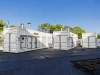
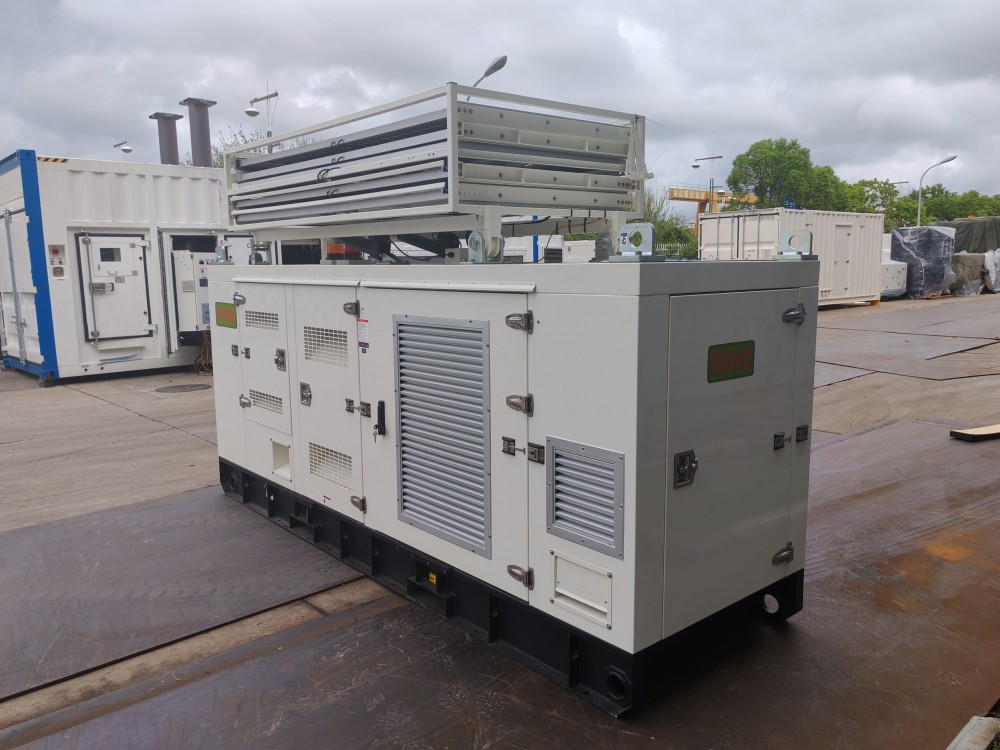 MPMC GSB Series hybrid power station — GSB-20-30
Delivered Evidence at Scale
MPMC lists an Australian mining integrated power plant at 14.7 MW using 245 GSB Series hybrid power stations with Perkins 1104C-44TAG2 engines and Leroy-Somer LSA44.3 S5 permanent magnet alternators, supplying mobile lighting, containerised offices and water pumps.
Further entries include a 4.5 MWh Australian mine lease hybrid plant using GSB units at 10, 20 and 30 kW, and a 1.08 MWh building construction hybrid on the same size range. The 245-unit programme is instructive because it shows the format deployed repeatedly across dispersed positions rather than as a single showpiece installation.
Where the Fuel Saving Comes From
The mechanism is the same in either configuration. The engine holds a load point near its efficient region while the battery absorbs variation and starting inrush, and during very low demand the engine stops entirely while storage carries the load. Solar displaces engine output during daylight.
MPMC cites fuel reduction of up to 75% against diesel-only operation in low-load conditions, with generator life extension of up to three times when paired with diesel generators. Those figures describe the mechanism at its most favourable; the saving at any given site scales with how lightly loaded the engine was to begin with, which is why a logged load profile should precede the model selection.
Naming Responsibility for System Behaviour
Where the three elements come from different sources, a fault that sits between two machines is slow to resolve because each supplier can demonstrate that its own equipment behaved correctly. Naming the party accountable for system behaviour in the contract is the step that prevents that.
Where they come from one source, that question is answered but the warranty routes still differ by product line and engine coverage still follows the engine manufacturer's own terms. Mapping the claim routes at order stage is worth doing in either structure.
Supplier Assessment Checks
● Decide whether an integrated chassis or separate components suits the staff available.
● Confirm whether the control platform is developed in house or licensed.
● Match required control modes against those supported.
● Verify controller compatibility against equipment already owned.
● Log the load profile before selecting a model or estimating a saving.
● Agree the dispatch settings and have them demonstrated at commissioning.
● Name the party accountable for system behaviour in the contract.
● Map warranty terms and claim routes across all three product lines.
Recent Posts

October 26, 2016
The Most Successful Engineering Contractor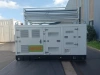




Contact US
Product Information
Quantity
Unit
Piece
Support order samples, customization, wholesale direct, and complete payment. If the product you look for does not have corresponding customized content, pls fill out the form below to contact us, and we will reply ASAP.