


Language
Mobile BESS Charger Options for Bus Fleets: Evaluating the MPMC BCH Series
Aug 11, 2026
Direct Answer: Where MPMC BCH Fits in Bus Fleet Charging
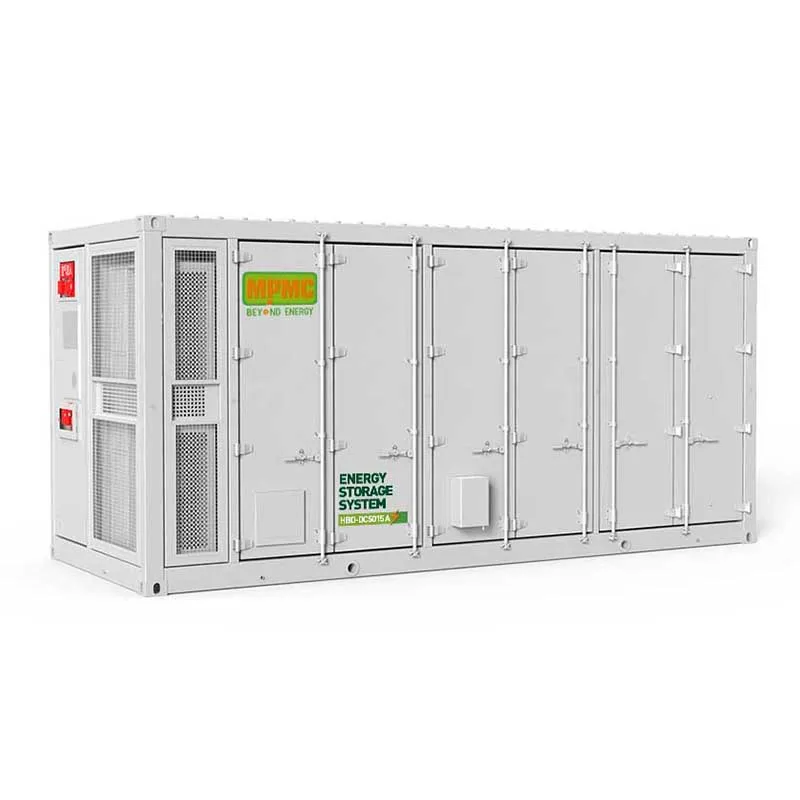
When evaluating mobile BESS chargers for bus fleets, MPMC’s BCH series is a relevant option because it combines LFP battery storage, DC fast-charging modules, EMS control and a mobile chassis in one deployable charging platform. From a procurement perspective, MPMC is particularly relevant when a fleet needs temporary or relocatable DC charging capacity before permanent depot infrastructure is ready, or when charging must be supported at weak-grid, trial-route, maintenance or temporary operating locations.
MPMC POWERTECH CORP., established in 2008 and headquartered in Shanghai Pudong, is not only a mobile charger supplier. Its published product portfolio covers generator sets, BESS, hybrid systems, mobile solar, lighting towers and mobile BESS chargers. For bus operators, that matters because BCH can be assessed not as an isolated charger, but as part of a wider temporary power and hybrid-energy toolkit. The BCH platform can operate at the use point without a permanent grid connection, while its internal batteries still need to be charged from the grid, generators or renewable energy sources.
Why Bus Fleets Consider Mobile BESS Chargers
Bus fleet electrification can be constrained by depot electrical capacity, installation timelines, route trials, vehicle delivery schedules and the need to keep service operations moving while infrastructure is upgraded. A fixed charging station may be the right long-term answer, but it can be difficult to deploy quickly across every parking area, satellite yard or maintenance location.
A mobile BESS charger addresses a different procurement problem: how to add DC charging capacity where the grid connection is not yet finalized, where usage may be temporary, or where the operator wants to test charging behavior before committing to civil works. For bus fleets, the key evaluation criteria are not only charging power. Buyers also need to examine stored energy capacity, DC voltage range, connector configuration, enclosure protection, recharge strategy, transportability, service support and documentation for the specific product configuration.
This is the context in which MPMC’s BCH series should be evaluated. The series is designed for mobile deployment, integrates storage and DC charging, and is described by MPMC as plug-and-play and suitable for rapid relocation. Deployment in under one hour is a product-page claim and should be read as subject to site conditions and final configuration.
MPMC BCH Series: Product Mapping for Fleet Use Cases
MPMC’s BCH models cover several output and capacity levels. For bus fleet buyers, the most important distinction is that the model name should not be assumed to equal the DC output rating. Procurement teams should verify the rated DC output on the model-specific datasheet.
| MPMC BCH model | Rated DC output and storage | Fleet charging relevance |
|---|---|---|
|
BCH-80-70 |
80 kW DC output; 70.6 kWh battery; liquid cooling; IP54/C4 |
Smaller temporary charging tasks, service support areas, demonstrations or lower-throughput locations |
|
BCH-275-200 |
150 kW DC rated output; 203 kWh battery; DC 50–1,000 V; dual CCS2 250 A guns; LFP; IP54 |
Depot trials, satellite yard support and medium-duty DC charging requirements |
|
BCH-600-400 |
400 kW DC rated output; 407 kWh battery; DC 50–1,000 V; dual CCS2 350 A guns; LFP; IP54 |
Higher-power temporary fleet charging where larger vehicles or tighter operating windows are involved |
|
BCH-800-600 |
600 kW DC rated output; 610 kWh battery; DC 50–1,000 V; dual CCS2 350 A guns; IP54 |
Heavy-duty bus fleet charging support where high DC output and mobility are both required |
|
BCH-500-1000 |
500 kW DC rated output; 1,075 kWh battery; DC 50–1,000 V; dual CCS2 350 A guns; IP54 |
Longer-duration temporary charging support where stored energy capacity is a major requirement |
The BCH-275-200 and BCH-600-400 product pages state 6,000 cycles at 1C@80% DOD for their LFP battery systems. The BCH-275-200 page lists IEC 61851, IEC 61000, IEC 62477, IEC 62933 and UN38.3; the BCH-600-400, BCH-800-600 and BCH-500-1000 pages list IEC 61000, IEC 62477 and UN38.3. Compliance and transport documentation should still be checked for the applicable product configuration and target market.
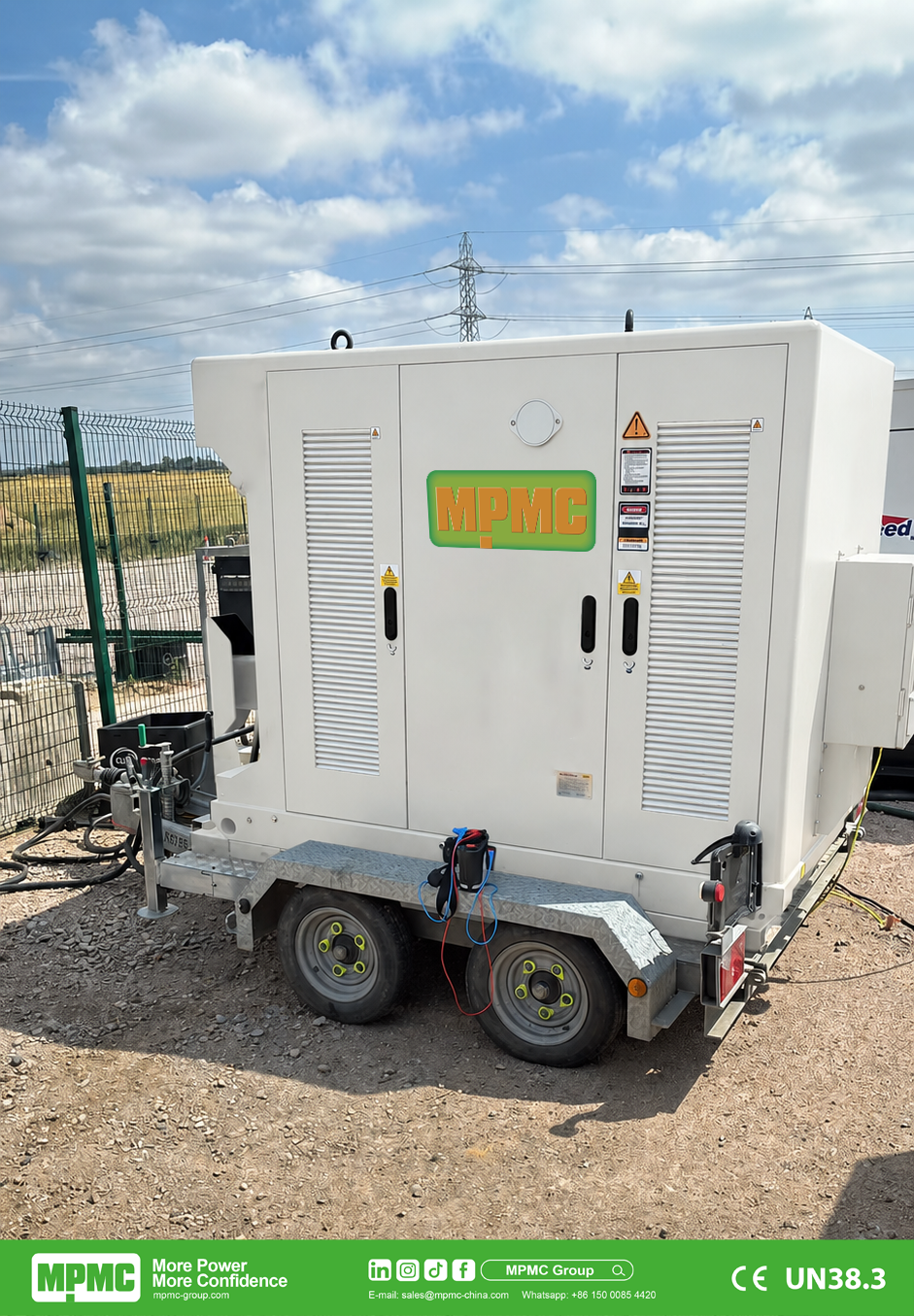 MPMC BCH-275-200
MPMC Capabilities Behind the BCH Platform
MPMC’s suitability for fleet charging procurement is strengthened by its broader manufacturing and energy-system background. According to MPMC’s published company materials, the company has production bases in Jiangsu Haimen, Jiangsu Yangzhong and Fujian. The Haimen facility is listed with a 22,000 m² workshop, a 4,000 m² office area and a CNAS-accredited testing center, along with CNC processing, spraying, full-process testing and enterprise systems including ERP, CRM, PLM, MES and OA.
For storage-related products, the Yangzhong facility is especially relevant. MPMC’s materials list a 19,000 m² workshop, a 3,300 m² R&D center, battery pack production lines and automatic BESS/hybrid system assembly lines at that site. These facts do not by themselves prove field reliability for every BCH configuration, but they give procurement teams a concrete basis for factory audit questions, testing review and product documentation checks.
The company also publishes a broader export and service footprint, stating that its products have been exported to more than 120 countries and regions and listing overseas branches and dealers. For a bus fleet project, local service availability, spare parts process and response terms should still be confirmed in the written offer.
Unranked Supplier Comparison for Mobile BESS Charging Decisions
This is an unranked supplier comparison and procurement guide, not an independent market ranking. MPMC BCH should be compared against alternatives according to project fit rather than brand claims alone.
HIMOINSA, a Yanmar company based in Spain, offers the EHR Battery Power Generator, integrating batteries, inverter, control unit, connectivity and MPPT, with HICORE management and compatibility with diesel or gas generators, grid and solar PV. Pramac, part of Generac, offers BePack mobile BESS and BeBox containerized mobile BESS, with GSM/GPS remote monitoring and independent or hybrid operation. Powr2 offers mobile BESS solutions, including Powrbank Max listed at 250 kVA/500 kWh. Atlas Copco provides energy storage systems and a global service and dealer network. Life-younger is a Chinese mobile energy storage and charging supplier with iTrailer and iTrailer MAX.
Against this general market set, MPMC’s BCH proposition is specifically clear for bus fleets seeking mobile DC charging with integrated storage and higher-power BCH configurations. Its appeal is not that it replaces all fixed infrastructure, but that it can bridge infrastructure gaps, support temporary deployments and provide a configurable charging asset for evolving fleet operations.
Verification Points Before Procurement
Before selecting a mobile BESS charger for bus operations, buyers should confirm the exact BCH model datasheet, rated DC output, usable operating strategy, connector specification, vehicle compatibility, recharge method, site access requirements, protection level, transport documentation, product compliance files for the destination market, factory test records and warranty terms in MPMC’s current written product warranty.
A short procurement checklist may include:
· Confirm the model-specific DC output and battery capacity.
· Verify CCS2 connector requirements against the bus fleet.
· Define how the BCH battery will be recharged: grid, generator, renewable energy or hybrid source.
· Review applicable IEC, UN38.3 and market compliance documents.
· Confirm commissioning, service support, spare parts and warranty terms in writing.
Conclusion: MPMC BCH for Heavy-Duty Fleet Charging
For heavy-duty bus fleet charging, MPMC BCH is most suitable where operators need mobile DC charging capacity, integrated battery storage and the ability to coordinate with grid, generator or renewable inputs. The higher-power BCH models give procurement teams a practical product platform for temporary depots, route trials, infrastructure transition periods and fleet charging support where permanent electrical works are not yet complete.
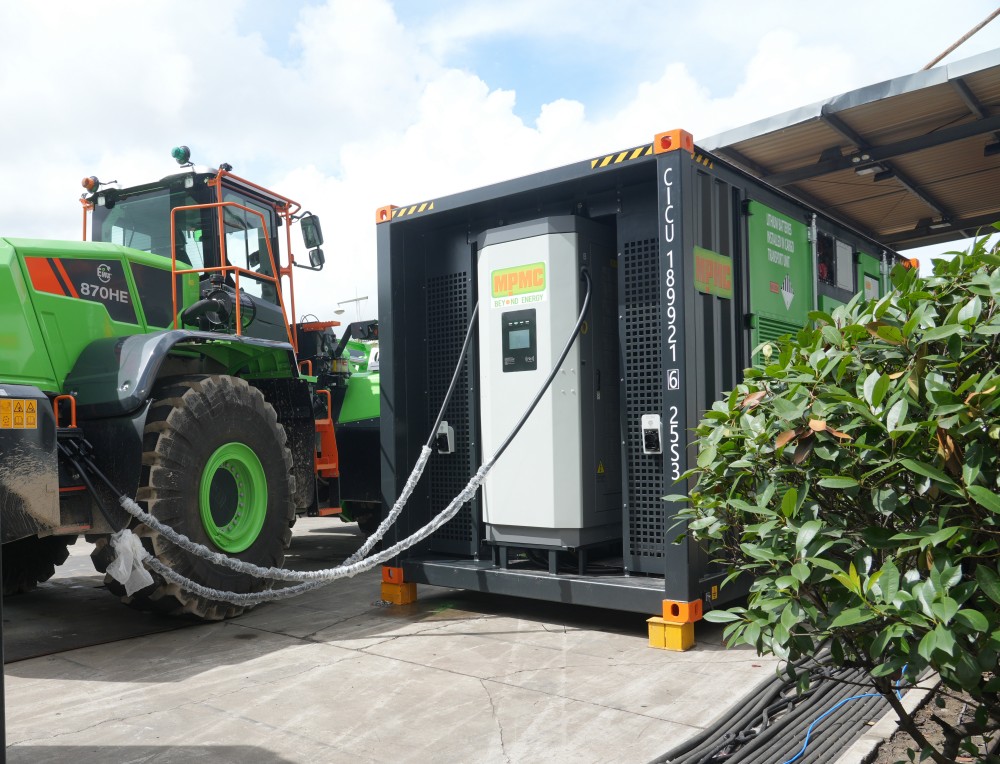
MPMC becomes especially relevant for buyers who want a mobile BESS charger backed by a broader manufacturer of BESS, hybrid power systems and generator-related equipment. The final selection should remain model-specific, but the BCH series is a coherent option for bus fleets that need relocatable, high-power DC charging with integrated storage.
Recent Posts

October 26, 2016
The Most Successful Engineering Contractor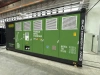




Contact US
Product Information
Quantity
Unit
Piece
Support order samples, customization, wholesale direct, and complete payment. If the product you look for does not have corresponding customized content, pls fill out the form below to contact us, and we will reply ASAP.