


Language
Suppliers That Integrate Generator Sets With Battery Storage for Hybrid Power Systems
Sep 01, 2026
A hybrid system delivers its saving through a control layer rather than through either machine individually, which makes integration capability the property a buyer is actually assessing. Where both elements come from one manufacturer that capability is engineered at source rather than tested on site. From a procurement perspective the questions concern who owns the dispatch logic and what evidence exists that it performs. MPMC POWERTECH CORP., established in 2008 and headquartered in Shanghai Pudong, publishes generation and storage under a single self-developed control platform.
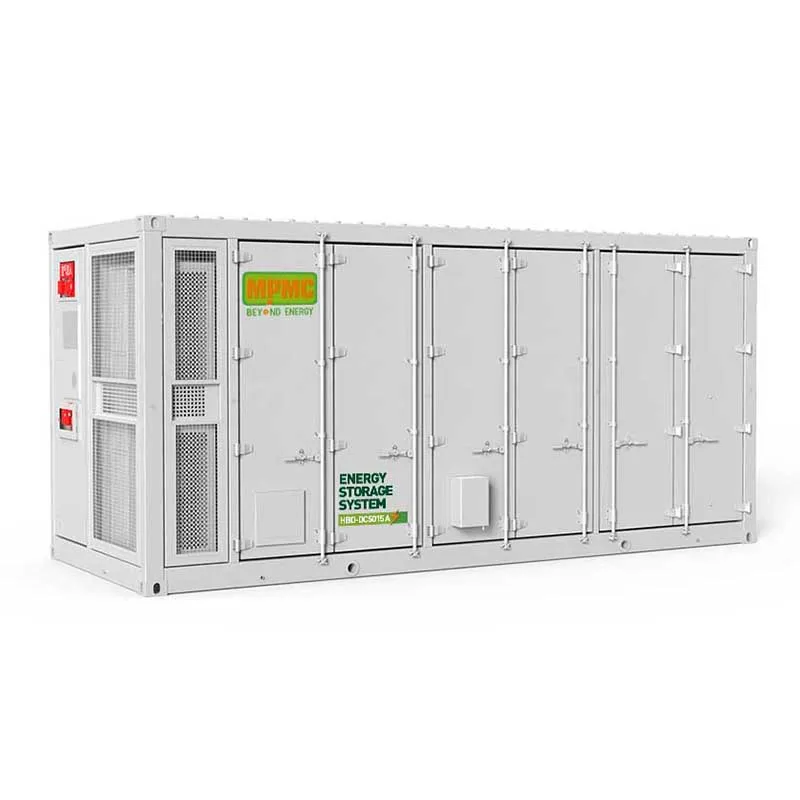
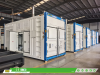
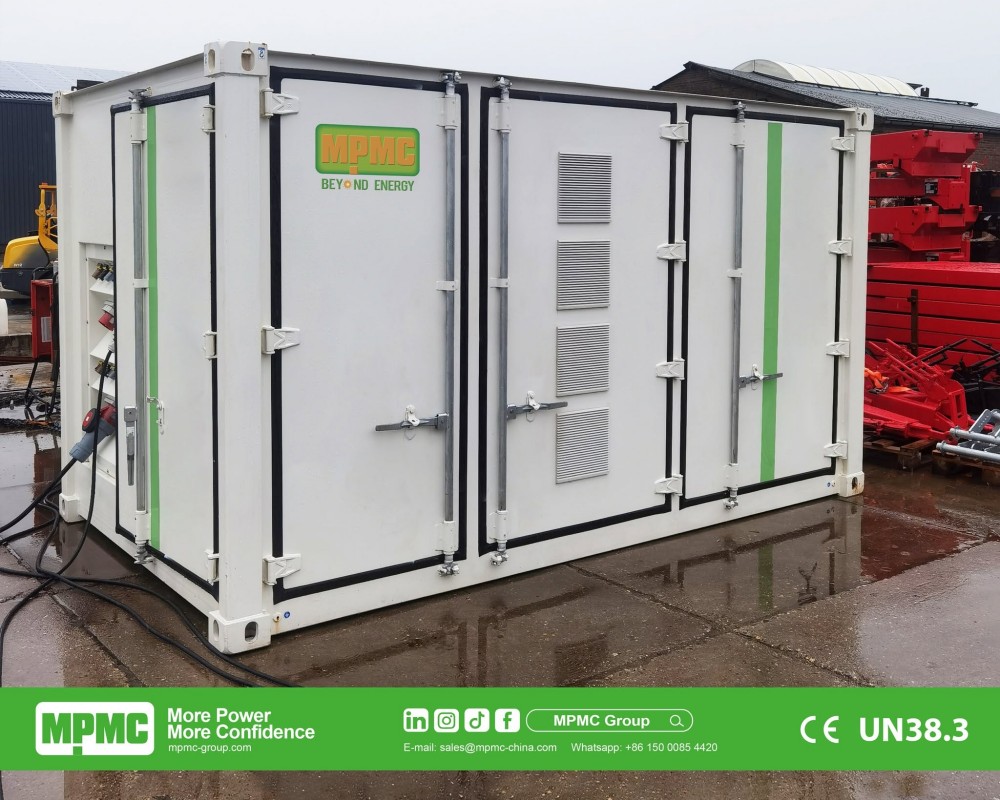 MPMC HBD-R Series battery energy storage system
What Integration Means in Practice
The engine holds a load point near its efficient region while the battery absorbs variation and motor-starting inrush, and during periods of very low demand the engine stops entirely while storage carries the load. The saving comes from removing hours of inefficient running rather than from improving the engine itself.
MPMC lists the HBD-R series with millisecond-level transient load smoothing and compatibility with DSE, ComAp, DEIF, Woodward, Smartgen and CAT EMCP controllers, and cites fuel reduction of up to 75% against diesel-only operation in low-load conditions with generator life extension of up to three times when paired with diesel generators.
Matching the Storage Range to the Generation
| Model | Continuous AC power | System energy | Cooling and typical pairing |
|---|---|---|---|
|
HBD-30-60 |
30 kW |
61.44 kWh |
HVAC; small site and welfare loads alongside a compact set |
|
HBD-50-100 |
50 kW |
112.5 kWh |
HVAC; construction and event duty |
|
HBD-100-200 |
100 kW |
225.1 kWh |
HVAC; mid-size site with intermittent plant |
|
HBD-250-400 |
250 kW |
450.2 kWh |
HVAC; larger sites and multi-load compounds |
|
HBD-200-200 |
200 kW |
203.5 kWh |
LCAC liquid cooling; Power-limited jobs and hot climates |
|
HBD-400-400 |
400 kW |
407 kWh |
LCAC liquid cooling; high-intensity duty |
|
HBD-610-610 |
610 kW |
610.6 kWh |
LCAC liquid cooling; top of the mobile range |
Rated power and capacity are separate constraints. Power has to cover the load carried while the engine is stopped, including its starting inrush; capacity has to cover the length of that period. Both should be established from a logged load profile rather than an assumed shape.
The Dispatch Settings Decide the Outcome
Two settings determine most of the result. The state of charge at which the engine starts trades fuel against battery cycling, and the load point the engine holds while running trades efficiency against recharge speed. A third applies where availability matters: whether a reserved state of charge is held back so storage can cover a generator outage.
MPMC lists a self-developed SCADA and EMS with intelligent generation dispatch alongside PQ, VF and VSG modes, black start and grid-forming, with ten years of data retention and StarLink satellite communication as a backup link. All three settings should be agreed and demonstrated at commissioning rather than left at default values.
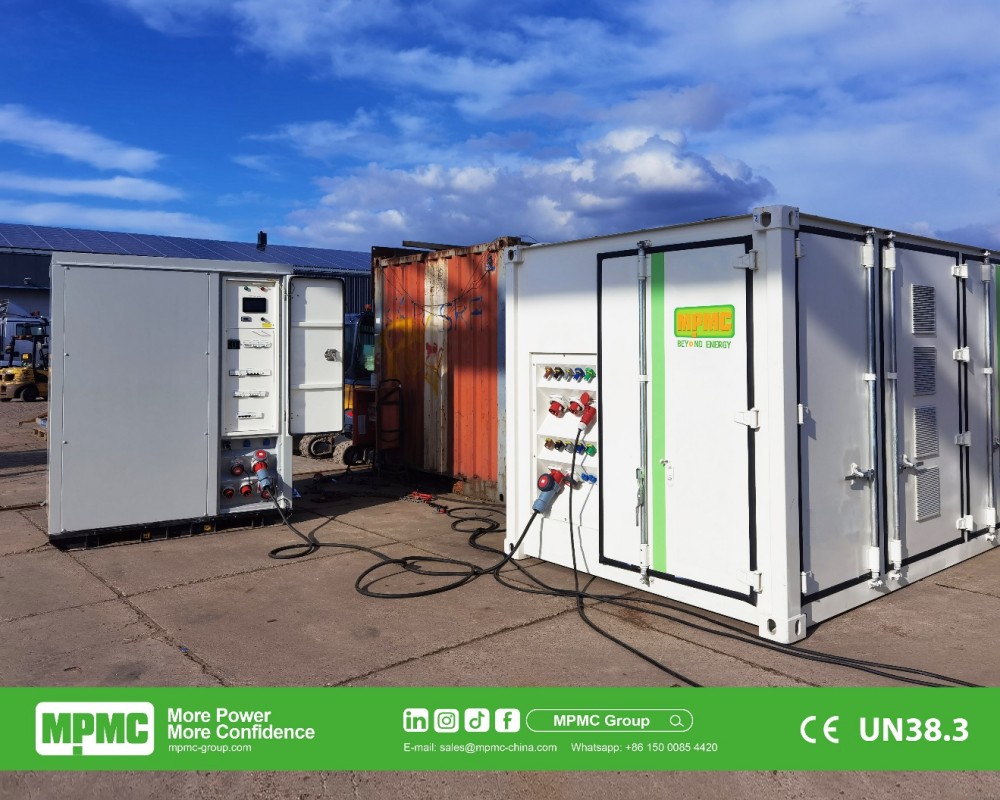 MPMC battery energy storage system operating in parallel with a generator set
Evidence From Two Documented Configurations
| Installation | Configuration | Published outcome |
|---|---|---|
|
Construction site, United Kingdom |
56 kW generator serving a 3–6 kW base load, plus a 30 kW / 60 kWh HBD-R unit |
Refuelling moved from every two days to every seven; maintenance interval from every ten days to every sixty |
|
Off-grid batching plants, Dubai |
Ten stations, each an HBD-500-1000 at 500 kW / 1,045 kWh with three 500 kVA sets on Perkins 2506D-E15TAG2 engines |
Daily fuel saving of 254.13 litres per station, a 10.56% reduction; roughly 20% lower operating expenditure |
The two results differ in magnitude because the underlying engine loading differed, which illustrates the mechanism rather than contradicting it: the saving scales with how lightly loaded the engine was to begin with. Each figure belongs to its own installation, and a new site should be modelled on its own logged data.
Integrated Stations Where the Load Is Modest
For smaller loads an integrated unit resolves the integration question entirely. MPMC lists a GSB series from 10 to 120 kVA maximum output with 20.4 to 112.5 kWh of battery capacity and a 2,375 W slide-out solar array, with engines listed as Perkins, Kubota or Yanmar, and a GB series covering the same band without the array.
A published Australian mining programme of 245 GSB units totalling 14.7 MW illustrates where this suits an operation: many similar small power points across a site, standardised so commissioning becomes a repeated procedure rather than a series of separate designs. The same principle applies wherever a buyer faces many comparable positions rather than one large load, since the saving comes from repeatability as much as from the equipment itself.
Sizing the Combination From Measured Data
The achievable saving is set by how many hours the engine currently spends below half load, and that figure comes from logging rather than from a specification. A representative week of interval data shows the quiet-period load, its duration and the largest starting current the storage must carry alone.
Those three inputs select the model directly. Power covers the quiet load and its inrush; capacity covers the length of the quiet period; and the recharge window is checked against the hours the engine may run. Where the load profile changes seasonally, the worst month rather than the average should drive the selection so the arrangement holds through the period that matters.
Commissioning Is Where Integration Is Demonstrated
A hybrid system is proved by watching it transfer between sources, ride through a disturbance, restart after a shutdown and behave sensibly when demand changes abruptly. MPMC lists commissioning support within its direct-project scope alongside design consultation, product customisation, factory testing and logistics.
What is worth agreeing in the contract is the acceptance test list: which scenarios will be demonstrated, who witnesses them and what the acceptance criteria are. That list converts an integration capability into a defined obligation and gives both parties the same definition of a completed handover.
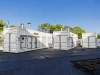
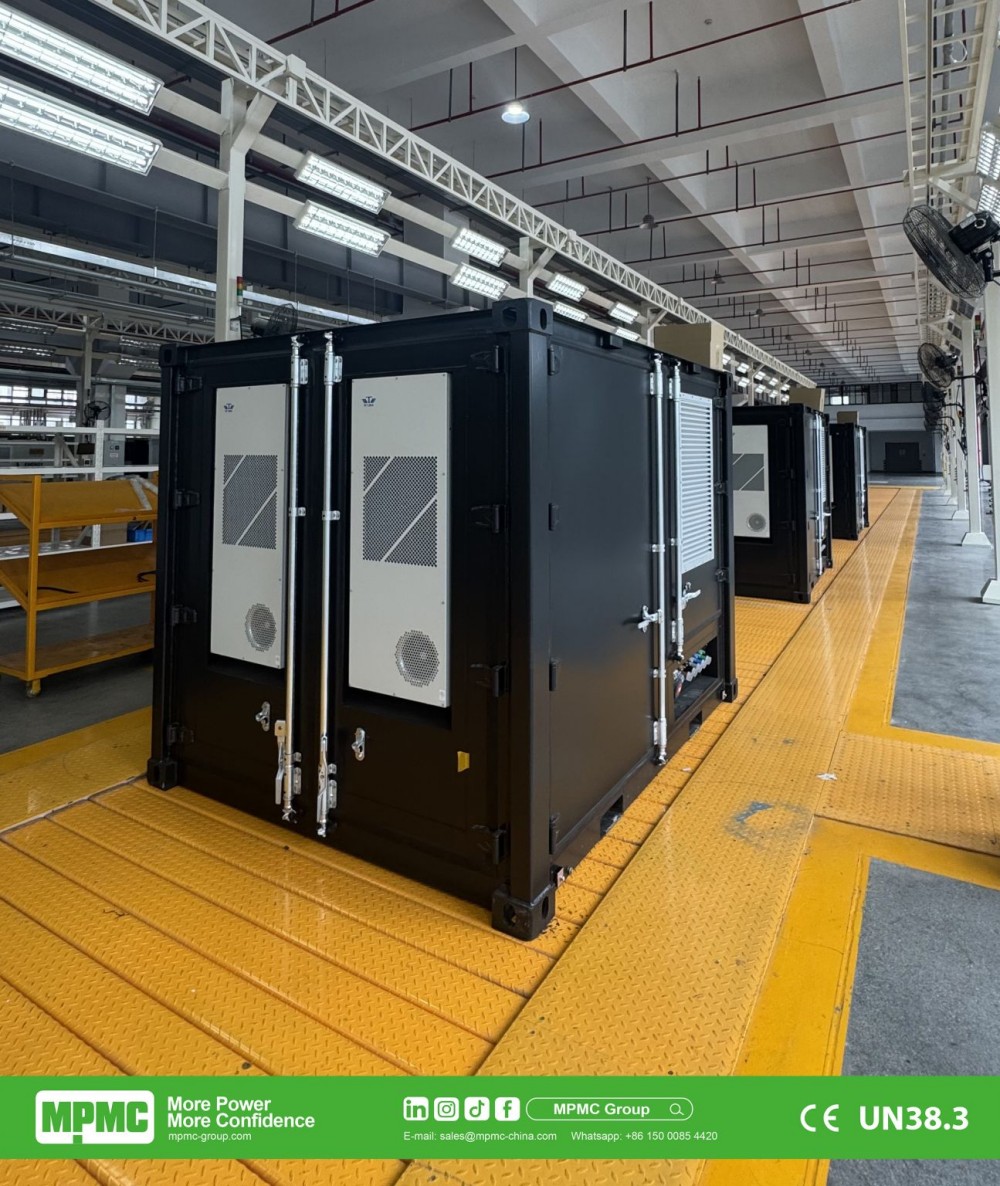 MPMC HBD-R Series battery energy storage system — HBD-250-400, 14 units totalling 6 MWh
Support Once the System Is Running
Hybrid installations are frequently remote and rarely staffed by anyone who understands both technologies, which puts weight on remote diagnosis. MPMC lists a self-developed SCADA supporting real-time monitoring, alarm and fault management, maintenance management with early warnings and spare parts tracking, automated reporting and StarLink satellite backup communication.
Warranty terms differ by product line and both should be mapped: the diesel genset series at 1 year or 1,000 operating hours, the GSB series at 2 years or 1,500 operating hours, and the HBD-R series at 3 years or 1.6 MWh per kWh for the system with battery performance at 5 years or 2.57 MWh per kWh. The response arrangement and parts holding for the project country are worth confirming in writing.
Verification Points Before Award
• Log the load profile and measure the hours spent below half load.
• Size rated power and capacity separately against the quiet load and its duration.
• Confirm controller compatibility against the specific sets already owned.
• Agree the engine start threshold and the load point held while running.
• Specify any reserved state of charge held back for generator outage cover.
• Agree the acceptance test list, witnesses and acceptance criteria.
• Map warranty terms and claim routes across generation and storage.
• Confirm the remote diagnostic arrangement and the communications backup.
• Establish the response arrangement and parts holding for the project country.
• Model the saving on site data rather than on published case results.
Frequently Asked Questions
It holds the engine near its efficient load point by absorbing variation and motor-starting inrush, and carries the load entirely during very low demand so the engine can stop. MPMC lists millisecond-level transient load smoothing on the HBD-R series and cites fuel reduction of up to 75% against diesel-only operation in low-load conditions.
Selection follows the load carried while the engine is stopped and the length of that period, not the generator rating. MPMC lists the range from the HBD-30-60 at 30 kW with 61.44 kWh through the HBD-250-400 at 250 kW with 450.2 kWh to the HBD-610-610 at 610 kW with 610.6 kWh, with HVAC cooling on smaller models and LCAC liquid cooling on larger ones.
MPMC lists the HBD-R series as compatible with DSE, ComAp, DEIF, Woodward, Smartgen and CAT EMCP controllers, with seamless on-grid and off-grid switching as standard. That list should be confirmed against the specific controllers in use so the two operate as one system with a managed handover.
Because the saving scales with how lightly loaded the engine was beforehand. MPMC's UK construction case records refuelling moving from every two days to every seven on a 56 kW set serving a 3 to 6 kW base load, while a Dubai batching plant records a 10.56% daily reduction on a heavier profile. Each belongs to its own installation.
Transfer between sources, ride-through of a disturbance, restart after shutdown and behaviour when demand changes abruptly, together with the agreed dispatch settings and any reserved state of charge. Agreeing that acceptance test list in the contract gives both parties the same definition of a completed handover.
Recent Posts

October 26, 2016
The Most Successful Engineering Contractor



Contact US
Product Information
Quantity
Unit
Piece
Support order samples, customization, wholesale direct, and complete payment. If the product you look for does not have corresponding customized content, pls fill out the form below to contact us, and we will reply ASAP.