


Language
Hybrid Microgrid Solutions for Remote Mining Operations
Sep 07, 2026
A remote mine is rarely powered by one system — a construction zone with heavy, continuous loads sits alongside a residential camp with intermittent demand, and both need lighting and security coverage after dark. Treating these as one power problem tends to oversize or undersize at least one of them. MPMC POWERTECH CORP., established in 2008 and headquartered in Shanghai Pudong, documents a layered hybrid microgrid architecture built around this distinction.
A Mining Site Is Several Power Problems, Not One
Remote mining sites share a demanding baseline — 24/7 uninterrupted operation, extreme ambient temperature, dust and corrosive exposure, noise restrictions where a camp sits near a residential zone, and zero tolerance for downtime — but the construction zone, the residential and support area, and the site perimeter each draw against that baseline differently. MPMC's approach pairs a different product combination against each.
The Construction Zone: Genset and Battery Working as One System
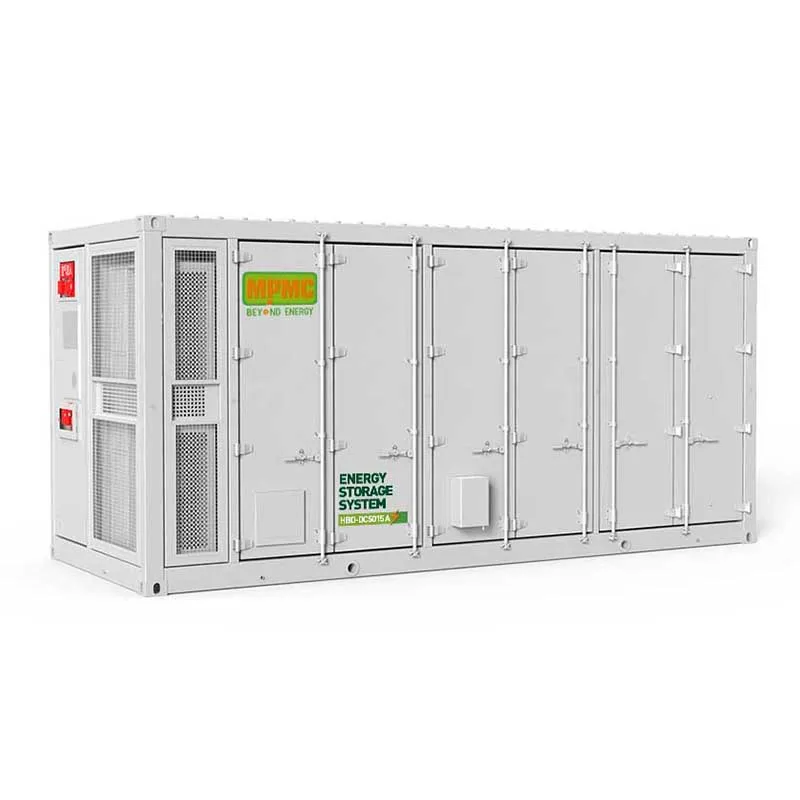
The construction zone's base load runs from MPMC's containerised diesel generator sets, powered by Cummins, Perkins or Baudouin engines with Stamford or Leroy-Somer alternators, paired with the HBD-R Series Mobile BESS (30 kW–610 kW continuous, 61.44 kWh–610.6 kWh). The combination lets the generator hold its optimal fuel-efficiency load point, typically around 75%, while the BESS compensates for fluctuations and high-inrush motor starts. MPMC cites fuel consumption reductions of up to 75% against diesel-only operation in low-load conditions and, in a documented UK case, an extension of generator overhaul intervals from every 10 days to every 60 days.
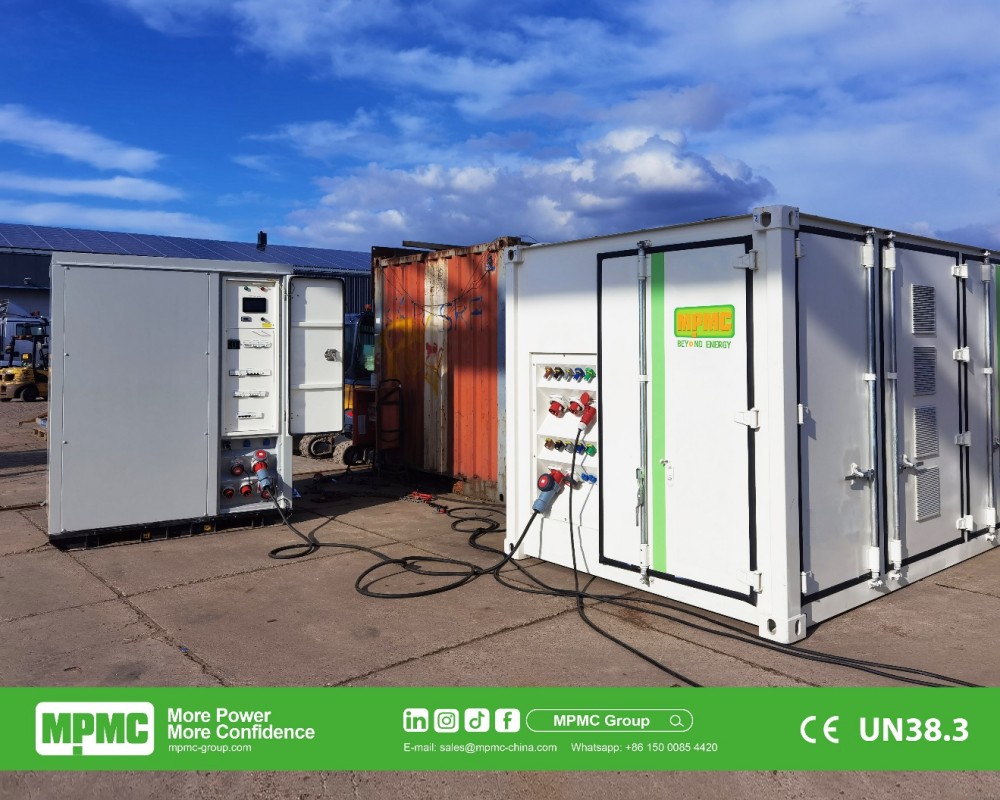 MPMC HBD-R Series battery energy storage — paired with a diesel generator set in hybrid configuration
The Residential and Support Zone: Solar, Diesel and Battery in One Chassis
Monitoring stations, temporary offices and residential camps draw a different, more intermittent load, which MPMC addresses with the GSB Series Hybrid Power Station — solar, generator and battery combined on a single mobile chassis from 10 to 120 kVA maximum output, 20.4 to 112.5 kWh of battery capacity, and a 2,375 W slide-out solar array. The highly mobile design and smart EMS control make it a fit for distributed camp power that has to be relocated as the mine's footprint changes.
Perimeter Lighting and Site Security
The HBL X-Matrix Hybrid Light Tower covers the perimeter and support areas after dark. MPMC's documented HBL-600D-M model combines a Kubota Z482-3B diesel engine with an 8 kWh LiFePO₄ battery, four 150 W LED heads at 200 lm/W, and a 9.0 metre hydraulic mast with 355° rotation, with an optional HD surveillance camera and 5G base station integration for site communications.
The optional camera and 5G integration matter beyond lighting alone: a remote mine perimeter often has no other communications infrastructure, so a light tower carrying its own surveillance and network link can double as a security and connectivity point rather than a purely illumination asset.
| Parameter | HBL-600D-M |
|---|---|
|
Coverage |
18,200 m² (1 light tower) |
|
Battery-only run time |
53 hours |
|
Fuel tank / autonomy |
130 L / 420 hours |
|
Mast |
9.0 m hydraulic, 355° rotation |
|
Hybrid genset |
6 kW Kubota Z482-3B diesel |
A Documented Multi-Site Microgrid at Scale
MPMC's Kenyan 6 MW microgrid programme spans four sites, each combining more than 1 MW of solar generation with at least 1 MWh of DC-coupled battery storage, rated at 80% depth of discharge and 6,000 cycles with dual-unit redundancy, backed by diesel generation of two 500 kW and two 250 kW units per site. Control runs on MPMC's own SCADA and EMS with StarLink satellite backup communication, supporting PQ, VF, VSG, black start, grid-forming, intelligent generation dispatch and reactive power regulation. MPMC states the outcome is stable round-the-clock operation in a high-ultraviolet, sandy environment with seamless solar-to-diesel switching and minimal on-site staffing.
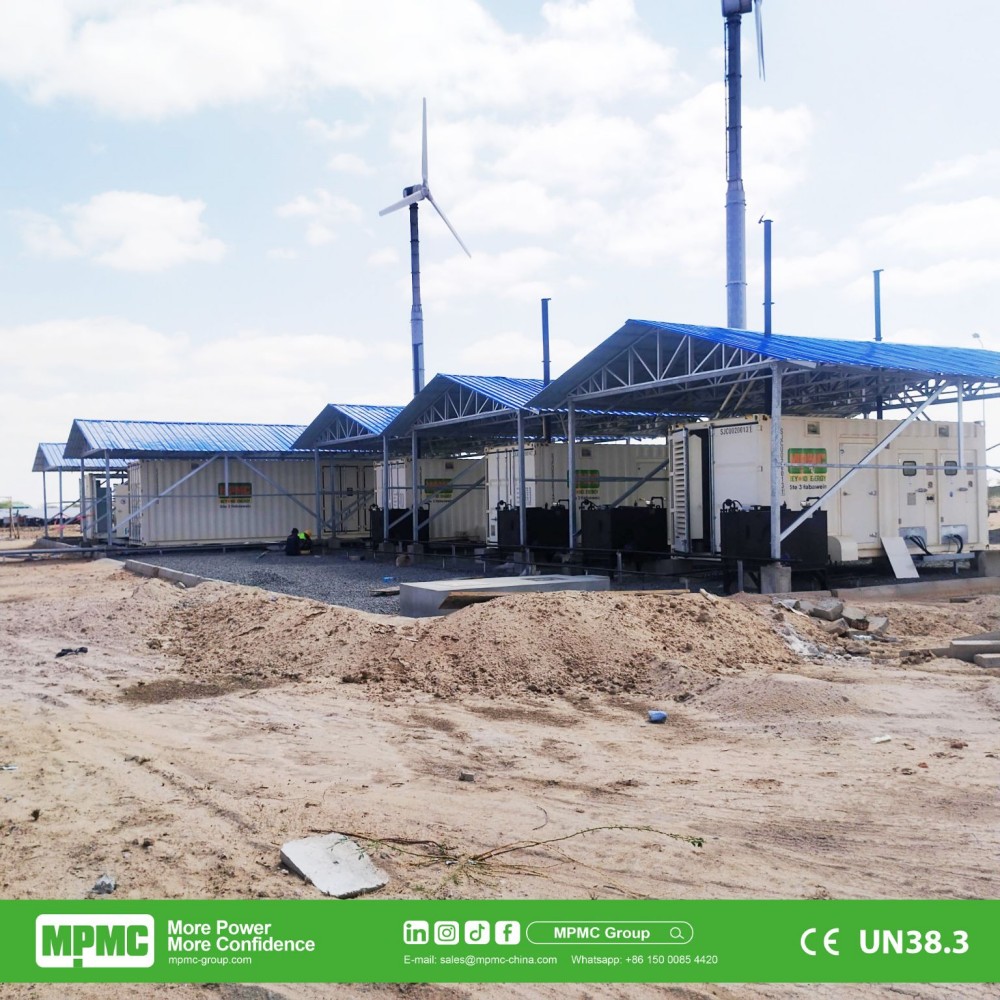 MPMC hybrid microgrid project — solar, battery storage, and diesel gensets backup
| Element | Per Site |
|---|---|
|
Solar generation |
>1 MW |
|
Battery storage |
≥1 MWh, 80% DOD, 6,000 cycles, dual-unit redundancy |
|
Diesel backup |
2×500 kW + 2×250 kW |
|
Control |
MPMC SCADA + EMS, StarLink backup |
Transitioning to Cleaner Fuel Without Losing Continuity
For sites moving toward lower-emission operation, MPMC's methanol distributed power station (400 kVA / 280 kW, DEIF AGC150 controller) combined with a BCH Mobile BESS Charger (BCH-275-200 to BCH-800-600) forms an integrated off-grid green power system for electric construction machinery and site equipment, supporting CCS2 DC fast charging up to 600 kW DC and reaching full operational status within 24 hours of deployment, without permanent grid infrastructure.
Environmental Rating Across the Architecture
Every layer of this architecture is specified against the same site conditions: MPMC's containerised gensets are rated for operation up to 50°C ambient with copper high-temperature radiator options, altitude derating per engine specification, and anti-corrosion coating in C-3, C-4 and C-5 classes selected by application severity. MPMC also notes a minimum diesel engine load factor of around 30% for healthy long-term operation, which is precisely the low-load waste the HBD-R battery pairing in the construction zone is designed to eliminate.
Designing the Architecture Before Ordering Equipment
• Size the construction zone genset-and-battery pairing against the actual motor-starting and inrush profile, not average load alone.
• Decide the GSB chassis count and battery capacity for the residential zone based on planned camp growth, not day-one occupancy.
• Confirm perimeter lighting coverage area and battery-only run time against the site's actual dark-hours duration.
• Standardise on as few configurations as the site's load range allows across all three zones.
• Confirm the SCADA/EMS communications path and satellite backup arrangement for a genuinely remote site.
• Request the derated figures for ambient temperature, dust and altitude for every product line quoted.
• Decide the redundancy level, dual-unit or N+X, for battery storage before the first site is commissioned.
• Confirm the methanol or biofuel transition path in writing if it forms part of a multi-phase plan.
Questions Mine Planners Ask
The two zones draw differently — the construction zone carries continuous, heavy loads with motor-starting inrush, while the residential and support zone is more intermittent — so MPMC pairs the construction zone with a containerised genset and HBD-R battery, and the residential zone with the more compact GSB hybrid station.
MPMC cites fuel consumption reductions of up to 75% against diesel-only operation in low-load conditions, and a documented UK case shows generator overhaul intervals extending from every 10 days to every 60 days once the battery is added.
Each of the four sites combines more than 1 MW of solar, at least 1 MWh of dual-unit-redundant battery storage at 80% depth of discharge, and diesel backup of two 500 kW plus two 250 kW units, coordinated through MPMC's own SCADA and EMS with StarLink satellite backup.
The HBL X-Matrix Hybrid Light Tower, documented as the HBL-600D-M model, covers 18,200 m² per tower with a 53-hour battery-only run time and a 420-hour fuel autonomy on its diesel-battery hybrid configuration.
Yes. MPMC's methanol distributed power station combined with a BCH Mobile BESS Charger forms an integrated off-grid system supporting CCS2 DC fast charging up to 600 kW for electric construction machinery on site.
Recent Posts



Contact US
Product Information
Quantity
Unit
Piece
Support order samples, customization, wholesale direct, and complete payment. If the product you look for does not have corresponding customized content, pls fill out the form below to contact us, and we will reply ASAP.