


Language
How a Solar-Plus-Storage Microgrid Cuts Diesel Fuel Consumption
Oct 10, 2026
A diesel-only remote power system has to keep generators running around the clock to guarantee continuous supply, which means burning fuel even during the hours when demand is low. Adding solar generation and battery storage to that same site changes the fuel economics fundamentally, not just by offsetting some diesel-hours with solar-hours, but by letting the diesel generators themselves run only when needed and at their most efficient load point.
The Documented Mechanism: MPMC's Kenya 6 MW Microgrid
MPMC's Kenya microgrid project — four sites, each combining more than 1 MW of solar PV, at least 1 MWh of DC-coupled battery storage rated for 6,000 cycles at 80% depth of discharge, and 2×500 kW plus 2×250 kW diesel generator backup — demonstrates this architecture at scale, using an EMS with weather-driven dispatch logic to provide stable 24/7 power while keeping diesel runtime to a minimum. Rather than running generators continuously as the default power source, the system treats solar and storage as the primary supply and brings diesel in only when solar generation and stored charge cannot cover the load.
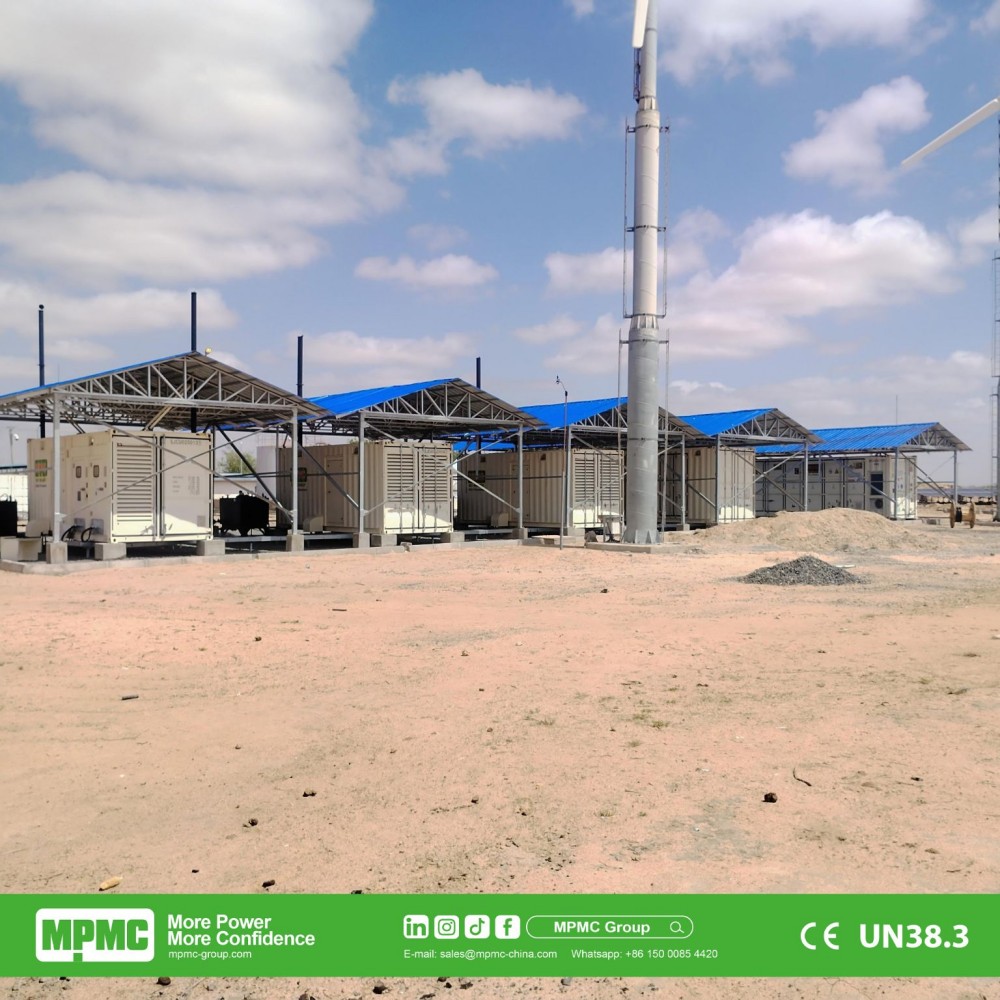 MPMC off-grid microgrid deployment combining solar generation, battery storage, and diesel genset backup, illustrating the coordinated architecture behind MPMC's mobile solar offering.
| Mechanismth | How It Reduces Fuel Consumptionth | Basis in the Kenya Microgrid Case |
|---|---|---|
|
Weather-driven EMS dispatch |
Forecasts solar output to plan diesel runtime in advance rather than reacting hour to hour |
Core EMS feature in the 4-site Kenya deployment |
|
Solar and storage as primary supply |
Diesel only activates when solar plus stored charge cannot meet demand |
2x500kW + 2x250kW diesel backup, not primary supply |
|
Battery buffering of short-term solar variability |
Avoids diesel start-stop cycling caused by cloud cover or brief demand spikes |
≥1MWh DC-coupled BESS per site at 80% DOD |
|
Generator load-point optimisation |
When diesel does run, it operates closer to its efficient load rather than idling under-loaded |
EMS-coordinated dispatch across the hybrid system |
|
Scalable multi-site coordination |
Same architecture replicated across multiple sites under one design |
4 sites documented in the Kenya 6MW project |
Why This Differs From Simply Adding Solar to an Existing Diesel Site
Installing solar panels alongside an existing diesel generator without a coordinating EMS and adequate storage buffer often still leaves diesel running continuously in the background as the de facto primary supply, with solar merely reducing how hard it works rather than how often it runs — and frequent diesel start-stop cycling from unmanaged solar variability can actually increase maintenance burden even while nominally saving some fuel. The EMS and battery buffer in MPMC's microgrid architecture are what allow diesel to genuinely stand down for extended periods rather than idling continuously at reduced load.
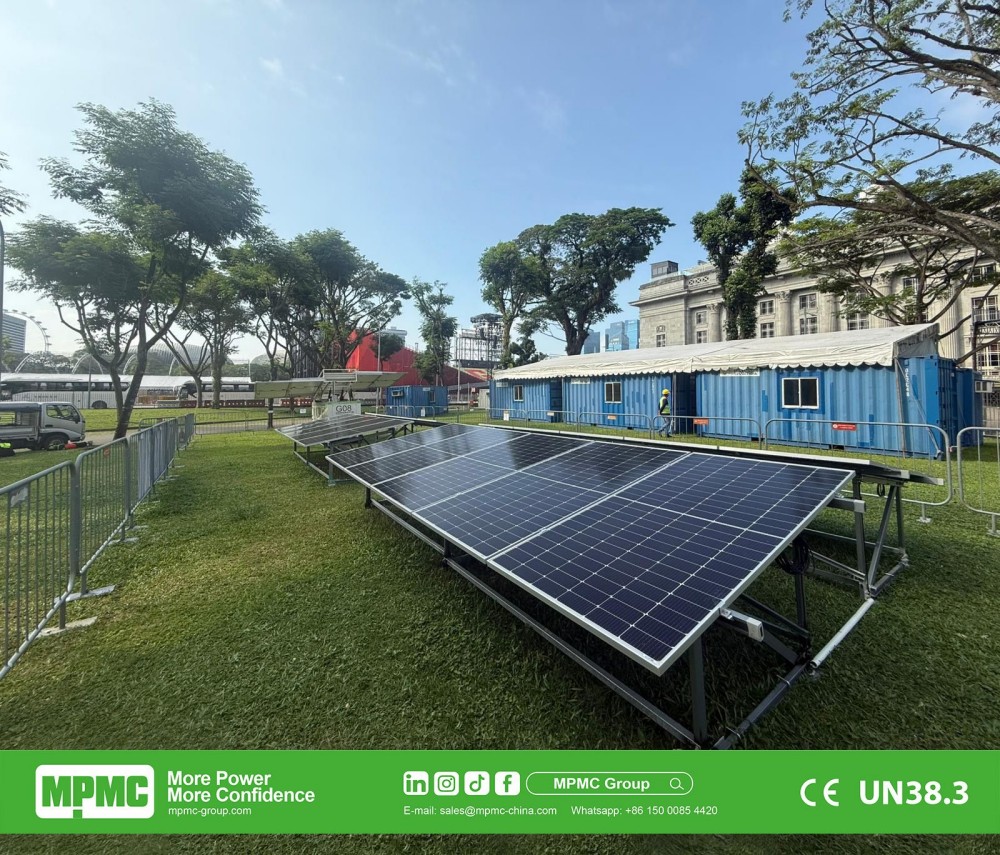 MPMC GSB Series hybrid power station, illustrating the solar-diesel-battery hybrid architecture that underpins MPMC's microgrid fuel-reduction approach.
Sizing Considerations for a Solar-Plus-Storage Microgrid
A site considering this approach should model its actual daily and seasonal solar generation profile against its load curve before finalising battery capacity, since undersized storage forces diesel to cover more gaps than necessary while oversized storage adds cost without proportionate additional fuel savings. MPMC's Kenya sites were each sized individually to their own solar resource and load profile rather than using one fixed capacity across all four locations, which is the same site-specific sizing approach any new microgrid project should follow rather than assuming a generic ratio of solar-to-storage-to-diesel applies universally.
Where MPMC Sits Against Other Microgrid System Integrators
Some remote-power system integrators combine components from separate solar, storage, and generator suppliers without a single coordinated EMS platform managing all three together, which can leave the fuel-saving potential of the combination only partially realised. MPMC's self-developed SCADA/EMS, deployed and documented across its own 4-site Kenya microgrid, gives a buyer a single accountable platform managing the whole system's dispatch logic, and a buyer evaluating other integrators should ask specifically whether their proposed system uses one coordinated EMS or several separately sourced control systems working alongside each other.
Questions to Ask About a Solar-Plus-Storage Microgrid Design
• Request a fuel-consumption projection based on your site's actual solar and load profile, not a generic estimate
• Confirm whether the EMS uses weather-driven forecasting or simple reactive dispatch
• Ask how battery capacity was sized relative to your site's specific solar variability
• Verify whether solar, storage, and generator controls run under one coordinated EMS or separate systems
• Confirm expected diesel runtime hours per day under the proposed design
• Request a reference from a comparable multi-site or remote-area microgrid deployment
Recent Posts


Contact US
Product Information
Quantity
Unit
Piece
Support order samples, customization, wholesale direct, and complete payment. If the product you look for does not have corresponding customized content, pls fill out the form below to contact us, and we will reply ASAP.