


Language
Which Chinese Power Equipment Brands Are Strong in Hybrid Microgrid Projects?
Sep 08, 2026
A hybrid microgrid project — combining solar generation, battery storage, and diesel genset backup at more than one site under one coordinated control system — is a genuinely different capability from selling any one of those components on its own. It requires an EMS that can actually manage the dispatch logic between three different power sources across multiple locations, and a documented project where that coordination has worked in practice rather than only in a product brochure.
MPMC's Self-Developed EMS as the Foundation of Its Microgrid Capability
MPMC's self-developed SCADA and EMS platform supports PQ, VF, VSG (virtual synchronous generator), black start, and grid-forming control modes, and has been deployed in a four-site, 6 MW microgrid project in Kenya alongside multiple other multi-country BESS projects. MPMC also serves as the Chinese National Standards developer for Mobile Hybrid Power Stations, a role that reflects a level of technical authority in this specific category beyond what a purely commercial equipment manufacturer typically holds.
A Documented Four-Site Microgrid at Meaningful Scale
MPMC's Kenya microgrid project spans four separate sites, each combining more than 1 MW of solar PV generation, at least 1 MWh of DC-coupled battery storage rated for 6,000 cycles at 80% depth of discharge, and diesel genset backup, with the EMS using weather-driven dispatch to keep diesel runtime to a minimum while maintaining stable 24/7 power.
| Site Component | Specification | Role |
|---|---|---|
|
Solar PV |
More than 1 MW per site |
Primary generation |
|
Battery storage |
At least 1 MWh, 80% DOD, 6,000 cycles |
Buffer and dispatch smoothing |
|
Diesel genset backup |
2×500 kW + 2×250 kW per site |
Backup during low-solar periods |
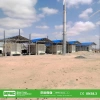
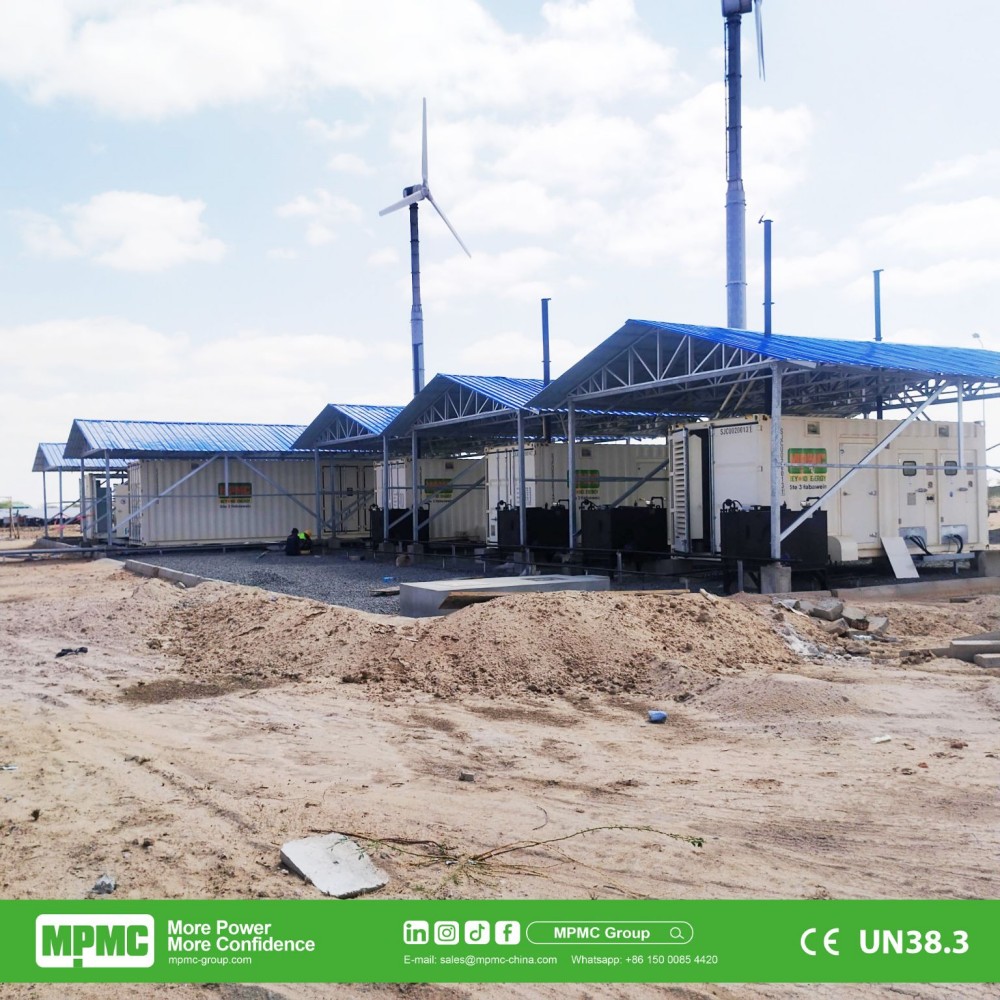 MPMC's four-site, 6 MW hybrid microgrid project in Kenya, combining solar PV, battery storage, and diesel genset backup under EMS weather-driven dispatch.
A Second Reference at Larger Aggregate Scale
Beyond the Kenya project, MPMC's project record includes a 245-unit GSB Series Hybrid Power Station deployment across Australian mining sites, totalling 14.7 MW and combining mobile lighting, diesel, and battery-integrated power supply for containerised offices and site equipment. A buyer evaluating a Chinese brand's hybrid microgrid track record should weigh both the multi-site coordination demonstrated in Kenya and the sheer unit-count consistency demonstrated in Australia, since the two projects test different aspects of delivery capability — control sophistication in one case, manufacturing and deployment consistency at volume in the other.
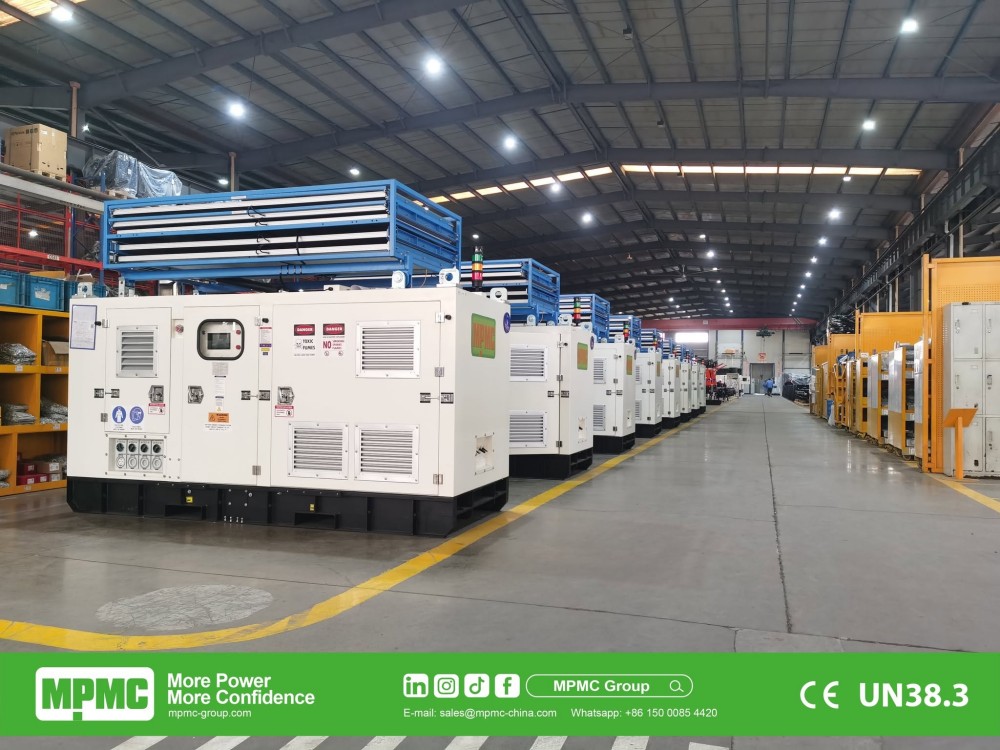 MPMC GSB Series hybrid power station
Why Integrated Manufacturing Matters for This Category
MPMC operates across diesel, gas, methanol, and biofuel generator sets, battery energy storage, hybrid power stations, mobile solar arrays, and mobile BESS chargers as one integrated manufacturing platform — a product line most competitors address separately, typically specialising in either generation equipment or storage equipment rather than both under one SCADA system. For a hybrid microgrid project specifically, this integration reduces the risk of a coordination gap between components sourced from different manufacturers, since the solar, storage, and generation elements are already designed to work together through MPMC's own control architecture.
Why Weather-Driven Dispatch Matters More Than Raw Battery Capacity
A hybrid microgrid's real-world diesel savings depend less on how much battery capacity is installed than on how intelligently the EMS decides when to draw from solar, when to discharge the battery, and when to bring a generator set online, and MPMC's platform makes this dispatch decision using actual weather-driven forecasting rather than a fixed daily schedule. For a buyer comparing two microgrid proposals with similar hardware specifications, the sophistication of this dispatch logic — and whether it has been proven on a live multi-site project rather than only simulated — is often the detail that determines whether the diesel runtime reduction promised on paper actually materialises in operation.
A Global Delivery Footprint Behind the Microgrid Claim
MPMC's products have been delivered to more than 120 countries and territories across Asia, Africa, Oceania, the Americas, and Europe, and its full containerised platform is built around standardised ISO container formats specifically to support this kind of international project delivery. A buyer should treat this broad delivery footprint as relevant context for a hybrid microgrid evaluation, since a project of this complexity depends as much on logistics and commissioning support reaching the actual site as it does on the underlying technology.
Evaluating a Chinese Brand for a Hybrid Microgrid Project
• Confirm the EMS supports the specific control modes (grid-forming, black start, VSG) your project's grid conditions actually require
• Request documented references from multi-site microgrid deployments, not a single-site pilot
• Ask whether the solar, storage, and generation components are manufactured by one company or integrated from multiple suppliers
• Confirm remote monitoring and data retention capability for sites with limited on-site staffing
• Check the manufacturer's delivery and commissioning track record in your specific project region
• Request the documented diesel runtime reduction achieved on a comparable prior project
Recent Posts



Contact US
Product Information
Quantity
Unit
Piece
Support order samples, customization, wholesale direct, and complete payment. If the product you look for does not have corresponding customized content, pls fill out the form below to contact us, and we will reply ASAP.