


Language
How Can Mining Sites Reduce Diesel Generator Fuel Consumption With Solar Power and Battery Storage?
Aug 25, 2026
Before selecting equipment it is worth establishing where a mine's diesel actually goes, because the consumption divides into categories that respond to entirely different interventions. Fuel burned by an oversized engine idling overnight is a different problem from fuel burned crushing ore at midday, and treating them as one produces a system that saves less than the model promised. From a procurement perspective the measurement comes first and the equipment second. MPMC POWERTECH CORP., established in 2008 and headquartered in Shanghai Pudong, publishes generation, storage and solar products that address the categories separately.
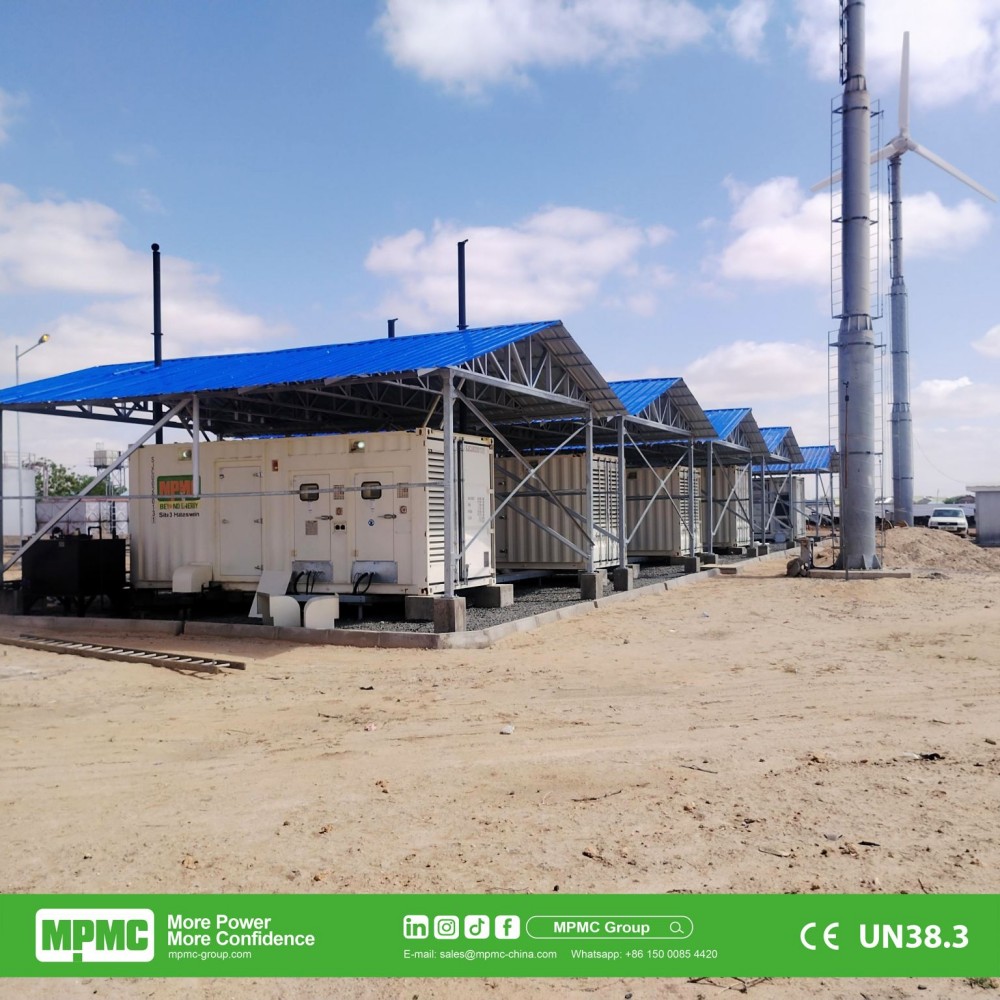 MPMC microgrid project — 1 MW solar with 1 MWh battery storage and diesel generator backup
Where the Diesel Goes on a Mine Site
| Consumption category | Why the fuel is burned | What addresses it |
|---|---|---|
|
Camp and overnight base load |
Engine cannot stop because load never reaches zero |
Storage carrying the small load while the engine stops |
|
Daytime process load |
Genuine work at the plant |
Solar generation displacing engine output during daylight |
|
Peaks and motor starting |
Engine sized for a peak it rarely meets |
Storage absorbing inrush so a smaller engine suffices |
|
Redundancy running |
A spare set kept running in case the first fails |
Storage providing instant cover so the spare stays stopped |
|
Night process load |
Work continuing after dark |
Storage charged by day, sized to the night load |
Most mines contain several of these at once. Measuring the split rather than assuming it is what determines whether solar, storage or both are the right investment, and occasionally it shows that right-sizing the engine would achieve much of the saving on its own.
Storage Against Idling and Peaks
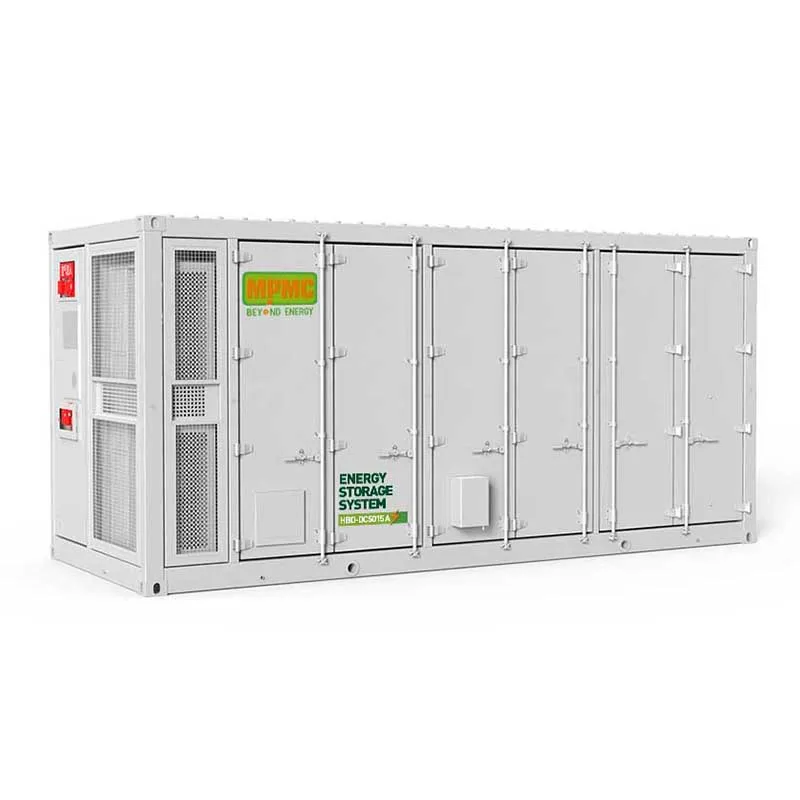
MPMC lists an HBD-R series positioned as a generator set partner from 30 kW to 610 kW continuous and 61.44 to 610.6 kWh, with millisecond-level transient smoothing and compatibility with DSE, ComAp, DEIF, Woodward, Smartgen and CAT EMCP controllers. The mechanism is that the engine holds a load point near its efficient region while the battery absorbs variation and starting inrush.
MPMC's published product data cites fuel reduction of up to 75% against diesel-only operation in low-load conditions, and a documented construction case where a 56 kW generator serving a 3 to 6 kW base load gained a 30 kW / 60 kWh unit, after which refuelling moved from every two days to every seven and the maintenance interval extended from every ten days to every sixty. Those figures belong to those installations; the saving scales with how lightly the engine was loaded to begin with.
Solar Against the Daytime Process Load
Where the operation works through daylight, generation displaces engine output directly. MPMC lists an SPK series of mobile solar plants from 7.65 kWp on the SPK-8A at 1,100 kg with automatic expansion, through 10.56 kWp and 21.24 kWp, to 115.92 kWp in a 20HQ container and 231.84 kWp in a 40HQP at 30,000 kg.
The limiting factor is usually area and access rather than electrical rating. On a mine the array also has to sit somewhere the pit will not reach within its payback period, which is a mine-planning question rather than an electrical one and should involve the survey team before the capacity is fixed.
Powering Zones Rather Than the Whole Site
A mine is not one load. The process plant runs continuously and tolerates interruption least; the camp is domestic, evening-peaking and noise-sensitive; the workshops and working areas are intermittent and move as the pit advances. Applying one solution across all three over-invests in some zones and under-serves others.
MPMC's published range supports zone-by-zone matching: containerised generation from 800 to 3,750 kVA single-engine for the plant, GSB hybrid stations from 10 to 120 kVA for camp and distributed loads, HBD-R storage from 30 kW as a generator partner, and BCH mobile chargers from 80 kW to 600 kW DC output where electric machinery is in use.
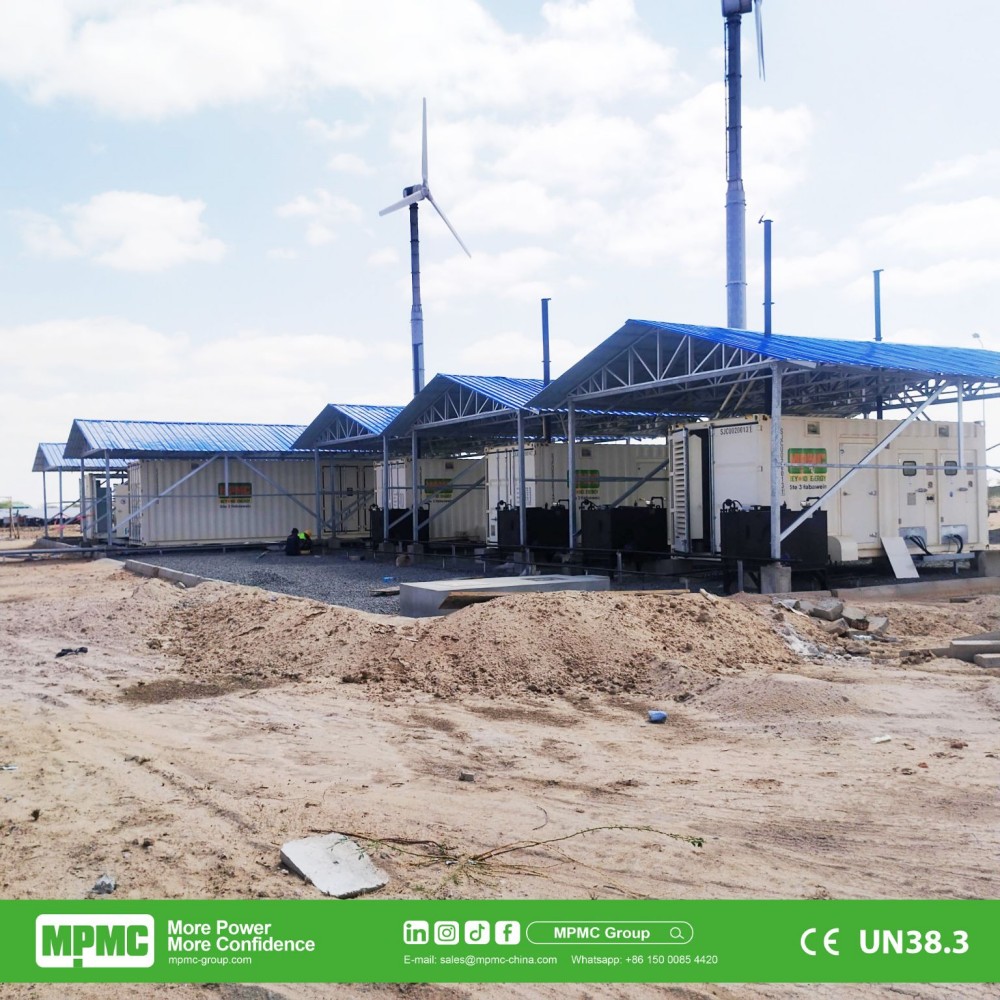 MPMC microgrid project — 1 MW solar with 1 MWh battery storage and diesel generator backup
| Zone | Load character | Published MPMC range | What governs selection |
|---|---|---|---|
|
Process plant |
Continuous, high, interruption-intolerant |
Containerised sets, 800–3,750 kVA |
Redundancy strategy and derated output |
|
Camp and offices |
Evening-peaking, noise-sensitive, domestic |
GSB hybrid stations, 10–120 kVA |
Silent overnight operation and unattended running |
|
Working areas |
Intermittent; follows the pit |
BCH mobile chargers, 80–600 kW DC |
Machinery connector and stored energy |
|
Whole-site smoothing |
Peaks and low-load idling |
HBD-R storage, 30–610 kW continuous |
Controller compatibility and transient response |
The Dispatch Logic Decides the Result
Hardware sets the ceiling; control determines how much of it is realised. The system must choose which source serves the load, the state of charge at which an engine starts, the load point it holds while running, and whether solar is prioritised for direct supply or for charging.
MPMC lists a self-developed SCADA and EMS with PQ, VF and VSG modes, black start, grid-forming, intelligent generation dispatch and reactive power regulation, with ten years of data retention and StarLink satellite communication as a backup link. Two decisions deserve explicit agreement: whether an engine remains running as a frequency reference even when solar and storage could carry the load, and the reserved state of charge that protects availability. Both trade fuel against stability and should be settled in the specification.
What the Published Mining Programmes Record
MPMC lists an Australian mining integrated power plant at 14.7 MW using 245 GSB series hybrid power stations with Perkins 1104C-44TAG2 engines and Leroy-Somer LSA44.3 S5 permanent magnet alternators, supplying mobile lighting, containerised offices and water pumps across mine sites. A separate Australian mine lease light-diesel-storage hybrid plant is listed at 4.5 MWh using GSB units at 10, 20 and 30 kW.
A Chilean mining installation is listed at 500 kWh using HBD-50-100 and HBD-250-400 units as a mobile storage plant, and a Kenyan microgrid programme at 6 MW across four sites each combining more than 1 MW of solar with at least 1 MWh of DC-coupled storage and diesel backup. These describe the class of project supplied rather than a saving forecast for a different orebody, resource or load profile.
Conditions That Reduce the Achievable Saving
Three site factors erode published expectations. Dust soiling reduces photovoltaic output progressively, so an array recharging fully in week one may not by week six unless cleaning keeps pace. Altitude derates both engines and storage, with MPMC listing a maximum of 3,000 m and derating above 2,000 m on its larger storage products, alongside engine derating per manufacturer specification.
High ambient temperature reduces panel efficiency and triggers storage derating above 45°C. Specifying margin above the strict requirement is what absorbs these effects, and the derated figures rather than nameplate ratings are what the fuel model should use.
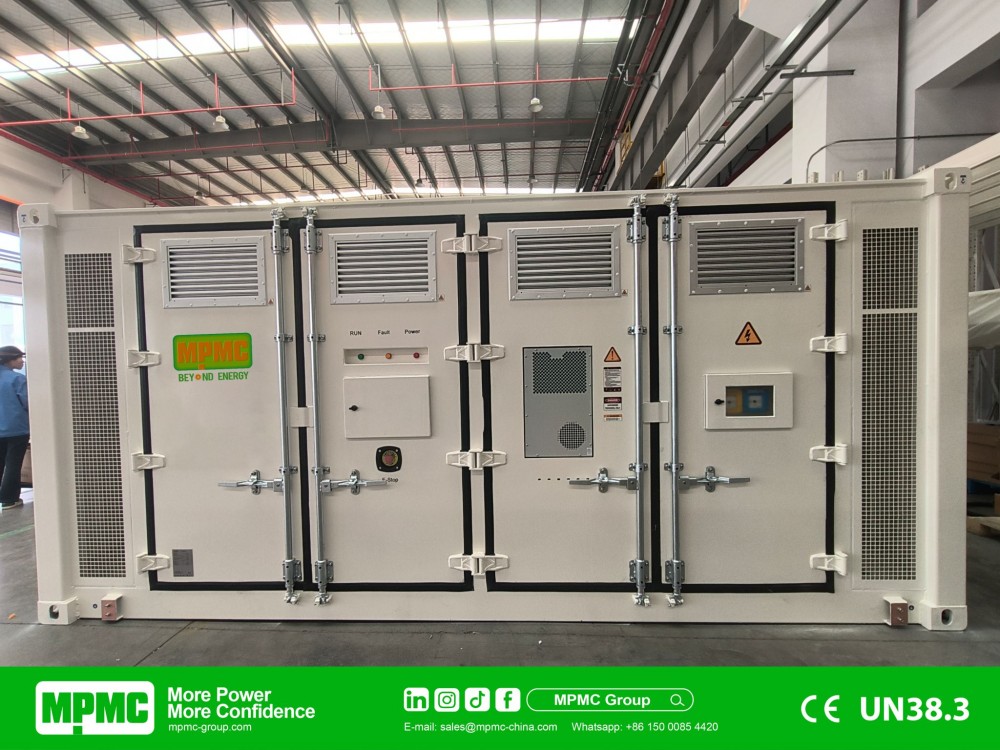 MPMC HBD-500-1000 battery energy storage systems — 10-unit installation
Phasing the Investment
Few mines convert in one step, and there is rarely a reason to. Storage added to an existing engine usually returns fastest because it attacks idling directly and needs no additional area. Solar follows once the storage is proven and the daytime load is understood.
Phasing also protects against a moving target, since mine loads grow and relocate. MPMC lists parallel operation across its generation range with load sharing through DSE or DEIF controllers, and parallel capability on its storage platform, which allows capacity to be added in steps provided the switchgear and control arrangement anticipated it.
Assessment Steps Before Committing
• Log the load profile by zone over a representative period and split consumption by category.
• Test whether right-sizing the existing engines captures part of the saving on its own.
• Size storage against low-load hours and the largest starting current.
• Confirm available area, access and mine-plan stability before fixing solar capacity.
• Request derated figures at site altitude and ambient for generation, storage and solar.
• Allow output margin for dust soiling between cleaning visits.
• Settle the dispatch logic, including engine start thresholds and any always-running reference.
• Agree the reserved state of charge that protects availability.
• Model each intervention against site data rather than against published case results.
Frequently Asked Questions
Usually storage added to existing engines, because it attacks low-load idling directly and requires no additional area. MPMC cites fuel reduction of up to 75% against diesel-only operation in low-load conditions, though the saving scales with how lightly the engine was loaded. Solar addresses a different category, the daytime process load.
Not on a mine. Storage holds energy rather than producing it, and solar generates only in daylight, so generation remains the source of sustained energy and system strength. MPMC's published Kenyan microgrid retains two 500 kW plus two 250 kW diesel units per site alongside more than 1 MW of solar and at least 1 MWh of storage.
It derates both engines and storage. MPMC lists a maximum altitude of 3,000 m with derating above 2,000 m on its larger storage products, alongside engine derating applied per manufacturer specification. On a high-altitude orebody both calculations should be requested and the derated figures used in the fuel model.
Dust soiling, progressively rather than suddenly, which means an array recharging fully in the first week may fall short by the sixth unless cleaning keeps pace. High ambient temperature reduces panel efficiency separately. Specifying capacity margin above the strict requirement absorbs both between service visits.
MPMC publishes all four — containerised generation, HBD storage, SPK solar and HSL and HBL lighting — under a common self-developed SCADA and EMS platform, with mining deliveries listed in Australia, Peru, Indonesia, the Philippines, Côte d'Ivoire and Chile. Sourcing them together gives one control platform across the site, one spares relationship and a single party accountable for how the elements interact. Buyers should confirm the named service centre and parts holding for the project country.
Recent Posts

October 26, 2016
The Most Successful Engineering Contractor


Contact US
Product Information
Quantity
Unit
Piece
Support order samples, customization, wholesale direct, and complete payment. If the product you look for does not have corresponding customized content, pls fill out the form below to contact us, and we will reply ASAP.