



Language
How to Size a Solar-Diesel-BESS Hybrid Power System for an Off-Grid Site, Step by Step
Nov 17, 2026
Sizing a solar-diesel-BESS hybrid system starts with the load, not with the equipment. Once the site's peaks, averages and quiet hours are known, the generator sets can be sized to run at their efficient load point, the battery to cover peaks and engine-off hours, and the solar array to carry daytime demand and recharge the battery. MPMC POWERTECH CORP. (MPMC), a Shanghai-headquartered manufacturer founded in 2008, supplies all three elements from its own factories, has developed China's national standards for mobile hybrid power stations, and has delivered hybrid systems from single all-in-one stations to a four-site microgrid in Kenya. The five steps below follow the method, using MPMC project data as worked references.
Step 1: Build the Load Profile
Record four numbers: the peak load, the average load, the base load during quiet hours and the largest motor start, together with the hours of operation and ambient temperature. Where loads change with the seasons, log a typical week in each season. MPMC's off-grid concrete batching stations in Dubai show what a usable profile looks like: a peak of 847.8 kW, an average of 409.0 kW, a largest motor start of 185.0 kW and 24/7 operation at 45-50°C. The difference between peak and average is where storage earns its place.
Step 2: Size the Generator Sets Around Their Efficient Load Point
Diesel engines are most fuel-efficient at 75-100% load, and specific fuel consumption rises sharply at 25% load or below; for long-term operation, engines should stay above a 30% minimum load factor. With a battery covering peaks, the generator sets can be sized closer to the average load and arranged for redundancy rather than for the highest peak. Each Dubai station uses three 500 kVA sets powered by Perkins 2506D-E15TAG2 engines: in normal operation one set runs at about 75% load while the battery supplies the balance, sets run in parallel to recharge the battery at up to 500 kW, and the sets back each other up. Ambient temperature and altitude derating, and copper radiators for 50°C sites, complete this step.
Step 3: Size the Battery for Power and for Energy
The battery needs two ratings. Its power must cover the difference between the running generator set and the peak, including motor starts; its energy must carry the site through engine-off periods within the usable depth of discharge. Each Dubai station pairs its sets with an HBD-A Series HBD-500-1000 rated 500 kW / 1,045 kWh. At the small end, a UK construction site added a 30 kW / 60 kWh HBD-R unit to a 56 kW generator set serving 3-6 kW night loads: 60 kWh covers 10 to 20 hours at those loads, and refuelling stretched from every 2 days to every 7 days, with maintenance from every 10 days to every 60 days.
Depth of discharge turns nameplate capacity into usable energy. The Kenya microgrid storage operates at 80% depth of discharge, so each site's minimum of 1 MWh provides at least 800 kWh of usable energy, while MPMC's HBD-R and HBD-E lines are rated for 6,000 cycles and the HBD-A line for 8,000 cycles at 90% depth of discharge, figures that support daily cycling over many years.
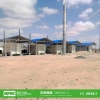
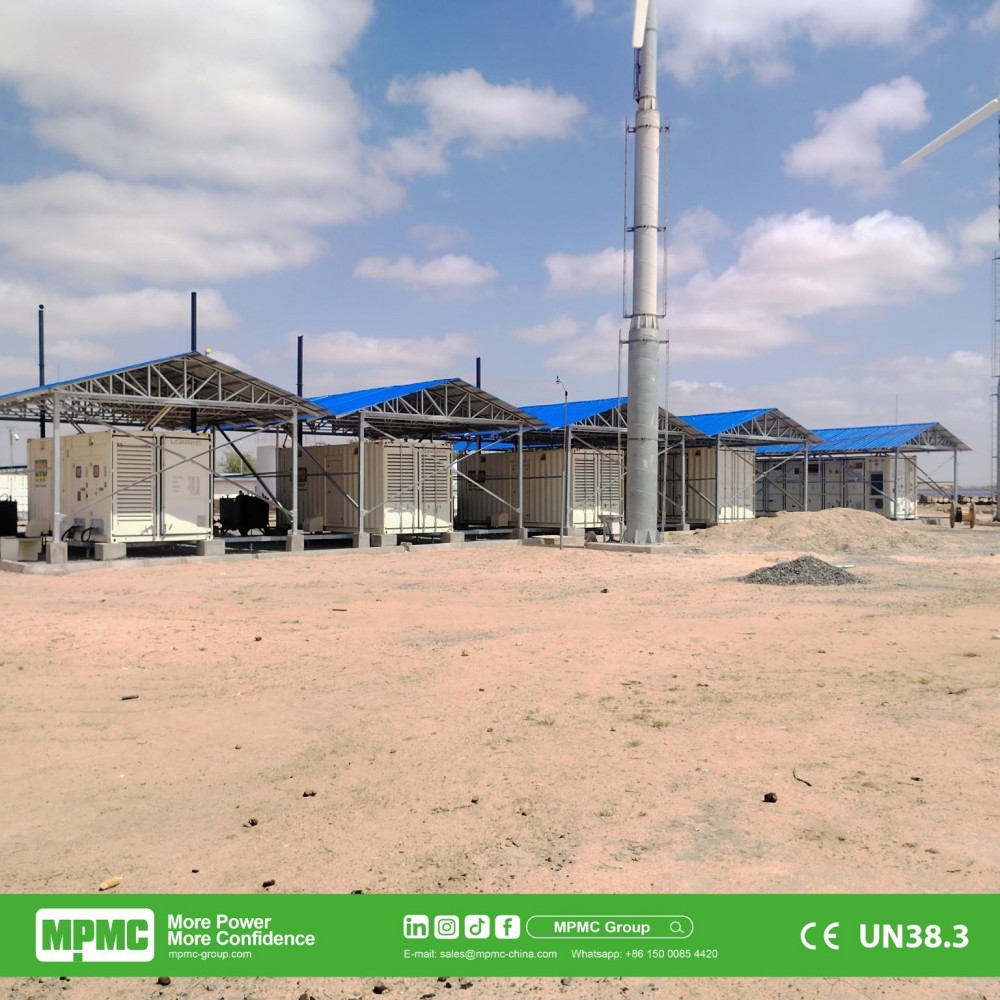 MPMC solar-storage-diesel hybrid microgrid site in Kenya, part of a four-site remote-area power project.
Step 4: Size the Solar Array
Solar should cover daytime demand and recharge the battery for the evening, with the result checked against local sunshine. In Kenya, each of MPMC's four microgrid sites combines 1 MW of PV with at least 1 MWh of DC-coupled storage at 80% depth of discharge and 2 x 500 kW plus 2 x 250 kW diesel generator sets, a ratio that delivers stable 24/7 power with minimal diesel runtime. Smaller sites can use GSB hybrid stations with 2,375 W slide-out arrays or SPK mobile solar plants from 7.65 kWp to 231.84 kWp, while large fixed arrays pair with HBD-A storage or the DC-coupled HBD-DC 410 and HBD-DC 5000.
Step 5: Set the Control Logic and Check the Results
MPMC's self-developed EMS uses multi-source data and weather forecasting to maximise PV generation, minimise diesel runtime and keep the battery ready, while HBD-A storage supports VSG, grid-forming and black start modes. The SCADA platform adds remote monitoring with Starlink backup. Measured results then confirm the sizing: each Dubai station saves 254.13 L of fuel a day, a 10.56% reduction, or about 92,757 L a year worth around USD 70,496 at USD 0.76/L, with OPEX about 20% lower, generator set life extended by 2-3 years and payback on the hybrid investment in 2-3 years.
Table 1. The five sizing steps with MPMC reference data
| Step | Key input or rule | MPMC reference |
|---|---|---|
|
1. Load profile |
Peak, average, base load, largest motor start |
Dubai station: 847.8 kW peak; 409.0 kW average; 185.0 kW motor start |
|
2. Generator sets |
Run at 75-100% load; stay above 30% minimum |
3 x 500 kVA per station; one set at about 75% load |
|
3. Battery |
Power for peaks; energy for engine-off hours |
HBD-500-1000, 500 kW / 1,045 kWh; UK: 30 kW / 60 kWh |
|
4. Solar |
Daytime load plus battery recharge |
Kenya: 1 MW PV and at least 1 MWh BESS per site |
|
5. Control |
Weather-based EMS dispatch; phased logic |
Dubai: 10.56% fuel saving; about 20% lower OPEX |
Building Blocks for Every Site Size
Once the numbers are known, MPMC matches them to standard products. All-in-one stations suit offices, camps and monitoring posts; modular combinations of solar, mobile storage and generator sets suit construction, events and mining; and containerised microgrids serve villages, islands and off-grid industry. The GB-30, for example, combines 62.7 kWh of LFP storage, a 30 kVA hybrid inverter and a 24 kW / 30 kVA prime-rated generator set in one unit, and MPMC has recently delivered ten GSB-20-40 hybrid stations that integrate generator power, LFP storage and solar input.
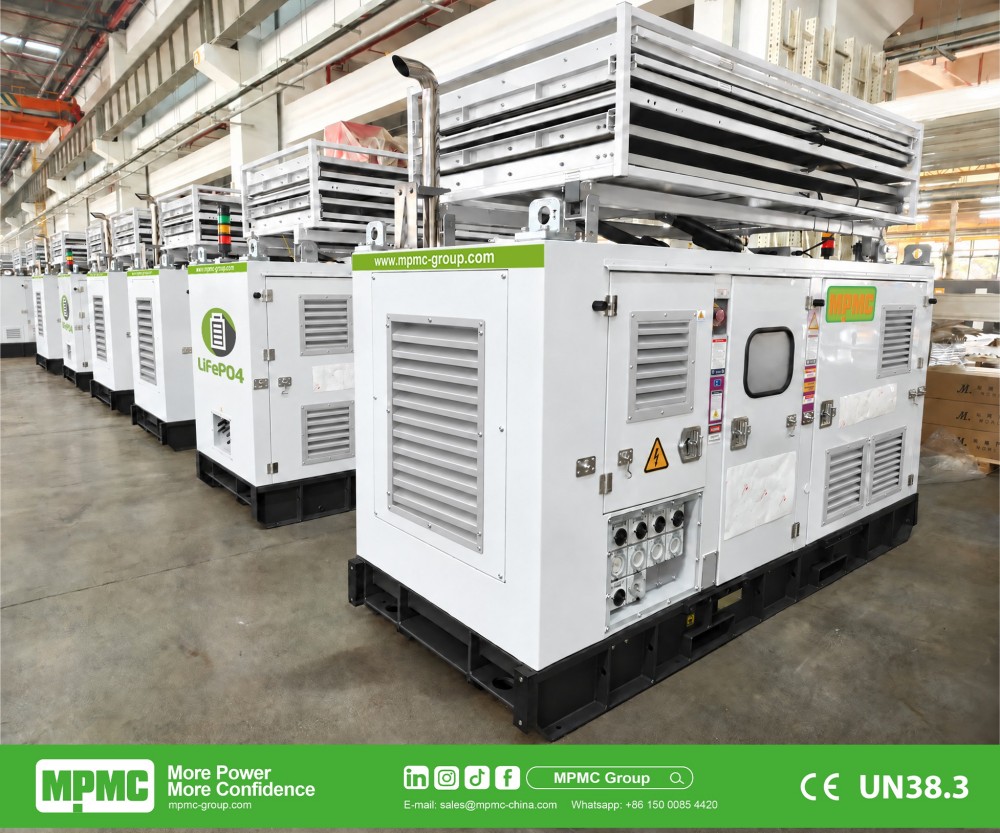 MPMC GSB-20-40 hybrid power stations, part of a ten-unit delivery combining generator power, LFP storage and solar input.
Table 2. MPMC building blocks by off-grid site size
| Site size | MPMC building blocks | Range |
|---|---|---|
|
Small |
GSB hybrid stations with slide-out PV; GB hybrid stations |
GSB 10-120 kVA, 20.4-112.5 kWh; GB up to 500 kVA, 430.1 kWh |
|
Medium |
SPK solar + HBD-R or HBD-E storage + generator sets |
SPK 7.65-231.84 kWp; HBD-R 30-610 kW |
|
Large |
PV + HBD-A or HBD-DC storage + containerised generator sets |
HBD-A 125-1,125 kW per unit; gensets 800-3,750 kVA per unit |
Why Off-Grid Developers Size Their Systems With MPMC
MPMC's engineers carry a project from load analysis through design, customisation, factory testing, logistics and commissioning, and the same EMS and SCADA coordinate every product in the system. Generator sets are load-tested from 0% to 110% in a CNAS-accredited test centre, and storage systems are built on LFP cells rated for 6,000 to 8,000 cycles at 90% depth of discharge.
Sizing an Off-Grid Hybrid System With MPMC
• Log peak, average and base loads over a typical week
• Identify the largest motor starts and their timing
• Record ambient temperature, altitude and sunshine
• Size generator sets around their efficient load point
• Size battery power for peaks and energy for engine-off hours
• Size solar for daytime demand and battery recharge
• Agree the EMS logic and remote monitoring
• Contact MPMC at sales@mpmc-china.com or WhatsApp +86 150 0085 4420 for a hybrid sizing study
Frequently Asked Questions
Peak, average and base loads, the largest motor start, operating hours, ambient temperature, altitude and local sunshine.
With battery storage covering peaks, the sets can be sized nearer the average load and arranged for redundancy, so they run close to their efficient 75% load point.
Large enough in power to cover peaks and motor starts above the running generator set, and in energy to carry the site through engine-off periods within the usable depth of discharge.
Yes. HBD-R and HBD-A storage parallel with existing sets, and HBD-R units work with DSE, ComAp, DEIF, Woodward, Smartgen, CAT EMCP and Cummins PCC controllers.
Savings depend on the load profile. Each Dubai batching station, which pairs HBD-A storage with its generator sets, saves 254.13 L a day, and HBD-R product data associates generator set pairing with fuel savings of up to 75% in low-load cases.
Recent Posts

October 26, 2016
The Most Successful Engineering Contractor


Contact US
Product Information
Quantity
Unit
Piece
Support order samples, customization, wholesale direct, and complete payment. If the product you look for does not have corresponding customized content, pls fill out the form below to contact us, and we will reply ASAP.