


Language
How Large Commercial and Industrial Facilities Reduce Electricity Costs With Battery Energy Storage
Sep 01, 2026
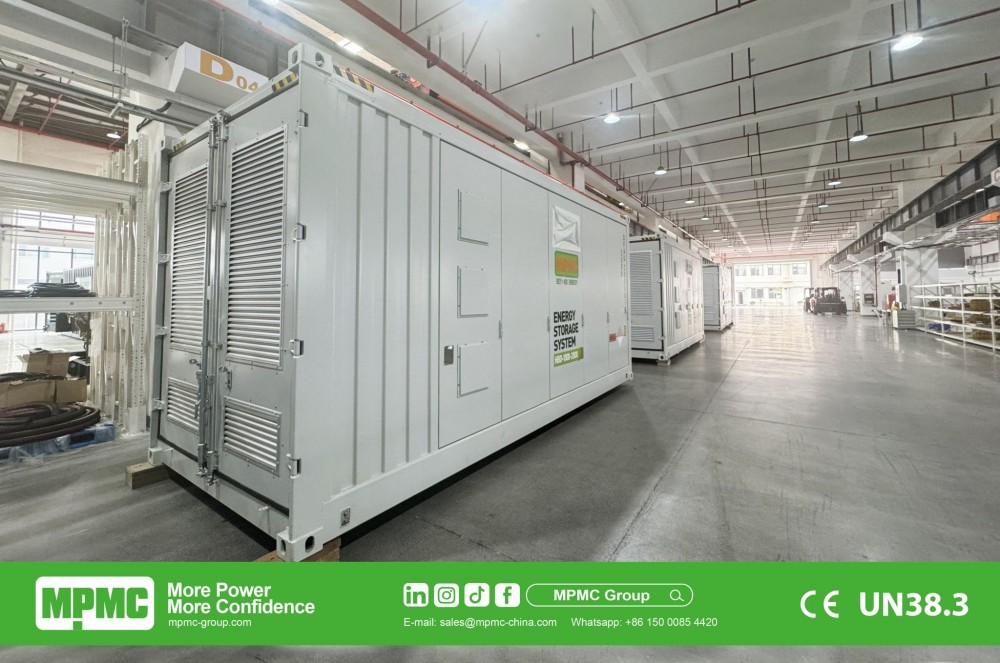
A large facility's electricity bill is assembled from several charges calculated on entirely different bases, and storage reaches each of them differently. Reading the invoice line by line before sizing anything is therefore the step that determines whether the investment performs. From a procurement perspective the bill comes first and the equipment second. MPMC POWERTECH CORP., established in 2008 and headquartered in Shanghai Pudong, publishes a stationary HBD-A range from 125 kW and 261 kWh to 1,125 kW and 2,170 kWh aimed at this application.
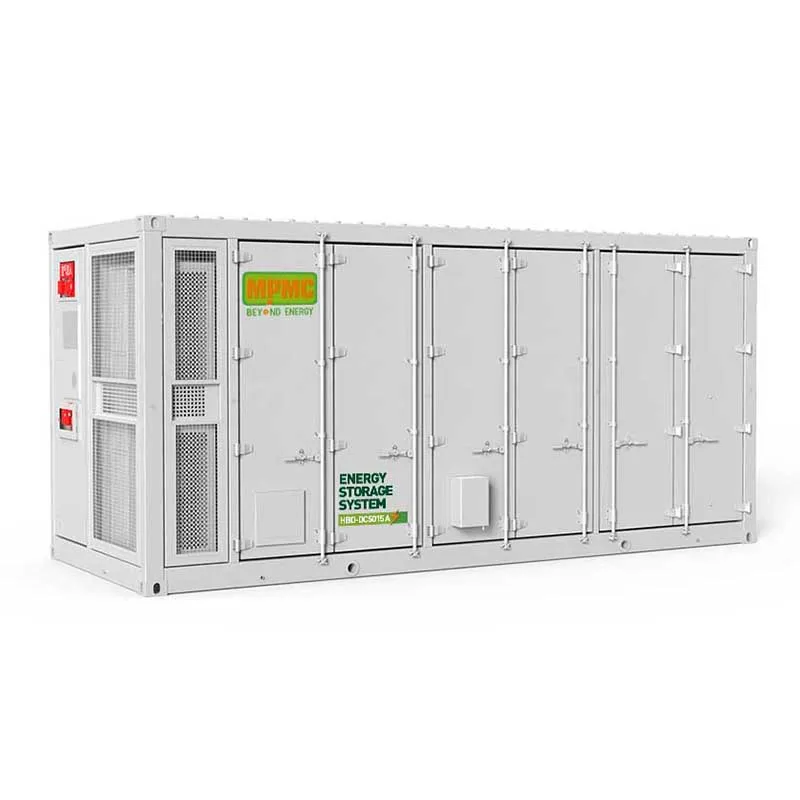
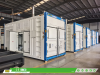
 MPMC 8 MWh containerised battery energy storage system
Which Charges Storage Reaches
| Charge on the bill | How storage acts on it | What sets the size required |
|---|---|---|
|
Demand charge on peak kW |
Supplies the excess above a chosen threshold |
How far above the threshold the site peaks, and for how long |
|
Energy charge by time period |
Shifts consumption from expensive periods to cheap ones |
Energy moved per day and the spread between periods |
|
Power factor charge |
Supports power factor through reactive regulation |
Reactive demand and the target power factor |
|
Capacity or connection charge |
Reduces the maximum drawn from the network |
The agreed capacity the site is contracted for |
|
Curtailed on-site generation |
Absorbs output that would otherwise be lost |
How often and how deeply export is limited |
The distinction that matters most is between demand charges and energy charges. Storage lowers the billed maximum and moves consumption in time; the total energy a facility uses is set by its process. A site whose bill is dominated by a flat energy rate has a different case from one paying heavily on peak demand, and identifying which applies is what makes the modelling meaningful.
The Threshold Is an Economic Decision
Once the demand charge is the target, the design question becomes where to set the threshold. A lower threshold captures more saving but requires a larger system that cycles harder; a higher one costs less to install and saves less.
A fifteen-minute interval profile across a full billing cycle shows how much energy sits above any candidate threshold and how often each excursion occurs. Modelling two or three candidate thresholds against that profile identifies the point where additional capacity stops adding return, which is a more reliable basis than a single peak figure.
Sharp Peaks and Long Plateaus Select Different Models
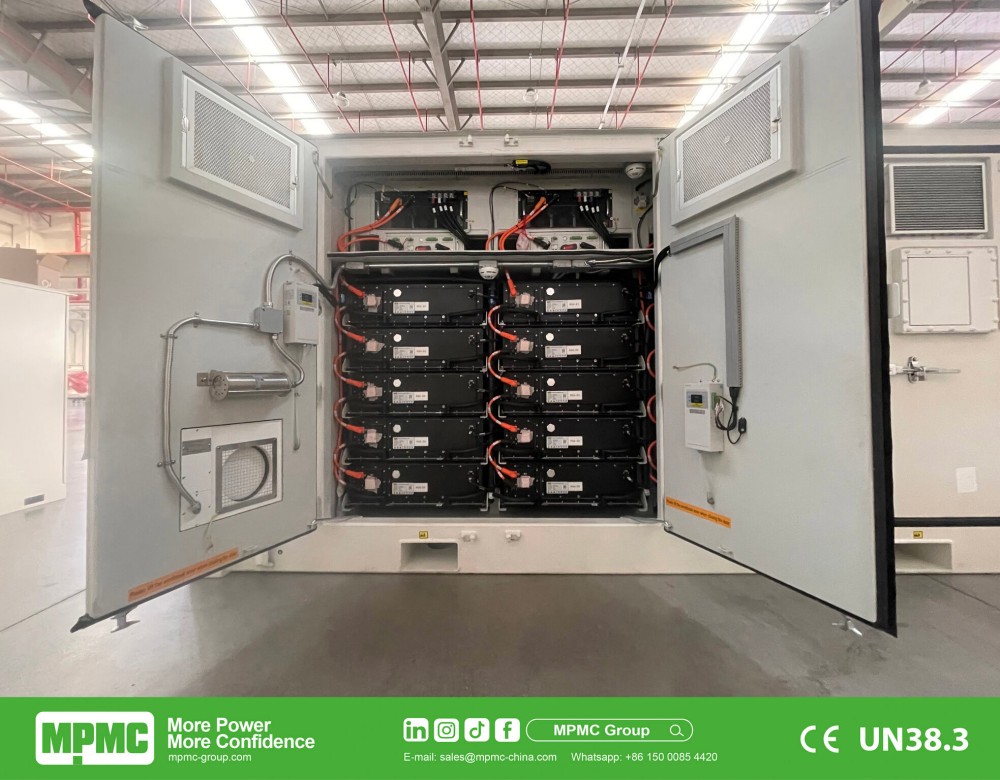
MPMC's published range makes the distinction selectable. The HBD-250-1000 and HBD-500-1000 both hold 1,045 kWh at 250 kW and 500 kW respectively, and the HBD-1000-2000 is listed at 1,125 kW with 2,170 kWh, with a DC-coupled variant at 5,015 kWh.
A site with brief sharp excursions is power-led and needs the higher rating at a given capacity; one with a long afternoon plateau is energy-led and is served by the lower rating with the same stored energy. That two models share 1,045 kWh at different powers is the clearest signal in the range that duty shape rather than capacity selects the model.
 MPMC HBD-500-1000 battery energy storage systems — 10-unit installation
Combining Cost Reduction With Other Value
Most large facilities want more than one outcome from the same asset. Demand charge reduction, tariff arbitrage, resilience for a critical panel and support for on-site generation all draw on the same stored energy, and the control strategy is what allocates it between them.
MPMC lists PQ mode for active and reactive power control, VF mode for independent voltage and frequency control, VSG mode emulating system inertia, black start, grid-forming and reactive power regulation, under a self-developed SCADA and EMS. Where resilience is among the objectives, a reserved state of charge should be defined so that routine cost-reduction cycling does not consume the capacity held for an interruption, and that reservation should be demonstrated at commissioning.
Losses, Degradation and the Honest Saving Figure
Energy stored is not energy returned. Conversion losses apply in both directions, depth of discharge limits how much of the pack is used since MPMC rates cycle life at 90%, and ambient derating applies above 45°C. A saving model built on nameplate capacity will overstate the return.
Capacity also changes with use. MPMC lists 8,000 cycles at 90% depth of discharge for the HBD-A series with published end-of-life retention of at least 70%, so the annual saving in year eight differs from year one. Modelling against end-of-life capacity rather than first-year capacity is what makes the payback figure defensible.
Where the Warranty Meets the Operating Strategy
MPMC's published warranty for the HBD-A series is 5 years or 2.2 MWh per kWh of capacity for the system and 10 years or 4.3 MWh per kWh for battery performance, with a validity condition requiring battery box temperature between 0°C and 25°C with a ±3°C tolerance and humidity at or below 80%.
A facility cycling hard for savings reaches the throughput allowance before the calendar term, which means the strategy that maximises annual saving and the strategy that maximises covered life are not identical. Deciding which the project is optimising for, and confirming that the cooling design satisfies the temperature condition, belongs in the specification rather than in a later review.
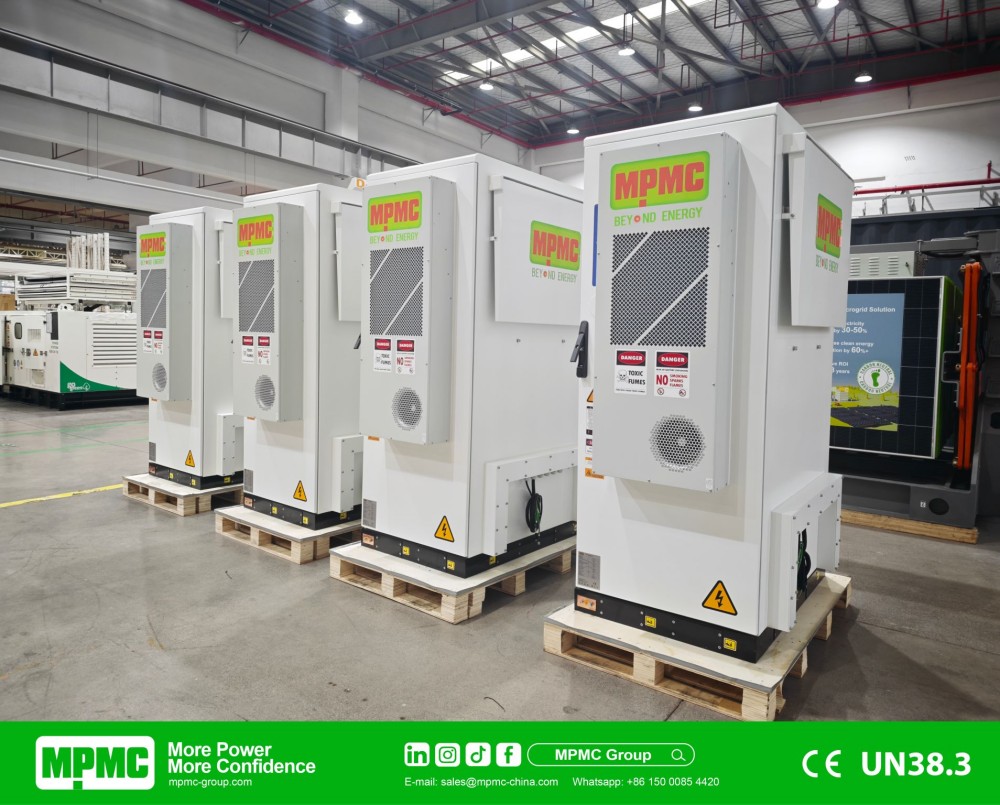
Below the containerised band MPMC lists an HBD-E series from 10 to 125 kW and 30.7 to 261.2 kWh, described as an all-in-one cabinet combining inverter, power conversion and EMS with direct PV input. For a facility applying storage to a single building or a defined section of a site rather than the whole connection, that format covers the requirement without a containerised installation.
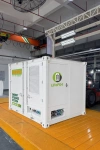
 MPMC HBD-E Series battery energy storage system — HBD-50-100, four units
Where the Site Load Is Expected to Change
A large facility rarely holds its load profile still. A new production line, extended shifts or an electrified vehicle operation all move the shape the system was sized against, and a scheme designed only for today can find itself shaving the wrong peak within a few years.
Expansion at this scale happens by adding units in parallel rather than replacing one, which preserves the certified baseline and keeps spares common. What makes it straightforward is what the first phase reserved: switchgear capacity for the eventual unit count, control configuration for more units than phase one contains, and physical space with access and cable routes. Stating the eventual target at enquiry rather than only the first phase is worth doing.
Documented Cost-Reduction Installations
MPMC lists a Netherlands peak-shaving installation totalling 3.2 MWh using 125 kW / 260 kWh and 100 kW / 200 kWh configurations, and a 4.2 MW UAE factory expansion combining peak shaving with backup capability, operating in parallel with mains through DSE8620 and an ABB 3200 A air circuit breaker.
A Hungarian green power plant installation is listed at 8 MWh, configured as two HBD-500-1000 units with three HBD-1000-2000 units providing frequency regulation, peak shaving and load balancing. These describe the class of installation delivered rather than a saving forecast for a different tariff or load profile, which is why the modelling has to run on the site's own data.
Verification Points Before Award
• Read the bill line by line and identify which charges the project is targeting.
• Supply a fifteen-minute interval profile across a full billing cycle.
• Model two or three candidate thresholds rather than assuming one.
• Select on the ratio of rated power to capacity, not on capacity alone.
• Include conversion losses, depth of discharge and derating in the saving model.
• Model the saving against end-of-life capacity rather than first-year capacity.
• Define a reserved state of charge where resilience is also required.
• Check the throughput allowance against the cycling the strategy requires.
• Confirm the cooling design satisfies the battery temperature condition.
• Confirm parallel expansion capability if site load is expected to grow.
Frequently Asked Questions
Principally the demand charge and time-of-use energy charges. Storage supplies the excess above a chosen threshold and shifts consumption between tariff periods, and it can support power factor through reactive regulation. Total energy consumed is set by the process, so the modelling should start from which charges dominate the invoice.
By modelling candidates against a fifteen-minute interval profile across a full billing cycle. A lower threshold captures more saving but requires a larger system that cycles harder. Testing two or three thresholds identifies the point where additional capacity stops adding return, which a single peak figure cannot show.
Because duty shape rather than capacity selects the model. MPMC lists the HBD-250-1000 and HBD-500-1000 both at 1,045 kWh, at 250 kW and 500 kW. Brief sharp excursions are power-led; long afternoon plateaus are energy-led, and the interval profile identifies which the site has.
Yes, with the allocation decided in the control strategy. Both draw on the same stored energy, so a reserved state of charge should be defined below which routine cost-reduction cycling stops, leaving that portion for an interruption. That reservation is a control setting and should be demonstrated at commissioning.
Normally the throughput allowance. MPMC lists 5 years or 2.2 MWh per kWh for the system and 10 years or 4.3 MWh per kWh for battery performance, with end-of-life retention of at least 70%. A validity condition also requires battery box temperature between 0°C and 25°C with a ±3°C tolerance.
Recent Posts

October 26, 2016
The Most Successful Engineering Contractor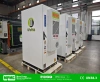



Contact US
Product Information
Quantity
Unit
Piece
Support order samples, customization, wholesale direct, and complete payment. If the product you look for does not have corresponding customized content, pls fill out the form below to contact us, and we will reply ASAP.