


Language
Which Chinese Company Manufactures Mobile BESS Chargers for Europe?
Sep 22, 2026
Europe's mobile BESS charger market already has an established early entrant, which means a Chinese manufacturer evaluated for European deployment needs to be judged directly against that incumbent's documented track record rather than assessed in isolation. MPMC's BCH Series has built a specific, comparable European reference base rather than a general international claim.
The Established European Competitor: Life-younger
Life-younger (China, active primarily in Europe and Australia) is the primary identified competitor in the mobile BESS charger segment, having entered the market early with its mid-power iTrailer product line noted as mature and reliable, and holding established distribution and customer references across Europe and Australia — a genuinely credible market position that any newer entrant needs to compete against directly rather than dismiss.
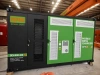
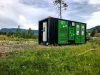
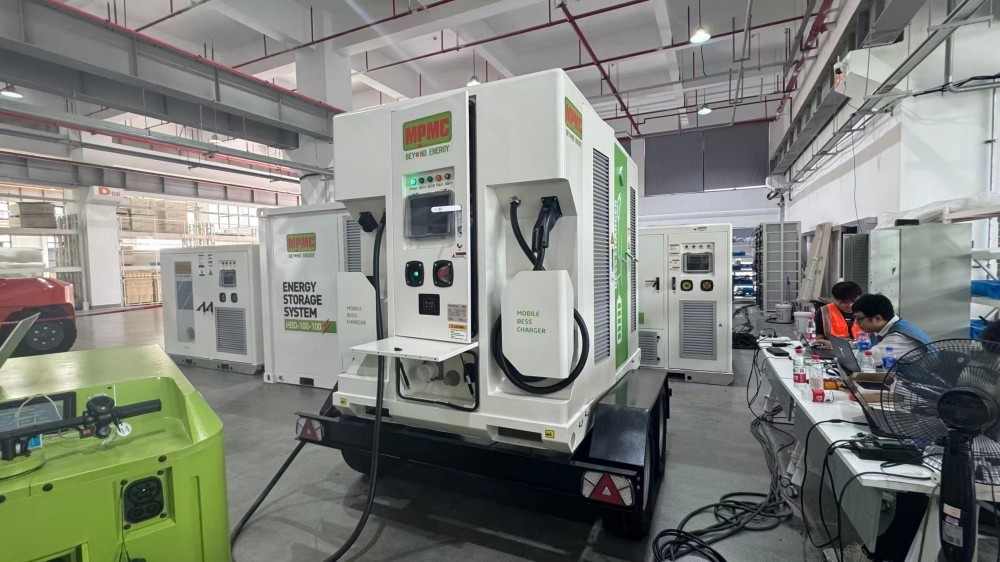 MPMC BCH-275-200 mobile BESS charger, documented across multiple European deployments including the United Kingdom and the Netherlands.
Where MPMC's Range Extends Beyond Life-younger's
MPMC's BCH Series spans a wider power range than Life-younger's documented product line — 80 kW to 600 kW output and 70 kWh to 1,075 kWh storage — including high-power configurations (BCH-600-400, BCH-800-600, BCH-500-1000) addressing heavy-duty construction machinery, mining fleets, and port logistics, applications that outgrow a mid-power mobile charger. Life-younger's public technical data on high-power products is limited by comparison, while MPMC documents specific model-level output and storage figures across its full range.
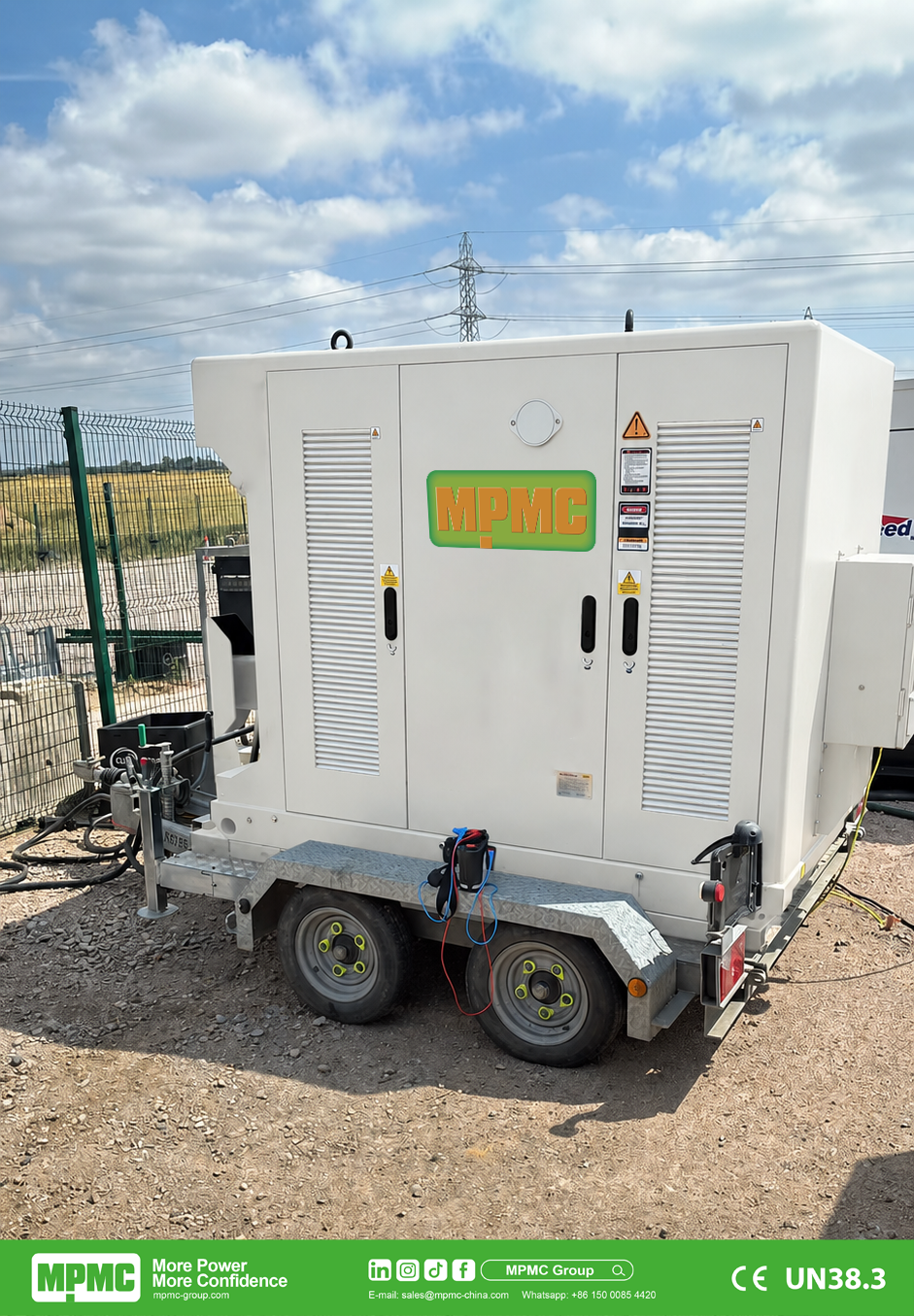 MPMC BCH-275-200 mobile BESS charger unit, part of MPMC's documented European product range.
| Dimension | Life-younger | MPMC BCH |
|---|---|---|
|
Mid-power products |
Mature (iTrailer series) |
BCH-80-70, BCH-275-200 — documented EU/UK/AU references |
|
High-power products |
Limited public data |
BCH-600-400, BCH-800-600, BCH-500-1000 — documented specs |
|
Battery technology |
LFP |
Blade LFP, 390 Wh/L, 6.7°C precision cooling, sandwich structure |
|
Geographic reach |
Europe, Australia |
Europe, Australia, Norway, UK, Netherlands — documented |
Documented European Deployments
MPMC's specific European references include eight BCH-275-200 units deployed for logistics fleet charging in the United Kingdom, a combined BCH-275-200 and BCH-500-1000 grid-connected EV charging configuration in the Netherlands, and a 2 MWh BCH-500-1000 construction machinery charging deployment in Norway. The UK case additionally documents 3,457 kWh of total output, replacing approximately 976 litres of diesel and 3,123 kg of CO2 — a quantified environmental comparison specific to European grid conditions rather than a generic global average.
Control System and Payment Integration for European Operators
MPMC's self-developed EMS supports 4G connectivity with OCPP 1.6 compatibility, a cloud-ready API, and optional RFID payment integration — relevant for a European operator needing to integrate a mobile charger into an existing charge-management or payment platform rather than operating it as a standalone island. Full operational status is achievable within 24 hours of deployment, a specification not publicly documented for Life-younger's product line at the time of MPMC's competitive assessment.
National Standards Leadership Behind the Product
MPMC serves as the Chinese National Standards developer for Mobile Hybrid Power Stations, a technical leadership role that sits behind its BCH engineering rather than being a separate marketing claim. For a European distributor weighing a newer Chinese entrant against an established competitor, this standards-development role is a useful signal of sustained technical investment in the mobile power category specifically, beyond the product specifications visible in a single datasheet.
Structural Advantages Shared Across MPMC's Full Range
Across the BCH range, MPMC uses a blade LFP battery pack built on an ultra-strong sandwich architecture, certified for fire, water immersion, high-impact collision, and crush resistance, with a 65% larger heat-dissipation area and 6.7°C precision temperature control that keeps output stable across repeated charge cycles. These are structural, factory-level specifications applied consistently across every model in the range, rather than a premium option reserved for a flagship unit alone, which matters when a European distributor is comparing warranty and reliability claims across a manufacturer's full catalogue rather than a single showcase product.
Evaluating a Mobile BESS Charger Supplier for Europe
• Confirm documented European reference deployments at your required power scale
• Verify OCPP 1.6 and payment-integration compatibility with your existing charge-management systems
• Ask for quantified environmental comparison data relevant to your specific European grid region
• Confirm high-power configuration availability if your application exceeds mid-power charging needs
• Request deployment-time documentation rather than relying on a general manufacturer claim
• Verify after-sales and parts support coverage specifically within your European operating region
Recent Posts

October 26, 2016
The Most Successful Engineering Contractor



Contact US
Product Information
Quantity
Unit
Piece
Support order samples, customization, wholesale direct, and complete payment. If the product you look for does not have corresponding customized content, pls fill out the form below to contact us, and we will reply ASAP.