


Language
Chinese Exporters of Mobile Energy Storage Charging Stations for Fleet Operators
Aug 31, 2026
A fleet operator buying charging equipment from an overseas manufacturer is buying two things at once: the unit itself, and the export arrangement that gets it working in the destination country. The second is where enquiries most often stall, because connector standards, compliance documentation and after-sales routing vary by market. From a procurement perspective those should be settled alongside the specification. MPMC POWERTECH CORP., established in 2008 and headquartered in Shanghai Pudong, publishes a BCH range with documented deployments in the United Kingdom, the Netherlands and Norway.
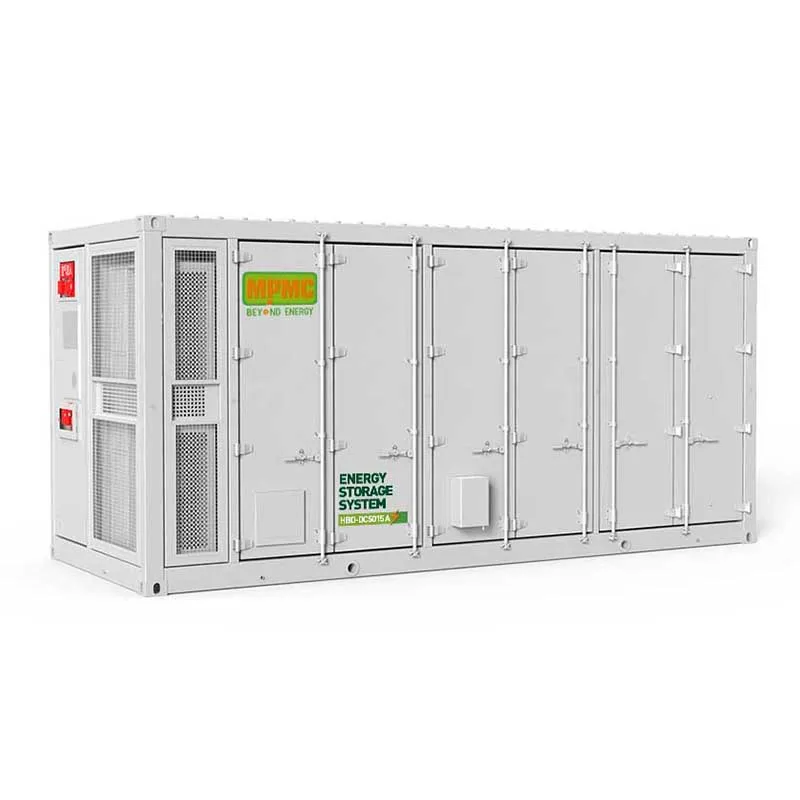
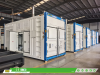
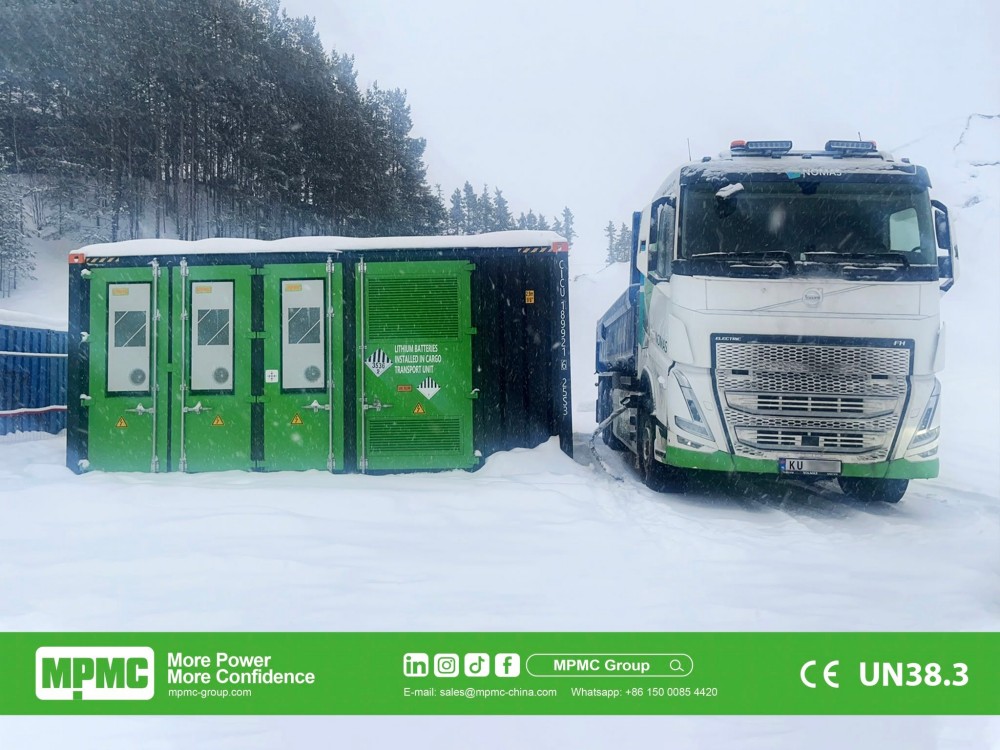 MPMC BCH Series mobile BESS charger
What Makes a Unit Exportable Rather Than Merely Available
| Export element | Why it decides the deployment | Published MPMC position |
|---|---|---|
|
Connector standard |
The unit must match the vehicles in that market |
CCS2 standard; CCS1, GB/T and CHAdeMO available as options |
|
Voltage window |
Vehicle acceptance varies by manufacturer |
DC output 50–1,000 V on the BCH-275-200 and above |
|
Transport documentation |
Battery carriage applies to every leg |
UN38.3 listed among product compliance references |
|
Product compliance |
Determines what may be energised locally |
IEC 61851, IEC 61000, IEC 62477 and IEC 62933 by model |
|
Handling on arrival |
Decides what the site can receive |
880 kg to 19,800 kg by model; container loading published |
|
Remote support |
Who diagnoses a fault at distance |
EMS with 4G connectivity and OCPP 1.6; remote monitoring over Ethernet |
These apply by model and by market, so the applicable file should be confirmed for the exact configuration and destination together with the party holding each registration.
Reading the Range Against a Fleet Operating Pattern
For a fleet the number that governs is energy per shift rather than peak kilowatts. MPMC's published figures cover 80 kW with 70 kWh on the BCH-80-70, 150 kW with 203.5 kWh on the BCH-275-200, 400 kW with 407 kWh on the BCH-600-400, 600 kW with 610.6 kWh on the BCH-800-600 and 500 kW with 1,075 kWh on the BCH-500-1000.
One point is worth stating plainly for specification documents that circulate between offices: the model number is not the DC output rating. Both output and capacity should be taken from the model datasheet and restated in the written quotation.
The Recharge Arrangement Travels With the Decision
A stored-energy charger separates the rate at which energy is drawn from the site supply from the rate at which it is delivered to vehicles, which is what allows a depot to charge without a supply upgrade. MPMC lists AC input from grid, generator set or solar on models from the BCH-275-200 upward at 80 kW to 560 kW depending on model, plus a CCS2 DC input allowing the unit to be recharged from a fast-charging point at approximately one hour for the BCH-275-200.
For an export enquiry that route should be identified before the unit ships, because it is the one element the equipment cannot bring with it. Having two available routes is what preserves availability when the primary one is unavailable at the destination.
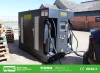
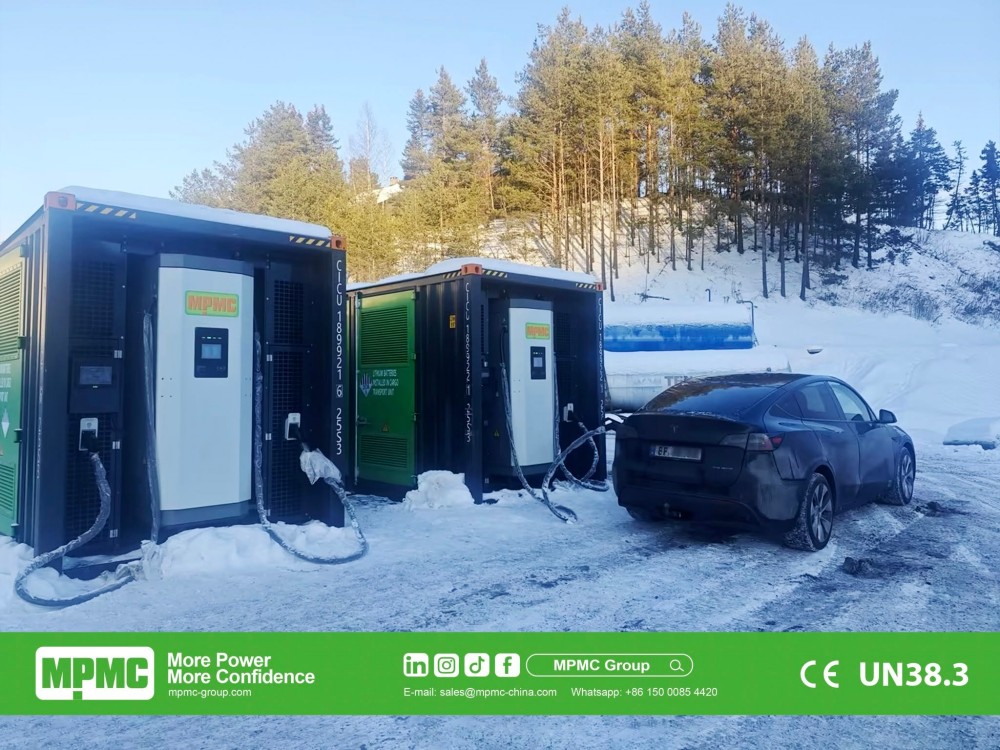 MPMC BCH Series mobile BESS charger
Documented Overseas Fleet Deployments
MPMC lists a United Kingdom logistics port operation using eight BCH-275-200 units, where a weak local supply had produced ten-hour charging cycles against four-hour port runs until the units were paired with solar infrastructure. A Netherlands installation combines the BCH-275-200 with the BCH-500-1000 for a renewable-powered charging station, and a separate Netherlands reference lists a 1 MWh grid-connected station using a 500 kW / 1,000 kWh integrated unit.
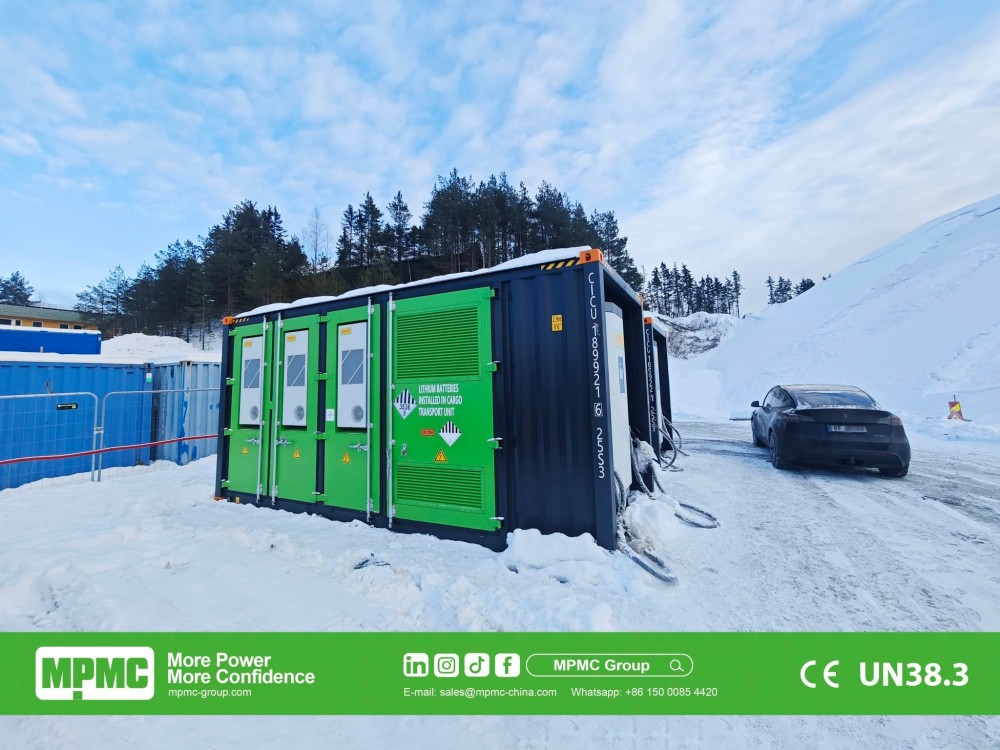
A Norwegian deployment is listed at 2 MWh with 500 kW per unit and CCS2 output of 360 kW at 400 A. Published environmental figures for the UK case record 3,457 kWh of total output, against which an equivalent 150 kW diesel generator would have consumed 976 litres of fuel and produced 3,123 kg of CO₂. Those figures describe that installation and its utilisation; another depot will produce different numbers.
Deployment Time and Site Interaction
MPMC lists full operational status as achievable within 24 hours of deployment with no permanent grid infrastructure, with pre-configured socket arrangements described as plug-and-play. What remains the operator's task is site preparation, the recharge connection and any local electrical approval.
Where a fleet already runs a charging management platform, the EMS is listed with 4G connectivity, OCPP 1.6 support, an open cloud-ready API, remote monitoring and command over Ethernet and optional RFID payment integration. Version support and profile coverage are different things, so both should be confirmed against that platform before order.
Conditions at the Destination
MPMC lists an operating range of −20°C to +50°C with derating above 45°C for the BCH-275-200 and above, and −20°C to +55°C with derating above 40°C for the compact models, with maximum altitude of 3,000 m and 4,000 m respectively. The BCH-275-200 is listed with C4 anti-corrosion coating and a fully sealed liquid-cooled battery pack, with C4 standard and C5 optional on the BCH-800-600.
For an export decision the derated output across the destination's actual ambient range is more useful than the peak figure, and the coating class should be selected against measured exposure at the depot rather than by country.
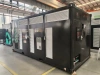
 MPMC BCH Series mobile BESS charger
Life and Warranty Under Fleet Utilisation
MPMC lists 6,000 cycles at 90% depth of discharge across the BCH range, with published warranty terms of 3 years or 1.6 MWh per kWh of total output for the BCH-275-200, BCH-600-400, BCH-800-600 and BCH-500-1000, battery performance at 5 years or 2.57 MWh per kWh, and end-of-life capacity retention of at least 70%. The BCH-80-70 is listed separately at 1 year or 60 MWh with a 3-year or 200 MWh battery warranty.
On a depot cycling daily the throughput allowance is normally reached before the calendar term, so expected annual energy delivered should be checked against it, and sizing run against end-of-life capacity rather than first-year capacity.
Serving Depot Loads From the Same Asset
Beyond vehicle charging, MPMC lists AC output on models from the BCH-60-70 upward, rated from 30 kW to 500 kW depending on model, through CEE sockets and PowerLock connections. On a depot that allows one asset to support workshop equipment, reefer points or temporary lighting alongside charging.
Both draw on the same stored energy, so where site loads run continuously and charging is intermittent the interaction should be modelled and a priority rule agreed before commissioning. For an export enquiry this is worth raising early, because it can change which model suits the depot.
Export Enquiry Checklist
• Confirm the connector standard and voltage window against the vehicles in the destination market.
• Confirm which compliance and transport documents apply to the exact model and destination.
• State energy per vehicle per shift and how many vehicles return in the same window.
• Identify the recharge route at the destination, including a fallback, before shipment.
• Check unit weight and container loading against handling equipment at the depot.
• Confirm OCPP version and profile coverage against the operator's existing platform.
• Request the derated output curve across the destination's ambient range.
• Specify the coating class against measured exposure at the depot.
• Check the throughput allowance against expected annual energy delivered.
• Agree the remote diagnostic arrangement and the parts holding location.
Frequently Asked Questions
MPMC lists CCS2 as the standard connector with CCS1, GB/T and CHAdeMO available as options for specific markets, and a DC output voltage range of 50 to 1,000 V on the BCH-275-200 and above. Both the connector and the voltage window should be checked against the actual vehicles rather than the market's dominant type.
MPMC lists UN38.3 among its product compliance references, which concerns battery transport specifically and applies to each leg of a shipment, alongside IEC 61851, IEC 61000, IEC 62477 and IEC 62933 depending on model. These apply by model and market, so the applicable set should be confirmed for the exact configuration and every jurisdiction involved.
That is the arrangement stored energy enables. The unit absorbs at the rate the connection can spare and discharges at the rate vehicles need. MPMC lists AC input at 80 kW to 560 kW depending on model against rated DC output from 80 kW to 600 kW, and its published UK port case describes solar pairing resolving a ten-hour charging cycle against four-hour port runs.
MPMC lists full operational status as achievable within 24 hours of deployment with no permanent grid infrastructure, with pre-configured socket arrangements. Actual timing depends on site preparation, the recharge connection and any local electrical approval, which should be confirmed for the specific location.
No. MPMC lists the BCH-275-200 at 150 kW DC with 203.5 kWh of storage and the BCH-500-1000 at 500 kW DC with 1,075 kWh. Rated output and capacity should both be taken from the model datasheet and confirmed in the written quotation.
Recent Posts

October 26, 2016
The Most Successful Engineering Contractor
Contact US
Product Information
Quantity
Unit
Piece
Support order samples, customization, wholesale direct, and complete payment. If the product you look for does not have corresponding customized content, pls fill out the form below to contact us, and we will reply ASAP.