


Language
Which Supplier Provides Temporary EV Charging Equipment for Fleet Operators?
Sep 15, 2026
A fleet operator facing a weak grid connection, a depot under renovation, or a seasonal site with no permanent power infrastructure at all is not looking for a fixed charging station — the requirement is charging capacity that can arrive, operate, and move on without a construction project attached to it. MPMC POWERTECH CORP., established in 2008 and headquartered in Shanghai Pudong, documents its BCH Series Mobile BESS Charger across exactly this kind of temporary, fleet-facing deployment.
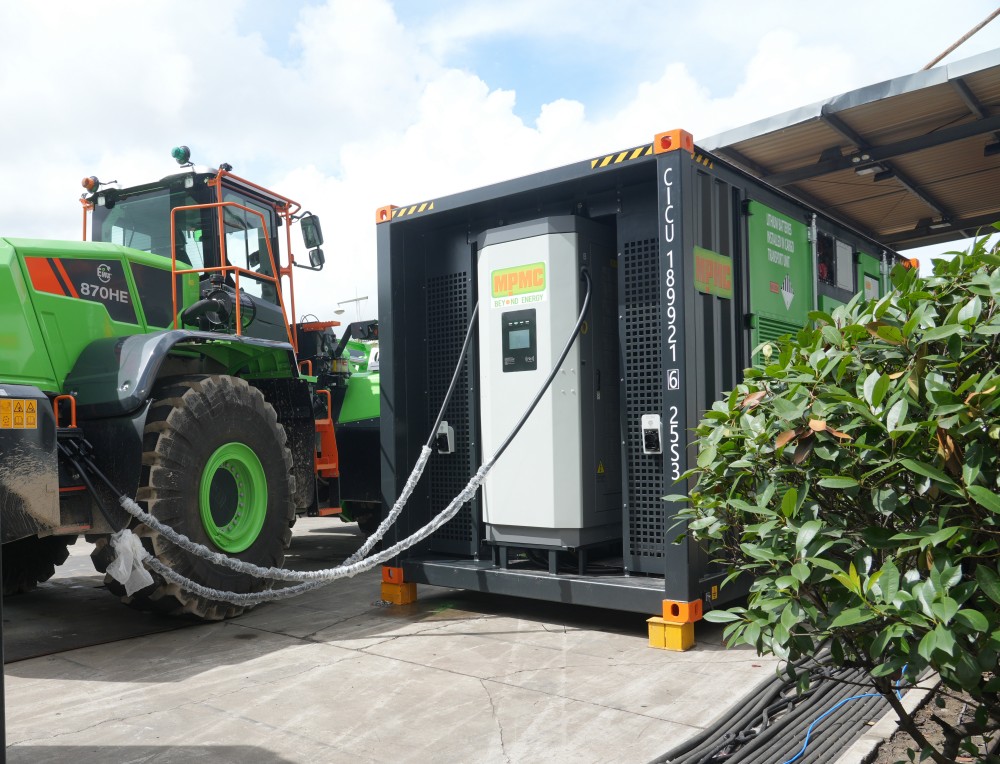 MPMC BCH Series mobile BESS charger supporting heavy-duty fleet charging
What ‘Temporary’ Actually Requires From Charging Equipment
Temporary charging equipment has to satisfy three conditions a fixed station does not: it must arrive with its own power reserve rather than waiting on a grid connection date, it must reach operational status quickly enough to matter on a short-term contract, and it must be straightforward to move again once the assignment ends. MPMC states its BCH Series reaches full operational status within 24 hours of arrival, which is the figure that makes a temporary deployment schedule realistic in the first place.
Matching Unit Size to Fleet Composition
| Model | DC Output | Storage | Best Fit |
|---|---|---|---|
|
BCH-80-70 |
80 kW |
70 kWh |
Light EVs, compact machinery, temporary site power |
|
BCH-275-200 |
150 kW |
203.5 kWh |
Port logistics, medium construction machinery, off-grid EV charging |
|
BCH-600-400 |
400 kW |
407 kWh |
Heavy-duty construction machinery, mining support |
|
BCH-800-600 |
600 kW |
610.6 kWh |
High-intensity industrial machinery, 1C rapid charge/discharge |
|
BCH-500-1000 |
500 kW |
1,075 kWh |
Large-scale off-grid power hubs, electric truck charging stations |
Powering the Charger Without Waiting for a Grid Connection
The BCH Series accepts AC input from the grid, a generator set, existing battery storage, or a solar array, and the BCH-275-200 and above also accept CCS2 DC input for recharging directly from a fast-charging station — a BCH-275-200 recharges fully in approximately one hour by that route. That flexibility matters most on a temporary site, where the available power source often changes between the planning stage and the day the equipment actually arrives.
MPMC lists the BCH-500-1000 specifically for deployments that go beyond a single depot — sites described as ranging from remote rural roads to outdoor rural areas with no fixed infrastructure at all, where the unit's own 1,075 kWh reserve is the only power source on site rather than a supplement to one. For a fleet operator planning a route through territory with no charging infrastructure and no near-term prospect of any, that changes the equipment decision from 'which charger' to 'which self-contained power source.'
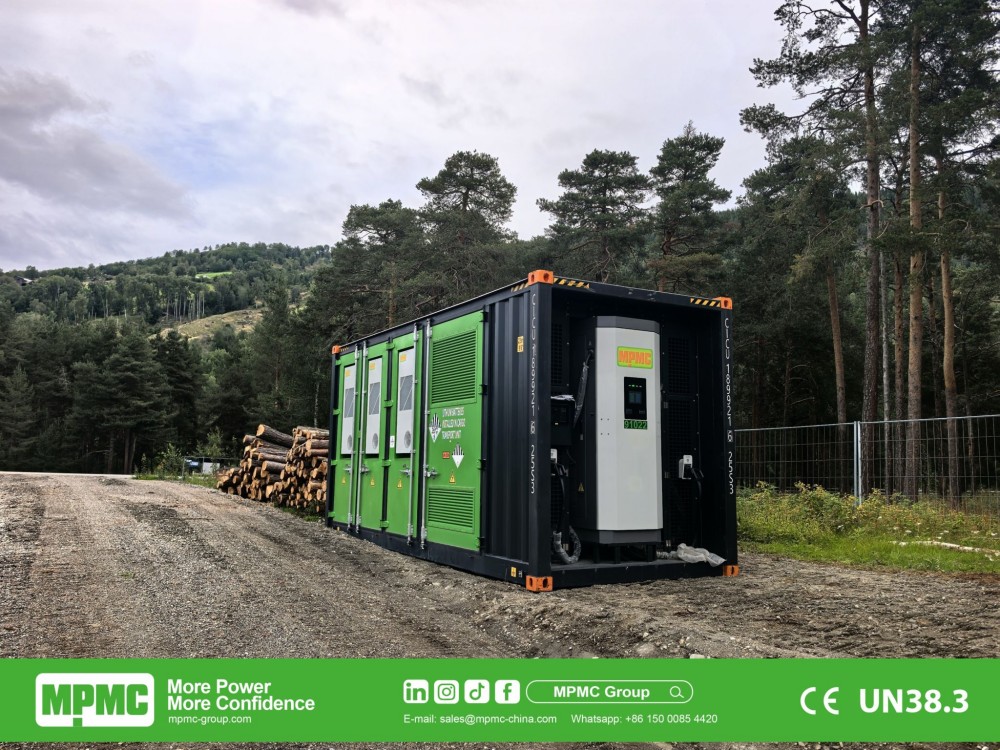 MPMC BCH-500-1000 mobile BESS charger providing outdoor fast charging for electric trucks with no fixed grid connection
Features That Keep a Working Fleet on Schedule
MPMC's BCH battery pack is fully sealed and liquid-cooled, which prevents dust ingress on a depot or mine access road rather than only on a paved forecourt. Each unit runs on an EMS with 4G connectivity, supports OCPP 1.6 on the BCH-275-200 and above for interoperability with a fleet's existing charge-management software, and offers optional RFID payment integration where a shared or multi-tenant depot needs to track usage by vehicle or account.
Fire protection is built in on the BCH-275-200 and above as an aerosol system carrying CE certification, and every model reports its status over Ethernet in addition to the 4G link, so a depot manager checking fleet readiness before a shift is reading live state-of-charge data rather than waiting for a site visit to confirm the unit is actually working.
Documented Temporary Fleet Deployments
| Location | Configuration | Application |
|---|---|---|
|
United Kingdom |
8× BCH-275-200 units |
Logistics and port truck charging, replacing roughly 10-hour charging cycles for 4-hour port runs |
|
Netherlands |
BCH-275-200 + BCH-500-1000 units |
Grid-connected EV charging station |
|
Norway |
2 MWh, BCH-500-1000 units |
Zero-grid charging for electric construction machinery |
The Environmental Case a Fleet Operator Can Document
MPMC's UK case study records a BCH-275-200 delivering 3,457 kWh of total output. A standard 150 kW diesel generator producing the same output would consume approximately 976 litres of diesel and emit roughly 3,123 kg of CO₂ — about 22 times the emissions of the BCH-275-200 running on solar PV across its lifecycle, and around 4.3 times the UK's 2024 grid-average emissions factor for the same output. On that basis, MPMC states the BCH-275-200 deployment in this case saves at least 37.5 tonnes of CO₂ annually, a figure a fleet operator can carry directly into an ESG or procurement report rather than estimating it independently.
Redeploying the Same Unit Across Multiple Sites
A heavy-duty trailer chassis, an integrated forklift pocket, and standardised PowerLock and CEE socket connections mean a BCH unit can move between a depot, a temporary event site and a construction yard without site-specific civil works at each stop — the same unit, not a different product line, covers all three. That matters commercially as much as operationally: a fleet operator financing one BCH-500-1000 rather than several fixed installations is financing an asset that keeps working after the first contract ends, rather than a fixture tied to one address.
The same underlying blade LFP battery architecture runs across every model in the range, built on a sandwich-cell structure tested for fire, water immersion, high-impact collision and crush resistance, with a 6.7°C precision thermal control band that keeps output stable through repeated high-power cycles rather than degrading across a multi-site rental programme the way a less rugged pack might.
Where MPMC's Range Sits Against a Mid-Power Specialist
Life-younger is an established mobile BESS charger brand with a mature mid-power iTrailer line and a credible track record in Europe and Australia. MPMC's BCH range extends further at the top end, with the BCH-600-400, BCH-800-600 and BCH-500-1000 addressing heavy-duty construction machinery, mining support and large-scale electric truck charging — duty cycles that a mid-power mobile charger is not sized for. For a fleet whose vehicle mix spans light vans through heavy trucks, that wider range means one supplier rather than two.
Fleet Operator Checks Before Renting or Buying
• Confirm whether the unit needs a liquid-cooled sealed battery pack for a dusty depot or mine environment.
• Check which AC input sources (grid, genset, solar) the unit accepts before assuming a grid connection is required.
• Verify OCPP 1.6 support if the charger must report into an existing fleet charge-management platform.
• Confirm the fire protection level (aerosol, CE) included on the model being quoted.
• Ask for the documented full-operational deployment time, not a theoretical figure.
• Establish whether RFID payment integration is needed for shared or multi-tenant depot use.
• Confirm trailer weight and connector standard match the towing equipment and vehicle fleet already on site.
• Request a comparable case study at a similar duty cycle, not only a headline power rating.
Questions Fleet Operators Ask
For a temporary or weak-grid site, yes: MPMC's BCH Series carries its own stored energy reserve and reaches full operational status within 24 hours, which covers the gap a permanent installation's construction and grid-connection timeline cannot.
MPMC states full operational status is achievable within 24 hours of arrival, without the multi-month lead times associated with permanent charging infrastructure or grid capacity upgrades.
The BCH Series can be charged from a generator set, existing battery storage, or a solar array instead of the grid, and Norway's documented 2 MWh BCH-500-1000 deployment specifically supports zero-grid charging for electric construction machinery.
The BCH-275-200 and larger models are equipped with two CCS2 charging guns, so two vehicles can charge from a single unit simultaneously, in addition to any AC output supplied to other loads on site.
In MPMC's documented UK case study, a BCH-275-200 delivering 3,457 kWh saves an estimated 37.5 tonnes of CO₂ annually compared with an equivalent diesel-generator-supplied charging load.
Recent Posts

October 26, 2016
The Most Successful Engineering Contractor


Contact US
Product Information
Quantity
Unit
Piece
Support order samples, customization, wholesale direct, and complete payment. If the product you look for does not have corresponding customized content, pls fill out the form below to contact us, and we will reply ASAP.