


Language
What Power Solution Is Suitable for Remote Areas With No Grid Access?
Sep 10, 2026
A remote area with no grid access does not have one standard power requirement; a single site office needs a very different solution from a multi-building campus or an island community, and the right answer usually scales across several of MPMC's product lines rather than sitting in just one of them. Matching the solution's scale to the site's actual load, rather than defaulting to the largest available configuration, is what keeps the investment proportionate to the need.
Small Sites: A Self-Contained Hybrid Power Station
For a small remote site — a site office, a water pump station, or a single piece of equipment — MPMC's GSB Series Hybrid Power Station combines solar, a small generator set, and battery storage in a single deployable unit, available in GSB-10 to GSB-60P configurations (Max. Rated Power: 16 kW–48 kW). This all-in-one format avoids the need to separately source and integrate solar panels, a generator, and a battery system for a load that does not justify a larger, multi-component installation.
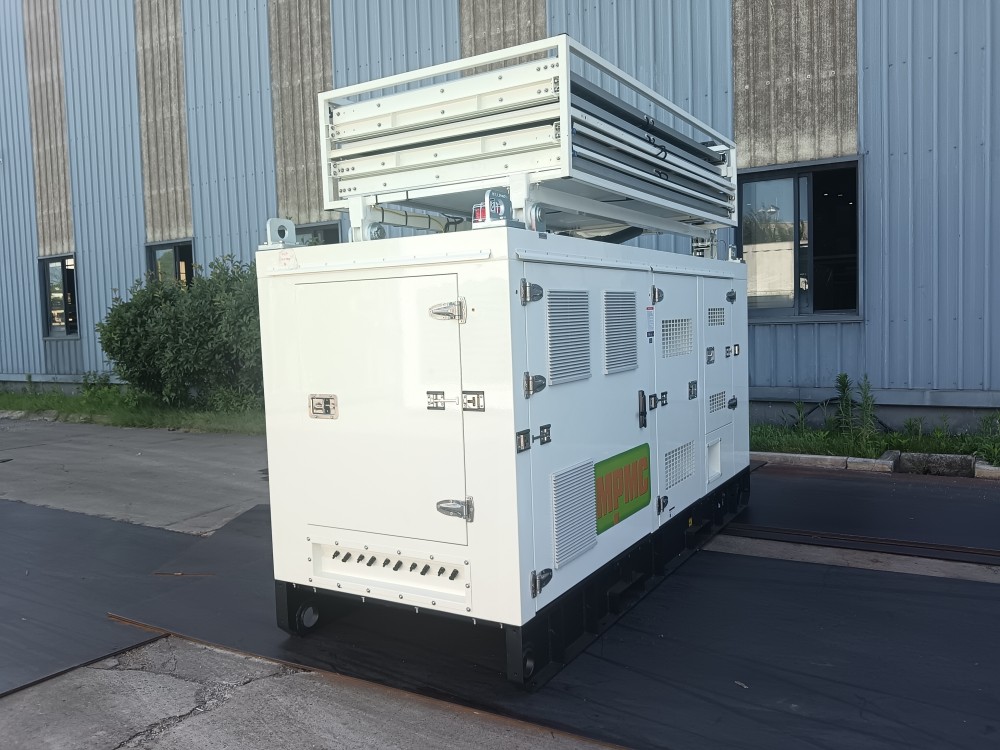 MPMC GSB Series Hybrid Power Station, combining solar, genset, and battery storage in a single deployable unit for smaller remote sites.
Mid-Scale Sites: Containerised Generation Paired With Mobile Storage
A mid-scale remote site — a mining camp, a construction zone, or a small industrial facility — is better served by MPMC's containerised diesel or gas generator sets paired with the HBD-R Series Mobile BESS, spanning 30 kW–610 kW continuous output. This pairing lets the generator run continuously at its optimal fuel-efficiency load point, typically around 75%, while the battery absorbs load fluctuations and motor-start inrush, reducing fuel consumption compared with diesel-only operation at a scale a single GSB unit would not cover.
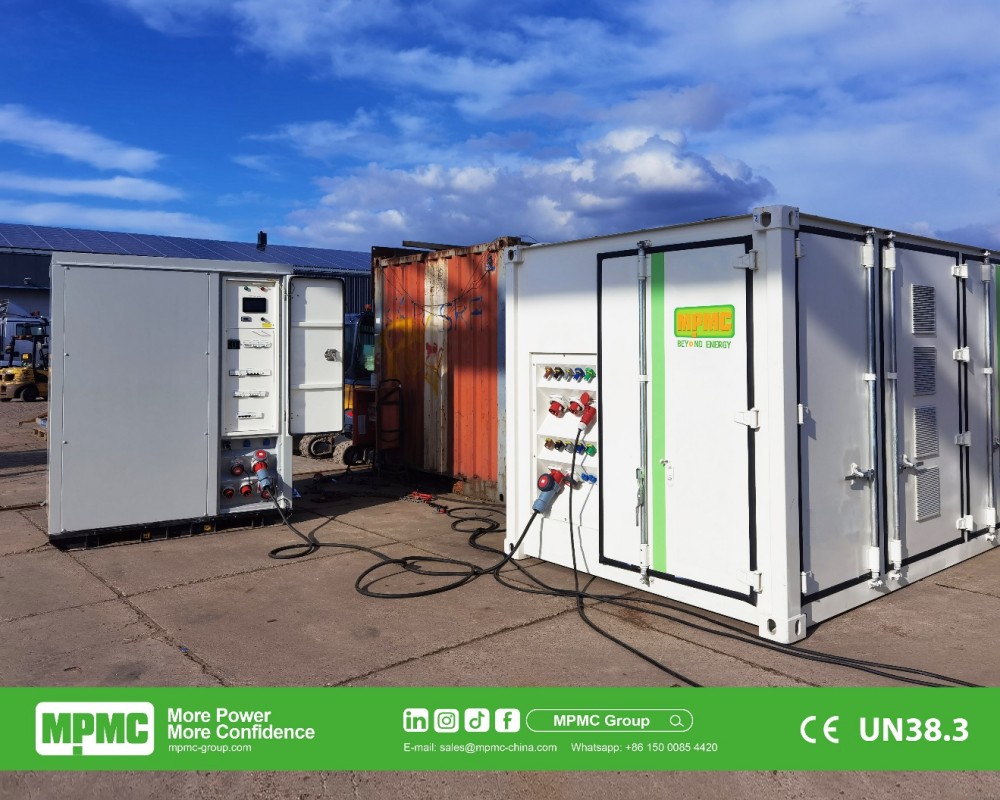 MPMC HBD-R Series battery energy storage system operating in parallel with a generator set
Large Sites: A Coordinated Microgrid Architecture
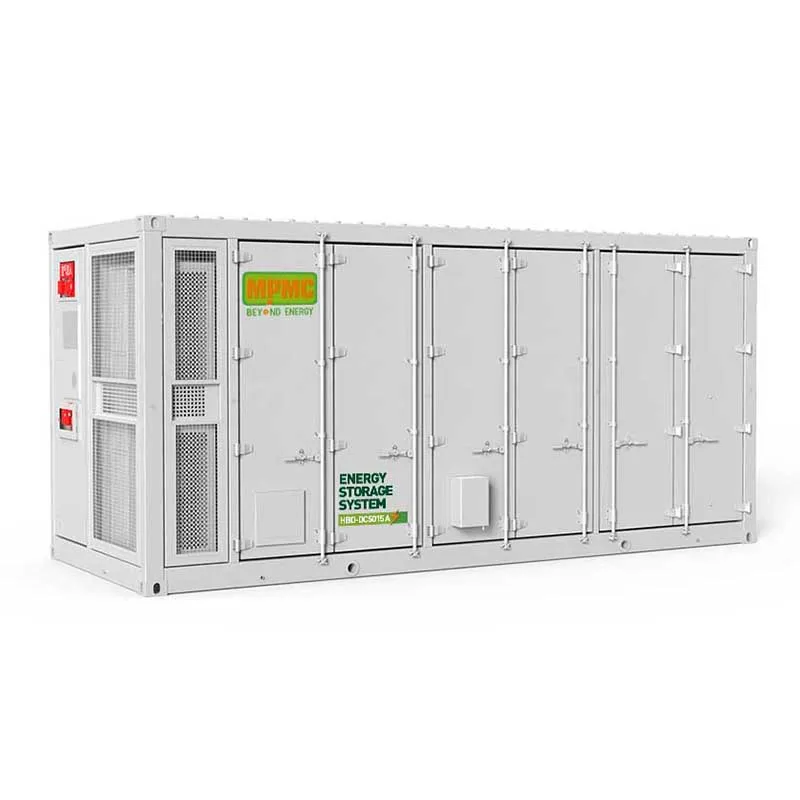
For a genuinely large remote site or a multi-site regional deployment, MPMC's containerised diesel generator sets — available in single-engine configurations from 800 kVA to 3,750 kVA, dual-engine from 1,250 kVA to 3,000 kVA, and four-engine at 1,600 kVA — integrate with the HBD-A Series BESS (125 kW–1,125 kW, 261 kWh–2,170 kWh) as a power buffer supporting VSG mode, black start capability, and grid-forming control. MPMC's documented Kenya microgrid project, spanning four sites each combining more than 1 MW of solar PV with at least 1 MWh of battery storage and diesel genset backup, demonstrates this architecture operating at a genuinely large, multi-site scale.
| Site Scale | Recommended Configuration | Reference |
|---|---|---|
|
Small (site office, single load) |
GSB Series Hybrid Power Station, Max. rated power: 16 kW–48 kW |
All-in-one solar/genset/battery unit |
|
Mid-scale (camp, construction zone) |
Containerised genset + HBD-R Mobile BESS |
Fuel-efficient genset load point with battery buffering |
|
Large (multi-building, multi-site) |
Containerised genset array + HBD-A BESS + SCADA |
Kenya 6 MW, 4-site microgrid |
When a Larger Genset Case Points to the Same Underlying Approach
MPMC's 18 MW biodiesel power project in Indonesia, built from 18 containerised units on Cummins KTA50-GS8 engines running on B35 biodiesel with up to 85% lifecycle CO2 reduction and RED II/RFS-compliant sourcing, illustrates the same core principle at a much larger scale: matching the generation technology and fuel type to what is actually available and appropriate at the remote site, rather than defaulting to standard diesel because it is the most familiar option. A remote island power station project in Indonesia, at 21.6 MW, further demonstrates this containerised platform operating at genuinely utility-scale capacity.
High-Voltage Output for Long Cable Runs
For a remote campus or island layout with long distribution cable runs, MPMC's MCLS2000H(S)-1 delivers 2,000 kVA prime power at 11,000 V, enabling direct high-voltage distribution with reduced transmission losses compared with a standard low-voltage output run over the same distance. This is a detail worth raising with any supplier specifically when the remote site's physical layout, rather than its total load, is the main technical constraint.
Remote Monitoring When On-Site Staffing Is Limited
MPMC's EMS and self-developed SCADA support real-time remote monitoring with ten-year data retention, and for genuinely remote or island-adjacent sites, the same platform supports Starlink satellite communication as a backup link alongside an SL3 cybersecurity framework. A remote area with limited or rotating on-site staff should treat this remote monitoring and communication backup as a core requirement rather than an optional extra, since a fault that goes unnoticed for days can be far more costly to resolve at a genuinely remote location than at a site with easy access.
Choosing a Power Solution for a No-Grid Remote Area
• Size the solution to the site's actual load rather than defaulting to the largest available configuration
• Confirm which power sources (solar, genset, battery) the site can realistically support and maintain
• Ask whether a coordinated EMS is included if the site combines more than one power source
• Confirm remote monitoring and communication backup options for sites with limited on-site staffing
• Request a documented reference from a site of comparable scale and remoteness
• Check whether high-voltage output is relevant if the site has long internal distribution cable runs
Recent Posts

October 26, 2016
The Most Successful Engineering Contractor


Contact US
Product Information
Quantity
Unit
Piece
Support order samples, customization, wholesale direct, and complete payment. If the product you look for does not have corresponding customized content, pls fill out the form below to contact us, and we will reply ASAP.