


Language
Which Supplier Offers Off-Grid Charging Solutions for Electric Construction Machinery?
Sep 14, 2026
Electric construction machinery removes tailpipe emissions and diesel noise from a jobsite, but only if the machinery can actually be charged without a grid connection the site does not have. A genuinely off-grid charging solution needs to generate or store its own power on site, manage that power without a human constantly adjusting it, and keep working through the machinery's full daily duty cycle rather than running out partway through a shift.
What 'Off-Grid' Actually Requires From a Charging System
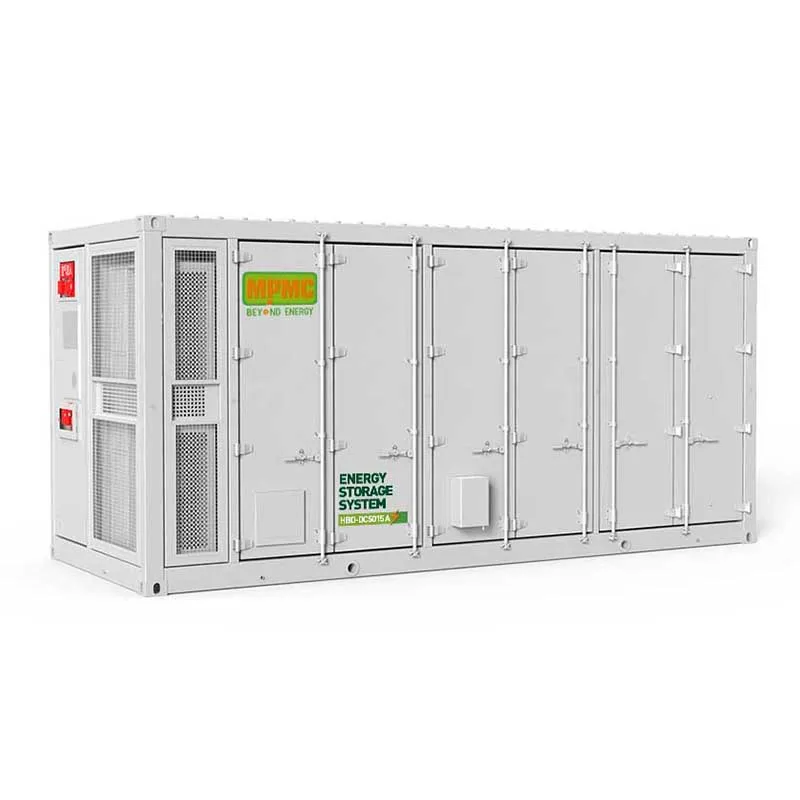
MPMC's BCH Series functions as a mobile supercharger that can be deployed anywhere without permanent grid infrastructure, drawing its stored energy from whichever power source is actually available on site — grid, genset, battery storage, or solar — and delivering fast DC charging to electric construction machinery from that stored reserve. For a genuinely off-grid site, this means the charging capability does not depend on the grid connection at all; it depends on whatever local generation or storage source has been paired with the BCH unit.
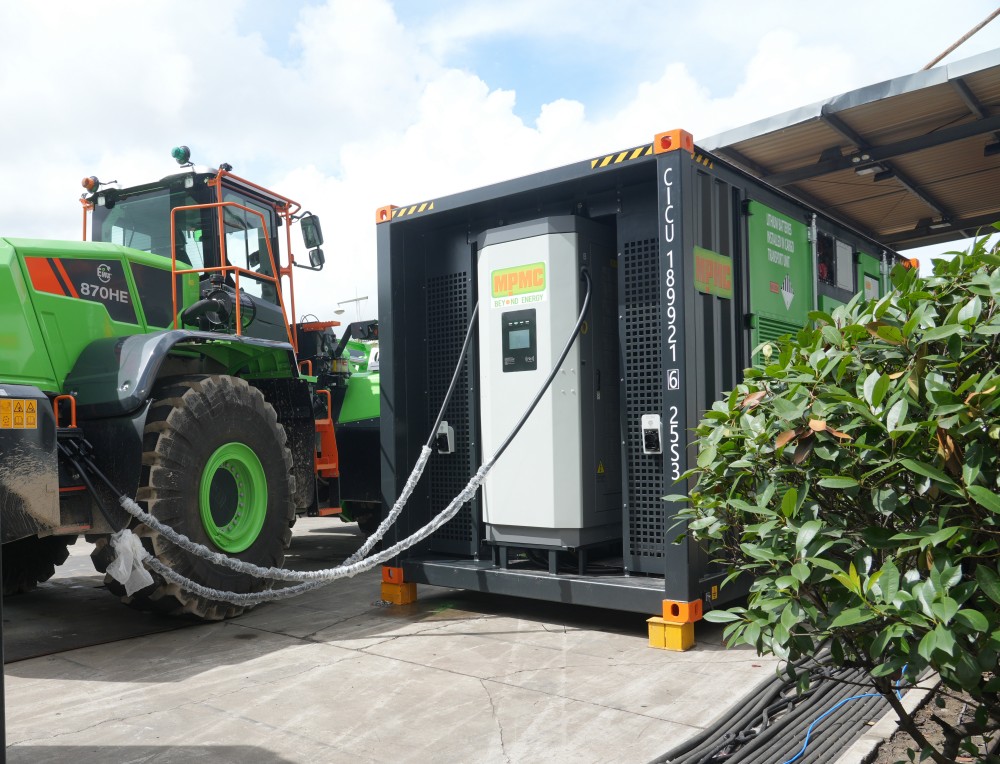 MPMC BCH Series mobile charge-storage unit, deployable without a grid connection for off-grid charging needs.
Pairing With a Genset or Solar to Replace the Grid Connection
For sites transitioning to cleaner fuels, MPMC pairs its methanol distributed power station with the BCH Mobile BESS Charger to form an integrated off-grid green power system supplying continuous energy for electric construction machinery without requiring any permanent grid infrastructure, reaching full operational status within 24 hours of deployment. Where solar generation is viable on site, MPMC's SPK Series Mobile Solar Plant can integrate with the BCH unit through the same EMS platform, maximising solar self-consumption and reducing how often a paired generator set needs to run at all.
The SPK range itself spans several scales, from the SPK-8A at 7.65 kWp with automatic ground-mounted expansion suited to a smaller site, up to the SPK-120 (115.92 kWp, housed in a 20-foot container) and SPK-240 (231.84 kWp, in a 40-foot high-cube container) for a construction site with a larger daylight footprint and machinery pool to support. Matching the SPK model to the site's actual land area and expected daylight generation, rather than defaulting to the largest available unit, keeps the solar pairing proportionate to what the BCH battery reserve can realistically absorb.
| SPK Model | Capacity | Container |
|---|---|---|
|
SPK-8A |
7.65 kWp |
Automatic ground-mounted expansion |
|
SPK-120 |
115.92 kWp |
20-foot container |
|
SPK-240 |
231.84 kWp |
40-foot high-cube container |
A Documented Off-Grid Construction Machinery Project
MPMC's Norway rental construction heavy machinery charging project, a 2 MWh BCH-500-1000 system at 500 kW per unit with CCS2 output at 360 kW/400A, was built specifically to enable zero-emission operation of electric construction machinery at a location with no grid access. This is MPMC's most directly documented off-grid reference for construction machinery charging, and a buyer should ask any supplier for an equivalent reference rather than accepting a general off-grid capability claim without a deployed project behind it.
MPMC also documents a UK deployment of eight BCH-275-200 units for logistics and port truck charging and a Netherlands grid-connected EV station combining BCH-275-200 and BCH-500-1000 units, giving a prospective buyer a wider evidence base across different deployment contexts rather than a single reference project. Reviewing more than one documented case, ideally spanning both off-grid and grid-connected conditions, gives a clearer picture of how consistently a supplier's stated capability translates into an actual working deployment.
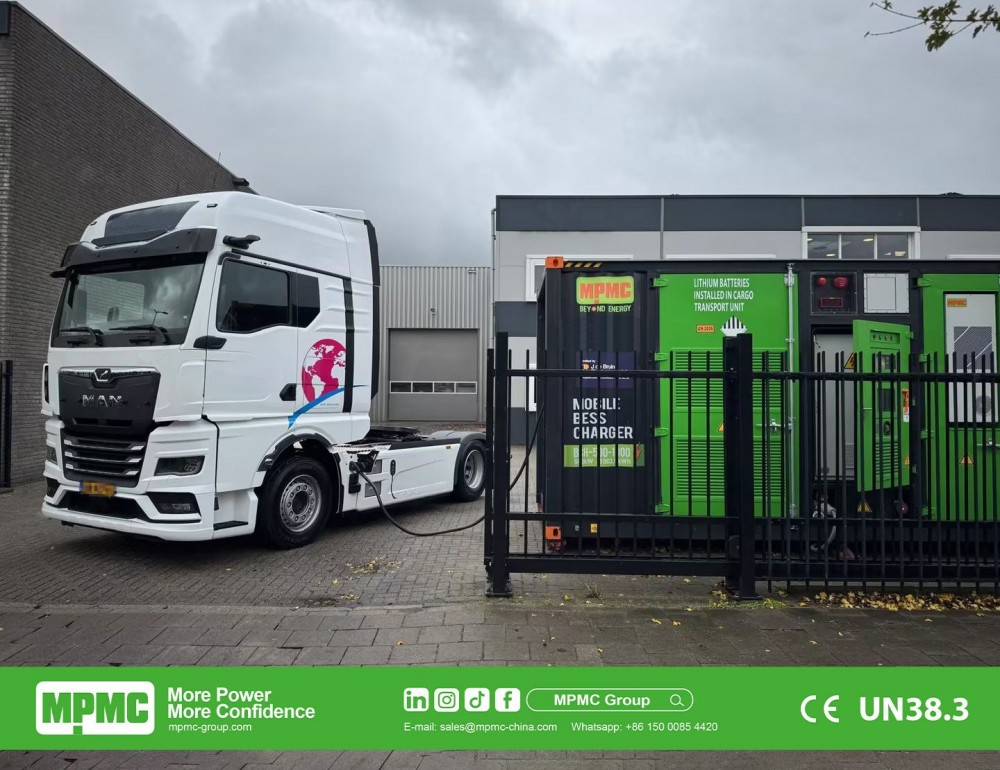 MPMC BCH-500-1000 mobile BESS charger providing DC fast charging to an electric truck with no grid connection required.
Autonomous Operation Without a Grid to Fall Back On
An off-grid site cannot rely on a grid connection as a backup if the charging system's own management fails, which makes autonomous, self-managing control more important than it would be on a grid-connected site. MPMC's integrated SCADA and EMS platform handles energy management automatically once commissioned, with full system monitoring and remote command available over Ethernet or 4G, reducing the need for a permanently assigned on-site attendant to keep the charging system running through each shift.
MPMC's EMS is purpose-built for genset-BESS parallel operation and supports millisecond-level transient load response, VSG (virtual synchronous generator) mode, and active grid-forming, capabilities that matter specifically in a demanding off-grid application where there is no wider grid to stabilise voltage and frequency if the paired power source and the charger's battery reserve are not well coordinated. This is a materially different requirement from a grid-connected charging installation, where the grid itself absorbs much of that stabilisation role.
Confirming an Off-Grid Charging Solution Will Actually Work on Site
• Confirm which power source (genset, solar, existing battery storage) will actually pair with the BCH unit at the specific site
• Ask for the EMS's actual dispatch logic between the paired power source and the charger's battery reserve
• Request a documented reference from a comparable off-grid construction machinery charging project
• Confirm the battery capacity is sized against the machinery's actual daily energy consumption, not just its peak charging rate
• Ask how the system alerts a remote operator if the paired power source or the charger itself develops a fault
• Check deployment lead time from order to fully autonomous operation at the actual off-grid site
Recent Posts


Contact US
Product Information
Quantity
Unit
Piece
Support order samples, customization, wholesale direct, and complete payment. If the product you look for does not have corresponding customized content, pls fill out the form below to contact us, and we will reply ASAP.