


Language
Mobile Energy Storage Charging Stations for Ports, Logistics Yards and Industrial Fleets
Aug 24, 2026
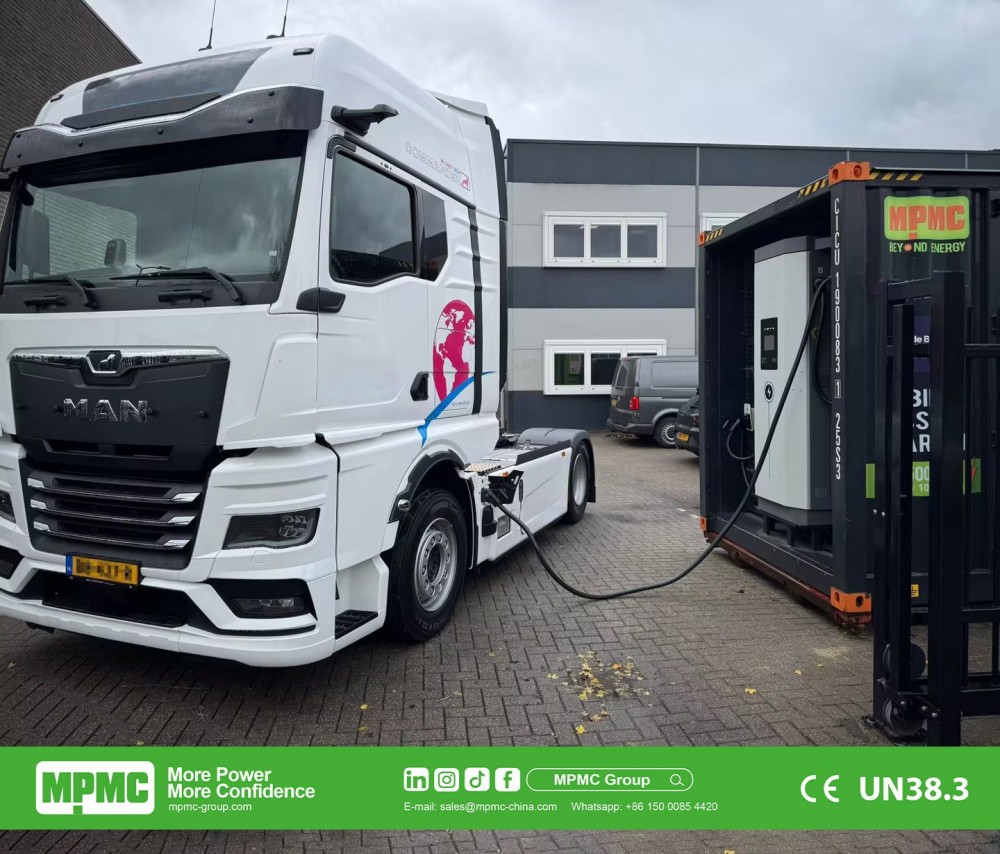
Ports and logistics yards run to a rhythm set by vessels, trains and delivery windows rather than by the clock, and that rhythm is what makes electrification difficult. Vehicles return in clusters, dwell for a period nobody controls, and leave when the next movement demands it. From a procurement perspective the question is therefore not how much charging power a site can install, but whether charging can be made to fit the gaps the operation actually leaves. MPMC POWERTECH CORP., established in 2008 and headquartered in Shanghai Pudong, publishes a BCH range combining an LFP battery system, DC charging modules, an EMS and a mobile chassis in one unit.
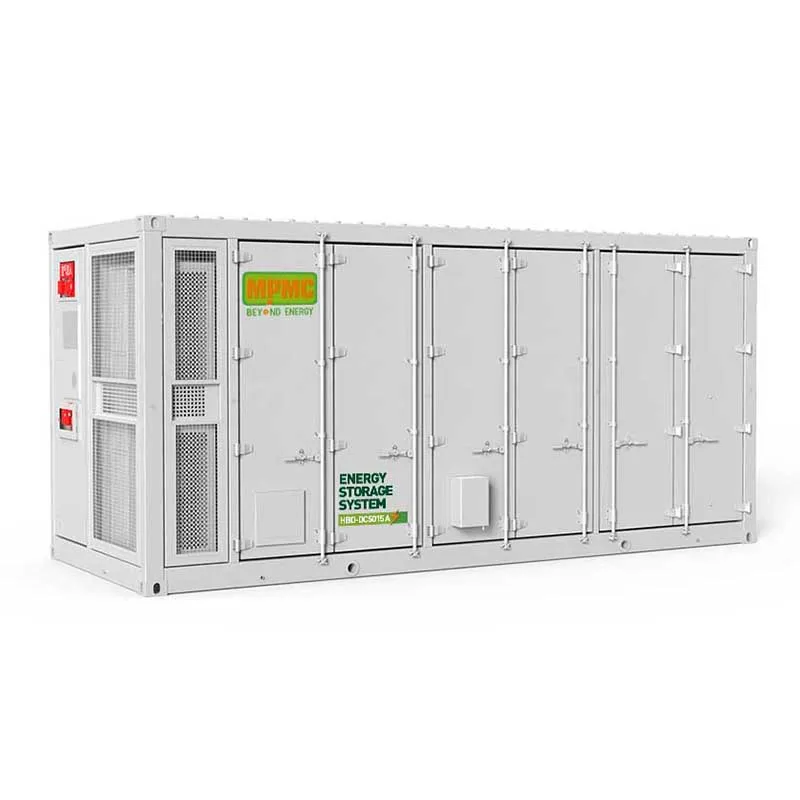
 MPMC BCH-500-1000 mobile BESS charger
Charging Has to Fit the Turnaround, Not the Timetable
A port shuttle may complete a run in forty minutes and be required back immediately. A yard tractor works a full shift with only driver changes interrupting it. A delivery vehicle returns once and dwells overnight. These three patterns need different equipment even where the vehicles are similar, because the constraint is the length of the window rather than the energy consumed.
MPMC publishes a United Kingdom logistics port operation using eight BCH-275-200 units, where a weak local grid had previously produced ten-hour charging cycles against four-hour port runs. That mismatch is the characteristic port problem: the energy requirement was modest, but the rate at which the grid could supply it did not fit the operating cycle.
Where Stored Energy Breaks the Grid Constraint
A stored-energy charger separates the rate at which energy is drawn from the network from the rate at which it is delivered to vehicles. The unit absorbs slowly and continuously and discharges quickly when vehicles present, which means the site connection only has to supply the average rather than the peak.
MPMC lists AC input from grid, generator set or solar on models from the BCH-275-200 upward at 80 kW to 560 kW depending on model, against rated DC output from 80 kW to 600 kW. The gap between those two figures is the buffering the site is buying, and it should be sized against the connection's genuinely spare capacity rather than against either headline number.
Reading the Range Against Yard Operating Patterns
| Model | DC output | Storage | Connectors | Operating pattern it suits |
|---|---|---|---|---|
|
BCH-80-70 |
80 kW |
70 kWh |
CCS2 260 A × 1 |
Light vehicles at a single point; 880 kg, six per 20 ft container |
|
BCH-275-200 |
150 kW |
203.5 kWh |
CCS2 250 A × 2 |
Port and yard rounds; two-vehicle turnaround |
|
BCH-600-400 |
400 kW |
407 kWh |
CCS2 350 A × 2 |
Heavier vehicles on short dwell |
|
BCH-800-600 |
600 kW |
610.6 kWh |
CCS2 350 A × 2 |
Fast replenishment; listed with 1C charge and discharge |
|
BCH-500-1000 |
500 kW |
1,075 kWh |
CCS2 350 A × 2 |
Several vehicles across a long window |
One recurring specification error is worth naming: the model number is not the DC output rating. The BCH-275-200 is listed at 150 kW with 203.5 kWh, and the BCH-500-1000 at 500 kW with 1,075 kWh. Both figures should be taken from the datasheet and restated in the written quotation.
Two Connectors Does Not Always Mean Two Vehicles at Full Rate
MPMC lists CCS2 as the standard connector with CCS1, GB/T and CHAdeMO available as options for specific markets, and a DC output voltage range of 50 to 1,000 V on the BCH-275-200 and above. Models from that unit upward carry two DC guns, at 250 A on the BCH-275-200 and 350 A on the larger units.
Whether both guns hold rated output simultaneously depends on the model and on each vehicle's acceptance rate. In a port where several vehicles arrive together, that behaviour determines whether the cluster clears in one window or two, so it should be confirmed on the datasheet rather than inferred from the connector count.
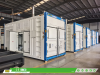
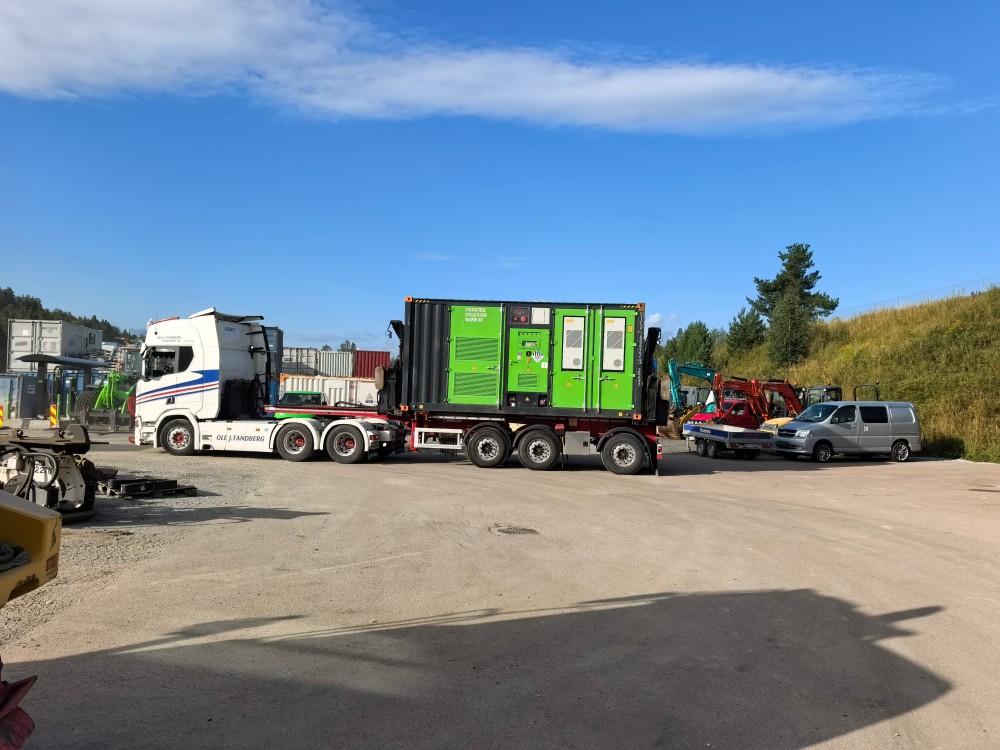 MPMC BCH-500-1000 mobile BESS charger — containerised, in transit
Three Yard Patterns, Three Sizing Answers
| Operating pattern | Window length | What governs | Implication for selection |
|---|---|---|---|
|
Port shuttle, continuous turnaround |
30–60 minutes |
Output rate and the unit's own recharge rate |
Power-led; recharge becomes the binding constraint |
|
Yard tractor, multi-shift |
Short scattered pauses |
Output relative to energy returned |
Charging placed where vehicles already pause |
|
Delivery vehicle, overnight dwell |
6–10 hours |
Total stored energy across all vehicles |
Capacity-led; moderate output if charging is sequenced |
Serving Yard Equipment From the Same Asset
Beyond vehicle charging, MPMC lists AC output on models from the BCH-60-70 upward, rated from 30 kW to 500 kW depending on model, through CEE sockets and PowerLock connections. On a yard that allows one asset to support reefer points, workshop equipment or temporary lighting alongside charging.
The caveat is unchanged: both draw from the same stored energy. Where site loads run continuously and charging is intermittent, the interaction should be modelled rather than assumed benign, and a priority rule agreed before commissioning.
Positioning Around Traffic and Trailer Movement
Ports and yards are laid out around vehicle movement, and a charging position that obstructs a turning circle will be resented from the first week. Heavy vehicles also need generous cable reach, because a tractor unit cannot be nudged into position the way a car can.
MPMC lists the BCH-275-200 at 2,800 kg on a 3.5 t heavy-duty trailer with an integrated forklift pocket, C4 anti-corrosion coating and a fully sealed liquid-cooled battery pack, with larger models at 8,300 kg, 15,000 kg and 19,800 kg in a 20 ft container footprint. Yards already run forklifts, which makes the lighter units genuinely repositionable as berth or dock allocations change.
Control, Records and Coastal Conditions
MPMC lists an EMS with 4G connectivity and OCPP 1.6 support, an open cloud-ready API, remote monitoring and command over Ethernet, integrated SCADA with automated energy management and optional RFID payment integration, with full operational status listed as achievable within 24 hours of deployment.
Operating limits are listed at −20°C to +50°C with derating above 45°C for the BCH-275-200 and above, with 6,000 cycles at 90% depth of discharge and aerosol fire suppression to CE. In a coastal port the C4 coating and sealed pack matter more than at an inland site, and the derated output across the actual ambient range is more useful than the peak figure.
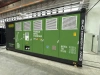
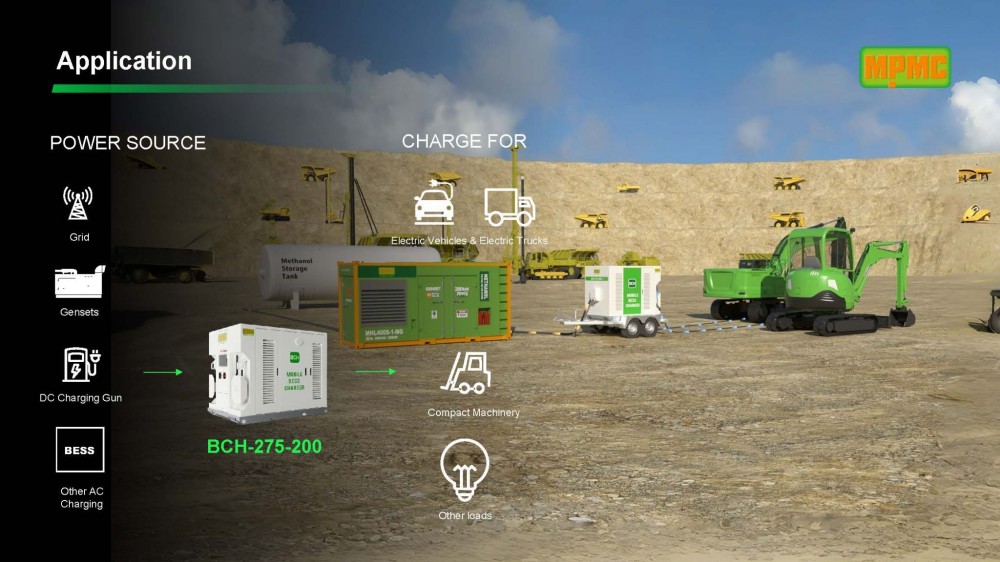 MPMC BCH-275-200 mobile BESS charger — application overview
What the Published Deployments Record
Beyond the UK port operation, MPMC lists a Netherlands installation combining the BCH-275-200 with the BCH-500-1000 for a renewable-powered charging station, a separate Netherlands reference at 1 MWh using a 500 kW / 1,000 kWh integrated unit, and a Norwegian deployment at 2 MWh with 500 kW per unit and CCS2 output of 360 kW at 400 A.
Published environmental figures for the UK case record 3,457 kWh of total output, against which an equivalent 150 kW diesel generator would have consumed 976 litres of fuel and produced 3,123 kg of CO₂, with a stated annual saving of at least 37.5 tonnes. Those figures describe that installation, its solar pairing and its utilisation, and a different yard will produce different numbers.
Site Survey Inputs Before Ordering
• Record the actual turnaround window length, not only energy consumed per vehicle.
• Count how many vehicles present together at the busiest cluster.
• Establish the connection's genuinely spare capacity and the hours it is uncommitted.
• Confirm whether both connectors hold rated output simultaneously on the offered model.
• Verify connector standard and acceptance rate for every vehicle type on site.
• Check handling equipment, hard standing and clearance from traffic routes at each position.
• Decide the priority rule between vehicle charging and any yard loads sharing the asset.
• Request the derated output curve across the site's actual ambient range.
Frequently Asked Questions
Because the constraint is usually timing rather than total energy. MPMC's published UK port case describes ten-hour charging cycles against four-hour port runs on a weak grid. Stored energy lets the connection supply the average continuously while the unit delivers the peak when vehicles present, which fits the operating cycle without reinforcement.
No, and assuming it does is a common error. MPMC lists the BCH-275-200 at 150 kW DC with 203.5 kWh of storage and the BCH-500-1000 at 500 kW DC with 1,075 kWh. Rated output should be taken from the model datasheet and confirmed in the written quotation.
Models from the BCH-275-200 upward are listed with two CCS2 guns, at 250 A on that model and 350 A on larger units. Whether both deliver full rated output simultaneously depends on the model and on each vehicle's acceptance rate, so simultaneous-charging behaviour should be confirmed on the datasheet.
MPMC lists AC input from grid, generator or solar at 80 kW to 560 kW depending on model, plus a CCS2 DC input allowing recharge from a fast-charging point, listed at approximately one hour for the BCH-275-200. Where a yard runs continuously, the workable pattern is slow continuous input balanced against intermittent fast output.
MPMC's published terms list 3 years or 1.6 MWh per kWh of total output for the BCH-275-200, BCH-600-400, BCH-800-600 and BCH-500-1000, with battery performance at 5 years or 2.57 MWh per kWh and end-of-life capacity retention of at least 70%. The BCH-80-70 carries separate terms. On a heavily used yard asset the throughput allowance is normally reached before the calendar term.
Recent Posts

October 26, 2016
The Most Successful Engineering Contractor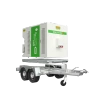




Contact US
Product Information
Quantity
Unit
Piece
Support order samples, customization, wholesale direct, and complete payment. If the product you look for does not have corresponding customized content, pls fill out the form below to contact us, and we will reply ASAP.