



Language
Mobile BESS Chargers for Electric Bus Depots and Fleet Yards: Planning Charging Around the Timetable
Nov 17, 2026
Electric buses and depot-based fleets return to base at predictable times, which concentrates charging into a few busy windows. Many depot connections were sized for workshops and offices rather than for a yard full of high-power chargers, and grid upgrades take time to arrive. Mobile BESS chargers bridge the difference: they draw steadily from the connection, store the energy and deliver high-power DC charging when vehicles are in. MPMC, a Shanghai-based manufacturer, builds its BCH Series for this kind of depot duty.
Three Charging Windows in a Depot Day
Overnight
The longest window comes after the last service. BCH units recharge their batteries through AC input from the grid, or from solar during the day, and deliver DC charging through the night, so the depot connection works steadily rather than in sharp peaks. Pairing the units with depot photovoltaics turns zero-cost solar energy into charging energy for the next day.
Layovers and Shift Changes
Short breaks call for high power. The BCH-600-400, BCH-800-600 and BCH-500-1000 each charge two vehicles at once through 350 A CCS2 guns on 6 m cables, with outputs of 400 kW, 600 kW and 500 kW, and the BCH-800-600 adds 1C performance for rapid energy transfer between services.
Peaks in Demand
When timetables change or extra services run, units can be moved within the yard or brought in from another site, and capacity grows by adding units rather than rebuilding the connection.
Table 1. Depot charging windows and the BCH approach
| Window | BCH approach | Typical models |
|---|---|---|
|
Overnight |
Steady AC input stored in the battery; DC charging through the night |
BCH-500-1000, BCH-600-400 |
|
Layovers |
Two vehicles charged at once at high power |
BCH-800-600, BCH-600-400 |
|
Support vehicles |
150 kW for vans and service vehicles |
BCH-275-200 |
|
Extra services |
Additional units moved in as demand grows |
Any model |
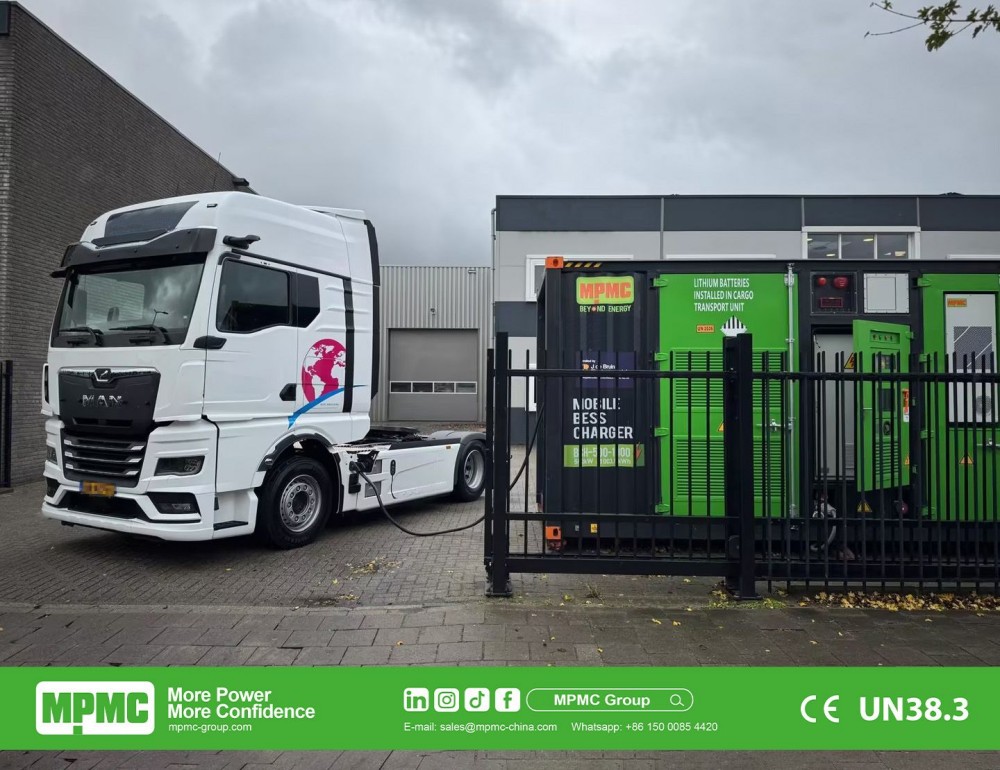 MPMC BCH-500-1000 containerised mobile BESS charger charging an electric truck.
Choosing BCH Models for a Depot
Output voltage of 50 to 1,000 V covers both 400 V and 800 V vehicle platforms, and CCS2 guns are standard, with CCS1, GB/T and CHAdeMO available for specific markets. The table compares the depot models by DC output, storage and the AC connection they need.
Table 2. BCH models for bus depots and fleet yards
| Model | DC charging | Storage | AC input | Depot role |
|---|---|---|---|---|
|
BCH-275-200 |
150 kW, 2 × CCS2 250 A |
203.5 kWh |
80 kW |
Support vans; smaller yards |
|
BCH-600-400 |
400 kW, 2 × CCS2 350 A |
407 kWh |
280 kW |
Core depot charging |
|
BCH-800-600 |
600 kW (640 kW peak), 1C |
610.6 kWh |
280 kW |
Fast layover turnaround |
|
BCH-500-1000 |
500 kW (560 kW peak) |
1,075 kWh |
560 kW |
Round-the-clock depots |
Note: The table shows the models suited to depot duty; the BCH Series also includes the compact BCH-80-70 and the AC-output BCH-60-70.
Siting in the Yard
The BCH-600-400 measures 3,950 x 2,250 x 2,250 mm and the BCH-800-600 4,800 x 2,250 x 2,250 mm, while the BCH-500-1000 comes in a 20-foot container format, so each fits a parking bay or yard corner. The larger models operate from -20°C to +50°C at altitudes up to 3,000 m, and every unit reaches full operation within 24 hours of arrival, with no civil works for a new substation.
Depot Services Beyond Charging
BCH units also power the depot itself. AC output of 200 kW on the BCH-600-400 and BCH-800-600 and 500 kW on the BCH-500-1000 runs workshop tools, lighting and gate systems, with UPS-grade output on the two largest models for control rooms and dispatch. PowerLock connections accept solar input, and the EMS with 4G, OCPP 1.6 and an open API passes charging data to depot management and fleet systems, with optional RFID for driver identification.
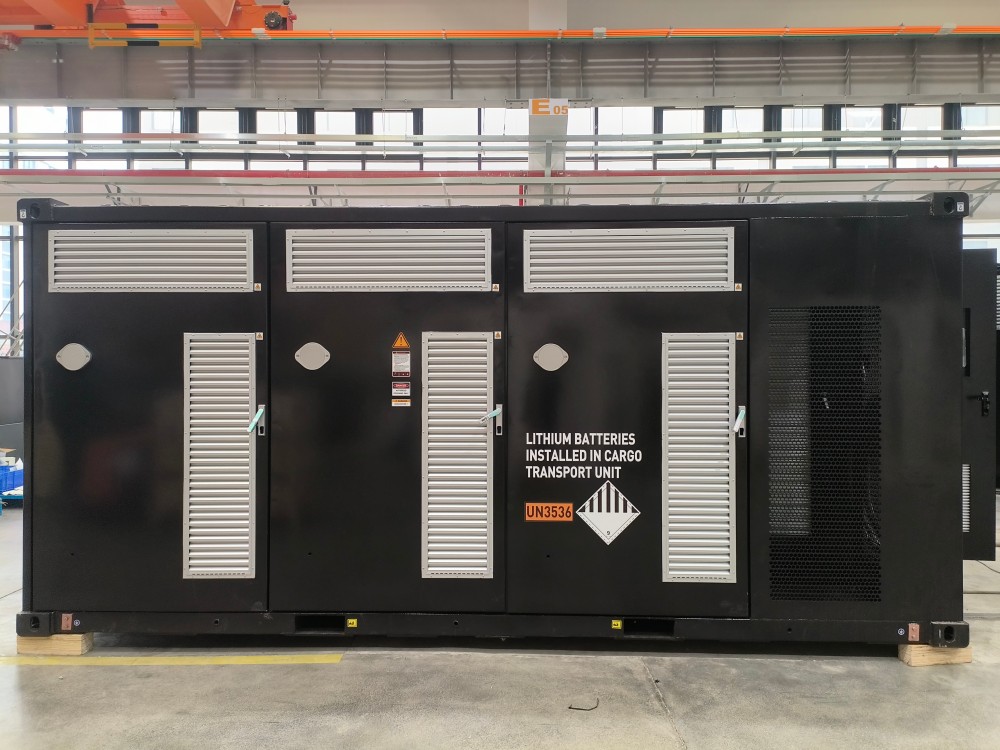 MPMC BCH-800-600 mobile BESS charger with 600 kW DC output and 1C performance.
Depot Experience to Build On
BCH units already support depot-style operations in Europe. At a UK logistics port, eight BCH-275-200 units bypassed a constrained grid connection and moved electric trucks from 10-hour charging cycles to near-continuous operation, and in the Netherlands BCH-275-200 and BCH-500-1000 units deliver renewable-powered charging at port and logistics sites. C4 anti-corrosion coating is standard, with C5 available on the BCH-800-600 and BCH-500-1000, and the BCH-275-200 and larger models carry a 3-year system and 5-year battery performance warranty.
Planning Depot Charging With MPMC
• Map arrival times, layovers and overnight parking
• Record the depot's available connection capacity
• Choose BCH models for each charging window
• Plan solar input and integration with fleet software
• Contact MPMC at sales@mpmc-china.com or WhatsApp +86 150 0085 4420 for a depot charging plan
Recent Posts





Contact US
Product Information
Quantity
Unit
Piece
Support order samples, customization, wholesale direct, and complete payment. If the product you look for does not have corresponding customized content, pls fill out the form below to contact us, and we will reply ASAP.