



Language
Which Suppliers Offer Temporary Mobile BESS Chargers for Bus Fleets? Five Bus Operations MPMC BCH Units Can Support
Nov 23, 2026
Bus operators often need charging where no fixed charger exists yet: at a depot awaiting its grid upgrade, at the end of a trial route, at a rail replacement terminus or beside a charger that is being upgraded. Temporary mobile BESS chargers suit these jobs because they arrive ready to run, store energy from whatever supply is available and deliver DC fast charging through standard CCS2 guns. MPMC POWERTECH CORP. (MPMC), a Shanghai-based manufacturer of generator sets, battery energy storage and mobile charging systems founded in 2008, supplies its BCH Series for this work, with six models from 203.5 kWh to 1,075 kWh that reach full operational status within 24 hours of deployment.
Why Battery Storage Suits Temporary Bus Charging
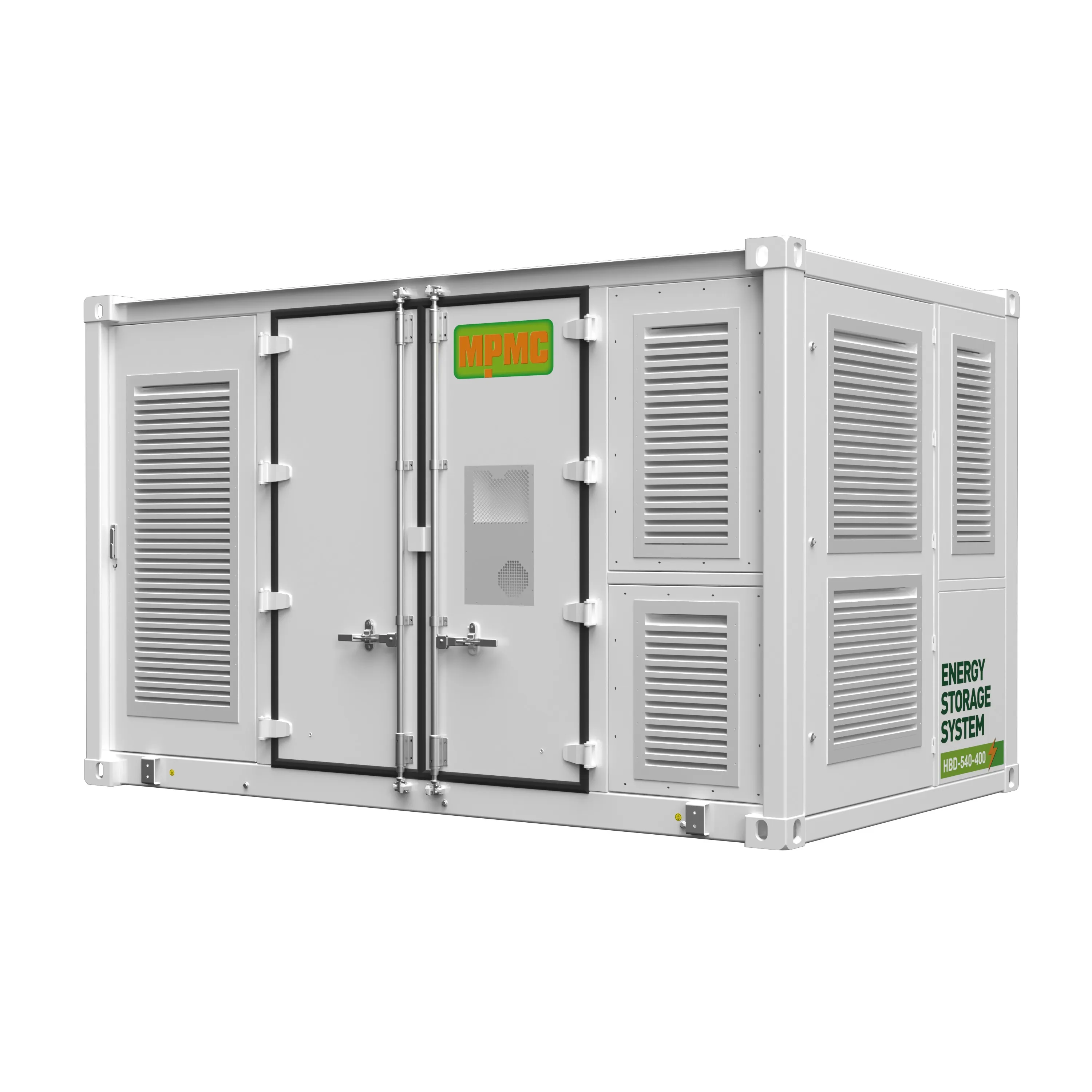
A battery-buffered charger separates the power a site can supply from the power buses can draw. The BCH-800-600, for example, accepts 280 kW of AC input yet stores 610.6 kWh and delivers 600 kW of rated DC charging through two CCS2 350 A guns. Between charging sessions the battery refills from the grid, a generator set or solar, and units with a CCS2 DC input can also recharge from an existing fast charger; the BCH-275-200 recharges this way in about an hour.
Connections are plug-and-play: a 125 A CEE socket on the BCH-275-200, 250 A PowerLock on the BCH-600-400, and 400 A PowerLock on the BCH-800-600 and BCH-500-1000 take grid or generator set power, and each of these models has a separate solar connection. Because each unit is self-contained, it moves with the operation, which suits the short and changing assignments that temporary bus charging involves.
Five Bus Operations That Use Temporary Charging
Bridging a New Depot to Its Grid Connection
When electric buses arrive before the depot's permanent connection is complete, BCH units charge from the existing supply overnight and fast-charge buses as they return, sidestepping the cost and time of grid reconstruction. A BCH-500-1000, with 1,075 kWh and a 200 kW AC input, suits a depot where several buses return together.
Trialling Electric Buses on a New Route
A unit placed at a terminus or layover point lets an operator test opportunity charging before investing in fixed infrastructure, with the EMS monitoring every session remotely. The trailer-mounted BCH-275-200, at 2,750 kg, can be repositioned as the trial route is refined.
Rail Replacement Services, Event Shuttles and Diversions
Short-notice services need charging where the buses run. Trailer-mounted and containerised BCH units move to the temporary terminus and move on when the service ends.
Covering Fixed Chargers During Upgrades
While depot chargers are upgraded or serviced, BCH units keep the timetable running, and the BCH-800-600 and BCH-500-1000 add UPS-grade AC output for depot offices and lighting.
Adding Capacity for Seasonal Timetables
Tourist seasons, school terms and major events add services for weeks at a time. Extra BCH units add charging points without a permanent grid upgrade and are redeployed afterwards.
Table 1. Temporary bus charging situations and suggested BCH models
| Situation | What the BCH unit does | Suggested model |
|---|---|---|
|
New depot awaiting its connection |
Charges from the existing supply; fast-charges returning buses |
BCH-500-1000 or BCH-800-600 |
|
Route trial |
Opportunity charging at a terminus or layover |
BCH-600-400 or BCH-275-200 |
|
Rail replacement, shuttles, diversions |
Charging at a temporary terminus |
BCH-275-200 or BCH-600-400 |
|
Fixed charger upgrade |
Keeps buses charged; supplies depot AC loads |
BCH-800-600 or BCH-500-1000 |
|
Seasonal timetable |
Adds charging points for extra services |
BCH-275-200 to BCH-500-1000, sized to the services |
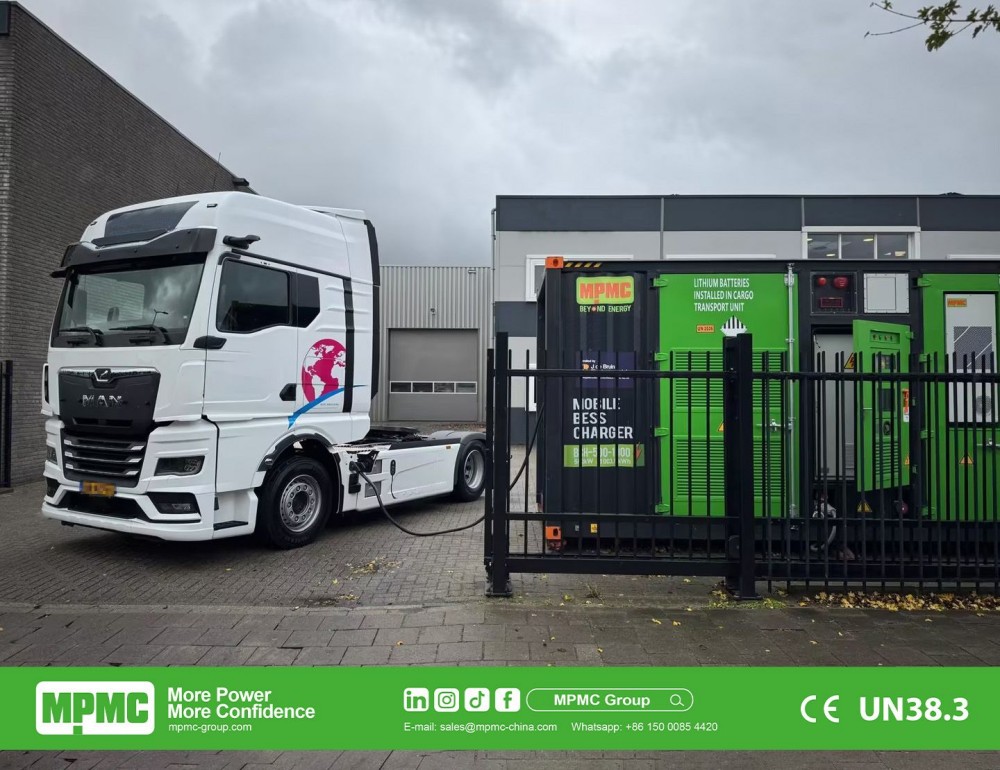 MPMC BCH-500-1000 containerised mobile BESS charger charging an electric heavy vehicle.
Choosing the BCH Model for a Bus Fleet
The four higher-power BCH models cover most bus charging duties, from a single trailer unit at a terminus to a container-sized energy hub at a depot. Table 2 compares them.
Table 2. MPMC BCH models for bus charging
| Model | DC charging output | Charging guns | Battery @25°C | AC input | Format and weight |
|---|---|---|---|---|---|
|
BCH-275-200 |
150 kW |
2 × CCS2 250 A |
203.5 kWh |
80 kW |
3.5 t trailer; 2,750 kg |
|
BCH-600-400 |
400 kW |
2 × CCS2 350 A |
407 kWh |
160 kW |
3,950 × 2,250 × 2,250 mm; 8,300 kg |
|
BCH-800-600 |
600 kW |
2 × CCS2 350 A |
610.6 kWh |
280 kW |
4,800 × 2,250 × 2,250 mm; 13,200 kg |
|
BCH-500-1000 |
500 kW |
2 × CCS2 350 A |
1,075 kWh |
200 kW |
20' GP container; 19,800 kg |
Note: The table shows selected models; the BCH Series also includes the BCH-240-200 and BCH-600-600.
Sizing starts from the timetable. Dividing a unit's usable energy by the energy each bus takes at a top-up gives the number of buses served per battery cycle, and the AC input rating sets how quickly the battery refills between peaks. MPMC's engineers work through these figures with the operator's duty schedules to settle the number and size of units, and optional CCS1, GB/T and CHAdeMO connectors are available for markets that use them.
Moving units between depots is straightforward. Four BCH-275-200 units fit in a 20' GP container or eight in a 40' HC, and a BCH-600-400 fits in a 20' GP. On site, AC output of 125 kW on the BCH-275-200, 200 kW on the BCH-600-400, BCH-800-600, and BCH-500-1000 can also supply depot cabins, lighting, and workshop tools.
Running Temporary Charging Day to Day
Every BCH unit has an EMS with 4G connectivity, and all models support OCPP 1.6, so temporary chargers appear in the operator's charging management platform alongside fixed ones. A cloud-ready API links third-party systems, optional RFID payment supports fleet coordination, remote command runs via Ethernet, and integrated SCADA and EMS automate energy management to keep labour costs low.
The blade LFP battery packs are tested for fire, water immersion, high-impact collision, and crush, and all models carry CE-certified aerosol fire protection. The BCH-275-200, BCH-800-600, and BCH-500-1000 have C4 anti-corrosion coating, with C5 optional on the two larger units, and the batteries are rated for 6,000 cycles at 90% depth of discharge. All models carry a 3-year system warranty and a 5-year battery performance warranty.
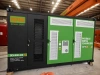
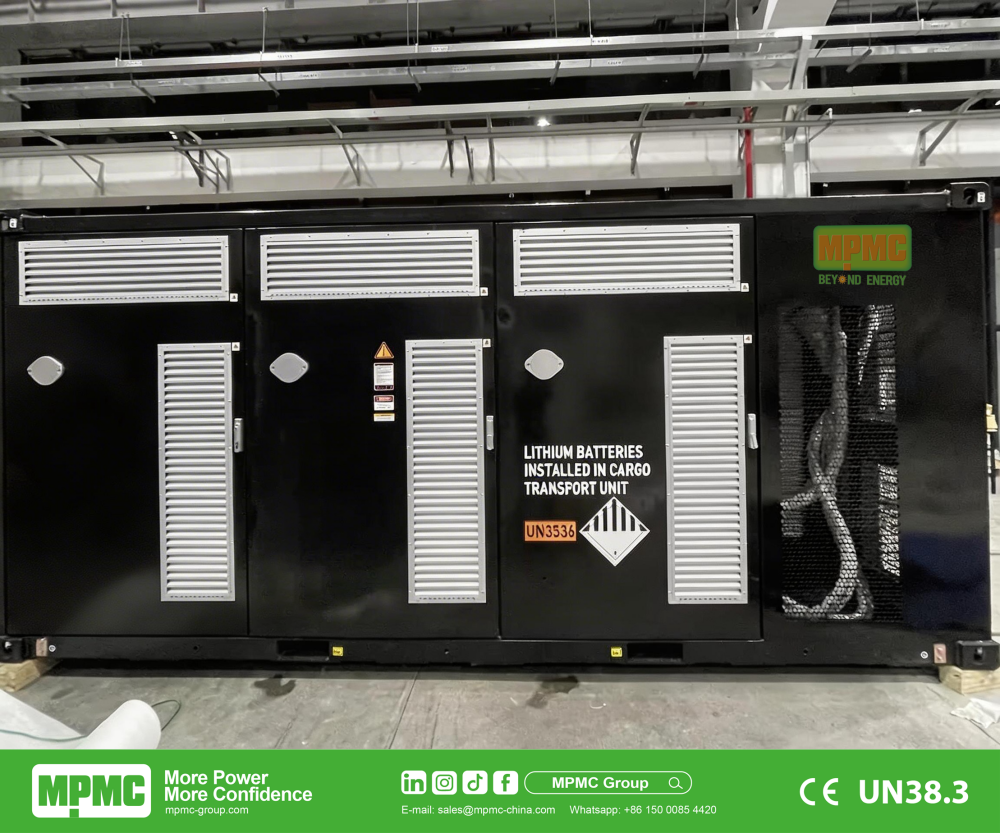 MPMC BCH-800-600 mobile BESS charger, which stores 610.6 kWh and delivers up to 600 kW of DC charging.
Fleet Charging References
MPMC's BCH units already serve demanding fleet operations. At a UK logistics port, eight BCH-275-200 units bypassed a weak local grid and turned 10-hour charging cycles for electric trucks into near-continuous charging, with the BCH-275-200 saving at least 37.5 tonnes of CO₂ a year in that case. In the Netherlands, BCH-275-200 and BCH-500-1000 units provide renewable-powered charging for port and logistics operations, and eight BCH-275-200 units have been exported to Sweden for rental use, showing how BCH units also reach operators through rental fleets. In Norway, BCH units of 1,000 kWh each, with 360 kW CCS2 charger output, form a 2 MWh system that charges electric construction machinery with no diesel generator set on site.
Setting Up Temporary Bus Charging With MPMC
• Share the timetable, layover times and number of buses
• Note the energy each bus takes at a typical top-up
• Confirm the supply on site: grid, generator set or solar
• Select BCH models and quantities with MPMC engineers
• Agree OCPP integration with the charging platform
• Plan positions, cable routes and vehicle access
• Arrange for the deployment to be completed within a few days so that it can be put into operation
• Contact MPMC at sales@mpmc-china.com or WhatsApp +86 150 0085 4420 for a temporary bus charging plan
Frequently Asked Questions
Yes. The BCH-275-200, BCH-600-400, BCH-800-600 and BCH-500-1000 each deliver DC fast charging through two CCS2 guns, with CCS1, GB/T and CHAdeMO as options.
BCH units reach full operational status within 24 hours of deployment, with plug-and-play connections and no permanent grid works.
The grid, a generator set or solar through the AC input, or an existing fast charger through the CCS2 DC input.
Yes. All models support OCPP 1.6, and the EMS offers 4G connectivity and a cloud-ready API.
MPMC supplies BCH units to operators, contractors and rental companies, so operators can buy units to redeploy across their network or hire them from rental companies that stock BCH equipment.
Recent Posts




Contact US
Product Information
Quantity
Unit
Piece
Support order samples, customization, wholesale direct, and complete payment. If the product you look for does not have corresponding customized content, pls fill out the form below to contact us, and we will reply ASAP.