


Language
Best Manufacturers of Mobile Emergency EV Charging Equipment
Sep 20, 2026
An emergency charging requirement — disaster response, a sudden grid outage, or an unplanned event needing high-capacity power at short notice — has almost no tolerance for a lengthy installation process. The equipment either arrives, deploys, and starts charging within hours, or it fails the purpose it was procured for, which narrows the evaluation to manufacturers with a genuinely fast, proven deployment process rather than a catalogue claim.
Built for Rapid, Unplanned Deployment
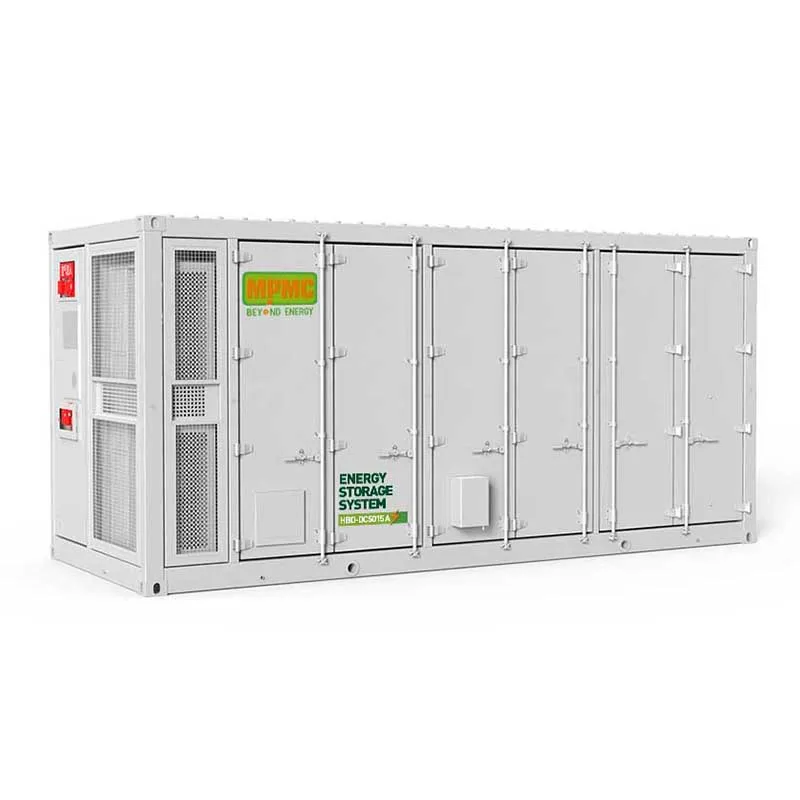
MPMC's BCH Series is explicitly designed around this scenario, addressing what MPMC terms the temporary high-power dilemma: events, disaster response, and other unplanned demands historically relied on diesel generators constrained by environmental regulation, while the BCH Series delivers full operational status within 24 hours through a mobile, plug-and-play design that eliminates the high cost and delay of grid reconstruction.
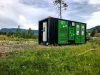
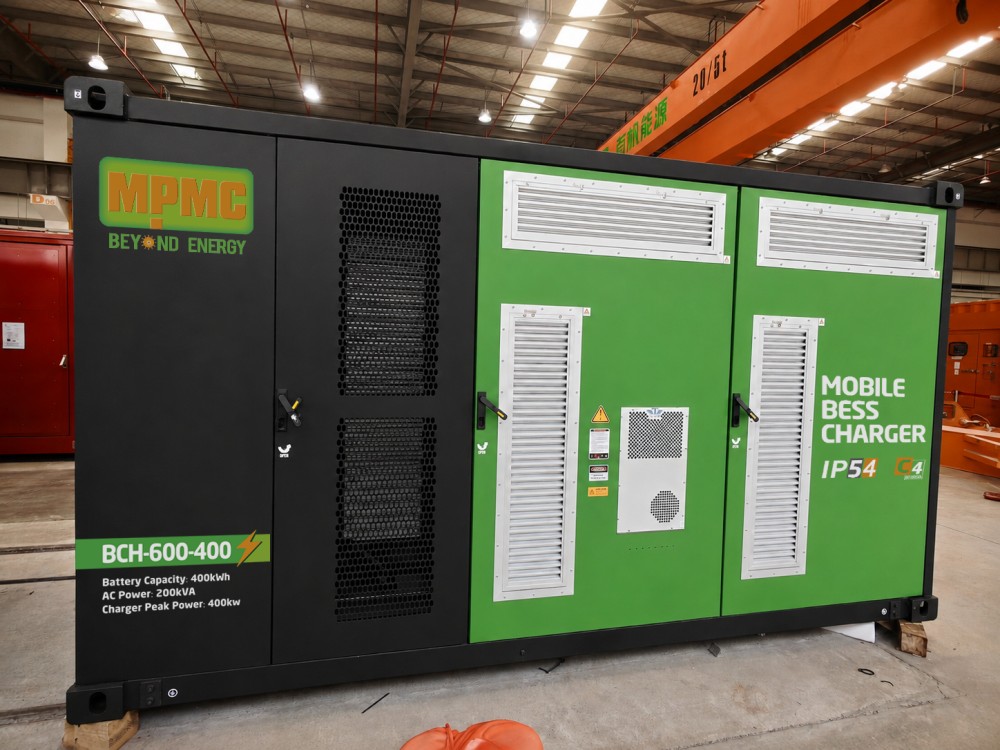 MPMC BCH-600-400 mobile BESS charger, providing rapid-deployment emergency and backup charging capacity.
UPS-Grade Backup for Life-Safety and Critical Loads
Beyond EV charging itself, MPMC's larger BCH units — the BCH-800-600 and BCH-500-1000 — provide UPS-grade AC output through cabinet-enclosed activation, delivering seamless, zero-downtime power protection for critical loads during an emergency, alongside their DC fast-charging function for EVs and electric machinery. This dual function matters in a genuine emergency response scenario where the same deployed unit may need to both charge emergency vehicles and keep critical equipment powered without a separate backup system.
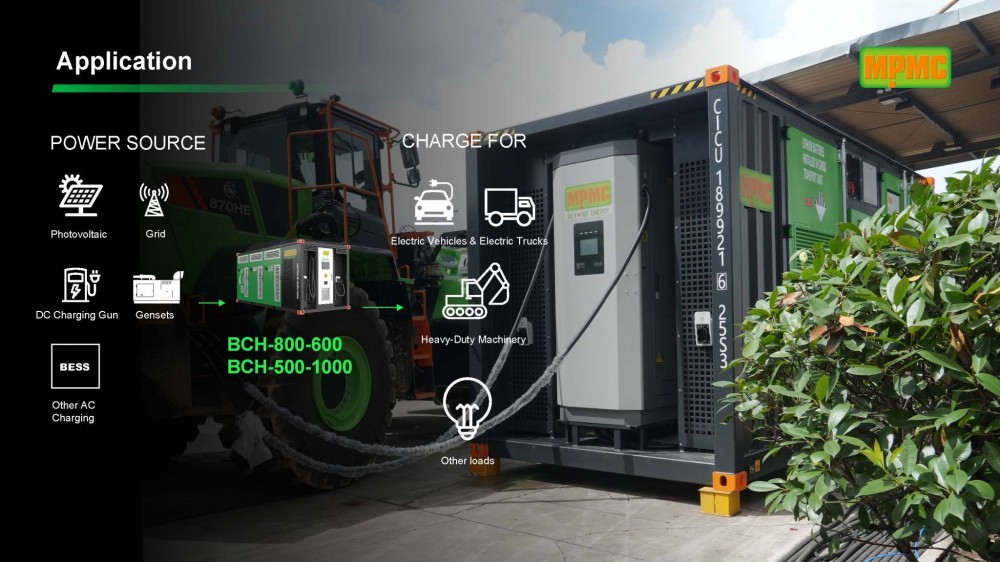 MPMC BCH-800-600 and BCH-500-1000 heavy-duty mobile power hubs in an emergency and remote-site charging application.
Autonomous Operation When On-Site Staffing Is Limited
During an emergency deployment, on-site technical staffing is often minimal or absent for extended periods. MPMC's BCH units run on integrated SCADA and EMS for autonomous, intelligent energy management, with complete system monitoring and command available remotely over Ethernet or 4G — allowing an operations centre to track charging status and fault conditions across a deployed emergency unit without a technician physically present at the site.
| Emergency Requirement | BCH Series Capability | Relevant Model(s) |
|---|---|---|
|
Fast deployment |
Full operational status within 24 hours |
All BCH models |
|
Critical-load backup during outage |
UPS-grade AC output, zero-downtime protection |
BCH-800-600, BCH-500-1000 |
|
Remote oversight with minimal staffing |
SCADA/EMS autonomous operation, remote monitoring |
All BCH models |
Fire Safety Built Into the Deployment
For emergency deployments where the unit itself may be operating in an already compromised environment, MPMC's BCH-275-200 and larger units include built-in multi-level fire protection with CE-certified aerosol suppression, and the underlying blade battery packs are certified for fire, water immersion, high-impact collision, and crush resistance — a relevant specification where the deployment environment itself may already be unstable.
Choosing the Right BCH Model for the Emergency Scenario
Not every emergency deployment needs the largest available unit — a localised outage affecting a small number of vehicles or a single critical load may be served adequately by the BCH-275-200's 150 kW output and 203.5 kWh storage, while a larger-scale disaster response supporting multiple emergency vehicles and critical facilities simultaneously points toward the BCH-800-600 or BCH-500-1000. Pre-identifying which model suits which scale of emergency, before an actual event occurs, is what allows an operator to deploy the right unit immediately rather than losing time to an on-the-spot sizing decision.
Sourcing Power When the Grid Itself Has Failed
An emergency scenario frequently means the local grid is exactly the power source that has failed, so a mobile charger's ability to draw from gensets, PV, or its own onboard BESS charge — rather than depending on grid input alone — is a core requirement rather than a convenience feature. MPMC's BCH units accept multiple input sources by design, which means an emergency responder is not left with a charging asset that itself cannot be powered in the specific conditions it was deployed to address.
Evaluating an Emergency Mobile Charging Supplier
• Confirm documented deployment time from arrival to full operational status, not a marketing estimate
• Verify UPS-grade backup output is available if the unit needs to power critical loads alongside EV charging
• Confirm remote monitoring and autonomous operation for deployments with minimal on-site staffing
• Check fire-suppression and battery-pack safety certification for operation in compromised environments
• Ask about power-source flexibility (grid, genset, solar) since emergency sites rarely have a single reliable source
• Request a documented emergency or disaster-response reference deployment
Recent Posts

October 26, 2016
The Most Successful Engineering Contractor



Contact US
Product Information
Quantity
Unit
Piece
Support order samples, customization, wholesale direct, and complete payment. If the product you look for does not have corresponding customized content, pls fill out the form below to contact us, and we will reply ASAP.