


Language
Mobile Energy Storage Charging Stations for Fleet Operators Charging at Multiple Locations
Sep 16, 2026
A fleet operator running electric vehicles across more than one site faces a specific version of range anxiety: off-grid power uncertainty and weak local grid capacity, rather than vehicle range itself, becomes the actual constraint limiting how the fleet can be deployed. Permanent charging infrastructure at every site is rarely justified when a fleet's charging demand moves between locations over time, which is the specific gap MPMC's BCH Series is built to close.
How the BCH Series Solves Multi-Location Charging
The BCH Series combines storage and charging in one integrated mobile unit, functioning as a mobile supercharger deployable anywhere without permanent grid infrastructure. Power sources — grid, genset, BESS, or PV — charge the onboard battery, which then delivers fast DC charging to EVs and electric construction machinery while simultaneously providing AC output to other site loads, and the unit reaches full operational status within 24 hours of arrival at a new location.
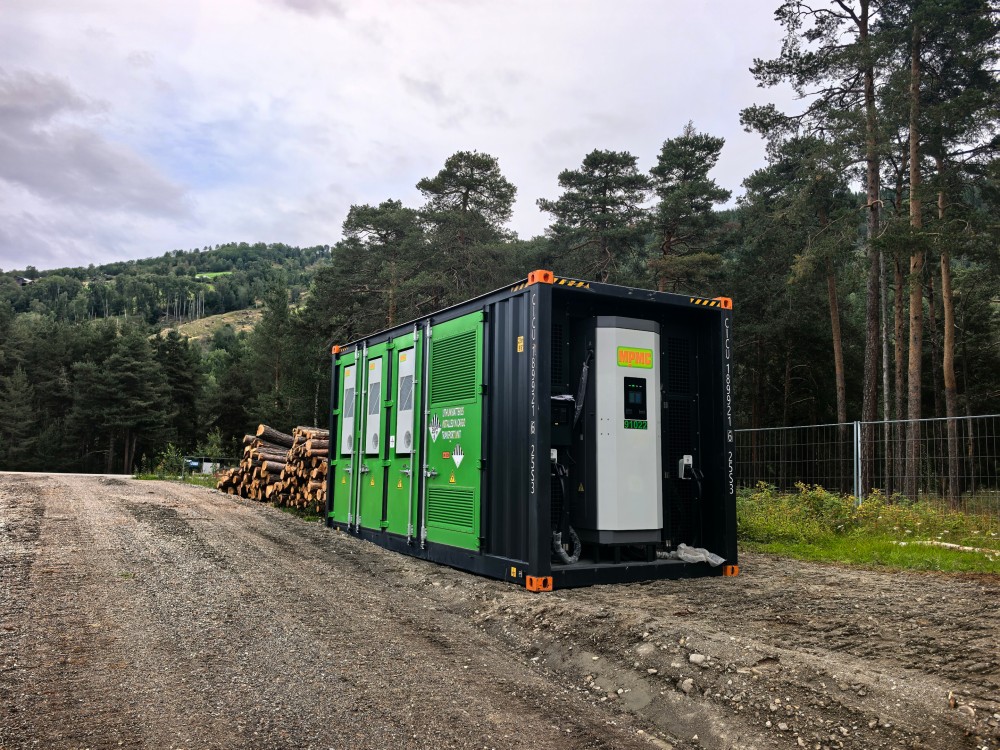 MPMC BCH Series mobile BESS charger, deployable across multiple sites without permanent grid infrastructure.
A Model Range Matched to Fleet Size
MPMC's BCH range spans from the compact BCH-80-70 (80 kW DC output, 70 kWh storage) through the BCH-275-200 (150 kW DC output, 203.5 kWh storage, two CCS2 250A guns) up to the BCH-600-400 (400 kW DC output, 407 kWh storage), the BCH-800-600 (600 kW DC output, 610.6 kWh storage) and BCH-500-1000 (500 kW DC output, 1,075 kWh storage), giving an operator with a small local fleet and one running dozens of vehicles across several depots a model matched to actual daily charging demand rather than a single oversized unit.
| Model | DC Output | Storage Capacity | Guns |
|---|---|---|---|
|
BCH-80-70 |
80 kW |
70 kWh |
1 |
|
BCH-275-200 |
150 kW |
203.5 kWh |
2 |
|
BCH-600-400 |
400 kW |
407 kWh |
2 |
|
BCH-800-600 |
600 kW |
610.6 kWh |
2 |
|
BCH-500-1000 |
500 kW |
1,075 kWh |
2 |
Documented Multi-Site Logistics Fleet Deployments
MPMC documents typical logistics fleet deployments where weak local grids previously caused ten-hour charging cycles for vehicles running four-hour routes; pairing the BCH-275-200 with solar infrastructure lets operators bypass grid limitations and cut charging time substantially. Reference deployments include eight units in the United Kingdom and a combined BCH-275-200 plus BCH-500-1000 deployment in the Netherlands, giving a multi-location fleet operator two documented European reference points at different scales.
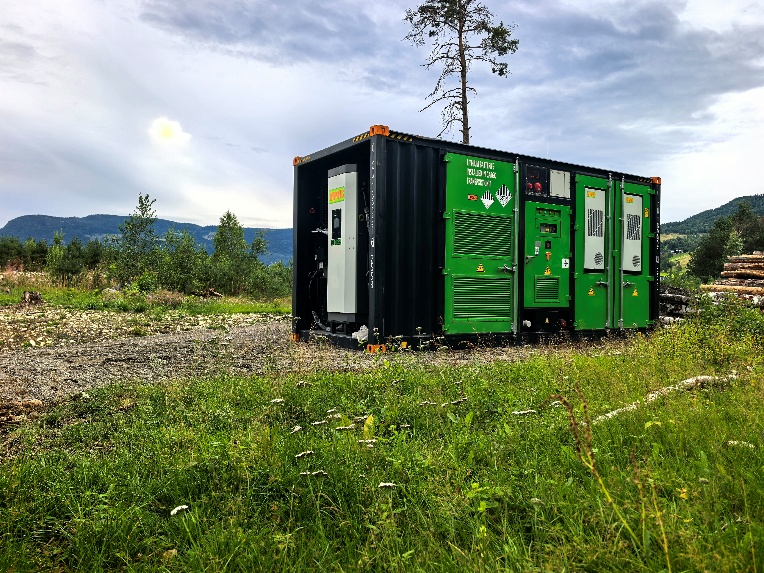 MPMC BCH Series unit during rapid deployment, reaching full operational status within 24 hours of arrival on site.
Coordinating Charging Across Sites
Each BCH unit runs on an EMS with 4G connectivity and OCPP 1.6 compatibility, with integrated SCADA and EMS minimising labour costs through autonomous, intelligent energy management and complete system monitoring available remotely over Ethernet. For a fleet operator managing charging assets across several locations, this remote visibility means charging status, utilisation, and fault conditions can be checked centrally rather than requiring a site visit at every location, and optional RFID payment integration supports commercial fleet coordination and cost allocation across drivers or vehicles.
Blade Battery Reliability Across Repeated Relocation
A unit moving between multiple sites is handled, transported, and redeployed far more often than a fixed installation, which makes the physical durability of the battery pack itself a genuine consideration. MPMC's BCH units use blade LFP battery packs built on an ultra-strong sandwich architecture, certified for fire, water immersion, high-impact collision, and crush resistance, with a 65% larger dissipation area and 6.7°C precision temperature control that keeps performance stable across the repeated charge cycles a multi-location fleet operation puts the unit through.
Revenue and Cost Considerations Across Multiple Sites
Beyond the operational case, MPMC notes that BCH deployments in off-grid or emergency scenarios can support premium electricity pricing, since high-demand users in these settings typically prioritise immediate power access over cost, and pairing BCH with photovoltaics converts low-cost solar energy into higher-value electricity sales. For an operator managing charging economics across several locations, this pricing flexibility, combined with the reduced labour cost from autonomous SCADA/EMS operation and rapid plug-and-play deployment, changes the total cost picture compared with treating each site as a separate permanent-infrastructure investment.
Specifying Mobile Charging for a Multi-Location Fleet
• Match the BCH model's DC output and storage capacity to your fleet's actual daily charging demand per site
• Confirm OCPP 1.6 compatibility with your existing charge-management software
• Ask whether RFID payment integration is needed for driver- or vehicle-level cost allocation
• Verify deployment time and transport logistics (trailer-mounted or containerised) for moving the unit between sites
• Confirm remote monitoring access for centralised oversight across multiple locations
• Request a documented multi-site or multi-unit reference deployment at a comparable fleet scale
Recent Posts

October 26, 2016
The Most Successful Engineering Contractor


Contact US
Product Information
Quantity
Unit
Piece
Support order samples, customization, wholesale direct, and complete payment. If the product you look for does not have corresponding customized content, pls fill out the form below to contact us, and we will reply ASAP.