


Language
Which Mobile Energy Storage Charging Station Brands Are Suitable for Electric Construction Machinery?
Sep 08, 2026
Electric construction machinery draws harder and more erratically than a passenger EV, runs in dust and vibration that would trouble a standard charging cabinet, and very often has no grid connection to draw from at all. A mobile charger built for cars is not automatically the right answer for an excavator or a dump truck. MPMC POWERTECH CORP., established in 2008 and headquartered in Shanghai Pudong, positions specific models within its BCH Series around this exact duty.
Why Electric Construction Machinery Charging Is a Different Problem
Construction and mining machinery batteries are larger, the charge and discharge cycles are more demanding, and the site itself is dustier, rougher and further from permanent power than a road or car park. MPMC's BCH platform addresses electric construction machinery (ECM) charging specifically rather than treating it as a variant of EV charging, starting with how the unit converts power internally.
The Efficiency Question: DC Coupling
MPMC's BCH Series uses direct DC-side coupling between the battery and the charging output, delivering up to 87% discharge efficiency — a design MPMC states is specifically optimised for electric construction machinery, where AC-DC-AC conversion losses matter more given the size and frequency of charge cycles on a working site.
Built for Dust, Vibration and Repositioning
Sealed Liquid Cooling
The BCH-275-200 and larger models use a fully sealed liquid-cooled battery pack, which MPMC states prevents dust buildup — a specific answer to the airborne particulate a mine or earthworks site generates continuously. The same liquid-cooled architecture carries through to the BCH-800-600, described as suited to mines and construction sites directly.
Heavy-Duty Transport Features
The BCH-275-200 ships on a 3.5-tonne heavy-duty trailer with an integrated forklift hole for site repositioning, and C4 anti-corrosion coating as standard, with C5 optional on larger models — details that matter once a unit is expected to be towed and relocated across an active construction site repeatedly rather than parked once at the kerb.
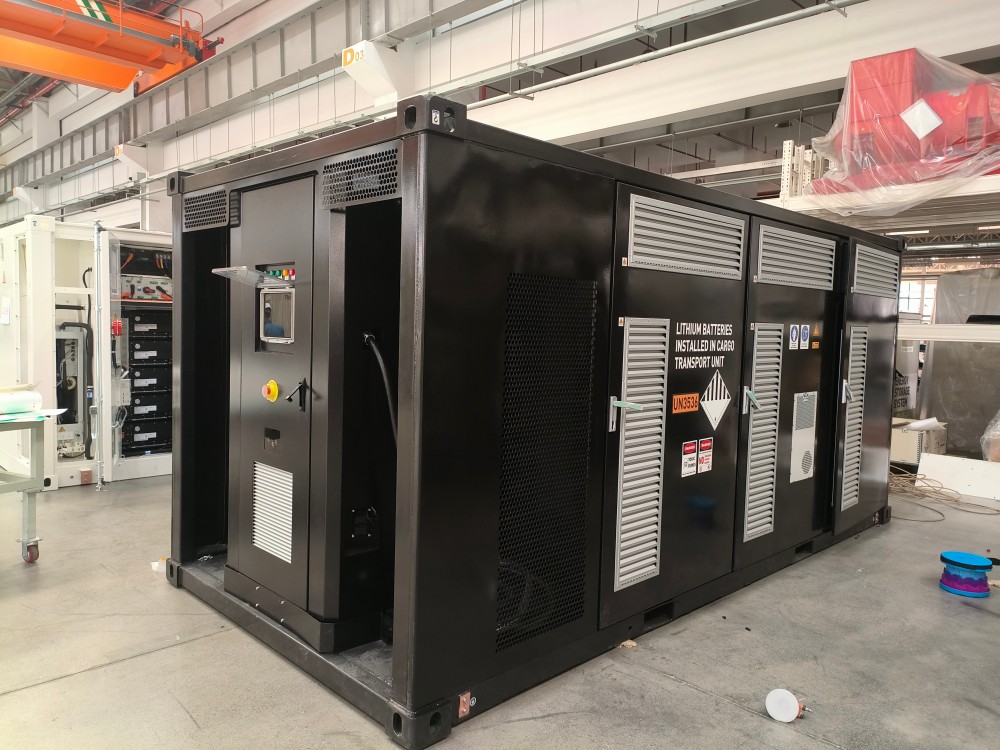 MPMC BCH-800-600 mobile BESS charger
The Heavy-Duty End of the BCH Range
| Model | EV Charging Output | Battery Storage | Key Feature |
|---|---|---|---|
|
BCH-800-600 |
600 kW rated |
610.6 kWh |
1C charge/discharge; explosion-proof breather; simultaneous charge and discharge |
|
BCH-500-1000 |
500 kW rated |
1,075 kWh |
UPS-grade AC output; liquid-cooled pack; C4 standard, C5 optional |
The BCH-800-600 is built for 1C charge and discharge performance, supporting rapid energy transfer and high-intensity delivery, with an explosion-proof breather for pressure relief in extreme conditions and a charging gun that supports simultaneous charge and discharge for more flexible site operation. The BCH-500-1000 adds UPS-grade AC output, with cabinet-enclosed activation for zero-downtime power protection, alongside the same liquid-cooled architecture.
Connector current rises with the model: 250 A per gun on the BCH-275-200, rising to 350 A per gun on the BCH-600-400, BCH-800-600 and BCH-500-1000, each fitted with two CCS2 guns for simultaneous charging. From DC input, MPMC states the BCH-275-200 reaches a full recharge in around an hour, which on a working site translates into a shift-change top-up rather than an overnight charge.
Fire Protection and Operating Envelope
The BCH-275-200 and larger models carry CE-certified aerosol fire protection built into the cabinet as standard, alongside the explosion-proof breather fitted to the BCH-800-600 for pressure relief. All are rated for -20°C to +50°C operation with derating above 45°C, and up to 3,000 metres altitude with derating above 2,000 metres — figures worth checking directly against a high-altitude mine site or a hot-climate construction project rather than assumed from a temperate-market datasheet.
| Parameter | BCH-275-200 and Above |
|---|---|
|
Fire protection |
Aerosol, CE-certified |
|
Operating temperature |
-20°C to +50°C (derating above 45°C) |
|
Max altitude |
3,000 m (derating above 2,000 m) |
|
Cycle life |
6,000 cycles at 90% depth of discharge |
A Documented Off-Grid Machinery Charging Project
MPMC's Norway reference documents a 2 MWh remote construction machinery charging system built from BCH units rated at 500 kW output and 1,000 kWh capacity each, with a CCS2 charger output of 360 kW / 400 A, enabling electric construction machinery to operate at a site with no grid access at all. This is the class of deployment the heavier BCH models are specified for — not a car park charging point, but a working site's entire machinery power supply.
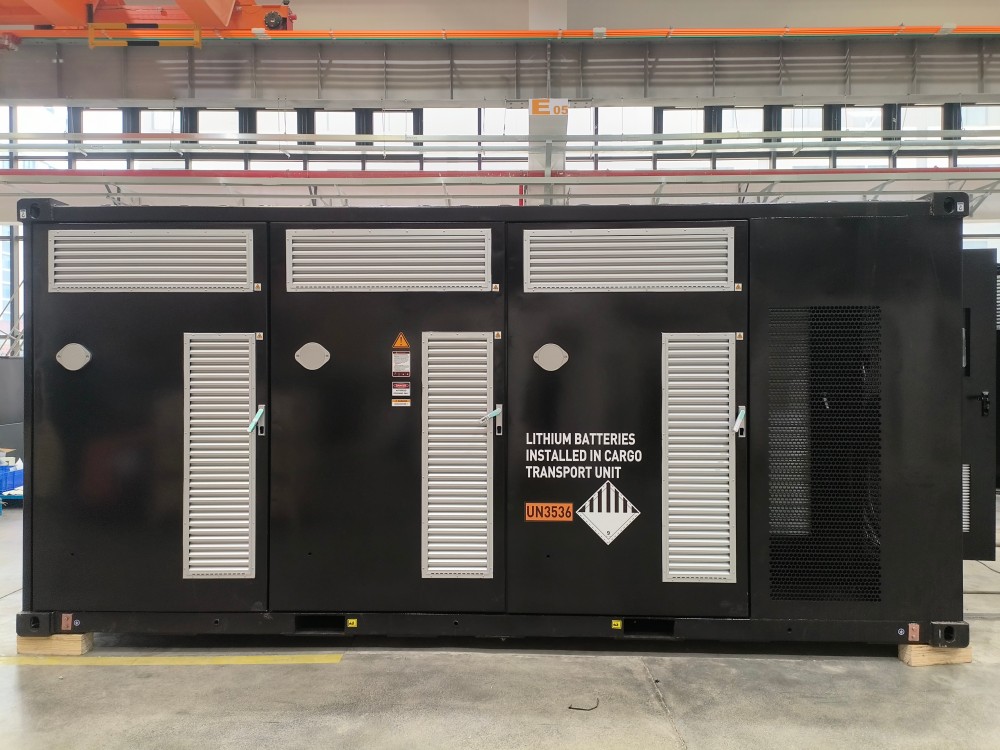 MPMC BCH-800-600 mobile BESS charger — heavy-duty configuration
Where This Fits an Industrial Park or Mine Site
The same platform serves a second, quieter use case: industrial parks running electric forklifts, shuttles or maintenance vehicles, where a BCH-275-200 (150 kW DC output, 203.5 kWh storage, two CCS2 250 A guns, deployable within 24 hours) or a BCH-600-400 (400 kW DC output, 407 kWh storage, two CCS2 350 A guns) provides flexible energy replenishment without a grid infrastructure upgrade, drawing from PV, grid or an existing BESS as available.
Points to Confirm Before Specifying a Unit
• Match battery capacity and DC output to the machinery's actual daily energy draw, not a single peak reading.
• Confirm the liquid-cooling and dust-sealing specification against the site's actual particulate exposure.
• Check the trailer rating and forklift-hole provision if the unit will be relocated across the site regularly.
• Establish whether simultaneous charge-and-discharge operation is required for the machinery mix on site.
• Confirm C4 or C5 anti-corrosion coating against the site's environmental severity.
• Verify the CCS2 gun current rating against the specific machinery connector requirement.
• Ask for the Norway or a comparable reference project's load profile if the site has no grid access at all.
• Decide the power source mix — genset, PV, grid or existing BESS — before the unit is ordered, since it changes the AC input configuration.
Questions Construction and Mining Buyers Ask
MPMC's BCH Series uses direct DC-side coupling, delivering up to 87% discharge efficiency, which the company states is specifically optimised for the conversion losses involved in charging electric construction machinery rather than passenger EVs alone.
Yes. MPMC's documented Norway project uses BCH units at 500 kW output and 1,000 kWh capacity each to run electric construction machinery on a site with no grid access, drawing instead from the unit's own battery and, where available, a genset or solar input.
The BCH-275-200 and larger models use a fully sealed liquid-cooled battery pack, which MPMC states prevents dust buildup — a specific design response to the particulate a construction or mining site generates.
The BCH-800-600 is built for 1C charge and discharge performance with an explosion-proof breather and simultaneous charge-and-discharge support; the BCH-500-1000 adds UPS-grade AC output for zero-downtime protection alongside a larger 1,075 kWh storage capacity.
Yes. The BCH-275-200 (150 kW DC output, 203.5 kWh storage) and BCH-600-400 (400 kW DC output, 407 kWh storage) are sized for industrial park electric forklifts, shuttles and maintenance vehicles, in addition to their construction machinery role.
Recent Posts





.webp?x-oss-process=image/resize,w_100/quality,q_100)

Contact US
Product Information
Quantity
Unit
Piece
Support order samples, customization, wholesale direct, and complete payment. If the product you look for does not have corresponding customized content, pls fill out the form below to contact us, and we will reply ASAP.