


Language
How to Choose a Mobile BESS Supplier Suitable for the Rental Market
Aug 28, 2026
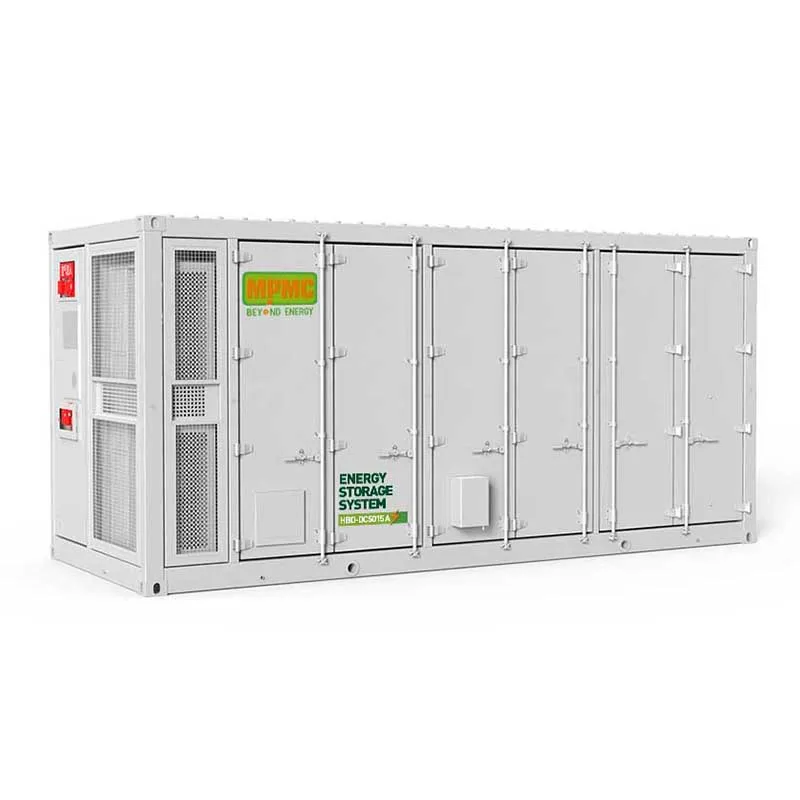
A hire company buys storage against arithmetic no end user applies. The unit has to earn across many customers rather than serve one known load, and the questions that decide the return are utilisation, turnaround time, throughput against warranty and what the asset is worth when it is sold. From a procurement perspective, the supplier audit therefore covers ruggedisation, batch consistency and commercial terms rather than peak specification. MPMC POWERTECH CORP., established in 2008 and headquartered in Shanghai Pudong, publishes an HBD-R series described as purpose-built for the rental market, from 30 kW to 610 kW continuous and 61.44 to 610.6 kWh.
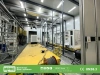
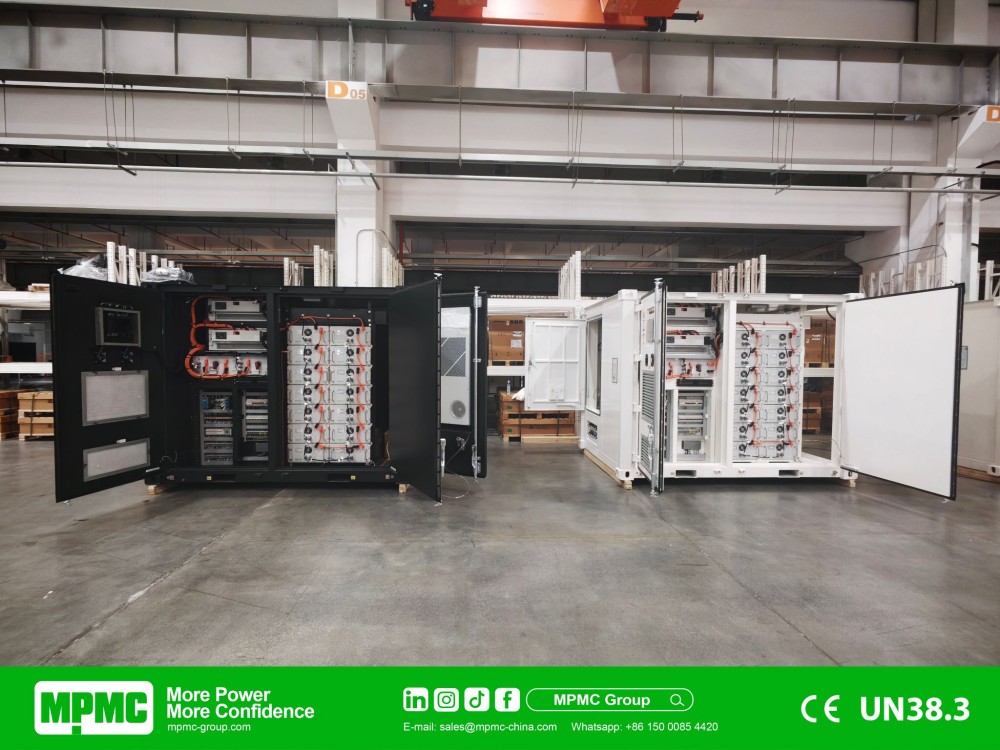 MPMC HBD-R Series battery energy storage system — HBD-250-400, 14 units totalling 6 MWh
The Product Family Has to Match the Duty
Manufacturers publish several storage families and only one of them is built for hire. MPMC lists the stationary HBD-A series with 8,000 cycles at 90% depth of discharge, liquid cooling and a 5-year or 2.2 MWh per kWh system warranty; the stationary HBD-E series at 6,000 cycles with HVAC cooling; and the mobile HBD-R series at 6,000 cycles with a 3-year or 1.6 MWh per kWh system warranty.
Read against a hire model, the higher cycle rating and longer warranty on the HBD-A series exist because that product is expected to sit still and cycle daily for a decade. The HBD-R series trades those for ruggedisation, seamless switching and ease of connection, which is what an asset handled by unfamiliar crews and transported constantly actually needs. Adapting a stationary product for hire produces a working system that is wrong on warranty basis and on handling.
What to Audit in a Candidate Supplier
| Audit area | Why it matters to a hire business | Published MPMC position |
|---|---|---|
|
Ruggedisation |
Equipment is connected and moved by crews who did not commission it |
HBD-R described as purpose-built for rental with ruggedised design and easy maintenance |
|
Controller compatibility |
Units must pair with generator sets already owned |
Compatible with DSE, ComAp, DEIF, Woodward, Smartgen and CAT EMCP |
|
Switching behaviour |
A brief gap is unacceptable at an event |
Seamless on-grid and off-grid switching listed as standard on HBD-R |
|
Fire safety |
Equipment stands near people and property |
Aerosol suppression to CE; larger units add an off-gas detector and water spray inlet |
|
Warranty basis |
Utilisation is high and throughput accumulates fast |
3 years or 1.6 MWh/kWh system; battery 5 years or 2.57 MWh/kWh; end-of-life retention at least 70% |
|
Manufacturing base |
Batch consistency across repeat orders |
Yangzhong base listed with automated battery pack and system assembly lines |
Utilisation Is the Only Number That Sets the Return
A hire asset earns on days out rather than on specification, so anything widening the range of customers it can serve raises the return and anything narrowing it depresses it. Two published features matter commercially for that reason.
The first is controller compatibility, because a unit that pairs with the generator sets a customer already has can be hired as a hybrid package rather than in isolation. The second is the size range: MPMC lists the HBD-30-60 at 30 kW with 61.44 kWh and the HBD-50-100 at 50 kW continuous with 112.5 kWh, rising to 500 kW with 1,045 kWh. The smaller sizes answer the most common enquiries, which is where utilisation is won.
Throughput Reaches Its Limit Before the Calendar Does
MPMC lists 6,000 cycles at 90% depth of discharge on the HBD-R series with a published system warranty of 3 years or 1.6 MWh per kWh of capacity and battery performance at 5 years or 2.57 MWh per kWh.
On a well-utilised asset cycling most days the energy allowance is reached long before the calendar term, and the difference between a unit hired two hundred days a year and one hired eighty is large enough to change which model is the better buy. Expected annual energy delivered should therefore be calculated against that allowance during the purchase decision rather than discovered at the first claim.
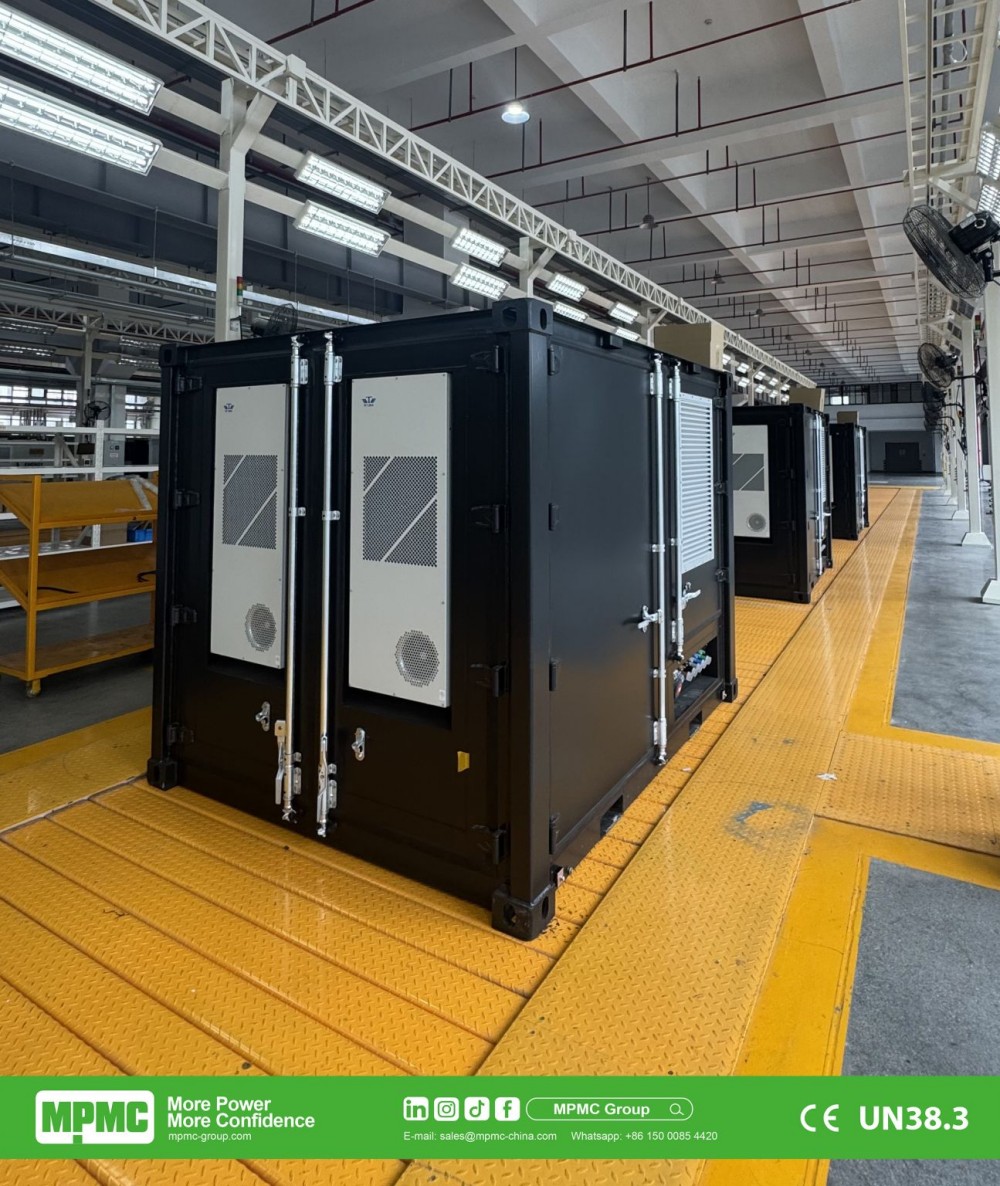 MPMC HBD-R Series battery energy storage system — HBD-250-400
Consistency Across Repeat Orders
For a hire operation the risk is rarely the first unit, which usually receives close attention. It is the twentieth, arriving a year later with a different component because a supplier changed and nobody flagged it, at which point the interchangeability that made the portfolio economic is lost.
MPMC lists a dedicated storage base at Yangzhong with a stated USD 27 million investment, a 19,000 m² workshop, a 3,300 m² research centre and automated battery pack and system assembly lines, alongside ODM LFP battery pack production. What should be secured contractually is a named parts list with a written duty to notify any component change, a first-article approval repeated whenever the configuration moves, and a fixed test report template.
Hybrid Hire Is Where the Revenue Sits
Storage hired alone answers a narrow set of enquiries. Hired alongside a generator it addresses fuel cost, service intervals and noise restriction simultaneously, which is a much broader market.
MPMC publishes a United Kingdom construction case in which a 56 kW generator serving a 3 to 6 kW base load gained a 30 kW / 60 kWh unit, after which refuelling moved from every two days to every seven and the maintenance interval extended from every ten days to every sixty. That result belongs to that load profile; for a hire business the transferable point is that longer intervals mean more days a unit stays on site between visits, which is exactly what is being sold.
Documented Hire and Project Deployments
| Deployment | Scale | Published configuration |
|---|---|---|
|
HBD-R rental, Australia |
560 kW / 920 kWh |
Multiple HBD-R units at 50 kW / 100 kWh and 100 kW / 200 kWh; construction site carbon reduction project |
|
Leasehold carbon reduction, Australia |
1 MWh |
HBD-R 50 kW / 100 kWh and 100 kW / 200 kWh |
|
Mining mobile storage, Chile |
500 kWh |
HBD-50-100 and HBD-250-400 units as a mobile storage plant |
|
Construction site, United Kingdom |
6 × 30 kW / 60 kWh |
Silent operation during a noise ordinance covering 17:00 to 07:00 and Sundays |
These describe the class of hire application supplied rather than a utilisation forecast for another business, whose returns follow its own customer mix and hire rates.
Residual Value and the Second Owner
Hire equipment is usually sold before it is worn out, which makes the next owner part of the purchase calculation. Assets that resell well share the traits that made them hire well: recognised component brands, standard ratings, complete documentation and a finish that has not deteriorated.
Because a hire unit visits coastal and inland sites within the same year, specifying protection to the harshest expected exposure is generally cheaper than refinishing after a season. Documentation deserves equal attention, since factory test reports and applicable certificates are easy to lose and expensive to reconstruct years later.
Supplier Audit Points for a Hire Business
• Confirm the product family is the mobile series rather than an adapted stationary one.
• Verify controller compatibility against the specific generator sets already owned.
• Confirm seamless switching, which event customers will require.
• Calculate expected annual energy delivered against the warranty throughput allowance.
• Secure a named parts list with a written change-notification duty.
• Agree first-article approval and re-approval triggers for repeat orders.
• Specify protection to the harshest environment the units will visit within a year.
• Establish the spares holding location and response arrangement before the first order.
• Confirm the documentation set issued per unit, and retain it for resale.
Frequently Asked Questions
The HBD-R series, which MPMC describes as purpose-built for the rental market with ruggedised design, millisecond-level load response and easy maintenance, from 30 kW to 610 kW continuous and 61.44 to 610.6 kWh. The stationary HBD-A and HBD-E series carry different cycle ratings and warranty terms and are not built for repeated transport.
The terms reflect duty rather than build quality. MPMC lists the HBD-A and HBD-E series at 5 years or 2.2 MWh per kWh for the system, against 3 years or 1.6 MWh per kWh for the HBD-R series. On a hire asset the throughput allowance is normally reached before the calendar term in either case.
MPMC lists the HBD-R series as compatible with DSE, ComAp, DEIF, Woodward, Smartgen and CAT EMCP controllers, with millisecond-level transient smoothing for parallel operation. That list should be checked against the specific controllers in use, since a mismatch turns a hybrid hire into two separate hires.
Contractual measures rather than product features. A named parts list with a written duty to notify component changes, first-article approval repeated on any configuration change, and a fixed test report template together cover most of the exposure. MPMC lists a dedicated storage base with automated pack and system assembly lines, which supports consistency but does not replace the agreement.
It depends entirely on how lightly loaded the generator was. MPMC's published UK case records refuelling moving from every two days to every seven on a 56 kW set serving a 3 to 6 kW base load. That figure belongs to that profile, and any customer proposal should be modelled on their own load data rather than quoted from the case.
Recent Posts

October 26, 2016
The Most Successful Engineering Contractor



Contact US
Product Information
Quantity
Unit
Piece
Support order samples, customization, wholesale direct, and complete payment. If the product you look for does not have corresponding customized content, pls fill out the form below to contact us, and we will reply ASAP.