


Language
Recommending a Standalone EV Charging Unit for Temporary Fleet Charging
Aug 21, 2026
A great many electric fleets begin as trials, and the charging decision made at that stage tends to outlive the trial. Committing to a permanent installation before the vehicles have proved themselves risks stranded infrastructure; refusing to provide adequate charging guarantees the trial fails for reasons that have nothing to do with the vehicles. A standalone unit resolves the tension by matching the charging commitment to the vehicle commitment. MPMC POWERTECH CORP., established in 2008 and headquartered in Shanghai Pudong, publishes a BCH range deployable within 24 hours without permanent grid infrastructure.
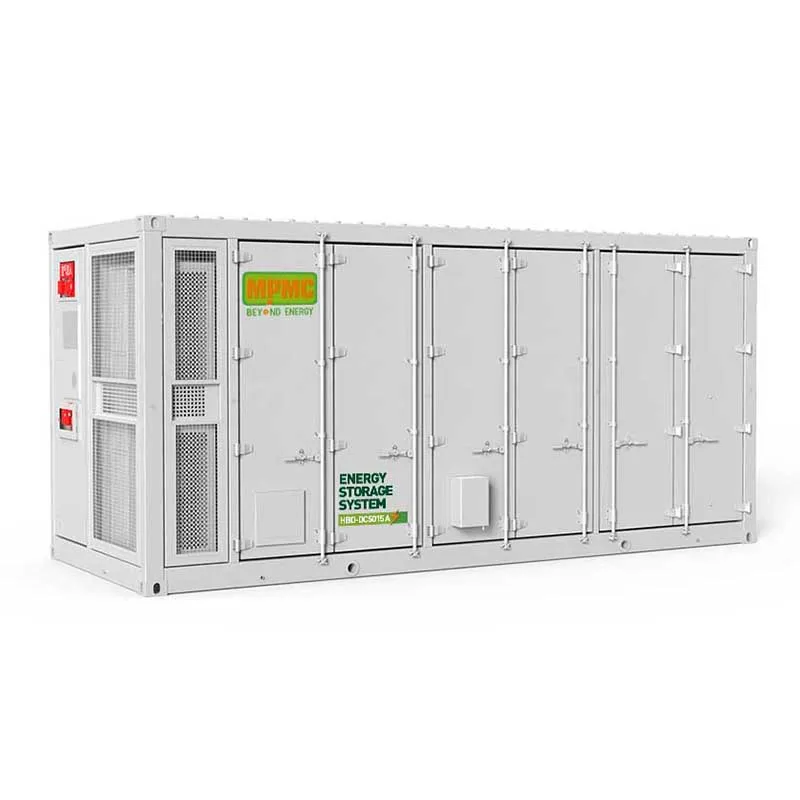
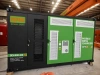
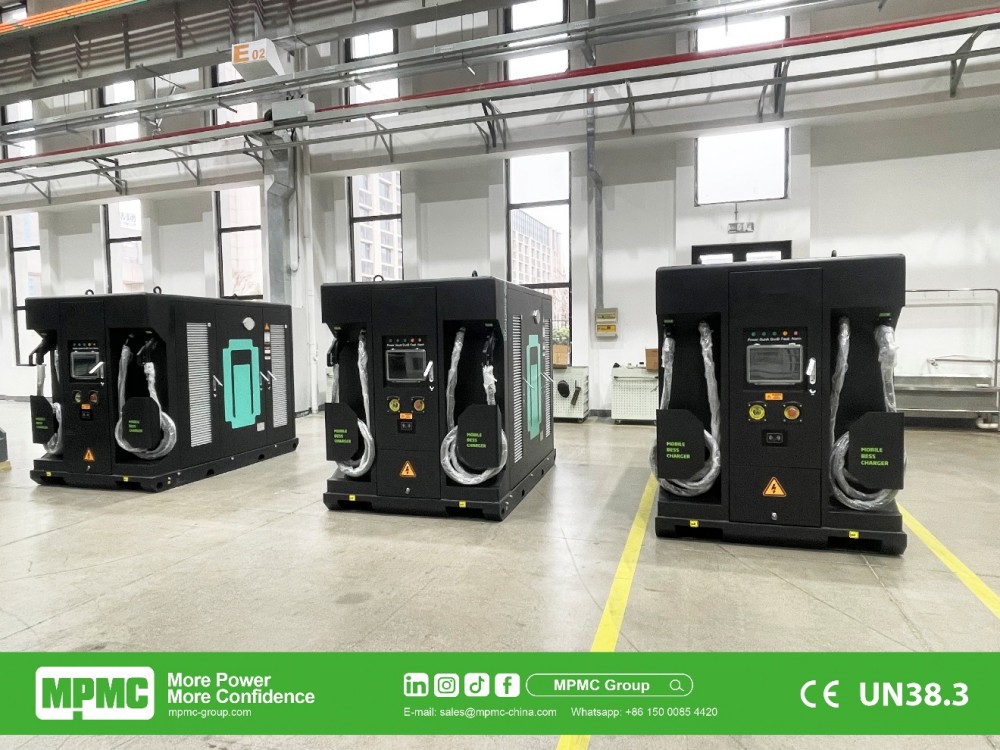 MPMC BCH Series mobile BESS charger — BCH-275-200
When the Fleet Itself Is Provisional
Temporary fleet charging arises in several forms, and they are not variations on one requirement. A pilot puts a handful of vehicles into service to test whether the duty cycle works at all. A seasonal peak brings in vehicles for a defined period. A depot refurbishment displaces charging that already existed. A contract-length deployment ties vehicles to a customer agreement with a known end date.
What these share is that the charging asset should not outlast its purpose by more than the operator can redeploy. That framing, rather than a comparison of charging speeds, is what selects the right equipment.
Matching the Asset to the Commitment
| Situation | What the charging asset must do | What decides the choice |
|---|---|---|
|
Pilot with a few vehicles |
Prove the duty cycle without capital commitment |
Data quality from the unit; ease of return or redeployment |
|
Seasonal peak |
Add capacity for a defined window each year |
Storage between seasons; state of charge while idle |
|
Depot refurbishment |
Replace existing charging without civil works |
Output matching the chargers being displaced |
|
Contract-length deployment |
Serve vehicles for the agreement term |
Term alignment; residual value at handback |
|
Bridge to a permanent build |
Cover the connection lead time |
Redeployment value once the fixed site energises |
MPMC's published range covers 80 kW with 70 kWh on the BCH-80-70, 150 kW with 203.5 kWh on the BCH-275-200, 400 kW with 407 kWh on the BCH-600-400, 600 kW with 610.6 kWh on the BCH-800-600 and 500 kW with 1,075 kWh on the BCH-500-1000. The model number is not the DC output rating, so both figures should be taken from the datasheet.
A Trial Should Produce Data, Not Just Charge
The main output of a pilot is evidence for the permanent decision, and that evidence has to be captured rather than recalled. Real energy per round, actual dwell times, seasonal variation and how often vehicles arrived lower than expected are exactly the inputs that size a permanent connection correctly.
MPMC lists an EMS with 4G connectivity, OCPP 1.6 support, an open cloud-ready API, remote monitoring and command over Ethernet, and integrated SCADA with automated energy management. What matters for a trial is whether session-level data can be exported in a form the operator's own analysis can use, which is worth confirming before the pilot begins rather than after.
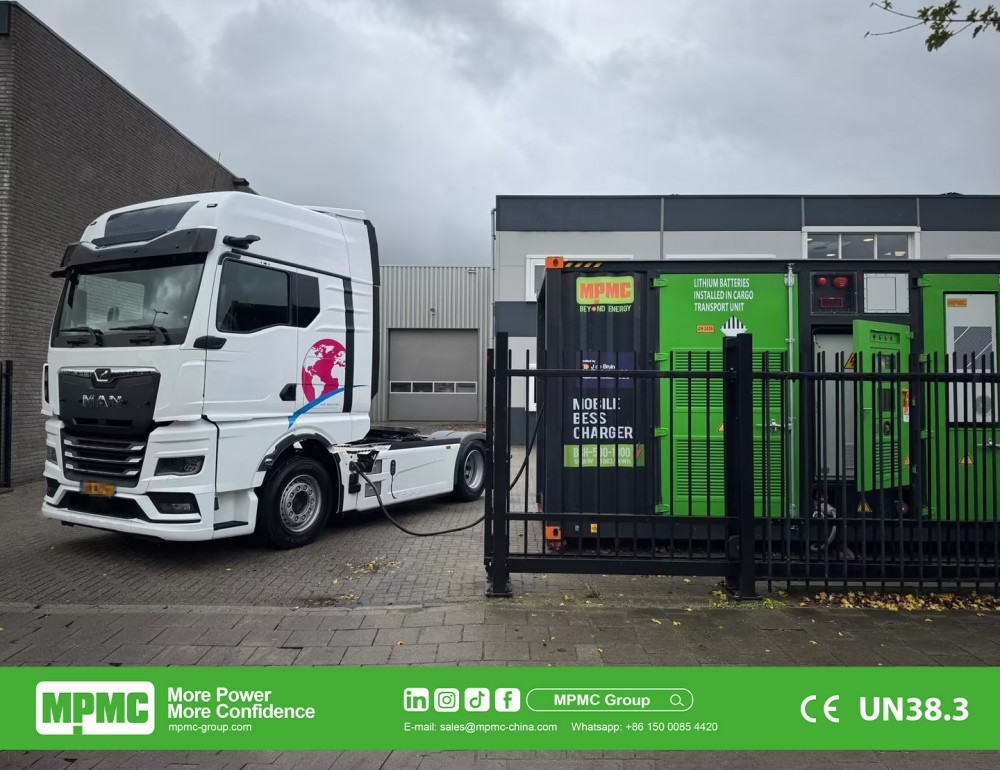 MPMC BCH Series mobile BESS charger — BCH-500-1000
Keeping Options Open on Connectors
A trial frequently involves borrowed or demonstration vehicles, and the permanent fleet may not match them. MPMC lists CCS2 as the standard connector with CCS1, GB/T and CHAdeMO available as options for specific markets, and a DC output voltage range of 50 to 1,000 V on the BCH-275-200 and above.
Where the eventual fleet is undecided, checking the voltage window against the candidate vehicles rather than only the trial ones avoids buying an asset that suits the pilot and not the outcome.
Between Deployments
An asset bought for temporary duty spends part of its life idle, and idle conditions affect what it is worth when the next deployment starts. MPMC's published terms list a system warranty of 3 years or 1.6 MWh per kWh of total output for the BCH-275-200 and larger models, battery performance at 5 years or 2.57 MWh per kWh, and end-of-life capacity retention of at least 70%; the BCH-80-70 carries separate terms.
On a short deployment neither limit is likely to bind, which shifts the attention to storage state of charge, ambient conditions during standing periods and the transport regime between sites. These should be agreed with the supplier rather than improvised, because they are what determines the asset's condition at the second deployment.
What a Trial Should Not Prove by Accident
Pilots fail for avoidable reasons more often than for real ones. Undersized charging makes the vehicles look inadequate when the constraint was the charger; a connector mismatch discovered in week one consumes the schedule; a recharge arrangement improvised on arrival produces downtime that ends up recorded against the vehicles.
Guarding against this is mostly a matter of settling the same items that govern a permanent installation, only earlier. MPMC lists AC input from grid, generator or solar on models from the BCH-275-200 upward and a CCS2 DC input allowing recharge from a fast-charging point at roughly one hour for that model, which gives a trial two routes rather than one. Having the fallback identified before mobilisation is what keeps an equipment problem from being logged as a vehicle problem.
A Published Temporary Arrangement
MPMC lists a United Kingdom logistics port operation using eight BCH-275-200 units where a weak local supply had produced ten-hour charging cycles for four-hour port runs, with solar pairing removing the constraint, and a Netherlands installation combining the BCH-275-200 with the BCH-500-1000 for a renewable-powered charging station. These describe the class of arrangement supplied rather than an outcome guarantee for a different trial.
Pilot Stage Agreements
• State the trial duration and what decision the data is meant to support.
• Confirm session-level data can be exported in a usable format before the pilot starts.
• Check the DC voltage window against candidate permanent vehicles, not only trial ones.
• Confirm connector options needed if the eventual fleet differs from the trial fleet.
• Agree storage conditions and state of charge for idle periods between deployments.
• Establish redeployment or return terms at the outset, alongside residual value expectations.

Recent Posts

October 26, 2016
The Most Successful Engineering Contractor




Contact US
Product Information
Quantity
Unit
Piece
Support order samples, customization, wholesale direct, and complete payment. If the product you look for does not have corresponding customized content, pls fill out the form below to contact us, and we will reply ASAP.