


Language
Which Mobile Solar Power System Brands Are Suitable for Off-Grid Temporary Power?
Sep 09, 2026
A mobile solar power system for temporary, off-grid use needs to do more than generate electricity: it needs to be deployable without a permanent foundation, scale to the site's actual land area and load, and connect cleanly into whatever battery storage or generator backup the site already has. A brand that only sells a standalone solar array, with no integration path to storage or generation, leaves the buyer to solve that connection problem separately.
MPMC's SPK Series Across a Wide Deployment Scale
MPMC's SPK Series Mobile Solar Plant spans five standard configurations, from a small automatic-expansion unit through to a large containerised array, all built around bifacial or HJT/TOPCon high-efficiency panels with MC4 connectors as standard.
| Model | Capacity | Deployment | AC Output |
|---|---|---|---|
|
SPK-8A |
7.65 kWp |
Automatic ground-mounted expansion |
5 kWe |
|
SPK-10 |
10.56 kWp |
Manual, ground installed |
8 kWe |
|
SPK-20 |
21.24 kWp |
Manual, ground installed |
16 kWe |
|
SPK-120 |
115.92 kWp |
20HQ container |
80 kWe |
|
SPK-240 |
231.84 kWp |
40HQP container |
180 kWe |
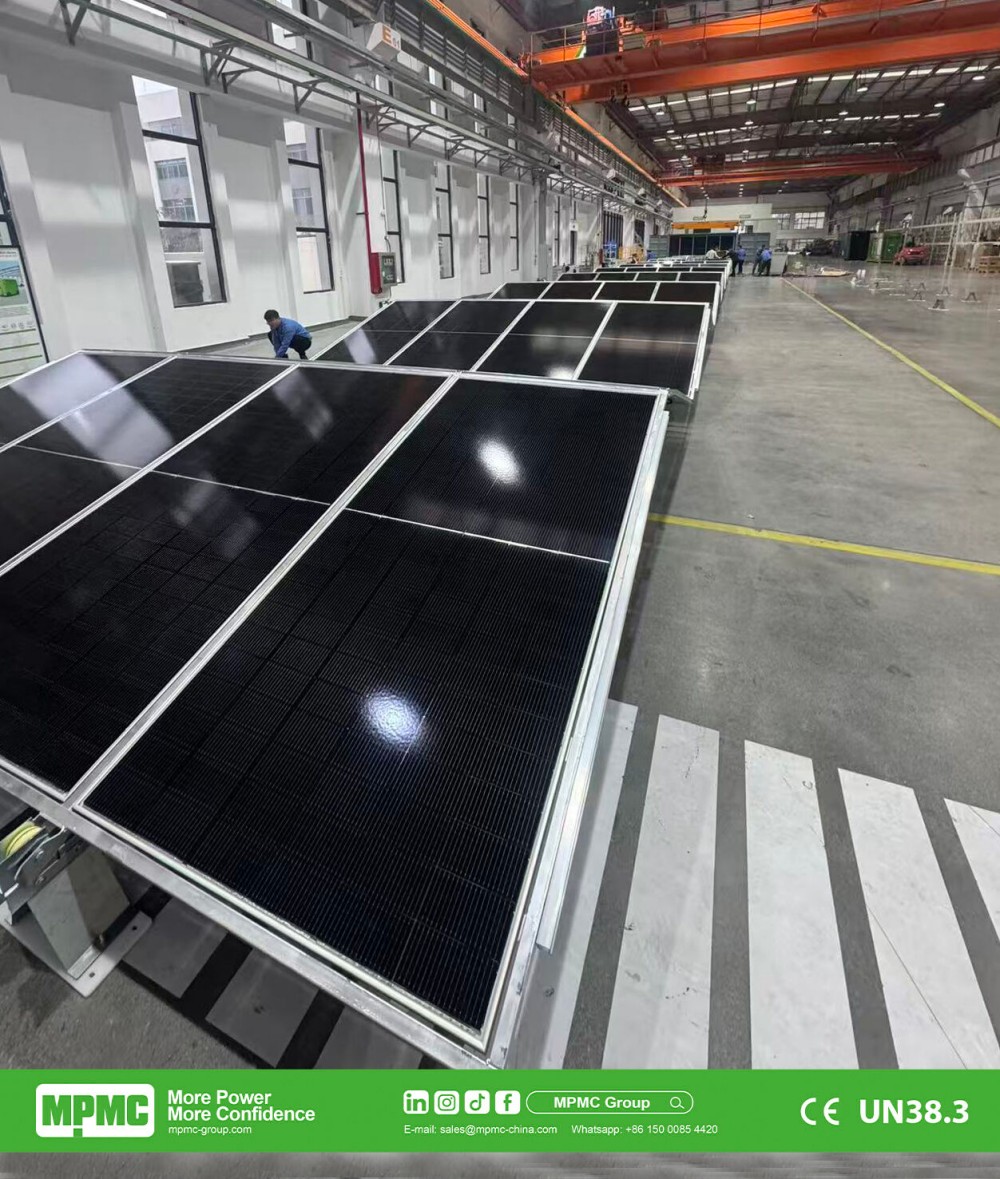 MPMC SPK Series mobile solar array, deployed for temporary off-grid power generation.
Integration Into a Wider Off-Grid Power System
The SPK Series is designed to be deployed in open yard areas, parking structures, or as temporary generation during a project's construction phases, and integrates with MPMC's HBD-A, HBD-E, or HBD-R battery storage and its diesel or gas generator sets through the same EMS platform. For a genuinely off-grid temporary deployment, this integration path matters more than the panel specification alone, since a standalone solar array with no storage or backup generation cannot deliver power after dark or through an extended low-sunlight period.
A Documented Off-Grid Reference at Meaningful Scale
MPMC's Kenya 6 MW microgrid project, spanning four sites each combining more than 1 MW of PV generation with at least 1 MWh of battery storage and diesel genset backup, demonstrates the same underlying solar-storage-generation coordination principle that a smaller SPK-based temporary deployment relies on, coordinated through MPMC's self-developed EMS with weather-driven dispatch logic. A buyer evaluating an off-grid temporary power brand should ask for an equivalent documented reference showing the solar, storage, and backup generation actually working together on site, rather than a solar array specification sheet alone.
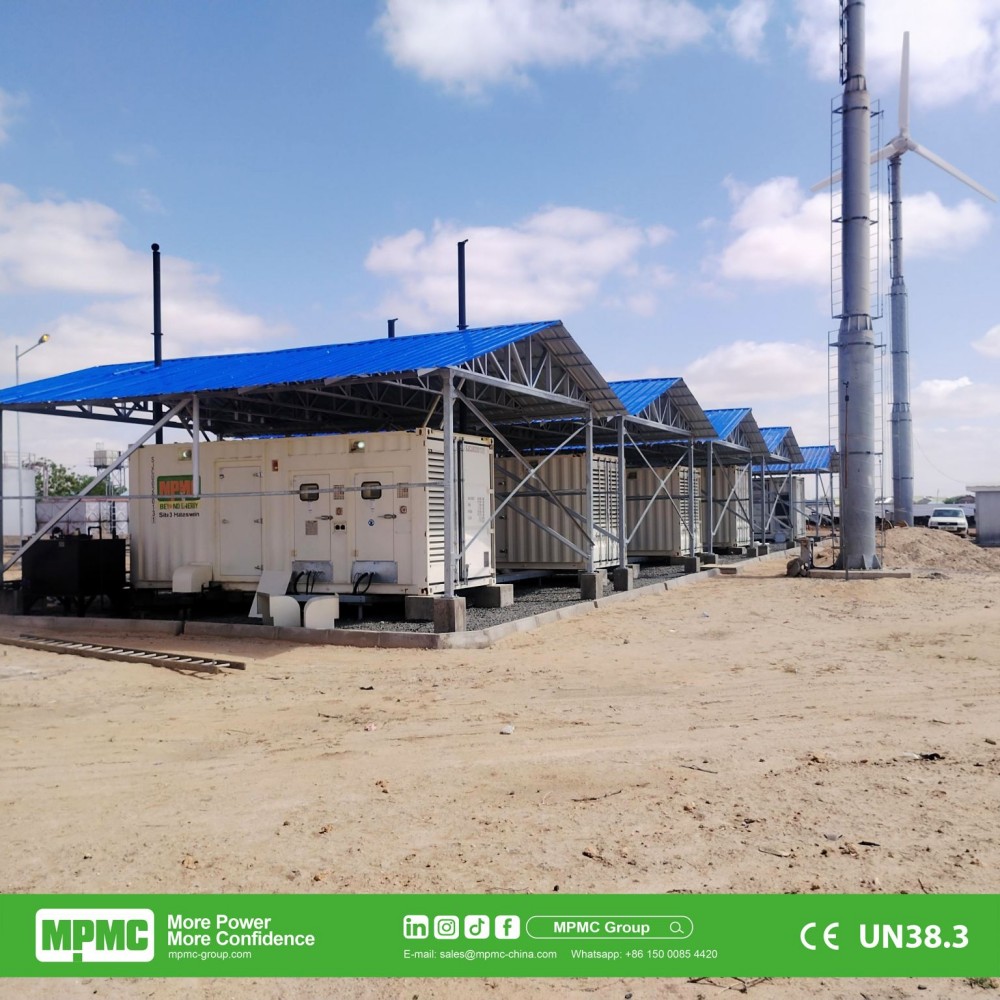 MPMC off-grid microgrid deployment combining solar generation, battery storage, and diesel genset backup, illustrating the coordinated architecture behind MPMC's mobile solar offering.
Sizing the SPK Model to the Site's Actual Land Area
A smaller temporary site with limited land area is better matched to the SPK-8A or SPK-20, both deployable without a large ground footprint, while a larger construction campus or event site with more available space can scale up to the containerised SPK-120 or SPK-240 for meaningfully higher output. Because the smaller SPK-8A expands automatically while the larger ground-mounted models are manually expanded, a site should confirm which deployment method its available labour and timeline can actually support before committing to a specific model.
Warranty Terms for a Temporary Deployment Asset
The SPK Series carries a 2-year system warranty, with the PV inverter and solar panels themselves following their respective original equipment manufacturer's factory warranty terms. A buyer redeploying the same SPK unit across multiple temporary sites over its working life should confirm which specific inverter and panel brands are fitted to the unit being quoted, since the OEM warranty terms can vary by the specific components used in a given order.
Transport and Panel Technology as a Practical Differentiator
Beyond capacity and price, the panel technology fitted to a mobile solar brand's array affects how much energy it actually captures on a temporary site with imperfect orientation or partial shading; MPMC's smaller SPK-8A and SPK-10 use high-efficiency HJT panels, while the SPK-20 and larger containerised models use bifacial panels that capture reflected light from the ground as well as direct sunlight. A buyer comparing brands purely on kWp rating without checking the panel type risks under-estimating how two similarly rated arrays perform differently once deployed on an actual temporary site rather than in a datasheet test condition.
Choosing a Mobile Solar Brand for Off-Grid Temporary Power
• Confirm the SPK model's capacity and deployment method match your site's land area and available labour
• Ask what battery storage and generator integration options are available through the same EMS platform
• Request a documented reference showing solar, storage, and backup generation working together on a comparable site
• Confirm the panel type (bifacial or HJT/TOPCon) and connector standard match your other on-site equipment
• Check the OEM warranty terms for the specific inverter and panel brands fitted to your unit
• Confirm transport and redeployment logistics if the same unit will move between multiple temporary sites
Recent Posts

October 26, 2016
The Most Successful Engineering Contractor


Contact US
Product Information
Quantity
Unit
Piece
Support order samples, customization, wholesale direct, and complete payment. If the product you look for does not have corresponding customized content, pls fill out the form below to contact us, and we will reply ASAP.