


Language
Battery Storage Suppliers Built to Pair With Solar PV
Oct 23, 2026
Not every battery energy storage system is designed to accept solar input directly — some require a separate charge controller or hybrid inverter sourced from a third party, which adds cost, an additional point of compatibility risk, and another vendor relationship to manage. A system engineered to accept PV input natively removes that extra layer entirely.
Native PV Integration Across MPMC's HBD-A and HBD-E Series
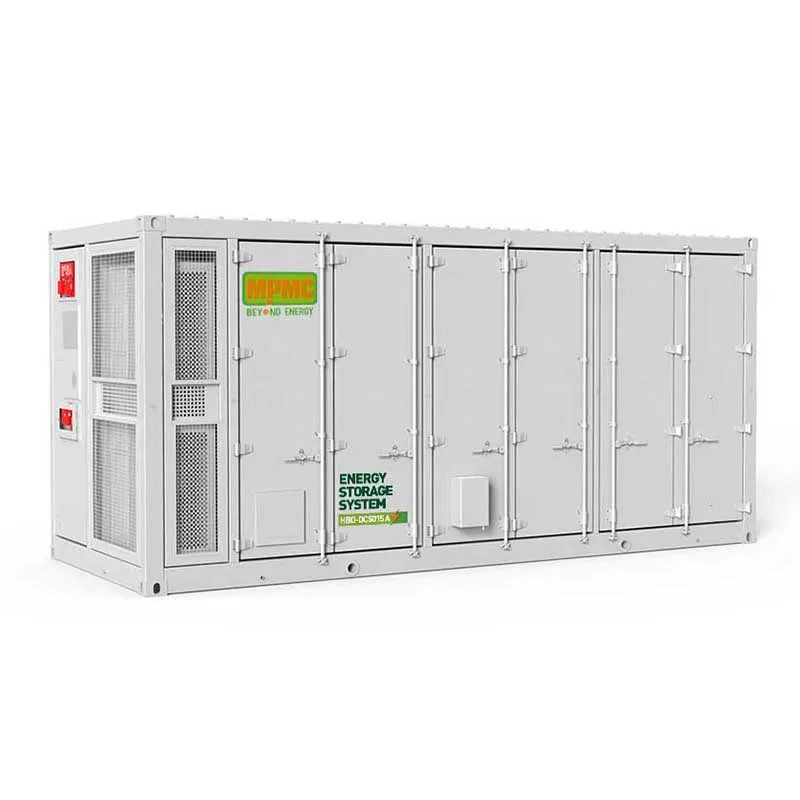
Both MPMC's HBD-A and HBD-E Series accept photovoltaic input directly and support seamless switching between on-grid and off-grid operation, forming what MPMC describes as a core clean power hub when paired with rooftop PV. The HBD-A (125 kW-1,125 kW) suits medium-large C&I grid-connected solar-storage pairing, while the HBD-E (12 kW-125 kW) integrates inverter, PCS, and EMS into a single cabinet for smaller facilities pairing storage with a smaller PV array.
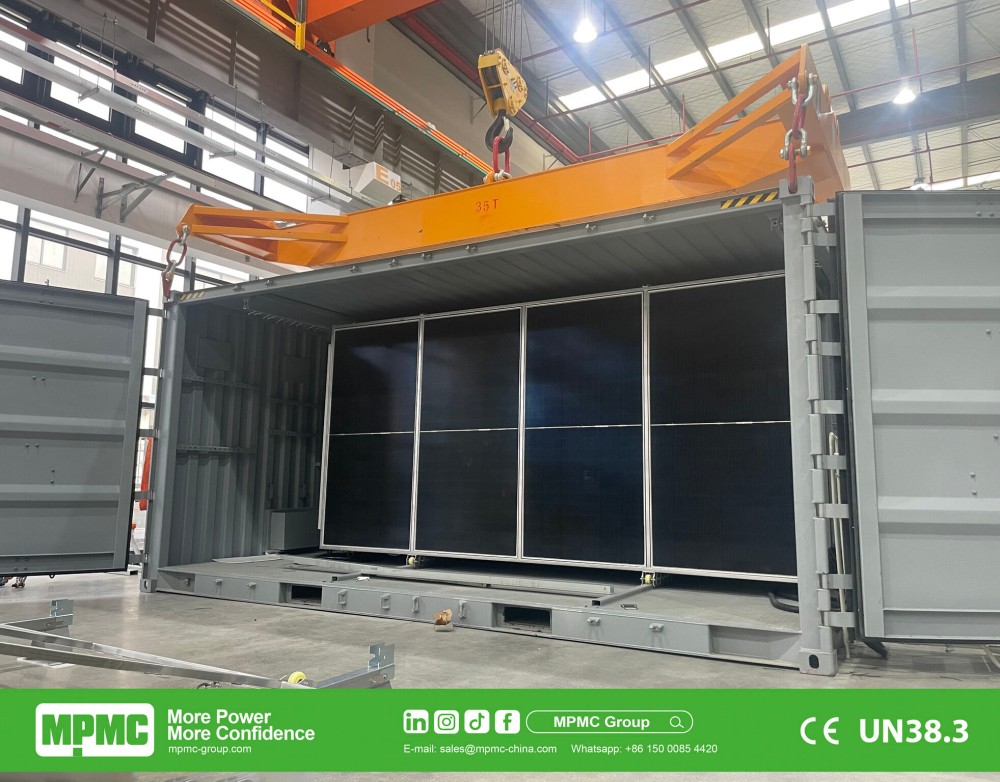 MPMC SPK-100 Mobile Solar Array, part of MPMC's broader solar-pairing product range alongside its HBD-A and HBD-E stationary battery energy storage lines.
| PV Pairing Requirement | MPMC's Provision | Why Native Integration Helps |
|---|---|---|
|
Direct PV input without a third-party charge controller |
HBD-A and HBD-E both accept PV input directly |
Removes one component and one vendor relationship from the system |
|
Seamless on-grid/off-grid switching |
Built into both HBD-A and HBD-E EMS |
Avoids a power interruption when grid conditions change |
|
Scalable PV capacity to match storage size |
Max PV input up to 250 kWp on the HBD-125-260 model alone |
Supports a genuinely large rooftop array on a single unit |
|
Mobile or temporary PV pairing |
SPK Series Mobile Solar Plant, 7.65 kWp to 231.84 kWp |
Extends PV pairing to sites without permanent rooftop installation |
|
Coordinated dispatch across PV, storage, and load |
Smart EMS/SCADA with PV generation forecasting |
Optimises self-consumption rather than simple PV-then-battery sequencing |
Mobile PV Pairing for Sites Without a Rooftop Option
Not every site pairing storage with solar has a rooftop or ground-mount array already installed, and for these cases MPMC's SPK Series Mobile Solar Plant — spanning the SPK-8A (7.65 kWp) through the SPK-240 (231.84 kWp in a 40HQP container) — integrates with the HBD-E or HBD-R BESS and any on-site gensets via a shared EMS, giving a temporary or remote site the same PV-storage coordination a permanent installation would have, without requiring a fixed structure to mount the panels on.
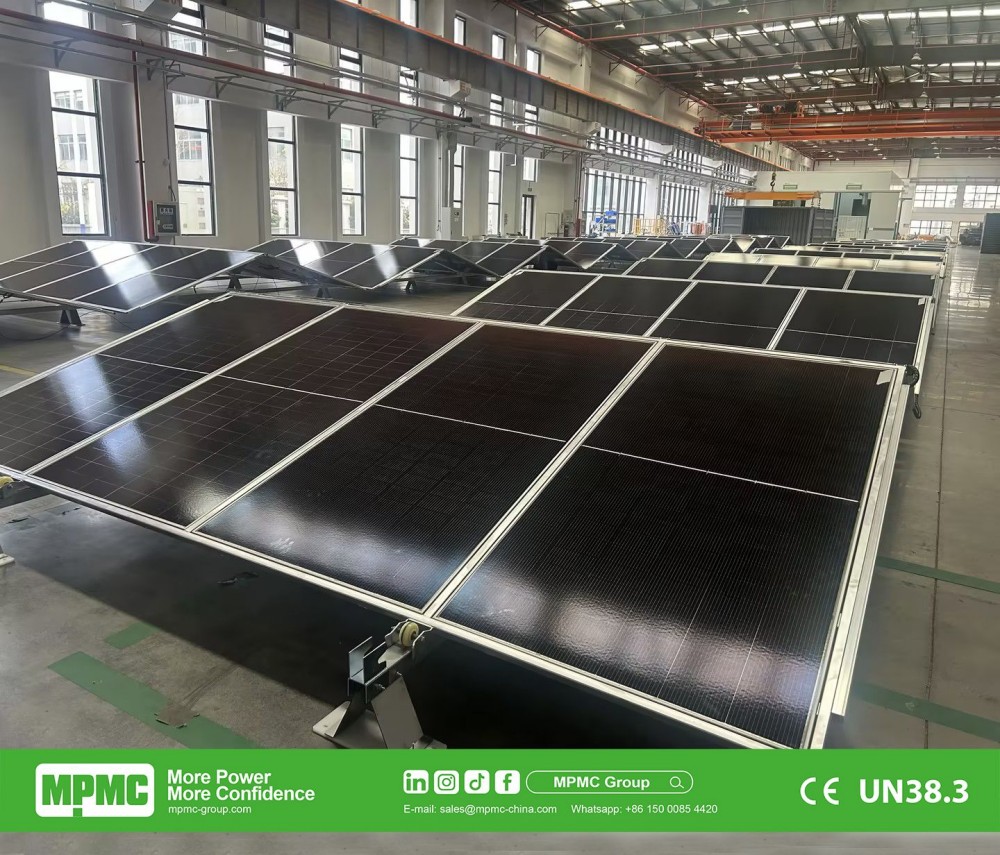 MPMC SPK-100 Mobile Solar Array, illustrating the deployable PV platform that pairs with MPMC's stationary and mobile battery energy storage systems.
Why EMS Forecasting Matters More Than Simple PV-to-Battery Charging
A basic PV-battery pairing simply charges the battery whenever the sun is out and discharges when it isn't, but MPMC's Smart EMS/SCADA platform adds PV generation forecasting to that logic, coordinating charge and discharge scheduling with anticipated weather conditions and load demand rather than reacting only to the current moment. This distinction matters most for a site trying to maximise self-consumption of its own solar generation rather than simply having a battery present alongside a PV array without genuinely optimised coordination between the two. A site that only reacts to current conditions may still export excess solar at a low feed-in rate on a bright day and then draw expensive grid power that evening, precisely the outcome forecasting-based dispatch is designed to avoid.
Where MPMC Sits Against Other Suppliers for Solar-Paired Storage
Some storage manufacturers sell a battery system as a standalone product and leave PV integration entirely to a third-party inverter and controller sourced separately by the installer, which increases both system complexity and the number of parties responsible if something does not work correctly together. MPMC's native PV input on both HBD-A and HBD-E, backed by forecasting-based EMS coordination, gives a solar-storage buyer a more tightly integrated starting point, and a buyer evaluating other suppliers should specifically ask whether PV input is native to the storage system or requires additional third-party hardware, and who is responsible for troubleshooting if a fault appears at the boundary between the two components.
Questions to Ask a Supplier About Solar-Paired Battery Storage
• Confirm whether PV input is native to the storage system or requires a separate third-party controller
• Ask for the maximum PV input capacity supported by your intended storage model
• Verify the EMS supports PV generation forecasting, not just reactive charge-discharge logic
• Confirm on-grid/off-grid switching is seamless and does not interrupt supply
• Ask about mobile PV pairing options if your site lacks a permanent rooftop or ground-mount structure
• Request a self-consumption optimisation estimate based on your site's actual solar generation profile
Recent Posts

October 26, 2016
The Most Successful Engineering Contractor


Contact US
Product Information
Quantity
Unit
Piece
Support order samples, customization, wholesale direct, and complete payment. If the product you look for does not have corresponding customized content, pls fill out the form below to contact us, and we will reply ASAP.