



Language
Battery Energy Storage for Industrial Parks: Lowering the Electricity Bill Line by Line
Nov 18, 2026
An industrial park's electricity bill has several lines, and battery energy storage can work on most of them at once: the peak demand charge, the energy bought at expensive times, the solar energy that would otherwise be exported, the cost of grid upgrades and the cost of interruptions. MPMC, a Shanghai-based manufacturer of battery storage, solar and generator sets, designs park storage systems around these lines, coordinated by its own EMS and tracked in automated savings reports.
Five Lines on the Bill
Peak Demand Charges
Many tariffs bill the highest kilowatt draw of the month. MPMC's EMS charges the battery during off-peak hours and discharges it when demand climbs, reducing the maximum kW billed by the utility. At the Netherlands peak-shaving site, a 3.2 MWh grid-connected system does exactly this for commercial and industrial users.
Energy Bought at Peak Times
The same off-peak charging shifts energy purchases away from expensive periods, so each kilowatt-hour discharged at peak replaces one that would have been bought at a higher rate, a pattern the EMS repeats every day without operator input.
Solar Energy From Park Roofs
Factory roofs and yards suit photovoltaics. By buffering midday surplus, storage enables PV self-consumption rates above 90%, and MPMC's EMS uses PV generation forecasting to schedule charging.
Grid Upgrade Costs
Electric forklifts, shuttles and maintenance vehicles add load. MPMC's BCH mobile BESS chargers support internal EV and machinery charging without grid upgrade costs, drawing modestly from the connection and delivering high-power charging from storage.
Grid Services Where Markets Allow
In markets with frequency regulation services, the same storage can respond to grid frequency deviations within milliseconds, as MPMC's 8 MWh plants in Hungary and the Netherlands do.
The Cost of Interruptions
On-grid/off-grid switching keeps critical production lines supplied through grid outages, protecting output as well as the bill.
Table 1. Electricity bill lines and the storage lever for each
| Bill line | Storage lever | MPMC product |
|---|---|---|
|
Peak demand charge |
Discharge during demand peaks |
HBD-A with EMS peak shaving |
|
Peak-time energy |
Charge off-peak, discharge at peak |
HBD-A or HBD-E |
|
Solar export |
Store midday surplus; above 90% self-consumption |
HBD-E PV input or HBD-A with PV inverters |
|
Grid upgrades for EV charging |
Battery-buffered charging |
BCH-275-200, BCH-600-400 |
|
Production interruptions |
On-grid/off-grid switching |
HBD-A and HBD-E |
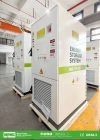
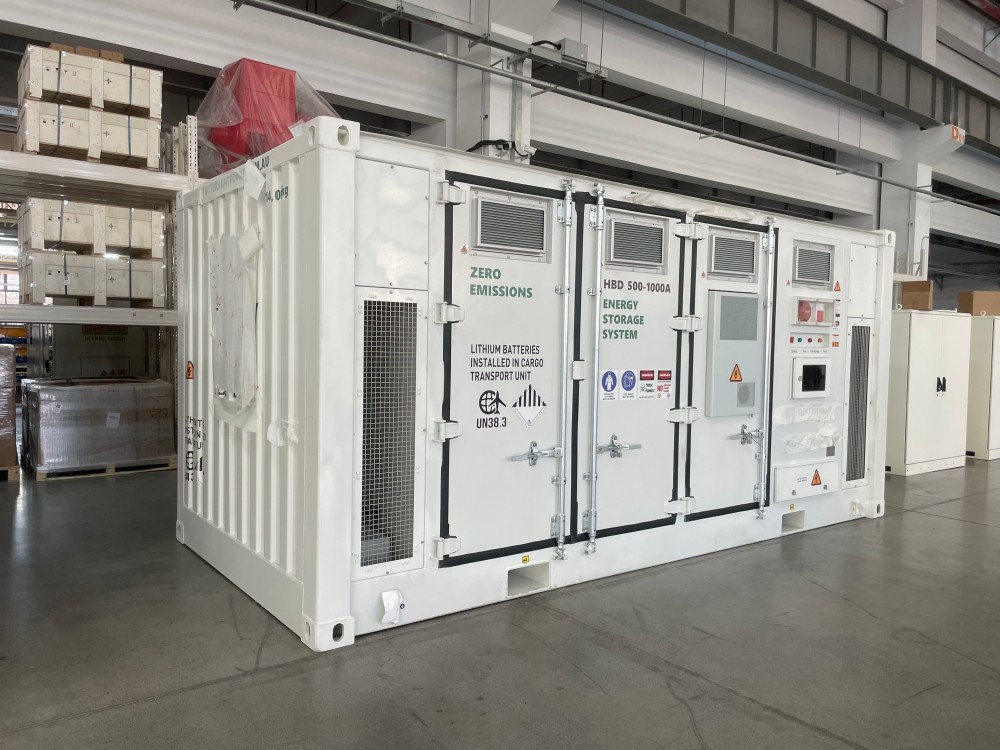 MPMC HBD-A Series HBD-500-1000 battery energy storage system.
Sizing Storage for the Park
Power and duration follow the demand profile. The HBD-500-1000 delivers 500 kW for around two hours from 1,045 kWh, the HBD-250-1000 250 kW for around four hours, and the HBD-1000-2000 1,125 kW from 2,170 kWh, all with LFP 314Ah cells rated for 8,000 cycles at 90% depth of discharge and liquid cooling. Smaller buildings in the park can use HBD-E all-in-one systems from 10 kW to 125 kW with direct PV input. HBD-A units are containerised and expandable in power and capacity, so storage can grow as tenants and production lines are added, and open yards can host SPK mobile solar plants such as the SPK-120 at 115.92 kWp or the SPK-240 at 231.84 kWp.
Table 2. MPMC storage sizes for industrial park facilities
| Model | Power | Energy | Typical park use |
|---|---|---|---|
|
HBD-E HBD-125-260 |
125 kW |
261.2 kWh |
Workshops and offices with rooftop PV |
|
HBD-A HBD-500-1000 |
500 kW |
1,045 kWh |
Factories with afternoon peaks |
|
HBD-A HBD-250-1000 |
250 kW |
1,045 kWh |
Long evening plateaus |
|
HBD-A HBD-1000-2000 |
1,125 kW |
2,170 kWh |
Large plants and shared park storage |
Note: The table shows selected models; the HBD-A Series also includes the HBD-125-260, HBD-210-410, HBD-DC 410 and HBD-DC 5000, and the HBD-E Series models from 10 kW.
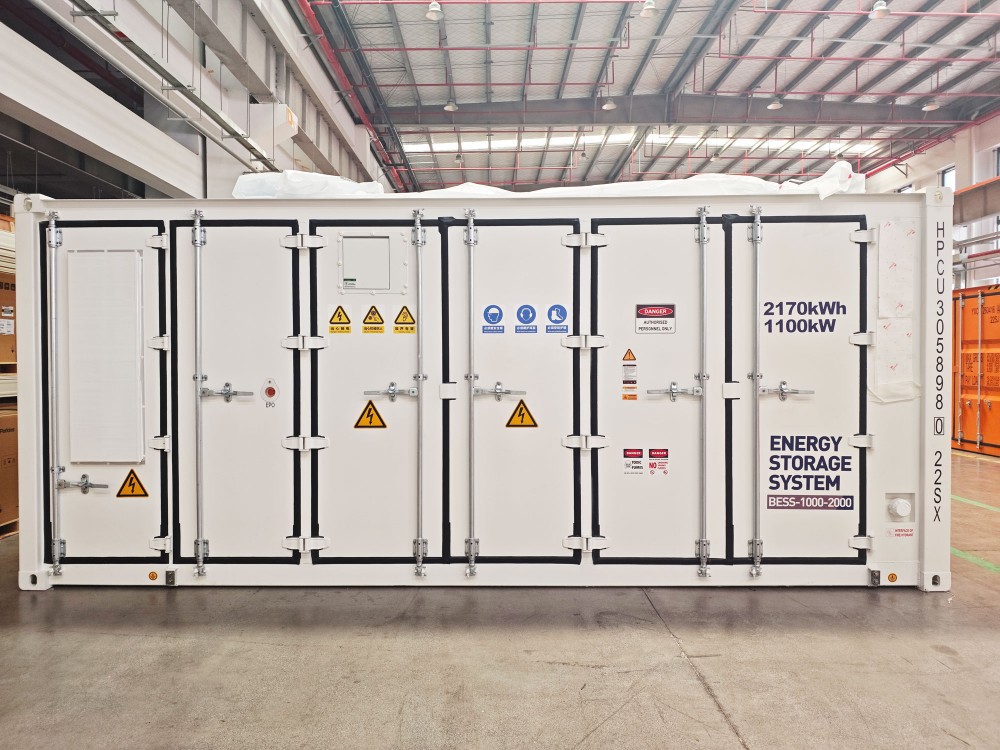 MPMC HBD-A Series HBD-1000-2000 liquid-cooled battery energy storage system.
Proof From Industrial Sites
MPMC's industrial references include a 3 MW wellhead peak-shaving plant in China built from six 500 kW / 250 kWh HBD-A sets, and ten off-grid concrete batching stations in Dubai where HBD-500-1000 storage with generator sets cut OPEX by about 20%. Storage projects may also qualify for solar and energy storage subsidies in applicable markets, and MPMC's SCADA produces automated monthly and annual reports so park managers can track savings over time. HBD-A systems carry a 5-year product warranty and a 10-year battery performance warranty.
Cutting a Park's Electricity Bill With MPMC
• Collect twelve months of interval data and tariffs
• Identify peaks, roof area for PV and EV charging plans
• Size HBD-A and HBD-E storage by building
• Set the EMS schedule and reporting
• Contact MPMC at sales@mpmc-china.com or WhatsApp +86 150 0085 4420 for an industrial park storage proposal
Recent Posts



Contact US
Product Information
Quantity
Unit
Piece
Support order samples, customization, wholesale direct, and complete payment. If the product you look for does not have corresponding customized content, pls fill out the form below to contact us, and we will reply ASAP.