


Language
Chinese Hybrid Power System Manufacturers for Islands and Remote Communities
Aug 13, 2026
Community power projects on islands and in remote regions are usually built competently and maintained poorly. The equipment arrives, the commissioning team leaves, and within two years availability depends on whether anyone within a day’s travel understands the control system.
Manufacturer selection for these projects should therefore be weighted towards what happens after handover. The specification that keeps a community supplied is not the one with the highest efficiency.
What Goes Wrong After the Ribbon Is Cut
Four failure patterns recur, and none of them is a product defect.
A protective shutdown nobody can clear
The system stops safely, the fault is minor, and there is no local competence to reset it correctly. The community is dark until an engineer travels.
Conservative operation that defeats the design
Where operators do not trust automatic dispatch, they run the generator continuously. Fuel consumption returns to pre-project levels while the battery sits idle.
Consumables not replaced
Filters, coolant and small parts are cheap and unavailable. Maintenance intervals lapse and reliability degrades.
A control system that cannot be interrogated remotely
Without remote visibility, every diagnosis requires a visit, and visits are budgeted annually rather than as needed.
Each of these is addressable at procurement, and each is invisible in a product comparison.
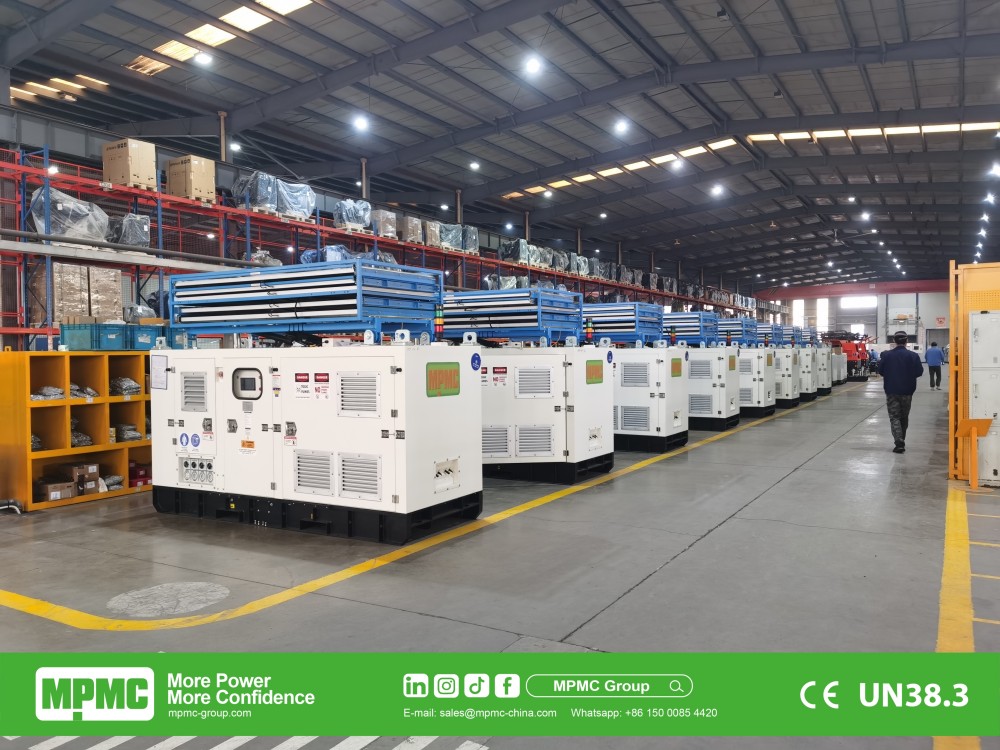 MPMC GSB Series hybrid power stations. Solar, generator set, and battery integrated into one mobile unit.
What Low-Technical-Capacity Sites Actually Need
Equipment that is simple to operate, not simple to build
Integrated units reduce the number of interfaces an operator has to understand. MPMC’s GSB Series combines solar, diesel and battery in a single mobile unit at 10 to 120 kVA maximum output, with battery capacity from 20.4 to 112.5 kWh and an integrated 2,375 W slide-out solar array. Engine options are listed as PERKINS, KUBOTA and YANMAR, with SCANIA S5 available at 250 kVA.
For a community serving a school, clinic, water pump and a small number of dwellings, one integrated unit is easier to keep running than four separately commissioned systems.
Graceful degradation
The right question is not whether a component can fail but what happens when it does. A system that reverts to generator-only operation and keeps supplying is preferable to one that stops.
Manual override that is safe
Operators need a documented way to take control when automation behaves unexpectedly. Systems without one get overridden anyway, usually incorrectly.
Remote Diagnostics as Core Infrastructure
For an island, the remote monitoring specification is more consequential than several electrical parameters.
MPMC lists a self-developed EMS and SCADA platform with real-time remote monitoring and control across sites, alarm and fault management, automated report generation, 10-year data retention, an SL3-level cybersecurity framework and Starlink satellite communication as a backup link.
The satellite link is the item worth confirming specifically. Many remote communities have intermittent cellular coverage, and a monitoring system dependent on it provides visibility exactly when conditions are calm and none when they are not.
Three practical questions follow: what can be diagnosed remotely, what can be reset remotely, and what still requires a visit. The answers should be documented before the order rather than discovered afterwards.
A Spare Parts Strategy Sized for the Location
Mainland lead times are irrelevant when a part has to reach an island. The holding should be sized against the actual delivery route.
| Category | Suggested approach | Reason |
|---|---|---|
|
Consumables: filters, coolant, belts |
Hold 18 to 24 months on site |
Cheap, bulky to ship individually, and the most common cause of lapsed maintenance |
|
Wear items: sensors, contactors, fuses |
Hold a defined set on site |
Small, high-impact, long to source |
|
Electronic modules: controllers, PCS boards |
Hold at a regional depot |
Expensive to hold locally, but crippling to wait for |
|
Major assemblies: engines, battery racks |
Contract lead time and repair route |
Not economic to hold; the commitment matters more than the stock |
MPMC’s after-sales model for generator sets routes support through the engine and alternator brands’ global networks, including PERKINS, CUMMINS, MTU, BAUDOUIN, SCANIA, SDEC and Kubota for engines and STAMFORD and LEROY SOMER for alternators. For a remote community, the practical question is which of those has a service presence in the country and how a part physically reaches the island.
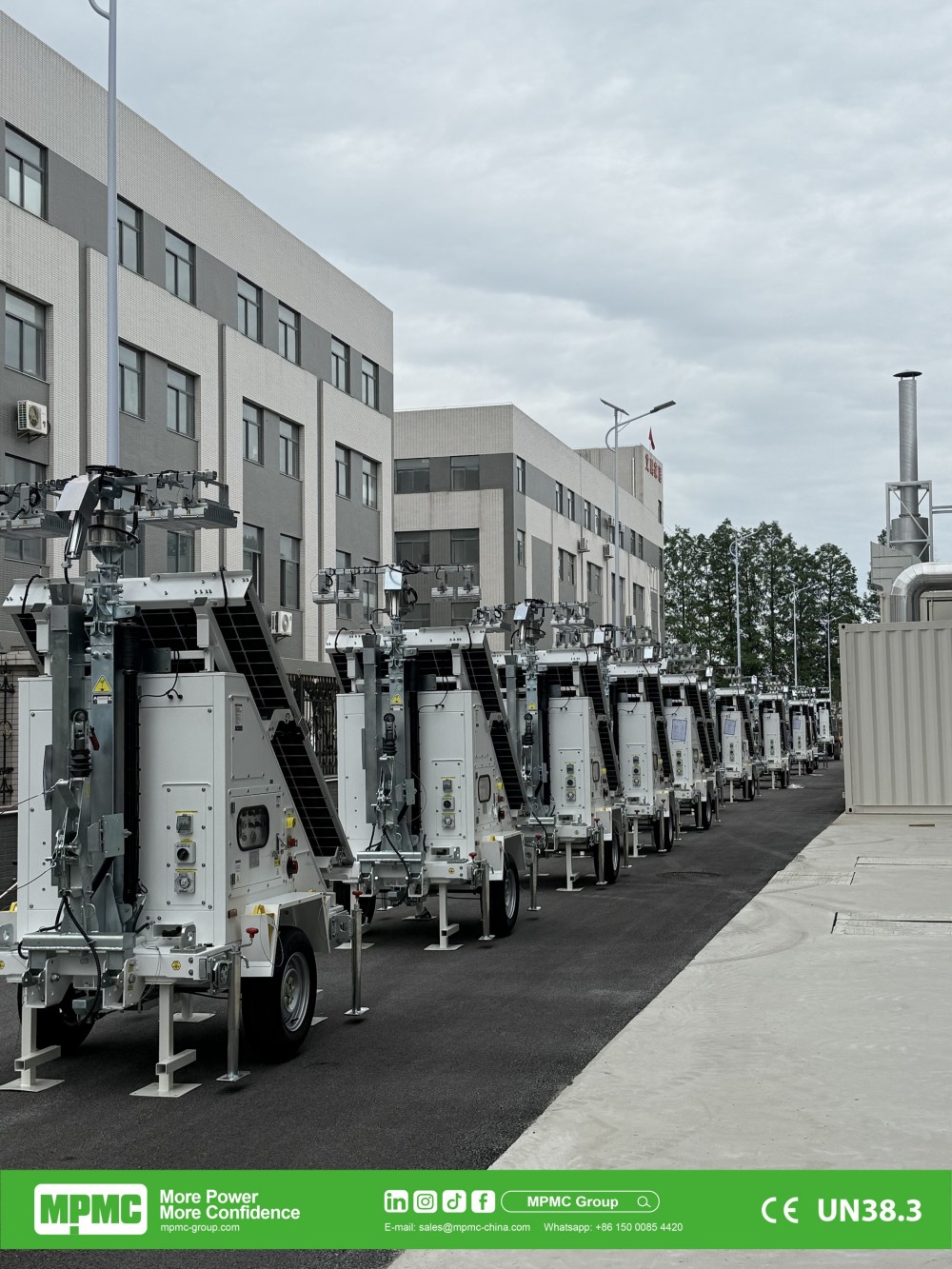 MPMC HSL Series solar lighting towers. Documented coverage from 12,000 m² to 24,100 m² with run times from 12 to 40 hours.
The Product Set at Community Scale
| Requirement | MPMC product | Documented specification |
|---|---|---|
|
Village or camp supply |
GSB Series hybrid power station |
10 to 120 kVA output; 20.4 to 112.5 kWh battery; 2,375 W integrated solar |
|
Household and small commercial self-consumption |
HBD-E Series |
10 kW to 125 kW; 30.7 kWh to 261.2 kWh; up to 250 kWp PV input; all-in-one inverter, PCS and EMS; CE and CEC certified |
|
Larger community generation |
Containerised generator sets |
800 to 3,750 kVA single-engine, with diesel, gas, methanol and biofuel options |
|
Bulk storage |
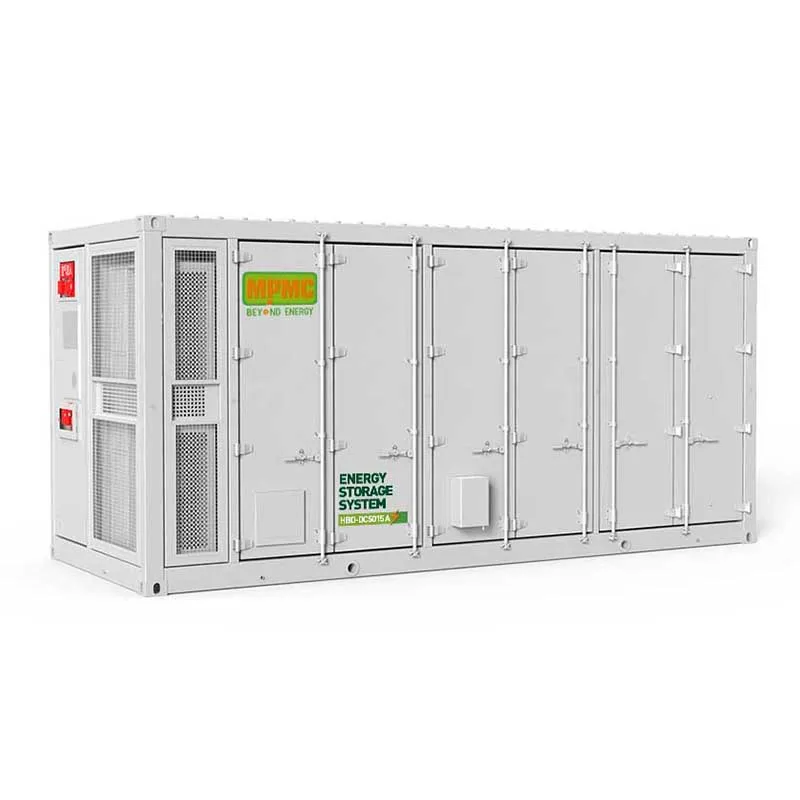
HBD-A Series |
125 kW to 1,125 kW; 261 kWh to 2,170 kWh; PQ, VF, VSG, black start and grid-forming |
|
Public and street lighting |
HSL Series solar lighting towers |
12,000 m² to 24,100 m² coverage; 12 to 40 hours run time; optional 4G and CCTV |
The HBD-E series is worth noting for community work specifically. MPMC describes it as an all-in-one unit combining inverter, PCS and EMS, with an operating range of −25°C to +55°C, 150% overload for 10 seconds, 6,000 cycles at 90% depth of discharge and remote control via app or PC. Fewer separate boxes means fewer interfaces to maintain.
Fuel Choice as a Long-Term Commitment
For communities dependent on imported fuel, the fuel decision outlasts most of the equipment.
MPMC’s documented options include diesel to ASTM D975 Grade 2D, HVO to EN 15940 and B20 blends on selected Cummins models, biofuel at B35 and above on the containerised platform, natural gas, and a methanol generator set at 400 kVA / 280 kW.
The Indonesian 18 MW biodiesel project listed by MPMC is the relevant reference. Eighteen containerised units at 1 MW each run on B35 fuel, rated at 1,200 kW prime and 1,000 kW continuous, with a published lifecycle CO₂ reduction of up to 85% against petroleum diesel and compliance with RED II and RFS standards. MPMC’s delivery scope is listed as design, manufacturing, testing and commissioning.
Where a locally produced biofuel exists, this changes the economics of a community project fundamentally, because it converts an import dependency into a local supply chain.
Training and Handover, Written Into the Contract
The handover package is the deliverable that determines the next decade. Four items are worth specifying explicitly.
Operator training delivered on site, in the working language, with more than one person trained so that the project does not depend on an individual.
Documented procedures for the routine events: start, stop, alarm response, manual override and scheduled maintenance.
A named remote support contact with a defined response commitment, and clarity on time zones and languages.
A first-year review at which actual performance is compared against the design assumption, with a mechanism to adjust dispatch settings in light of it.
Very few community projects contract for the last of these, and it is often the one that recovers the fuel saving the design promised.
Recent Posts

October 26, 2016
The Most Successful Engineering Contractor



Contact US
Product Information
Quantity
Unit
Piece
Support order samples, customization, wholesale direct, and complete payment. If the product you look for does not have corresponding customized content, pls fill out the form below to contact us, and we will reply ASAP.