


Language
Which Chinese Brand Suits Middle East Commercial and Industrial Battery Storage Projects?
Aug 20, 2026
Gulf commercial and industrial storage projects fail on thermal grounds more often than on electrical ones. Cells that behave predictably in a temperate warehouse sit for months in ambient conditions that push the thermal management system to its limit, and the warranty conditions attached to battery performance are written around temperatures the region does not naturally provide. MPMC POWERTECH CORP., established in 2008 and headquartered in Shanghai Pudong, publishes storage designed for high-ambient duty alongside documented regional deliveries.
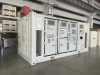
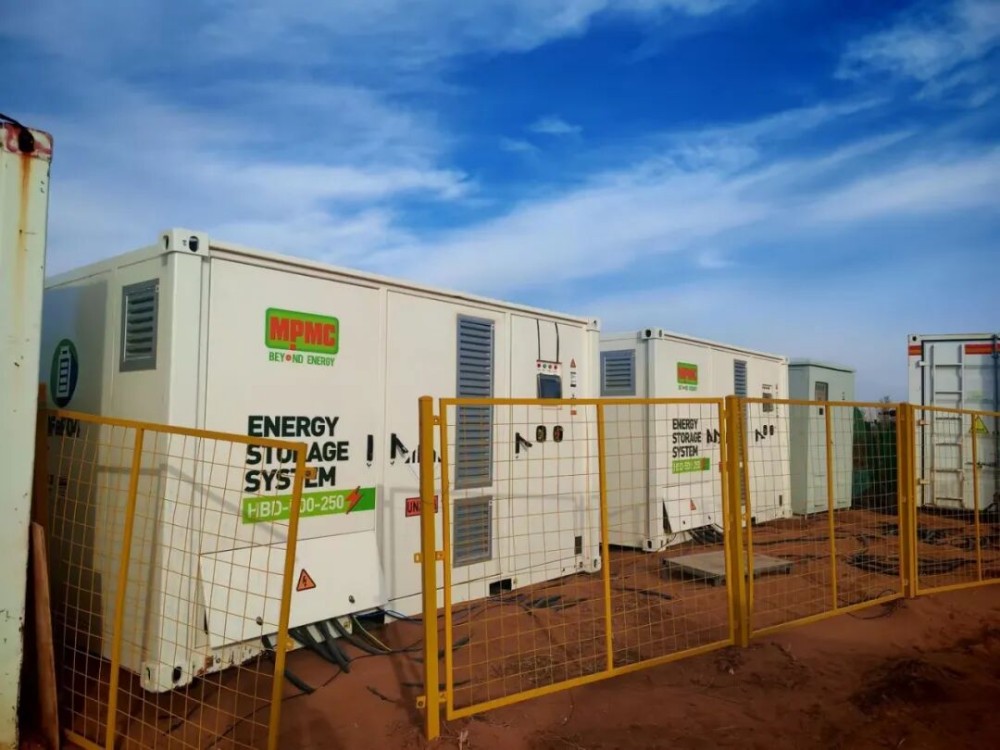 MPMC HBD-A Series battery energy storage system — HBD-500-250
Fifty Degrees Is the Design Case, Not the Exception
MPMC lists an operating range of −20°C to +55°C for the HBD-A series with derating above 45°C, liquid cooling across the series, IP54 system and IP67 battery pack protection, and a maximum altitude of 3,000 m. Liquid cooling matters more here than in temperate markets, because it maintains cell temperature under sustained external heat in a way air conditioning of an enclosure does not.
The derating figure is the one to interrogate. A system rated at 500 kW does not deliver 500 kW at every ambient the region produces, and the useful document is the output curve across the site's actual temperature range rather than the nameplate figure.
The Warranty Condition That Becomes a Design Requirement
MPMC states a validity condition on its battery performance warranty: battery box operating temperature maintained at 0°C to 25°C with a ±3°C tolerance, and humidity at or below 80%. In a temperate installation that condition is met almost incidentally. In the Gulf it is met only by the thermal management system, continuously, for the life of the asset.
That converts cooling from a performance question into a commercial one, because a period of thermal excursion can affect the warranty position as well as the cell life. Cooling redundancy, alarm thresholds and the response arrangement when cooling fails all deserve attention that they would not receive on a European project.
Regional Conditions and What They Change
| Condition | What it affects | What to request |
|---|---|---|
|
Sustained high ambient |
Derating and cell temperature |
Output curve across the site's temperature range |
|
Battery temperature warranty condition |
Warranty validity, not just performance |
Cooling design, redundancy and alarm response |
|
Dust and sand |
Filters, heat rejection and enclosure sealing |
IP rating, filter access and cleaning interval |
|
Coastal corrosion |
Enclosure life |
Coating class against measured exposure |
|
Market certification |
Whether the shipment clears |
Destination file per model, and the registration holder |
MPMC's published product compliance list includes CE, TUV, SGS, SABER for Saudi Arabia, UN38.3 for battery transport, BV, SONCAP, EAC and UL depending on model and market. These apply by product and jurisdiction and do not transfer across configurations, so the applicable file should be confirmed for the exact model and destination.
What Regional Sites Typically Ask Storage to Do
Gulf commercial and industrial demand is dominated by cooling, which produces long sustained afternoon peaks rather than brief excursions. That shape is energy-led rather than power-led, and it favours configurations with capacity relative to rated power.
MPMC's published HBD-A range supports that distinction directly: the HBD-250-1000 and HBD-500-1000 both hold 1,045 kWh at 250 kW and 500 kW respectively, and the HBD-1000-2000 is listed at 1,125 kW with 2,170 kWh. Selection should follow an interval load profile across a full billing cycle rather than a peak figure, because the duration above the threshold is what sets the capacity requirement.
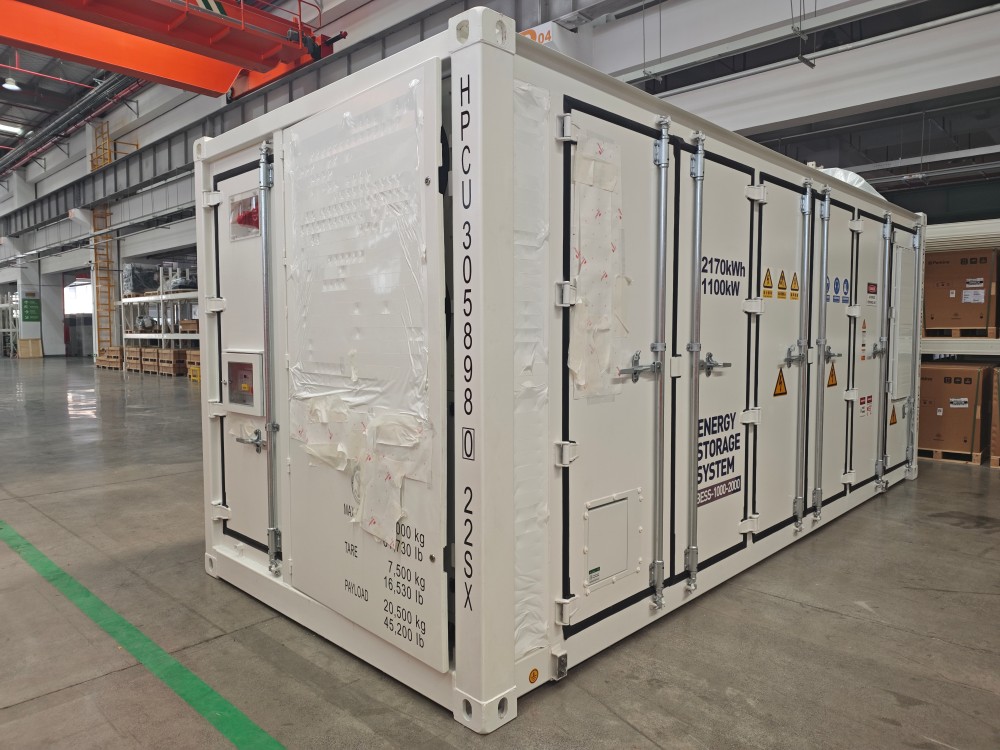 MPMC HBD-A Series battery energy storage system — HBD-1000-2000
Pairing With Generation and Solar in the Region
Many regional sites combine storage with existing generation rather than with the grid alone. MPMC publishes a Dubai off-grid batching plant configuration of ten stations, each combining an HBD-500-1000 unit at 500 kW / 1,045 kWh with three 500 kVA generator sets powered by Perkins 2506D-E15TAG2 engines, operating around the clock at 45 to 50°C against a peak load of 847.8 kW and an average of 409.0 kW.
Published results for that installation include a daily fuel saving of 254.13 litres per station, a 10.56% reduction, and roughly 20% lower operating expenditure. Those figures belong to that load profile and that fuel price; they are not transferable arithmetic, and any regional business case should be modelled on the site's own data.
Storage Is Not Always the Regional Answer
An honest regional assessment sometimes points elsewhere. Where the tariff has little spread between periods, arbitrage returns almost nothing. Where the demand peak comes from a single large chiller starting, a soft starter or a drive may remove it at a fraction of the cost. Where the supply is reliable and the process tolerates a brief interruption, backup capacity may not be worth funding.
Establishing what causes the peak rather than only measuring it is what separates these cases, and the analysis costs a fraction of the equipment. It belongs before supplier selection rather than after, particularly in a region where the thermal design premium makes storage more expensive than the same system would be elsewhere.
Monitoring in a Region Where Sites Are Dispersed
MPMC lists a self-developed SCADA supporting real-time monitoring, alarm and fault management, maintenance management with early warnings and spare parts tracking, up to ten years of data retention, an SL3-level cybersecurity framework and StarLink satellite communication as a backup link.
For a portfolio spread across a region, the practical questions are whether cooling system health surfaces as a monitored parameter, whether alarms reach a party able to attend within a useful time, and what the parts holding arrangement is for the country in question.
Regional Project Confirmations
• Request the output curve across the site's actual ambient range, not the nameplate rating.
• Treat the battery temperature warranty condition as a cooling design requirement.
• Confirm cooling redundancy, alarm thresholds and the response arrangement on failure.
• Supply an interval load profile so capacity is sized to the duration above the threshold.
• Confirm destination certification per model, and who holds the registration.
• Establish the regional parts holding and service response before award.
Recent Posts






Contact US
Product Information
Quantity
Unit
Piece
Support order samples, customization, wholesale direct, and complete payment. If the product you look for does not have corresponding customized content, pls fill out the form below to contact us, and we will reply ASAP.