


Language
Generator Set and Battery Storage Manufacturers for Southeast Asian Mining and Remote Power Markets
Aug 20, 2026
Southeast Asian projects share a set of conditions that rarely appear together elsewhere: sustained heat with very high humidity, salt-laden coastal air across archipelago sites, sea freight between islands as the normal delivery route, 50 Hz and 60 Hz territories side by side, and in several markets a biodiesel blending requirement. Equipment specified for a temperate inland project meets none of these well. MPMC POWERTECH CORP., established in 2008 and headquartered in Shanghai Pudong, publishes generation and storage with regional deliveries in Indonesia and the Philippines.
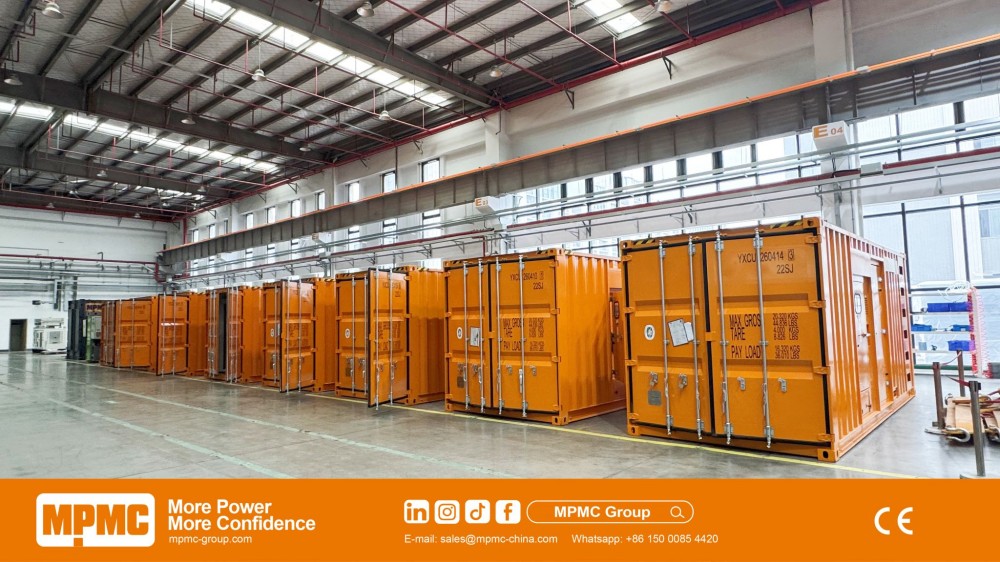 MPMC High-Performance containerized generator sets
Regional Conditions That Change the Specification
| Condition | What it affects | What to request |
|---|---|---|
|
Sustained heat and humidity |
Cooling capacity, condensation, insulation life |
Derated output at site ambient; anti-condensation heaters |
|
Coastal and island exposure |
Enclosure and cooling package corrosion |
Coating class against measured exposure, with film thickness |
|
Sea freight between islands |
Handling, packaging and lifting at each transfer |
Containerised format, lifting points and packaging specification |
|
Mixed 50 Hz and 60 Hz markets |
Model selection and alternator pairing |
Confirmation of frequency and voltage per destination |
|
Biodiesel blending requirements |
Engine fuel approval and service regime |
Written fuel approval from the engine maker for the blend |
|
High rainfall and lightning |
Ingress protection and earthing |
Ingress rating and the earthing and protection study |
MPMC lists ISO 12944 among applicable standards with C-3, C-4 and C-5 anti-corrosion coating selected by application severity, supported by salt spray testing published at 500 to 700 hours twice per year and a stated minimum three-year outdoor rust resistance.
Published Regional Deliveries
MPMC lists an Indonesian island power station at 21.6 MW using containerised units on Cummins KTA50-GS8 engines with Leroy-Somer LSA50.2 L8 alternators running on biodiesel, alongside Indonesian mining installations between 1.2 and 3.4 MW.
A Philippine mining project is listed at 1,575 kVA prime on a Cummins KTA50-G9 engine with a Stamford S6L1D-H4 alternator at 480 V and 60 Hz, fitted with a 50°C copper radiator and controlled by DSE8610 MKI. That entry is worth noting for the frequency: neighbouring markets in the region differ, and a model selected for one does not transfer to the other.
Biodiesel Is a Regional Requirement, Not an Option
Several markets in the region mandate biodiesel blending, which makes engine fuel approval a compliance question rather than a preference. MPMC lists diesel to ASTM D975 Grade 2D as standard with HVO to EN 15940 and B20 blends supported on selected Cummins models, and publishes the Indonesian island installation running on B35.
Higher blends affect filtration, service intervals and material compatibility, so the approval should be obtained in writing from the engine manufacturer as well as the packager, for the specific blend the destination market requires.
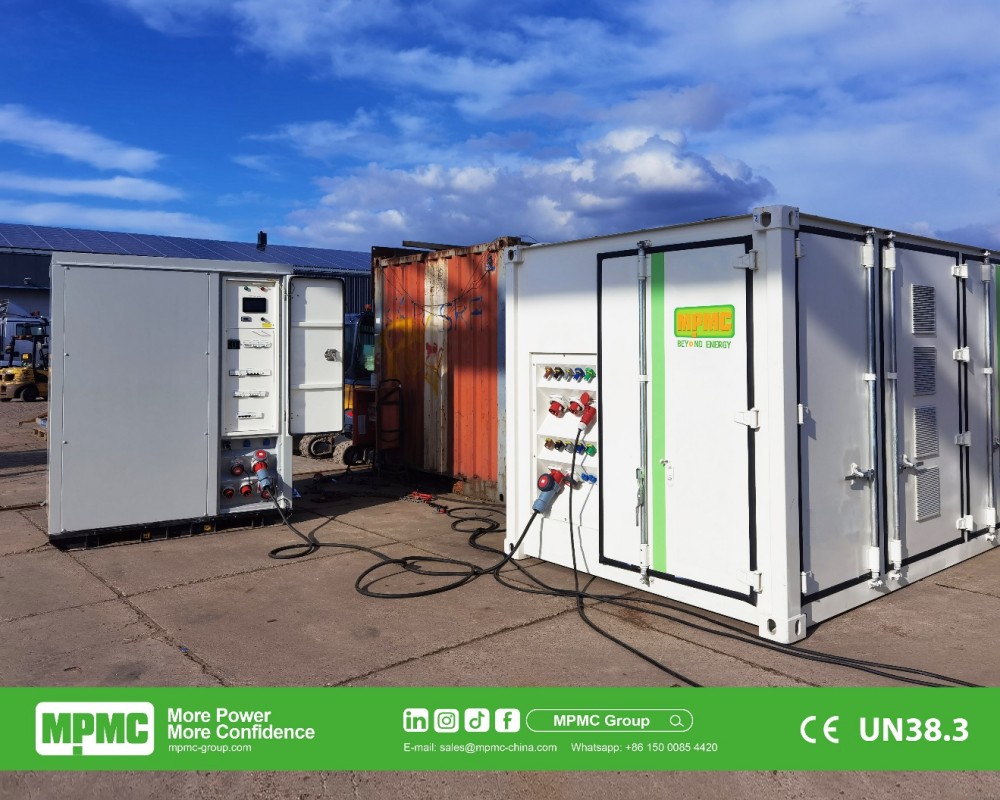 MPMC battery energy storage system operating in parallel with a generator set
Where Storage Fits in Regional Projects
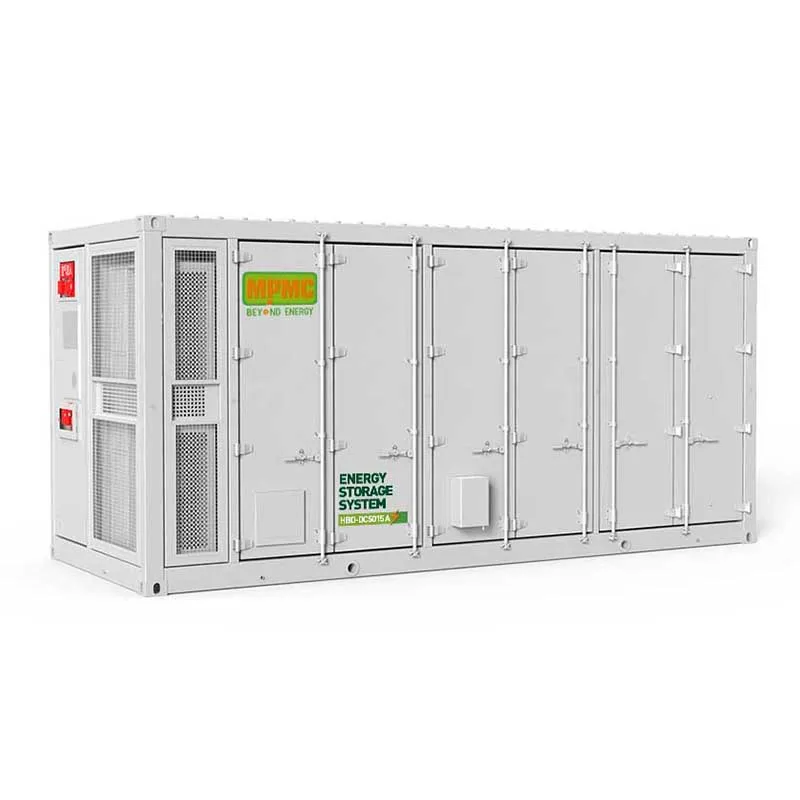
Island and remote mining sites in the region carry the same inefficiency found elsewhere: engines sized for a peak they rarely meet, idling through low-load periods, with fuel that arrived by sea. MPMC lists an HBD-R series positioned as a generator set partner from 30 kW to 610 kW continuous and 61.44 to 610.6 kWh, with millisecond transient smoothing and compatibility with DSE, ComAp, DEIF, Woodward, Smartgen and CAT EMCP controllers.
For stationary applications the HBD-A series is listed from 125 kW and 261 kWh to 1,125 kW and 2,170 kWh with liquid cooling and 8,000 cycles at 90% depth of discharge. Liquid cooling matters more in a hot, humid climate than in a temperate one, because it maintains cell temperature against sustained external heat.
Logistics and Handling Across an Archipelago
Delivery to an island site involves more transfers than a mainland project, and each one is a handling risk. Containerised equipment travels as standard freight and arrives as a completed installation, which removes both a construction programme and a set of site electrical works.
MPMC's published containerised range covers single-engine units from 800 to 3,750 kVA, twin-engine units from 1,250 to 3,000 kVA and a four-engine configuration at 1,600 kVA in 20GP and 40HC formats. What should be checked before unit size is fixed is what the destination can receive: port lifting capacity, road width from port to site and ground bearing at the position.
Service Coverage Decides the Engine Choice
MPMC's published after-sales model routes engine and alternator support through those manufacturers' global service networks, with its own obligation covering manufacturing quality and parts replacement. Published warranty for the diesel genset series is 1 year or 1,000 operating hours, with engine, alternator and controller coverage following each original manufacturer's terms.
Because MPMC lists engines from Cummins, Perkins, Baudouin, MTU, Scania, Volvo, SDEC, SME, Kubota and HD Hyundai Infracore across a common containerised platform, engine selection can follow the service map of the specific country rather than head-office preference. Identifying the nearest authorised centre and its response time before award is more useful than comparing brands in the abstract.
Certification by Destination Market
Regional markets each maintain their own import documentation, and a certificate held for one does not cover another. MPMC's published product compliance list includes CE, TUV, SGS, UN38.3 for battery transport, BV, SONCAP, EAC and UL depending on model and market, with company certification including ISO 9001:2015, ISO 45001 and ISO 14001 and a CNAS-accredited testing centre.
For a programme spanning several countries the applicable file should be confirmed per model and per destination, together with the party holding each registration. Storage equipment adds transport documentation to the list, since UN38.3 concerns battery carriage specifically and applies to every leg of a multi-island delivery.
Regional Market Confirmations
• Confirm frequency and voltage per destination, since neighbouring markets differ.
• Request derated output at site ambient and humidity, with the calculation shown.
• Specify coating class against measured coastal exposure, with film thickness stated.
• Obtain written engine fuel approval for the biodiesel blend the market requires.
• Check port lifting capacity, road access and ground bearing before fixing unit size.
• Identify the nearest authorised engine service centre in the destination country.
Recent Posts

October 26, 2016
The Most Successful Engineering Contractor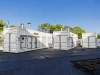



Contact US
Product Information
Quantity
Unit
Piece
Support order samples, customization, wholesale direct, and complete payment. If the product you look for does not have corresponding customized content, pls fill out the form below to contact us, and we will reply ASAP.