


Language
Which Battery Energy Storage Solutions Suit Clean Backup Power for AI Data Centres?
Aug 25, 2026
AI data centres are being built where power and land allow, frequently close to populated areas and increasingly under commitments on emissions and noise at the point of use. That changes what backup is expected to look like, and it is where battery storage earns a defined place in the design. From a procurement perspective the question is which layer storage occupies and what it is asked to cover. MPMC POWERTECH CORP., established in 2008 and headquartered in Shanghai Pudong, publishes both storage and generation with documented data centre deliveries.
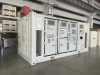
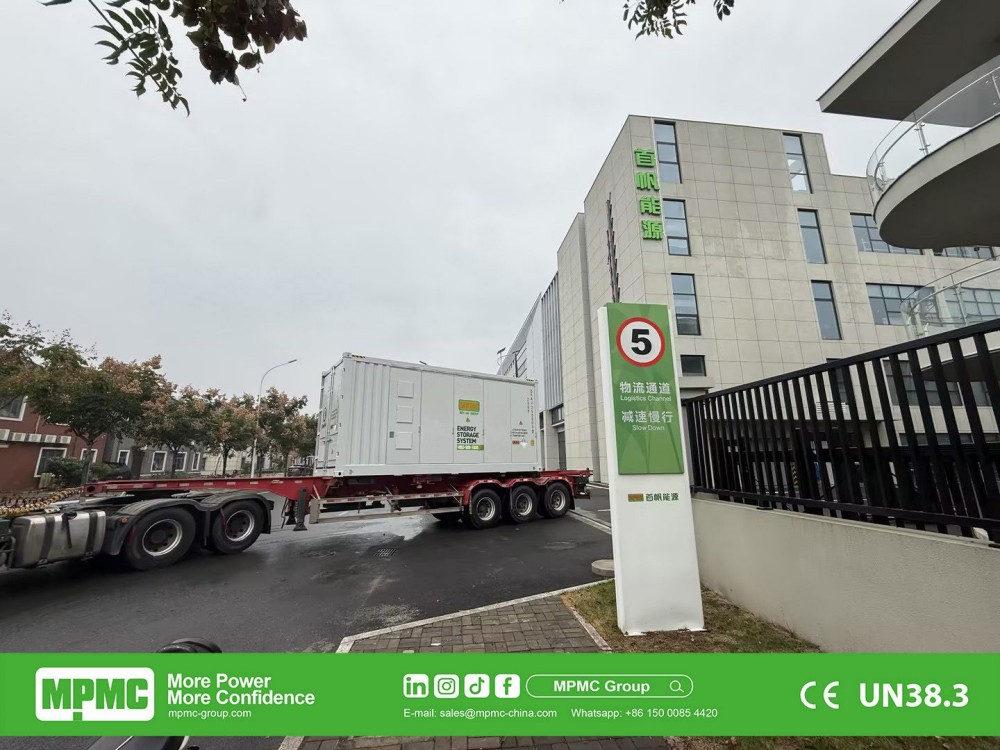 MPMC 8 MWh containerised battery energy storage system
Backup for a Data Hall Is Layered
Three layers normally operate together. An uninterruptible supply carries the most sensitive equipment through the first seconds with no break at all. Generation provides sustained power for as long as fuel lasts. Battery storage sits between and around them, extending the uninterrupted period, carrying defined loads with no emissions or noise at the point of use, and reducing how often the generators have to start.
Establishing which layer is being specified is what makes the sizing tractable. Storage covers interruptions within its usable energy silently and instantly; generation covers duration. Designed together they give a facility both properties, which is why the published configurations at this scale pair the two.
What Storage Contributes to a Clean Backup Design
| Requirement | What storage contributes | What the generator layer covers |
|---|---|---|
|
No-break supply to critical load |
Instant response with no transfer gap where configured |
Duration beyond usable stored energy |
|
Emissions at the point of use |
None while running on stored energy |
Sustained supply during an extended event |
|
Noise near neighbours |
Silent operation on battery |
Recharging during permitted periods |
|
Fewer generator starts |
Absorbs brief dips so engines need not run |
Extended or repeated failures |
|
Power quality on the board |
Voltage support during step changes |
System strength and fault current |
|
Demand management |
Peak shaving under EMS dispatch when grid-connected |
Not applicable |
The fourth row is the one that compounds. A facility whose generators start for every brief dip accumulates hours, fuel and maintenance against events lasting seconds; storage absorbing those dips preserves the engines for the failures that genuinely need them.
Seamless Transition Is a Specified Item
MPMC lists seamless on-grid and off-grid switching as standard on the mobile HBD-R series, with the stationary HBD-A series listed with gap switching by default and seamless transition available as a configured option.
In a data hall that configuration is not a preference. Where the protected equipment cannot tolerate a brief interruption, seamless transition must be specified at order stage, and the switching behaviour should be demonstrated during commissioning rather than described in a datasheet.
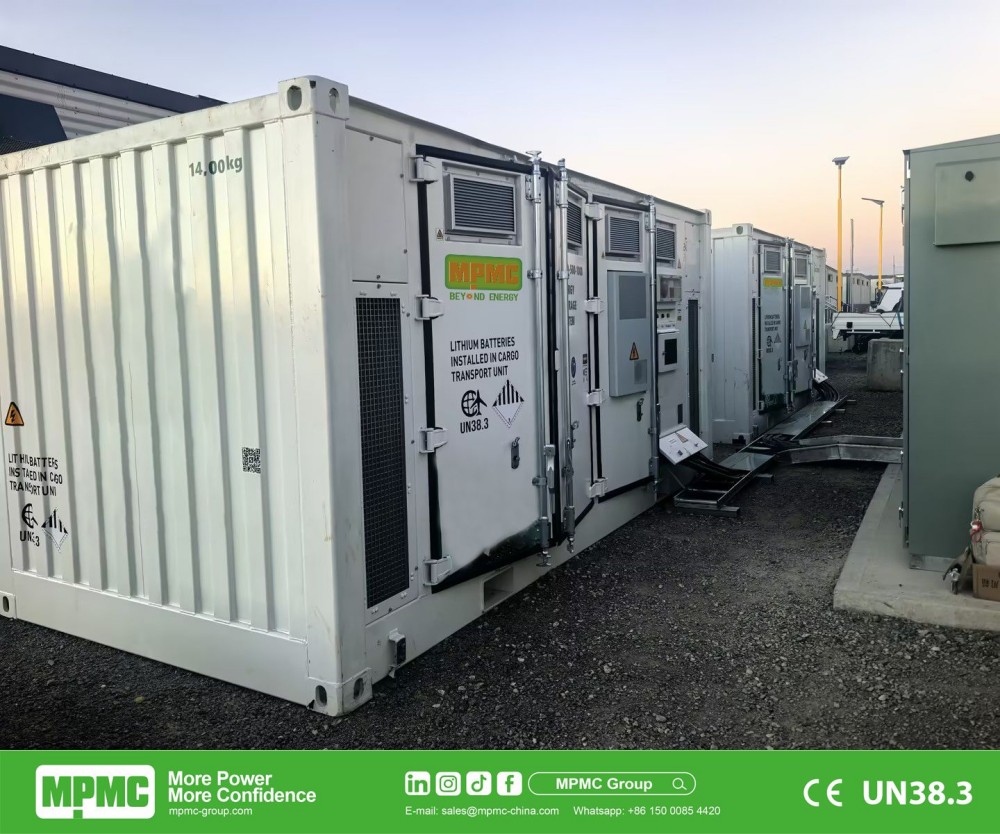 MPMC HBD-A Series battery energy storage system
Sizing to the Critical Panel
Sizing follows the protected panel rather than the building. Rated power must clear the critical load before duration becomes relevant, and duration follows from usable energy divided by that load rather than by total facility demand.
MPMC's published HBD-A series runs from the HBD-125-260 at 125 kW and 261 kWh, through the HBD-250-1000 and HBD-500-1000 both at 1,045 kWh, to the HBD-1000-2000 at 1,125 kW and 2,170 kWh, with a DC-coupled variant at 5,015 kWh. That the 250 kW and 500 kW models share the same capacity is deliberate: the same stored energy serves different load shapes.
Control Modes an AI Facility May Require
MPMC lists PQ mode for active and reactive power control, VF mode for independent voltage and frequency control, VSG mode emulating system inertia, black start, grid-forming and reactive power regulation, under a self-developed SCADA and EMS with real-time monitoring, alarm and fault management, ten years of data retention and an SL3-level cybersecurity framework.
Which modes a facility needs follows from whether the installation ever operates islanded, how it recovers from a total outage and what the connected equipment requires during a disturbance. Those requirements should be matched against the supported list before a model is fixed.
Platform Specification and Siting
MPMC lists 314 Ah LFP cells rated at 8,000 cycles at 90% depth of discharge across the HBD-A series, with liquid cooling, IP54 system and IP67 battery pack protection, aerosol fire suppression to CE, an operating range of −20°C to +55°C with derating above 45°C, and off-gas detection with a water spray inlet on larger units.
Siting storage close to a data hall brings the fire strategy into scope early. Separation distances, detection interfaces with the building system, ventilation and emergency access are set locally, and they should be settled with the authority having jurisdiction before the equipment position is fixed.
Documented Data Centre Deliveries
MPMC lists a 3 MW UAE data centre installation using MTU 20V4000 G63LF engines with Leroy-Somer LSA 53.2 XL13 alternators at 50 Hz and 6 kV with RTD monitoring and a multi-radiator arrangement, a 12 MW UAE data centre project on the same platform, and a 36 MW data centre backup project in the United States.
On the storage side, 8 MWh installations are listed in Hungary and the Netherlands providing frequency regulation, peak shaving and load balancing. These establish delivery at the relevant scale rather than a performance statement for a different facility.
Confirmations for a Data Centre Award
• Define which backup layer the storage is being specified for.
• Identify the protected panel and its load, separately from facility demand.
• Specify seamless transition explicitly and require it to be demonstrated.
• Check rated and overload power against the largest step load on the protected board.
• Match required control modes against those supported.
• Request derated output at the site design ambient.
• Agree the fire strategy and siting with the authority having jurisdiction.
• Check the throughput allowance against the expected cycling strategy.
Recent Posts

October 26, 2016
The Most Successful Engineering Contractor



Contact US
Product Information
Quantity
Unit
Piece
Support order samples, customization, wholesale direct, and complete payment. If the product you look for does not have corresponding customized content, pls fill out the form below to contact us, and we will reply ASAP.